Olan Robison
Murderer Ervil LeBaron
Murderer · USA · 1972
Ervil Morrell LeBaron (1925 to August 16, 1981) was the leader of a polygamous…
35 victims
Ervil LeBaron
Murderer · USA · 1972
Ervil Morrell LeBaron (1925 to August 16, 1981) was the leader of a polygamous…
35 victims
 Brian Kevin Rosenfeld
Murderer · USA · 1985
Brian Kevin Rosenfeld Brian Kevin Rosenfeld was sentenced to three concurrent l…
23 victims
Brian Kevin Rosenfeld
Murderer · USA · 1985
Brian Kevin Rosenfeld Brian Kevin Rosenfeld was sentenced to three concurrent l…
23 victims
 Marvin Gray
Murderer · USA · 1975
Marvin Gray was convicted killer who claimed responsibility for 23 slayings and…
23 victims
Marvin Gray
Murderer · USA · 1975
Marvin Gray was convicted killer who claimed responsibility for 23 slayings and…
23 victims
 Yahweh ben Yahweh
Murderer · USA · 1980
Yahweh ben Yahweh was born and legally named Hulon Mitchell Jr. (October 27, 19…
23 victims
Yahweh ben Yahweh
Murderer · USA · 1980
Yahweh ben Yahweh was born and legally named Hulon Mitchell Jr. (October 27, 19…
23 victims
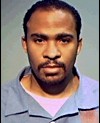 Gregory Paul Wilson
Murderer · USA · 1992
Gregory Paul Wilson was born on 5/10/67. Wilson maintained his innocence. The v…
1 victim
Gregory Paul Wilson
Murderer · USA · 1992
Gregory Paul Wilson was born on 5/10/67. Wilson maintained his innocence. The v…
1 victim
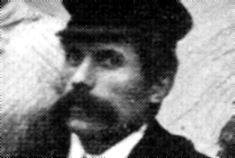 George Chapman
Serial killer · United Kingdom · 1897
George Chapman was the English name taken by serial killer Seweryn Antonowicz K…
3 victims
George Chapman
Serial killer · United Kingdom · 1897
George Chapman was the English name taken by serial killer Seweryn Antonowicz K…
3 victims
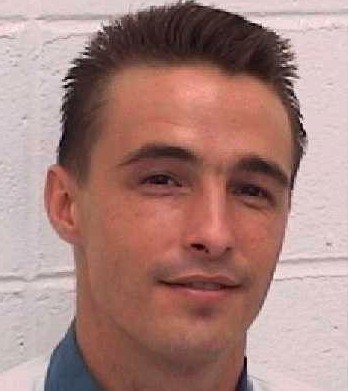 J. W. Ledford
Murderer · USA · 1992
J. W. Ledford Jr. was convicted of the malice murder of Dr. Harry Buchanan John…
1 victim
J. W. Ledford
Murderer · USA · 1992
J. W. Ledford Jr. was convicted of the malice murder of Dr. Harry Buchanan John…
1 victim
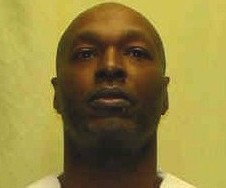 Rommel Broom
Murderer · USA · 1984
Romell Broom was an American convicted of murder, kidnap and rape. He was born…
1 victim
Rommel Broom
Murderer · USA · 1984
Romell Broom was an American convicted of murder, kidnap and rape. He was born…
1 victim
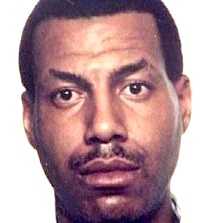 Vincent Darrell Groves
Serial killer · USA · 1978
Vincent Darrell Groves was arrested in connection with unsolved murders of at l…
14 victims
Vincent Darrell Groves
Serial killer · USA · 1978
Vincent Darrell Groves was arrested in connection with unsolved murders of at l…
14 victims
- Gender
- male
- Country
- USA
- Location
- Stephens County, Oklahoma, USA
- Date of birth
- 1947
- Age at first offence
- 33
- Characteristics
- murder-for-hire, robbery, drugs, alcohol
- Victim profile
- Julia Sheila Lovejoy, Averyl Bourque and Robert Leon Swinford
- Method of murder
- Shooting ( .22 caliber pistol and a .380 caliber pistol)
- Date(s) of murder
- June 12, 1980
- Years active
- 1980
- Date of arrest
- —
- Status
-
Executed
Executed by lethal injection in Oklahoma on March 13, 1992
Other details
Olan Randle Robison was a white man.
He was 35 when he was sentenced to death in Stephens County.
Timeline
June 12, 1980 — The bodies were discovered the morning of June 12, 1980 at a rural home on the outskirts of Velma, Oklahoma. June 11, 1980 — On June 11, 1980, multiple persons including Robison gathered at Sharon Briscoe’s apartment in Healdton, Oklahoma, to discuss a future amphetamine laboratory; Robison consumed drugs and alcohol throughout the day until he passed out in the early evening, then he requested that Johnny Gillum come to Healdton. March 13, 1992 — Robison was executed by lethal injection in Oklahoma. March 11, 1992 — Robison filed a petition seeking a declaratory judgment affirming his right to direct the manner of cremation for disposition of his body and sought injunction and/or restraining order preventing an autopsy after his execution. March 12, 1992 — After hearing, the trial court granted a temporary injunction and in open court ordered the warden not to turn the body over to the State Medical Examiner for purposes of conducting an autopsy. March 13, 1992 — After hearing, the trial court entered an order requiring the warden to ensure the body would not be autopsied by the Chief Medical Examiner or any other person unless allowed by order of the court or by order or writ issued by a higher court. September 6, 1985 — Robison’s application for post-conviction relief was denied by the Stephens County District Court. November 25, 1985 — This Court affirmed denial of post-conviction relief in an unpublished order. March 11, 1986 — Robison filed a Writ of Habeas Corpus in the United States District Court for the Western District of Oklahoma. June 16, 1986 — The writ was denied by unpublished opinion. July 16, 1986 — Robison appealed the denial to the United States Court of Appeals for the Tenth Circuit. September 25, 1987 — The Tenth Circuit affirmed in part and reversed in part and remanded a portion for further consideration; the sole issue remanded concerned effective assistance of appellate counsel. December 27, 1988 — The United States District Court for the Western District of Oklahoma entered an order finding that one of Robison’s death sentences was invalid but denied relief on the remanded issue. May 9, 1989 — Robison filed a notice of intent to appeal and the appeal was still pending. December 21, 1988 — Robison filed his second Application for Post Conviction Relief in the Stephens County District Court. February 21, 1989 — Supplements to the application were filed. March 3, 1989 — A hearing was conducted and final briefing was completed in September, 1989. November 14, 1989 — The Stephens County District Court entered an order denying Robison post-conviction relief. October 10, 1991 — Robison v. State, 1991 OK CR 111, was decided. November 25, 1985 — This Court affirmed that denial of relief in an unpublished order (post-conviction relief). 01/13/1984 — Robison v. State, 1984 OK CR 21, was decided. 04/02/1984 — Robison v. State, 1984 OK CR 21, was modified. 1984 — The United States Supreme Court denied certiorari in Robison v. Oklahoma, 467 U.S. 1246. 11/03/1992 — Robison v. Maynard was decided.
Background
Olan Randle Robison was convicted of three counts of Murder in the First Degree in Stephens County District Court, Case No. CRF-80-165.
The jury fixed punishment at death by lethal injection, in all three counts, and the trial court sentenced him accordingly.
In accordance with 21 O.S.Supp. 1976 § 701.11, the jury fixed punishment at death by lethal injection, in all three counts.
Robison appealed and the conviction was affirmed.
The United States Supreme Court denied certiorari in 1984 in Robison v. Oklahoma, 467 U.S. 1246, 104 S.Ct. 3524, 82 L.Ed.2d 831 (1984).
Robison’s application for post-conviction relief was denied by the Stephens County District Court on September 6, 1985, and this Court affirmed that denial on November 25, 1985 in an unpublished order.
On March 11, 1986, Robison filed a Writ of Habeas Corpus in the United States District Court for the Western District of Oklahoma; it was denied by unpublished opinion on June 16, 1986. He appealed to the United States Court of Appeals for the Tenth Circuit on July 16, 1986; on September 25, 1987, the Tenth Circuit Court of Appeals affirmed the decision in part and reversed in part, with an order remanding a portion for further consideration. The sole issue remanded concerned effective assistance of appellate counsel.
On December 27, 1988, the United States District Court for the Western District of Oklahoma entered an order finding that one of Robison’s death sentences was invalid but denied relief on the remanded issue. Robison filed a notice of intent to appeal on May 9, 1989, and the appeal was still pending.
Robison filed his second Application for Post Conviction Relief in the Stephens County District Court on December 21, 1988. Supplements to the application were filed on February 21, 1989, and on March 3, 1989 an evidentiary hearing was conducted and final briefing was completed in September, 1989. On November 14, 1989, the Stephens County District Court entered an order denying Robison post-conviction relief, and he appealed that denial.
Robison also filed a petition for declaratory judgment and sought injunction preventing an autopsy after his execution.
The offence
Robison was convicted of three counts of Murder in the First Degree for the deaths of Julie Sheila Lovejoy, Averil Bourque, and Robert Leon Swinford.
All three shared a house on the outskirts of Velma, Oklahoma.
A robbery apparently precipitated their deaths, evidenced by the disheveled state of their home when their bodies were discovered the morning of June 12, 1980.
The victims died from wounds inflicted by a .22 caliber pistol and a .380 caliber pistol.
Averil Bourque’s death was the result of multiple gunshot wounds. She was shot once in the left breast, once in the right ear, and twice between the eyes. The wounds in the ear and between the eyes were at close range as evidenced by powder burns surrounding the wounds. A death occurring at close range by two gunshots between the eyes amply supported a finding that the death occurred in a heinous, atrocious or cruel manner.
During the second stage of the trial, the State admitted a certified judgment and sentence of Robison’s 1973 conviction for armed robbery.
Investigation
Jewelry was discovered in a purse beneath Averil Bourque’s body on her bed.
A jeweler estimated the value to be between $6,000 and $8,000.
It was revealed at trial that Robison was aware that Ms. Bourque possessed valuable jewelry.
Among possessions discovered missing from the house following the murders were Robert Swinford’s watch, and a .22 caliber pistol.
During the investigation, Terry Henderson underwent hypnosis.
Robison sought to have Henderson’s testimony excluded but was unsuccessful; Henderson positively identified Robison as the man she saw in the car.
The Court held that testimony of witnesses which had been tainted by hypnosis should be excluded in criminal cases from the time of the hypnotic session forward, but it also held that the error was not grave enough to predicate reversal because the evidence apart from Henderson’s identification was far too overwhelming for the Court to conclude her identification determined the verdict.
Other details
Multiple witnesses implicated Robison and two other men, Johnny Gillum and William Starr Jordan, in the murders.
One witness, Sharon Briscoe, was Robison’s girlfriend and it was her apartment in Healdton, Oklahoma where several persons, including Robison, had gathered on June 11, 1980, to discuss a future amphetamine laboratory.
Throughout the day Robison consumed drugs and alcohol until he finally passed out in the early evening, but not until after he had called Johnny Gillum in Wichita Falls, Texas, requesting that Gillum come to Healdton because he was needed.
When Gillum arrived and successfully awakened Robison, the two of them and William Starr Jordan took several guns from the apartment and loaded them in Sharon Briscoe’s car.
Robison stated that he was going to "get some gold" or "get rich" and the three men left.
After returning sometime before 11:00 p.m. with a suitcase and an empty brown purse, Robison gave one of the women in the apartment a lady's watch, a man's watch, and a pocket knife.
Robison had her clean his boot, which contained a spot that looked like blood.
Robison also removed his blood-stained shirt.
Upon Robison’s orders, everyone packed and left that night for Wichita Falls, Texas.
Patricia Brumfield was with Robison and Johnny Gillum later that night when they traveled to Lake Arrowhead where suitcases and a gun were tossed into the water.
The gun, a .380 caliber pistol was later recovered.
At trial, Ms. Brumfield testified that Robison told her of shooting the people in Velma; that one of the women was naked and had a gun.
He also told her that they did not find the gold they had gone after.
Robison requested that Ms. Brumfield retrieve a .22 pistol from William Jordan, but she discovered that Jordan had disposed of it.
Two other witnesses for the State testified of being told by Robison that he had participated in murdering three people during a robbery.
The Court also described that Robison’s prior offense evidence was introduced through Ms. Briscoe’s testimony and included that Robison was on probation for an unspecified offense and had an upcoming court appearance at the time of the murders; trial counsel objected and the objections were sustained and the jury was admonished not to consider it.
The Court noted that Ms. Briscoe remarked that Robison was one of several people gathered at her apartment the day of the murders to plan the erection of an amphetamine laboratory.
Money was needed to set up the amphetamine laboratory, and the apparent motive behind the murders was robbery; the Court found that evidence of the amphetamine laboratory was explanatory of the motive for the commission of the murders.
Ms. Briscoe also explained that she slept with Robison, and Robison complained that this was an improper comment on his character; the Court held that the comment could not be construed as an attack on Robison’s character in the context made.
Robison filed a motion for new trial based on newly discovered evidence that was erroneously overruled by the trial court.
Robison secured an affidavit from codefendant Johnny Gillum; Gillum stated that Robison was asleep in the backseat of Sharon Briscoe's car when the murders occurred and had no knowledge of them until the crimes had been carried out.
Gillum further stated that the man seen and identified by Terry Henderson was not Robison, but William Starr Jordan.
Gillum’s trial was held several days after Robison’s; Gillum was found guilty and sentenced to life imprisonment.
The Court held there was no abuse of discretion in overruling Robison’s motion for new trial, stating that facts indicating Robison’s guilt were so strong that there was no reasonable probability that the jury’s verdict would change if the newly discovered evidence were introduced.
Trial
Robison filed affidavits of three residents in Stephens County who verified that Robison could not receive a fair trial in that County because of extensive pretrial news coverage of the triple slayings which prejudiced citizens against him and rendered it impossible to empanel a jury which did not have a fixed opinion concerning his guilt.
The Court applied the rule that there is a presumption that a defendant can get a fair and impartial trial in the county in which the offense charged was committed.
The Court held that newspaper accounts did not appear to be adverse to Robison, that jurors conveyed they had been exposed to publicity but that through voir dire it was established their prior knowledge would not act to prejudice them, and that no abuse of discretion was shown by the trial court’s denial of change of venue.
Robison urged reversal because of comments made by the prosecutor that amounted to comments on his right to remain silent.
The Court held that defense counsel did not object to the comments and therefore there was no basis for review other than for fundamental error and that none was found.
Robison complained of statements made during closing argument allegedly being comments on his failure to take the stand.
The Court read the closing argument and concluded the comments were reasonable comments on reasonable interpretations of the evidence and that taken out of context they appeared to be emphasizing Robison’s failure to testify; the Court also found that no objections were entered and any error was waived.
Robison urged reversal because of tainted in-court identification by Terry Henderson, who had undergone hypnosis prior to identifying him.
The Court held that it adopted the view that testimony from witnesses questioned under hypnosis should be excluded from the time of the hypnotic session forward, but it also held the error was not grave enough to predicate reversal of the conviction.
Robison argued evidence regarding character and prior offenses was improperly admitted and resulted in prejudice.
The Court held that testimony about the amphetamine laboratory was relevant and properly admissible; it weighed probative value against any effect on character.
The Court held that a comment about Ms. Briscoe sleeping with Robison did not constitute an attack on his character in context.
The Court also stated that objections to testimony about Robison’s prior record and probation were sustained and the jury admonished not to consider it.
Robison argued that the prosecutor went beyond the scope of evidence during closing arguments in both stages of the trial to arouse passions and prejudices and also expressed his personal opinion of Robison’s guilt.
The Court stated that prosecutors are entitled to make reasonable comments on interpretations of evidence and that it found Robison’s claims for the most part unfounded.
It addressed an instance where the prosecutor stated he represented the victims and that defense counsel failed to object; the Court stated the comment was improper but could not have affected the verdict and therefore reversal or modification was not justified.
Robison claimed five photographs of the victims were gruesome and admitted solely to arouse passions and prejudice.
The Court held photographs were admissible when relevant and when probative value was not outweighed by danger of prejudice, and it found the probative value manifested in several ways including showing nature, extent, and location of wounds, depicting the crime scene, and corroborating medical examiner testimony.
The Court found no basis to grant relief about one photographic exhibit depicting an O.S.B.I. agent holding a string stretched to a hole in the wall to illustrate trajectory of a bullet in relation to the dead body of Averil Bourque.
The Court stated it was of the opinion the photograph should not have been admitted because its purpose was no more than to show the State’s theory of what happened in Averil Bourque's bedroom the night of the murder, but found it not nearly as offensive as a Roberts case photograph, and found no apparent prejudicial effect from its admission.
Sentencing
The Court was required by Title 21 O.S. 1981 § 701.13 to make three determinations in addition to consideration of assigned errors.
First, the Court determined whether the death penalty was imposed under the influence of passion, prejudice, or any other arbitrary factor, and it found the transcript devoid of prejudice or bias and concluded the penalty imposed was not influenced by passion, prejudice, or any other arbitrary factor.
Second, the Court determined whether evidence supported the jury’s findings of statutory aggravating circumstances.
The jury found:
- the defendant knowingly created a great risk of death to more than one person;
- the defendant had previously been convicted of a felony involving the use or threat of violence to the person;
- the existence of a probability that the defendant would commit criminal acts of violence that would constitute a continuing threat to society; and it found a fourth aggravating circumstance that the murder was heinous, atrocious, or cruel in the case of Averil Bourque.
The Court stated that three murders created a risk of death to more than one person because the three victims resided in the same house and were all present when Robison and his two codefendants arrived to rob them.
It stated that the 1973 armed robbery conviction supported the prior felony involving use or threat of violence finding.
It also stated that the calloused manner in which the crimes were committed supported the probability of future acts of violence constituting a continuing threat to society.
It supported the heinous, atrocious, or cruel finding by the multiple gunshot wounds including close-range shots between the eyes.
Third, the Court determined whether the death sentence was excessive or disproportionate to the penalty imposed in similar cases and concluded it was not.
It cited Stafford v. State, 669 P.2d 285; Stafford v. State, 665 P.2d 1205; and Hays v. State, 617 P.2d 223 as cases where victims of robberies were shot and killed as occurred in the instant case.
It stated that factors where this Court had either modified the death sentence to life or reversed the conviction were not present in Robison’s case, and thus the assessed death penalty was neither excessive nor disproportionate.
Robison’s conviction and sentence were affirmed.
Appeals
Robison v. State, 1984 OK CR 21, affirmed.
Robison v. State, 1991 OK CR 111 affirmed denial of post-conviction relief.
In the 1991 appeal, the Court addressed assignments of error including:
- competency called into question prior to trial without a statutorily required post-examination competency hearing; the Court held there was never a judicial finding that doubt existed and noted res judicata barred issues not raised on direct appeal or in first post-conviction application;
- a claim that the jury was precluded from fully considering mitigating evidence due to an "anti-sympathy" instruction; the Court held Coleman barred the claim raised for the first time on second application and cited Saffle v. Parks;
- a claim that appellate counsel had previously, as a judge, sentenced Robison in other cases; the Court held res judicata barred it;
- a claim that Judge George W. Lindley should have disqualified himself because Robison needed testimony concerning the appointment of counsel; the Court held no prejudice and no violation of 22 O.S. 1981 § 1084, and found conditions listed in 20 O.S. 1981 § 1401 requiring disqualification were not present;
- a claim that the Oklahoma death penalty scheme was unconstitutional; the Court held procedural bar of Coleman precluded reconsideration.
The Court affirmed the Stephens County District Court’s order denying post-conviction relief.
Robison v. Maynard, 1992 OK CIV APP 142, reversed the temporary injunction entered in district court preventing the warden from turning the body over to the Chief Medical Examiner for purposes of autopsy.
In Robison v. Maynard, plaintiff’s counsel stated there was "no objection to continuing this appeal in the interest of deciding an issue of continuing concern."
The Court decided the case on the merits, stating the issue was capable of repetition yet evading review and of broad public interest.
The Court held that Oklahoma statutes required investigation by the Chief Medical Examiner and that discretionary powers of public officials would not be controlled by injunction absent a showing of fraud or bad faith.
The Court reversed the trial court’s temporary injunction.
Outcome
The judgment and sentence were affirmed.
The order of the district court denying post-conviction relief was affirmed.
The temporary injunction preventing autopsy was reversed.
Aftermath
Plaintiff Olan Randle Robison was sentenced to death by the District Court of Stephens County and execution was to be carried out on March 13, 1992 at the state penitentiary at McAlester.
Robison filed a petition on March 11, 1992 seeking relief regarding cremation and preventing autopsy.
The trial court issued a temporary injunction after hearing on March 12, 1992 ordering the warden not to turn the body over for autopsy.
After hearing on March 13, 1992, the trial court entered an order directing the warden to ensure the body would not be autopsied unless allowed by order of the court or by order or writ issued by a higher court.
In response to the petition in error, it was proposed that the appeal should be dismissed as moot because counsel for plaintiff had dismissed the underlying action and plaintiff’s body had been autopsied and released for burial.
The appellate court reversed.
Spotted an error, or have more information about this case?