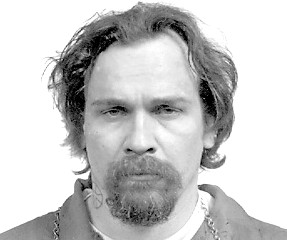
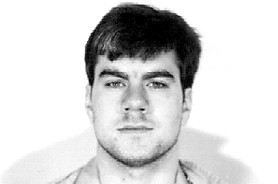
Jerry Thompson
Murderer Brian Kevin Rosenfeld
Murderer · USA · 1985
Brian Kevin Rosenfeld Brian Kevin Rosenfeld was sentenced to three concurrent l…
23 victims
Brian Kevin Rosenfeld
Murderer · USA · 1985
Brian Kevin Rosenfeld Brian Kevin Rosenfeld was sentenced to three concurrent l…
23 victims
 Russell Ellwood
Murderer · USA · 1991
Russell Ellwood was a former taxi driver. Authorities suspected him of killing…
20 victims
Russell Ellwood
Murderer · USA · 1991
Russell Ellwood was a former taxi driver. Authorities suspected him of killing…
20 victims
 Robert Martines Perez
Murderer · USA · 1994
Name: Robert Martines Perez · Other name used in proceedings: Robert Martinez P…
15 victims
Robert Martines Perez
Murderer · USA · 1994
Name: Robert Martines Perez · Other name used in proceedings: Robert Martinez P…
15 victims
 Billy Frank Vickers
Murderer · USA · 1993
Billy Frank Vickers Vickers was executed by lethal injection in Texas on Januar…
14 victims
Billy Frank Vickers
Murderer · USA · 1993
Billy Frank Vickers Vickers was executed by lethal injection in Texas on Januar…
14 victims
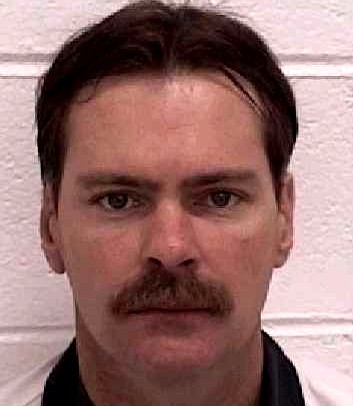 Leonard Drane
Murderer · USA · 1990
Leonard Maurice Drane was convicted in a capital case involving the killing of…
1 victim
Leonard Drane
Murderer · USA · 1990
Leonard Maurice Drane was convicted in a capital case involving the killing of…
1 victim
 David McGreavy
Murderer · United Kingdom · 1973
David McGreavy was born in 1950 or 1951. He was an English convicted murderer w…
3 victims
David McGreavy
Murderer · United Kingdom · 1973
David McGreavy was born in 1950 or 1951. He was an English convicted murderer w…
3 victims
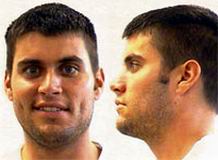 Andrew Paul Witt
Murderer · USA · 2004
Andrew Paul Witt (born 1982) was a former Senior Airman in the United States Ai…
2 victims
Andrew Paul Witt
Murderer · USA · 2004
Andrew Paul Witt (born 1982) was a former Senior Airman in the United States Ai…
2 victims
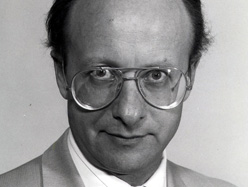 Valery Fabrikant
Mass murderer · Canada · 1992
Valery Fabrikant was a former associate professor of mechanical engineering at…
4 victims
Valery Fabrikant
Mass murderer · Canada · 1992
Valery Fabrikant was a former associate professor of mechanical engineering at…
4 victims
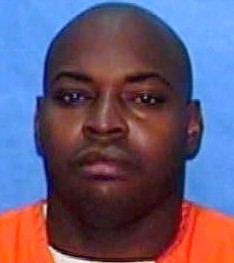 James Eugene Hunter
Murderer · USA · 1992
James Eugene Hunter was sentenced to death on August 18, 1993. The case involve…
1 victim
James Eugene Hunter
Murderer · USA · 1992
James Eugene Hunter was sentenced to death on August 18, 1993. The case involve…
1 victim
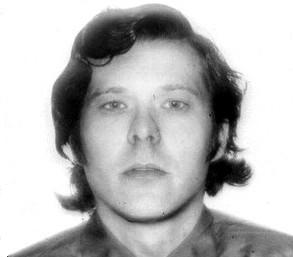 Timothy Charles Palmes
Murderer · USA · 1976
Defendant: Timothy Charles Palmes (also styled Timothy Charles PALMES) Age at e…
1 victim
Timothy Charles Palmes
Murderer · USA · 1976
Defendant: Timothy Charles Palmes (also styled Timothy Charles PALMES) Age at e…
1 victim
- Gender
- male
- Country
- USA
- Location
- Indianapolis, Indiana, USA
- Date of birth
- March 17, 1961
- Age at first offence
- 30
- Characteristics
- robbery
- Victim profile
- Wesley Crandall / Melvin Hillis, 68, and Robert Beeler, 47
- Method of murder
- Shooting
- Date(s) of murder
- February-March 1991
- Years active
- 1991
- Date of arrest
- —
- Status
-
Sentenced to death
Sentenced to death on May 25, 1996; convictions reversed and remanded for a new trial
Other details
Jerry Thompson was convicted of two counts of murder, two counts of felony-murder, two counts of robbery, and carrying a handgun without a license. The handgun used by Thompson was previously owned by Wesley Crandall. Evidence that Thompson was convicted of murdering Crandall in New Castle was admitted at the guilt trial as well as the penalty phase.
Sentencing
Thompson was sentenced to death on May 25, 1996. The sentencing also included a term of years for the other convictions. The aggravating circumstances included robbery, 2 murders, and that Thompson was convicted of another murder. The mitigating circumstances included dysfunctional family and difficult family upbringing.
A Marion Superior Court jury found Thompson guilty again of two counts of Murder, two counts of Felony-Murder, two counts of Robbery and Carrying a Handgun Without a License, and again recommended a death sentence on May 3, 2000. Thompson was again sentenced to death on September 29, 2000.
Appeals
A retrial in Marion County led to Thompson being on direct appeal from his death sentence. The Supreme Court of Indiana case was titled Jerry K. Thompson, Appellant (Defendant below) v. STATE OF INDIANA, Appellee (Plaintiff below), with appeal number 49S00-9507-DP-869, arising from appeal from the Marion Superior Court. The Honorable John R. Barney Jr., Judge was named, with Cause NO. 49G03-9204-CF-60651.
The Supreme Court of Indiana reversed the convictions and remanded for a new trial after concluding that extensive evidence of the prior crime was inadmissible under Indiana Evidence Rules 402, 403, and 404(b) and denied Thompson a fair trial.
Outcome
The convictions and sentence were reversed, and the case was remanded for a new trial.
Aftermath
On October 27, 2002, Thompson was found dead in the recreation area of a cellblock on “X Row” at the Indiana State Prison in Michigan City, Indiana. Thompson suffered several fatal stab wounds.
Timeline
- May 25, 1996 — Sentenced to death
- May 3, 2000 — A Marion County Superior Court jury again recommended a death sentence
- September 29, 2000 — Again sentenced to death
- October 27, 2002 — Found dead in the recreation area of a cellblock on “X Row” at the Indiana State Prison in Michigan City, Indiana
- February 14, 1991 — Wesley Crandall Jr. was shot to death in his home in New Castle, Indiana
- June 1991 — Illinois state police recovered a nine-millimeter handgun from the vehicle after a traffic violation involving Thompson and Douglas Percy
- March 14, 1991 — Melvin Hillis and Robert Beeler were shot to death at Hillis Auto Sales in Indianapolis
- March 1992 — Percy approached Indianapolis police with information about Thompson’s involvement in the killings
The offence
Indianapolis killings
On March 14, 1991, Melvin Hillis and Robert Beeler were shot to death at Hillis Auto Sales in Indianapolis.
Crandall murder (prior murder evidence discussed in the appeal)
On February 14, 1991, one month before the murders in the Indianapolis case, Wesley Crandall Jr.
Percy testified that he and Thompson went to Crandall’s house that day to purchase marijuana and that Thompson assaulted and shot Crandall. Thompson stole several of Crandall’s guns, including one Percy identified at trial as the same handgun recovered in the car search in Illinois in June 1991, and ballistics tests confirmed the weapon used to kill Hillis and Beeler.
Investigation
In June 1991, Thompson and Douglas Percy were driving through Illinois and were stopped for a traffic violation. Illinois state police recovered a nine-millimeter handgun from the vehicle that ballistics tests later determined was the weapon used to kill Hillis and Beeler.
In March 1992, Percy approached Indianapolis police with what he claimed was information about Thompson’s involvement in the killings.
Percy had been charged with altering a vehicle identification number, a felony. That charge was eventually dismissed in exchange for Percy’s testifying about the deaths of Hillis and Beeler.
Trial
A. Voir dire and death penalty information
Before any questioning occurred, the trial court began the voir dire by reading both the charging information and the death penalty information to all prospective jurors. Prospective jurors were informed, verbatim, of the four aggravating circumstances the State had pleaded against Thompson in the death penalty information. One aggravating circumstance was Thompson’s prior conviction of the murder of Wesley Crandall.
Although it was proper to inform prospective jurors of the crimes charged, the trial court erred in advising the jury of the death penalty information before the sentencing phase.
B. Evidence of prior misconduct and contested admissibility
Thompson filed a motion in limine before trial objecting to the admission of any evidence related to Crandall’s death, including the fact of Thompson’s conviction for that murder.
The State indicated it intended to offer evidence related to the Crandall murder to establish Thompson’s identity, and that it might offer evidence of Thompson’s previous felony convictions as rebuttal to attacks on the credibility of witness Douglas Percy, if the attacks opened the door to the use of such evidence.
In a second motion in limine, Thompson argued the evidence was not admissible under the identity exception because the Indianapolis killings and the Crandall murder were not “signature” crimes. Thompson conceded in that motion that the State was entitled to show Thompson had access to or control over the weapon used to commit the murders of Hillis and Beeler, and argued the murder weapon’s access was sufficiently proved by undisputed evidence that the murder weapon was found when Percy and Thompson were stopped by Illinois state police three months after Hillis and Beeler were killed.
The trial court denied Thompson’s motion, ruling that the State could show “how a weapon of the crime was obtained. I don’t think a signature, in quotes, is a required. I don’t think [Rule] 404 precludes the obtaining of the weapon, so the State will be allowed to introduce evidence of the obtaining of the weapon.”
C. Opening arguments and references to Crandall
In the State’s opening argument, the prosecutor outlined the events surrounding the Hillis and Beeler murders, then described the Crandall murder as follows:
“[W]hen [Percy] came forward to the Police he insisted that he needed to tell them about something that happened in New Castle, Indiana. . . . In February of 1991, [Thompson and Percy] went to New Castle, Indiana, to meet a man by the name of Wesley Crandall. Wesley Crandall was a small time marihuana dealer; they went there in a pick-up truck, and Jerry Thompson took his shotgun along. They met Mr. Crandall in his home in New Castle; they conducted their business, and when it came time to leave, they didn’t leave. Instead what happened, was Jerry Thompson took his shotgun and he blew part of Wesley Crandall's head off, and killed him. And, he took Wesley Crandall's money that was there, and the marihuana. And, he took Wesley Crandall's guns. . . . Mr. Thompson was ultimately convicted of the murder of Wesley Crandall in February of 1991.”
The defense opening statement included:
“Who does [the State] say was with Mr. Thompson in New Castle? Douglas Percy. Who does [the State] say was with Jerry Thompson on March 14th of 1991, at Hillis Auto Sales? Douglas Percy. And, who does [the State] say was in Illinois in June of 1991, when [Thompson] was stopped by [Illinois police]? Douglas Percy.”
The defense also said:
“think about what somebody's got to gain when they testify. Far more importantly what somebody has to lose. What does Mr. Percy have to lose? . . . Pay particular attention to Mr. Percy. . . . [W]hen you retire to that Jury Room after evaluating the credibility of Mr. Percy, listening to all the Evidence, you're going to have doubts.”
D. Percy's testimony about the Crandall murder
When Percy began to testify about events surrounding the Crandall murder, the defense objected and renewed its contention that this evidence was irrelevant and inadmissible under Rule 404(b).
The trial court ruled that the State would be allowed “to simply explain presence and then cut it off and let's get on.”
Percy gave the following account. On February 14, 1991, Percy and Thompson went to Crandall’s house to buy marijuana. Percy carried Thompson’s sawed-off shotgun into the residence. While Percy waited nearby in the living room, Thompson and Crandall spoke in the kitchen. On a prearranged signal, Percy gave the gun to Thompson. Thompson knocked Crandall down and stated that he thought he had broken Crandall’s neck. Thompson pointed the gun at Crandall, but it made a “clicking sound” and would not fire. Thompson retrieved a pillow from another room, placed it over Crandall’s head, and fired. Percy testified that Thompson “shot” Crandall. Percy did not see the location of the shot, but assumed that Thompson had shot Crandall in the head.
Thompson and Percy each grabbed a large trash bag and drove back to Indianapolis. Thompson’s bag contained several guns and Percy’s bag contained marijuana and shell casings. In the next few weeks, Thompson used Percy’s garage to grind the serial numbers off weapons taken from Crandall’s residence.
When shown the handgun allegedly used to kill Hillis and Beeler, Percy testified that it “looks like the 'one' [Thompson] always carried,” and that it resembled “one of the guns” that was taken from Crandall’s house. The serial numbers on the handgun were ground off.
In April 1991, Thompson destroyed all the guns taken from Crandall except the handgun, a second gun also admitted in evidence, and a “.22 derringer” that was sold to a third party. Thompson and Percy had the first two guns with them when they were detained by Illinois police in June 1991.
On cross-examination, the defense elicited that Percy had not been charged with any crime related to those events and that his charge for altering a vehicle identification number was dismissed in exchange for his cooperation in the case.
E. Additional witnesses and disputed admissibility
The Supreme Court of Indiana noted that the evidence beyond permissible access included testimony about how Crandall died.
A forensic pathologist testified as to the causes of death of Hillis and Beeler and also performed Wesley Crandall’s autopsy, testifying that Crandall died of a gunshot wound to the head.
A friend of Percy, Mike Featheringill, testified that Percy told him that:
“[Percy] went over to this drug dealer's house, and they were going to purchase some marihuana, and . . . Jerry shot the drug dealer with a shotgun, execution style.”
The Supreme Court of Indiana also described an evidentiary dispute about admission of Thompson’s prior conviction for Crandall’s murder. Over Thompson’s objection, an officer with the New Castle Police Department testified that he attended Thompson’s trial in Henry County for Crandall’s murder, that thirty to forty witnesses were called including Percy, and that the jury convicted Thompson. The charging information, witness list, and verdict form from Henry County were admitted into evidence.
F. Closing arguments and references to Crandall
The State’s closing argument included:
“[I]n the process of telling the Police Department and other Law Enforcement authorities those things that he knew, [Percy] solved 3 murders. On February 14th, 1991, Wesley Crandall, Junior, was murdered in his home in New Castle. Sometime after that 2 retarded men were coerced into admitting that they killed Wesley Crandall, were convicted; they went to prison, and but, for Doug Percy coming forward, they would probably still be there.”
The State also said:
“All of us know Doug Percy is not blameless in this, and at the very least, he assisted Jerry Thompson, after these horrible murders were committed. . . . [T]he Evidence shows that [Percy] did nothing to kill either of those 3 men. He did not break 5'10, 130 pound Wesley Crandall's neck. He didn't stomp on him; he didn't take a shotgun and nearly blow his head off.”
The defense closed by cautioning the jury that:
“the State wants to try and 'bootstrap' the events of February 14th, 1991, into scaring you into convicting Jerry Thompson for the events of March 14th.”
The defense argued:
The defense also described Percy as:
“liar” and argued that Percy’s testimony “has been bought and paid for, a number of ways and as such is suspect.”
In rebuttal, the State replied that:
“The reason it's relevant is because it proves [Thompson's] identity. This [is] the gun that came from there. That's what identifies him with being associated with that gun. Is proof of that conviction in New Castle, proof of his guilt in this case? In and of itself, no. But, the acts that [Thompson] committed up there, as they related to his case are proof of his guilt here; that's the whole reason you were able to hear it.”
The State further suggested:
“[Percy] was scrutinized in New Castle and in Henry County, by that Jury; and they returned a conviction . . . for the killing of the man from whom this gun was taken.”
The State described undoing apparently wrongful convictions of two men as the beginning of a “circle of justice” that could be closed if the jury returned with a conviction.
Other details
The Supreme Court of Indiana noted that it was unnecessary to reach remaining claims of error after reversing the convictions due to trial error in the admission of evidence.
The Supreme Court of Indiana also discussed Double Jeopardy, stating that reversal due to trial error in admission of evidence generally did not bar retrial, but double jeopardy forbids a retrial if evidence is legally insufficient to support the conviction. The Supreme Court concluded that double jeopardy did not preclude retrial because the jury could have convicted Thompson on Percy’s testimony alone and a conviction in a capital case may be based upon uncorroborated testimony of an accomplice.
The Supreme Court concluded:
“The convictions and sentence are reversed. This cause is remanded for a new trial.”

Spotted an error, or have more information about this case?