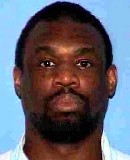
Geoffrey Griffin
Serial killer Glen Edward Rogers
Serial killer · USA · 1993
Glen Edward Rogers was a spree killer whose cross-country rampage in 1994-95 le…
70 victims
Glen Edward Rogers
Serial killer · USA · 1993
Glen Edward Rogers was a spree killer whose cross-country rampage in 1994-95 le…
70 victims
 Ronald Dominique
Serial killer · USA · 1997
Ronald Joseph Dominique (born 1964) was an American serial killer from the Bayo…
23 victims
Ronald Dominique
Serial killer · USA · 1997
Ronald Joseph Dominique (born 1964) was an American serial killer from the Bayo…
23 victims
 Jeremy Jones
Serial killer · USA · 1992
Name: Jeremy Jones · Aliases/identities mentioned: John Paul Chapman · Age (as…
21 victims
Jeremy Jones
Serial killer · USA · 1992
Name: Jeremy Jones · Aliases/identities mentioned: John Paul Chapman · Age (as…
21 victims
 Desmond Jennings
Serial killer · USA · 1993
Desmond Jennings declined to make a last statement. Texas Attorney General John…
20 victims
Desmond Jennings
Serial killer · USA · 1993
Desmond Jennings declined to make a last statement. Texas Attorney General John…
20 victims
 John Eric Armstrong
Serial killer · USA · 1992
John Eric Armstrong was a former USS Nimitz sailor of Dearborn Heights, Michiga…
18 victims
John Eric Armstrong
Serial killer · USA · 1992
John Eric Armstrong was a former USS Nimitz sailor of Dearborn Heights, Michiga…
18 victims
 Maury Troy Travis
Serial killer · USA · 2001
Maury Troy Travis (born October 25, 1965; died June 10, 2002) was an American s…
17 victims
Maury Troy Travis
Serial killer · USA · 2001
Maury Troy Travis (born October 25, 1965; died June 10, 2002) was an American s…
17 victims
 James Allridge
Murderer · USA · 1985
James Vernon Allridge (also written as James Vernon Allridge III) was convicted…
1 victim
James Allridge
Murderer · USA · 1985
James Vernon Allridge (also written as James Vernon Allridge III) was convicted…
1 victim
 Kevin Crump
Murderer · Australia · 1973
Kevin Crump and Allan Baker were convicted of raping and murdering Ian James La…
2 victims
Kevin Crump
Murderer · Australia · 1973
Kevin Crump and Allan Baker were convicted of raping and murdering Ian James La…
2 victims
 Tim Kretschmer
Mass homicide · Germany · 2009
Tim Kretschmer (26 July 1991 – 11 March 2009) was a 17-year-old graduate of the…
15 victims
Tim Kretschmer
Mass homicide · Germany · 2009
Tim Kretschmer (26 July 1991 – 11 March 2009) was a 17-year-old graduate of the…
15 victims
 Jieming Liu
Murderer · USA · 2012
Jieming Liu was a 79-year-old man from Shrewsbury. His wife, Yuee Zhou, was 73…
1 victim
Jieming Liu
Murderer · USA · 2012
Jieming Liu was a 79-year-old man from Shrewsbury. His wife, Yuee Zhou, was 73…
1 victim
 Claude Lastennet
Serial killer · France · 1993
Claude Lastennet (born January 19, 1971 at Brest, France) was a French serial k…
5 victims
Claude Lastennet
Serial killer · France · 1993
Claude Lastennet (born January 19, 1971 at Brest, France) was a French serial k…
5 victims
- Gender
- male
- Country
- USA
- Location
- Chicago, Illinois, USA
- Date of birth
- 1971
- Age at first offence
- 29
- Characteristics
- drug addict, rape
- Victim profile
- Female drug-addicted prostitutes
- Method of murder
- Strangulation / Beating
- Date(s) of murder
- May -June 2000
- Years active
- 2000
- Date of arrest
- June 17, 2000
- Status
-
Imprisoned
Sentenced to 100 years in prison on November 2005
Case identification
Geoffrey Griffin (also referred to as Geoffrey T. Griffin) was convicted of killing Angela Jones and was sentenced to 100 years in prison on November 2005.
Timeline
- August 26, 1995 — Geoffrey Griffin was arrested for Possession of a Controlled Substance.
- June 15, 2000 — Geoffrey Griffin was arrested in the slaying of Angela Jones.
- May 12, 2000 — Angela Jones’s body was discovered.
- A week later (after the June 15, 2000 arrest) — Beverly Burns’s body was not found until a week later.
- November 2005 — Geoffrey T. Griffin was sentenced to 100 years in prison.
Background
Geoffrey Griffin was a suspected serial killer in Chicago. Police labeled him the “Roseland Killer” after he confessed to killing Jones.
Geoffrey Griffin’s trial included evidence connected to multiple killings in the summer of 2000 involving seven women found dead in abandoned buildings. The women were described as participating in activities including prostitution and drug use.
The offence
Angela Jones (convicted killing)
Angela Jones was a 32-year-old mother of seven. Jones was strangled or beaten to death, and police said Griffin was responsible.
Jones’s body was discovered May 12, 2000, in an abandoned building on the 11800 block of South Yale. She was found naked and was strangled to death. DNA evidence of the assailant was recovered from the sexual assault kit.
In the videotape shown at trial, Griffin described how he squeezed Jones’ throat during sex after the two smoked crack cocaine.
Beverly Burns (acquitted killing)
Beverly Burns was described as a 34-year-old woman. Griffin was acquitted of killing Burns.
Burns’s shirt and jacket were spattered with her blood. Judge Fred Suria said he was troubled by a lack of evidence at the crime scene against Griffin and by the fact that there was no blood of the victim at the scene.
Defense attorneys explained that Burns’ blood could have gotten on Griffin when she had a bloody nose when the two were together. The judge said there was no evidence of a bloody struggle in the building where Burns’ body was found.
Burns’s body was not found until a week after Griffin was arrested June 15 in the slaying of Jones. The judge said the body was so badly decomposed that it was impossible to determine when the woman died.
Griffin gave a statement about killing Jones but gave no such statement about Burns.
Seven women killed in summer of 2000
Jones and Burns were among seven women killed in the summer of 2000. The women were found dead in abandoned buildings in the Roseland and Englewood neighborhoods on Chicago’s South Side and in nearby Harvey.
Griffin was charged with strangling or beating to death seven women during the summer of 2000.
Police said Griffin denied involvement in the other women’s deaths at that time, but police said he was responsible even though there was no solid evidence. DNA test results later connected Griffin to each of the seven killings.
Investigation
Lt. Joseph Murphy said DNA test results connected Griffin to each of the seven killings.
Police labeled Griffin the “Roseland Killer” after he confessed to killing Jones.
Geoffrey Griffin was charged in relation to serial killings involving seven women and was described as awaiting trial in the five other killings.
Arrest
Geoffrey Griffin was arrested June 15, 2000, in the slaying of Jones.
Trial
Judge Fred Suria convicted Geoffrey T. Griffin of Chicago of the death of Angela Jones after watching a videotape in which Griffin described how he squeezed Jones’ throat during sex after the two smoked crack cocaine.
Suria acquitted Griffin of killing Beverly Burns, and Suria said he was troubled by the lack of evidence at that crime scene.
Jeanna Burns reacted angrily to the verdict in the slaying of her mother, saying: “I hate you” “I hope you burn in hell.”
During the trial, the defense explained that Burns’ blood could have gotten on Griffin when she had a bloody nose when the two were together.
The judge said there was no evidence of a bloody struggle in the building where Burns’ body was found, and the body was so badly decomposed that it was impossible to determine when the woman died.
The defense argued that without knowing a time of death Griffin could have been in police custody when the woman was killed by someone else.
Sentencing
Geoffrey T. Griffin was sentenced to 100 years in prison for the 2000 strangulation of a woman on the city’s South Side.
He faced up to life in prison for Jones’ killing.
Appeals
No appeals were described.
Outcome
Griffin was convicted of killing Angela Jones and was acquitted of killing Beverly Burns. He was sentenced to 100 years in prison on November 2005.
Other details
- Jeanna Burns was the sister of Angela Jones’s killing of her mother Beverly Burns.
- Geoffrey Griffin had been initially jailed on suspicion of committing the slayings.
- The charges came 17 months after he was initially jailed on suspicion of committing the slayings.
- Griffin was charged two summers ago with first-degree murder in the killing of Angela Jones after he gave police a videotaped confession.
- Griffin was awaiting trial in the five other killings.
- The women were found dead in abandoned buildings in Roseland and Englewood neighborhoods on Chicago’s South Side and in nearby Harvey.
- Geoffrey Griffin was later described as having been charged with eight murders and one aggravated criminal sexual assault.
- In December 1993, Geoffrey Griffin was arrested for Possession of a Controlled Substance (Felony).
- The narrative asserted that if Illinois required him to give a DNA sample after the December 1993 felony arrest, a DNA match could have been obtained with DNA evidence recovered from his first rape, identifying him as the offender and preventing the subsequent eight murders, one rape and one attempted rape.
Rape and attempted rape incidents described in the case narrative
- On July 10, 1998, a 37-year-old woman was raped. She was forced into an abandoned building on the 6700 block of South Halsted. After being raped, she was beat into unconsciousness and left to die. DNA evidence was recovered from a sexual assault kit.
- On February 7, 1999, a 22-year-old woman was raped. She was attacked in an abandoned building on the 10900 block of South Edbrooke. The offender raped her, then beat her in the head with a brick and burned her eyes.
- On June 13, 2000, a 21-year-old woman was attacked. As she was in an abandoned building on the 11900 block of South Wallace, an offender attempted to rape her. She was struck with a knife but escaped.
- The narrative also described multiple murders with DNA evidence recovered from sexual assault kits or fingernail clippings, including incidents on July 11, 1998, May 2, 2000, May 12, 2000, May 17, 2000, June 16, 2000, June 19, 2000, June 22, 2000, and June 27, 2000, with victims’ ages and locations listed in the narrative.
- Geoffrey Griffin was arrested on June 17, 2000 in the case narrative.
- The narrative stated: “The following are 8 preventable murders, 1 rape & 1 attempt rape which would not have occurred had Griffin’s DNA sample been taken on August 26, 1995.”
Spotted an error, or have more information about this case?