
Cynthia Sommer
Justice miscarriage Cynthia George
Justice miscarriage · USA · 2001
Cynthia George was 53 at the time of her release. She faced national media scru…
0 victims
Cynthia George
Justice miscarriage · USA · 2001
Cynthia George was 53 at the time of her release. She faced national media scru…
0 victims
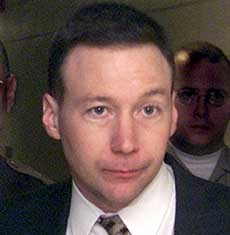 David Camm
Justice miscarriage · USA · 2000
David R. Camm was a former Indiana State Trooper who was acquitted after three…
0 victims
David Camm
Justice miscarriage · USA · 2000
David R. Camm was a former Indiana State Trooper who was acquitted after three…
0 victims
 Olivia Riner
Justice miscarriage · USA · 1991
Olivia Riner was a Swiss au pair accused in the arson death of 3-month-old Kris…
0 victims
Olivia Riner
Justice miscarriage · USA · 1991
Olivia Riner was a Swiss au pair accused in the arson death of 3-month-old Kris…
0 victims
 Nicholas Yarris
Justice miscarriage · USA · 1981
Nicholas Yarris Nicholas Yarris was sentenced to death on January 23, 1983. His…
0 victims
Nicholas Yarris
Justice miscarriage · USA · 1981
Nicholas Yarris Nicholas Yarris was sentenced to death on January 23, 1983. His…
0 victims
 Trupti Patel
Justice miscarriage · United Kingdom · 1997
Trupti Patel was a qualified pharmacist from Berkshire, England. She was born i…
0 victims
Trupti Patel
Justice miscarriage · United Kingdom · 1997
Trupti Patel was a qualified pharmacist from Berkshire, England. She was born i…
0 victims
 Vickie Dawn Jackson
Serial killer · USA · 2000
Vickie Dawn Jackson was a former nurse who received a life sentence after plead…
10 victims
Vickie Dawn Jackson
Serial killer · USA · 2000
Vickie Dawn Jackson was a former nurse who received a life sentence after plead…
10 victims
 Maurice Clemmons
Mass murderer · USA · 2009
Name: Maurice Clemmons · Life dates: February 6, 1972 – December 1, 2009 · Alle…
4 victims
Maurice Clemmons
Mass murderer · USA · 2009
Name: Maurice Clemmons · Life dates: February 6, 1972 – December 1, 2009 · Alle…
4 victims
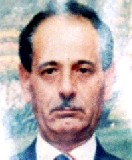 Ali Hassan Abu Kamal
Murderer · USA · 1997
Ali Hassan Abu Kamal opened fire on the observation deck of the Empire State Bu…
1 victim
Ali Hassan Abu Kamal
Murderer · USA · 1997
Ali Hassan Abu Kamal opened fire on the observation deck of the Empire State Bu…
1 victim
 Ronald & Reginald Kray
Murderers · United Kingdom · 1966
Ronald “Ronnie” Kray and Reginald “Reggie” Kray were English gangsters who were…
2 victims
Ronald & Reginald Kray
Murderers · United Kingdom · 1966
Ronald “Ronnie” Kray and Reginald “Reggie” Kray were English gangsters who were…
2 victims
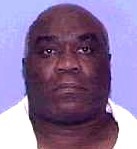 Bill Douglas Gates
Murderer · USA · 1999
Bill Douglas Gates was sentenced to death on February 21, 2001. Gates had a TDC…
1 victim
Bill Douglas Gates
Murderer · USA · 1999
Bill Douglas Gates was sentenced to death on February 21, 2001. Gates had a TDC…
1 victim
 Aubrey Dennis Adams
Murderer · USA · 1978
Aubrey Dennis Adams, Jr. was tried in a Florida court and was convicted of firs…
1 victim
Aubrey Dennis Adams
Murderer · USA · 1978
Aubrey Dennis Adams, Jr. was tried in a Florida court and was convicted of firs…
1 victim
 Filip Kapisoda
Murderer · Serbia · 2010
Filip Kapisoda (3 April 1987 – 16 March 2010) was a Montenegrin male model. He…
1 victim
Filip Kapisoda
Murderer · Serbia · 2010
Filip Kapisoda (3 April 1987 – 16 March 2010) was a Montenegrin male model. He…
1 victim
- Gender
- female
- Country
- USA
- Location
- San Diego, California, USA
- Date of birth
- 1974
- Age at first offence
- 28
- Characteristics
- convicted rapist, torture, poisoner, domestic violence, abuse, rape
- Victim profile
- Marine Sgt. Todd Sommer, 23 (her husband)
- Method of murder
- Poisoning (arsenic)
- Date(s) of murder
- February 18, 2002
- Years active
- 2002
- Date of arrest
- November 30, 2005
- Status
-
Released
Conviction overturned on November 30, 2007; charges dismissed in April 2008; released on April 17, 2008
Case information
Cynthia Sommer was convicted of first-degree murder with the “special circumstances” of murder by poison and murder for financial gain. She was later granted a new trial, and the charges against her were dismissed, leading to her release.
Background
In February 2002, 23-year-old Todd Sommer, a marine, fell ill in San Diego, California, and died a few days later. The death certificate stated the cause of death as a heart attack.
In 2003, the military tested some of Sommer’s tissue preserved from the autopsy and found fatal levels of arsenic in his body—over 1,000 times the normal level in his liver and over 250 times the normal level in his kidneys.
Cynthia Sommer, Todd’s wife, was arrested in Florida in November 2005 and extradited to California in 2006.
The offence
Prosecutors believed Cynthia Sommer poisoned Todd Sommer so she could collect more than $250,000 in insurance benefits and $1,900 per month in survivor benefits.
At trial, prosecutors argued that Cynthia Sommer used her husband’s life insurance to pay for breast implants and pursue a more luxurious lifestyle. Prosecutors also argued she had a motive based on circumstantial evidence, including her financial situation and later spending.
The prosecution’s narrative included that, in the weeks following Todd’s death, Cynthia got breast implants, had sex with several different partners, threw parties, and moved to Florida with a new boyfriend. Prosecutors also pointed out that she made multiple inquiries about money in the hours immediately following her husband’s death.
Defense counsel argued that lab results were suspect and that samples were likely contaminated. The defense presented experts who testified that the samples were likely contaminated.
During the trial, the judge ruled that the prosecution could not present evidence of Cynthia’s behavior after Todd’s death. The defense raised the issue when it introduced evidence presenting Cynthia Sommer as a grieving widow. In response, prosecutors pointed to Cynthia’s post-death behavior, including breast implants, sexual activity, parties, and moving to Florida.
Investigation
A death review panel approach was described in relation to the investigation into Todd Sommer’s death.
NCIS opened an investigation and, initially, found nothing suspicious. Heavy metals testing of Todd Sommer’s tissue samples was ordered, and arsenic levels were later reported as very high in Todd’s tissue, including the liver and kidneys.
Investigators concluded that the high levels indicated homicide rather than natural death.
Arrest
Cynthia Sommer was arrested in Florida in November 2005.
Trial
Conviction and special circumstances
In January 2007, a jury convicted Sommer of first-degree murder with the “special circumstances” of murder by poison and murder for financial gain. The conviction made her eligible for a sentence of life without the possibility of parole.
Cynthia Sommer retained a new attorney after her conviction. A motion for a new trial was filed and pursued issues related to the unreliability of the lab results.
At the trial, defense attorney Robert Udell argued that the prosecution could not show that Cynthia had access to arsenic and that there was no direct evidence linking her to arsenic. The defense expert testimony included that it was inconceivable that Todd Sommer could have died from arsenic poisoning based on symptoms and pathology lacking telltale signs, including incapacitating illness and visible organ damage.
Prosecutors argued that, with no direct evidence, circumstantial evidence showed motive and that she had opportunity and access to poison.
A deputy district attorney named Laura Gunn relied heavily on circumstantial evidence of Sommer’s debts to show motive. It was also asserted that the defendant was the only person with motive and access to poison the marine.
Sentencing setup and pre-sentencing ruling
Formal sentencing was set for March 23 after the January 2007 conviction. The judge had also ordered that evidence of Cynthia’s behavior after Todd’s death could not be presented during the prosecution’s case-in-chief.
In November 2007, before sentencing, the same judge vacated Cynthia’s conviction and granted her a new trial. The judge ruled that by “opening the door” to evidence of her behavior following her husband’s death, her defense attorney had deprived her of a fair trial.
Retrial was set for May 2008.
Evidence and discovery disputes
Sommer’s attorney repeatedly requested that the prosecution produce the other tissues preserved from Todd’s autopsy, but prosecutors insisted that no such evidence existed. In March 2008, after a formal discovery demand, the tissue samples were found.
Testing on the newly found materials, including samples from Todd’s liver and kidneys, were negative for arsenic. The prosecutor later stated that her office had forgotten about the samples.
Appeals
In November 2007, before sentencing, the judge vacated Cynthia’s conviction and granted a new trial because the defense counsel’s actions had deprived her of a fair trial by opening the door to evidence of her post-death behavior.
Sentencing
A life sentence without the possibility of parole had been part of the consequences of the conviction with special circumstances. Formal sentencing was set for March 23; however, the conviction was vacated and a new trial was granted in November 2007 before sentencing.
Outcome
In April 2008, based on new tests showing no arsenic on newly found tissue samples, the prosecution asked the court to dismiss the charges against Sommer.
The charges were dismissed and she was released on April 17, 2008.
Aftermath
After the dismissal, Cynthia Sommer filed a $20 million lawsuit alleging a conspiracy to wrongfully prosecute her. As of August 2011, the case was still pending.
Cynthia Sommer reported that she spent time planning activities after her release, including seeing her children and traveling to Michigan to see her sons.
The San Diego County District Attorney Bonnie Dumanis moved to dismiss murder charges and stated that overlooked evidence and new scientific scrutiny had poked holes in the prosecution’s assertion that she used arsenic to kill Sgt. Todd Sommer.
Cynthia Sommer questioned how prosecutors could sleep at night, stating: “I never lost any hope, faith or anything,” and “You can never give up if you're innocent.”
Her attorney Allen Bloom said the evidence was contaminated and accused the district attorney of “gross negligence.”
Bonnie Dumanis defended her handling of the case, saying: “Justice has been done,” and: “We did what we were supposed to do,” and: “We’re all looking backwards now and second-guessing everything.”
Todd Sommer was in top physical condition when he collapsed and died Feb. 18, 2002, at the couple’s home on the Marine Corps’ Miramar base in San Diego. His death was initially ruled a heart attack, and later tests reported high arsenic levels.
Cynthia Sommer stated she was looking forward to seeing her children, including a 16-year-old daughter and four children with ages stated across the accounts as 8 to 16 and specifically sons ages 8, 12 and 13 in one account.
She stated she would decide how to pay her legal bills and whether to sue the district attorney.
Cynthia Sommer stated that her next court battle involved getting her two younger sons back, who had lived with her brother since her arrest in 2005.
She said she lost custody of all four children when she was arrested for Todd’s murder and later lived with her oldest son and daughter again.
Cynthia Sommer said that she missed Todd and stated: “I love him,” and that her feelings for him had not faded.
Other details
- Married in 1999; the couple had a son.
- Todd Sommer appeared to be in excellent health when he fell ill and died a few days later.
- Todd Sommer’s body was cremated.
- Cynthia Sommer had three children by a previous marriage.
- When arrested, Cynthia Sommer had moved to Florida.
- A forensic accountant named April Riel testified about a trust fund left for Todd Sommer by his father being depleted by Dec. 31, 2002, and about a death gratuity payment in early timeframes after Todd’s death.
- Cynthia Sommer was added as a beneficiary in July 2001.
- A review of the couple’s financial records showed they had been running an $867 monthly deficit in the months leading up to Todd Sommer’s death.
- Rob Terwilliger testified at a preliminary hearing about the initial belief that Todd died from cardiac arrhythmia and the later discovery of high levels of arsenic.
- A prosecutor statement at a press conference after a verdict included: “In the end,” prosecutor Gunn said, “we had strong evidence and we're happy with the result.”
- Another prosecutor statement at a press conference included: Gunn likened the case to a jigsaw puzzle with a 1,000 pieces.
- A defense statement after the verdict included: “I'm deeply disappointed,” defense attorney Robert Udell said after the verdict.
- Defense attorney Udell was quoted saying: “I don't believe Cindy killed Todd.”
- A judge quoted while granting a new trial included: “I'm going to order that Ms. Sommer be allowed to have a new trial.” and: “I'm going to grant a new trial motion.”
- Bloom was quoted about preparing for retrial: “They're not supposed to prosecute a crime where there is no crime, That's what happened here. There was no crime.”
- A prosecution rationale for dismissal included the conclusion that there was reasonable doubt based on no arsenic found in newly tested tissues.
Spotted an error, or have more information about this case?