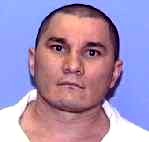
Gilmar Guevara
Murderer Russell Ellwood
Murderer · USA · 1991
Russell Ellwood was a former taxi driver. Authorities suspected him of killing…
20 victims
Russell Ellwood
Murderer · USA · 1991
Russell Ellwood was a former taxi driver. Authorities suspected him of killing…
20 victims
 Robert Martines Perez
Murderer · USA · 1994
Name: Robert Martines Perez · Other name used in proceedings: Robert Martinez P…
15 victims
Robert Martines Perez
Murderer · USA · 1994
Name: Robert Martines Perez · Other name used in proceedings: Robert Martinez P…
15 victims
 Billy Frank Vickers
Murderer · USA · 1993
Billy Frank Vickers Vickers was executed by lethal injection in Texas on Januar…
14 victims
Billy Frank Vickers
Murderer · USA · 1993
Billy Frank Vickers Vickers was executed by lethal injection in Texas on Januar…
14 victims
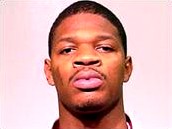 Antonyo Gipson
Murderer · USA · 2006
Defendant: Antonyo Gipson (23), of the 1100 block of North Kedvale Avenue · All…
3 victims
Antonyo Gipson
Murderer · USA · 2006
Defendant: Antonyo Gipson (23), of the 1100 block of North Kedvale Avenue · All…
3 victims
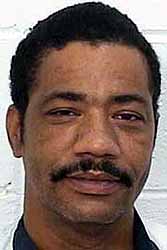 Jose Martinez High
Homicide · USA
Jose Martinez High · July 26, 1976 — Jose High, Nathan Brown and Judson Ruffin…
1 victim
Jose Martinez High
Homicide · USA
Jose Martinez High · July 26, 1976 — Jose High, Nathan Brown and Judson Ruffin…
1 victim
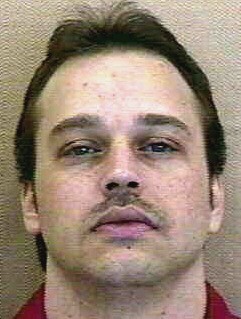 Edward Ernest Hartman
Murderer · USA · 1993
Defendant: Edward Ernest Hartman DOC Number: 0172549 Date of birth: 08/25/1964…
1 victim
Edward Ernest Hartman
Murderer · USA · 1993
Defendant: Edward Ernest Hartman DOC Number: 0172549 Date of birth: 08/25/1964…
1 victim
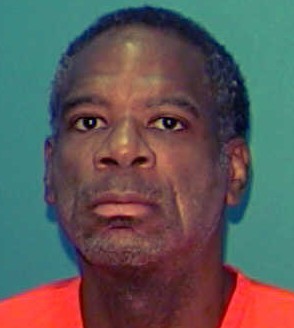 James Belcher
Murderer · USA · 1996
James Belcher was sentenced to death for the murder of Jennifer Embry on 01/08/…
1 victim
James Belcher
Murderer · USA · 1996
James Belcher was sentenced to death for the murder of Jennifer Embry on 01/08/…
1 victim
- Gender
- male
- Country
- USA
- Location
- Harris County, Texas, USA
- Date of birth
- October 5, 1969
- Age at first offence
- 31
- Characteristics
- robbery, murder for hire, attempted rape
- Victim profile
- Tae Youk, 48 and Gerardo Yaxon, 21 ( store employees )
- Method of murder
- S hooting
- Date(s) of murder
- June 2, 2000
- Years active
- 2000
- Date of arrest
- 8 days after
- Status
-
Sentenced to death
Sentenced to death on June 26, 2001
Case details
Gilmar Alexander Guevara was a Hispanic male born on 10/05/1969. He was 31 when he received his death sentence and was 30 at the time of the offense. He had four years of education. His hair color was brown; his height was 5 ft 7 in; his weight was 150; and his eye color was brown. He was from Santa Rosa, and he was from El Salvador. His prior occupation included cook, mechanic, and laborer.
He was sentenced to death by a Texas trial judge on June 26, 2001.
Timeline
- 06/02/2000 — Officers responded to a reported burglary and shots fired at a convenience store on Ranchester Street in Houston; Tae Youk and Gerardo Yaxon were found inside the store, both shot and dead.
- 06/02/2000 — Guevara and two co-defendants attempted to rob a market; a struggle ensued between Guevara and two store employees; Guevara shot and killed both victims.
- 06/10 — Police arrested Guevara in Texas City pursuant to a warrant.
- 09/08/1995 — Guevara was released on shock probation from State Jail confinement for unauthorized use of a motor vehicle.
- 05/05/1994 — Guevara was arrested for unlawfully carrying a weapon.
- 12/19/1994 — Guevara was arrested for driving a stolen vehicle.
- 01/1995 — Guevara was arrested for selling a stolen vehicle to undercover police officers working an auto-theft sting operation.
- 02/11/2000 — Guevara and another masked man robbed Ahmed Fraz and two of his friends.
- 05/20/2000 — A Houston convenience store robbery occurred; ballistics testing connected Guevara to the incident.
- 05 — A jury convicted Guevara of capital murder in May 2001.
- 06/26/2001 — The trial judge sentenced Guevara to death pursuant to the jury’s answers to the special issues.
- 01/15/2003 — The opinion on direct appeal was delivered.
The offence
On June 2, 2000, officers responded to a reported burglary and shots fired at a convenience store on Ranchester Street in Houston. Upon arrival, they discovered the bodies of Tae Youk and Gerardo Yaxon lying inside the store. Both victims had been shot and were dead.
Guevara and two co-defendants attempted to rob a market on that evening. A struggle ensued between Guevara and two store employees. Guevara shot and killed both victims. The victims were described as a 48 year old South Korean male and a 21 year old Guatemalan male. Guevara and the co-defendants fled the scene without taking anything.
Investigation and evidence
Officers arrested Guevara in Texas City on June 10 pursuant to a warrant. Shortly thereafter, they obtained Guevara’s consent to search his Texas City apartment and his vehicle. Officers also obtained Guevara’s wife’s consent to search the apartment.
During the search of Guevara’s car, officers recovered three pullover masks. From Guevara’s apartment, officers recovered a .40-caliber Smith & Wesson pistol, a .380-caliber Bersa pistol, a box of .40-caliber ammunition, and a box of .380-caliber ammunition.
A firearms examiner testified that the Smith & Wesson pistol recovered at Guevara’s apartment fired the bullets recovered at the crime scene. The examiner also testified that the manufacturer who made the .40-caliber ammunition recovered from Guevara’s residence also made the bullets recovered at the crime scene.
DNA samples recovered from one of the masks matched both Guevara’s and one of his co-defendant’s DNA samples.
Guevara subsequently gave an audiotaped statement to the authorities explaining the events on the evening of the murders. In his statement, Guevara said:
“[L]et's go to the store there.”
He stated that he was riding around in his van with some friends that evening when someone said to go to the store. Guevara and two others approached the store to “get the money.” When Guevara first entered the store, one of the store attendants hit him. At that time, one of his co-defendants told him to “shoot, shoot, shoot,” and Guevara shot at the attendant. Guevara claimed that he did not remember how many shots he fired but that he did not want to hurt anyone. Guevara and his accomplices left the store without taking anything.
Trial
Charges and conviction
In May 2001, a jury convicted Guevara of capital murder. The reference given was Tex. Penal Code Ann. § 19.03(a).
Sentencing
Pursuant to the jury’s answers to the special issues set forth in Texas Code of Criminal Procedure Article 37.071, sections 2(b) and 2(e), the trial judge sentenced Guevara to death. Art. 37.071, § 2(g).
Direct appeal to the court was automatic under Art. 37.071, § 2(h).
Issues raised on direct appeal
Guevara raised three points of error. The court affirmed.
Sufficiency of evidence at punishment (Point of error three)
Guevara challenged the sufficiency of the evidence at punishment, claiming that the evidence was legally insufficient to support the jury’s finding that he would be a continuing threat to society. The legal framework described review for whether any rational trier of fact could have believed beyond a reasonable doubt that Guevara would probably commit criminal acts of violence constituting a continuing threat to society.
The court described that the facts of the crime alone could be sufficient to support the affirmative finding, and that other evidence such as prior bad acts and uncharged conduct, prior criminal record, psychiatric evidence, and character evidence may support the finding.
The court stated that evidence presented at trial demonstrated Guevara’s complete disregard for the sanctity of human life. It stated that in his statement to police, Guevara told police that the reason he shot one of the victims was because he was urged to do so by a co-defendant. It stated that the State presented evidence revealing Guevara’s lack of remorse over the murders.
The court described evidence presented during the punishment phase that within hours after committing the instant double homicide, Guevara shot and killed an apartment security guard for the sole purpose of taking his gun.
The court also described prior crimes: on May 5, 1994, Guevara was arrested for unlawfully carrying a weapon; on December 19, 1994, Guevara was arrested for driving a stolen vehicle; and in January 1995, Guevara was arrested for selling a stolen vehicle to undercover police officers working an auto-theft sting operation.
The court also described other incidents presented to show an escalating pattern of violence:
- It stated that on February 11, 2000, Guevara and another masked man robbed Ahmed Fraz and two of his friends. It stated that Fraz said Guevara put a gun to his head and pulled the trigger, but the gun did not discharge. It stated that Guevara then beat him and one of Fraz’s friends with his pistol, causing very serious and permanent injuries to the friend. It stated that Guevara later announced to friends that he had robbed and beat up “some Ghandis [sic].” It stated that Guevara then used a credit card taken from Fraz to purchase items at an adult ware store.
- It stated that ballistics testing connected Guevara to a robbery on May 20, 2000, at a Houston convenience store. It stated that two masked individuals entered the store with guns. It stated that one individual placed his gun to an employee’s head, and the victim heard him chamber a round as if he was getting ready to fire. It stated that the owner distracted the man and the perpetrator advanced toward him. It stated that both assailants opened fire and the owner was shot in the arm.
The court concluded that the facts of the instant case and Guevara’s history permitted a rational jury to conclude he would continue to be a threat to society. It therefore held the evidence legally sufficient to support the jury’s affirmative answer to the future dangerousness issue. Point of error three was overruled.
Motion to suppress (Point of error one)
Guevara argued that the trial court erred in overruling his motion to suppress evidence obtained through a warrantless search of his automobile and apartment. He argued that searches without a warrant are per se unreasonable except for established exceptions, including consent.
He asserted that his consent was not voluntary because he was an immigrant from El Salvador with only a fourth grade education and a limited grasp of the English language, impairing his ability to read and comprehend the consent-to-search form.
The court stated that validity of consent was a question of fact determined from all circumstances. It described standards that required the State to prove consent under a preponderance of the evidence federally, while Texas required clear and convincing evidence.
The court described that the trial judge was the sole and exclusive trier of fact and judge of credibility, and that review applied deference to historical fact findings and de novo review to the application of law.
It summarized the suppression hearing findings. The judge found that Officer Phillip Guerrero assisted in Guevara’s arrest. Guerrero testified that he knew Guevara from the investigation of an unrelated case and knew Guevara spoke both English and Spanish. Guerrero read Guevara his statutory warnings in Spanish and Guevara indicated he understood those warnings. Guerrero gave Guevara a Spanish-language consent-to-search form requesting permission to search Guevara’s vehicle and his apartment. Guerrero explained the form in Spanish and determined that Guevara could read it by having him read the first sentence aloud. Guerrero told Guevara he had the right to refuse consent, and that statement appeared on the form itself. Guerrero testified that Guevara was not threatened or coerced into signing the consent form.
The judge concluded Guevara gave his consent knowingly, freely, and voluntarily to search his vehicle and apartment. The appellate court held that, considering all circumstances and giving deference, the State proved by clear and convincing evidence that Guevara consented to the search of his home and car. Point of error one was overruled.
Victim-impact testimony (Point of error two)
Guevara complained that the trial court reversibly erred in overruling his objection to improper victim-impact testimony at the punishment phase. He specifically complained about testimony of Ahmed Fraz concerning an extraneous aggravated robbery appellant had purportedly committed.
The court summarized Fraz’s testimony. Fraz testified he was with Mohammed Zubair when they were attacked on Club Creek Drive in Houston. During the robbery, one of the robbers struck Zubair in the head with a gun and beat him so badly that his injuries caused mental impairment; as a result, Zubair could no longer work or comprehend what he was doing. The court stated that Fraz could not identify Guevara as a robber because the robbers wore masks, but other evidence including Guevara’s own admissions confirmed that Guevara was the person who beat Zubair.
During questioning, when the prosecutor asked Fraz about personality changes Zubair suffered as a result of the attack, Guevara objected “as to the form of the question.” The judge sustained the objection. The prosecutor asked what Fraz noticed that was different about Zubair after the attack; Guevara objected that Fraz had not been qualified as a medical expert; the judge overruled this objection. Guevara made no other objections to Fraz’s testimony regarding Zubair.
The appellate court held that Guevara failed to preserve any error because the objection at trial did not match the complaint raised on appeal. It also concluded that even if error were preserved, Fraz’s testimony was not of the type characterized as inadmissible extraneous victim impact evidence in the cited authority. Point of error two was overruled.
Opinion publication details
The appellate opinion stated: DELIVERED: January 15, 2003. It also included “PUBLISH.”
Sentencing
Guevara received a death sentence on June 26, 2001 pursuant to the jury’s answers to Texas Code of Criminal Procedure Article 37.071 special issues set forth in sections 2(b) and 2(e), and referenced section 2(g). The direct appeal was automatic under Article 37.071, section 2(h). The appellate court affirmed the judgment of the trial court.
Other details
Case court reference
In the Court of Criminal Appeals of Texas, No. 74,141, Gilmar Alexander Guevara, Appellant v. The State of Texas. The appeal was from Harris Coounty. The court identified the opinion as delivered by Meyers, J., with Keller, P.J., Price, Johnson, Keasler, Hervey, Holcomb, and Cochran, J.J., joined; and Womack, J., concurring.
Victims
The convenience store victims were Tae Youk, described as a 48 year old South Korean male, and Gerardo Yaxon, described as a 21 year old Guatemalan male. Both were found inside the store and were shot and dead.
The extraneous robbery testimony at punishment referred to Ahmed Fraz and his friend Mohammed Zubair. Zubair was struck in the head with a gun and beaten so badly that injuries caused mental impairment; Zubair could no longer work or comprehend what he was doing.
Co-defendants and related persons
Guevara was described as having two co-defendants in the attempted market robbery incident. The court referenced co-defendant DNA matching on one of the masks, and it identified co-defendants as Oscar Diaz and Jose Luis Hernandez. In the punishment-phase discussion of the incident and admissions, the narrative referenced an accomplice/co-defendant urging Guevara to “shoot, shoot, shoot” and urges to shoot.
Guevara’s wife’s consent was obtained to search Guevara’s apartment.
Prior prison record
The record included a prior State Jail confinement for unauthorized use of a motor vehicle. Guevara had State Jail confinement under number #697471 and was released on 09/08/1995 on shock probation.

Spotted an error, or have more information about this case?