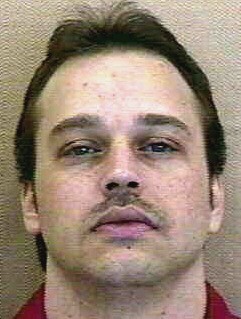
Edward Ernest Hartman
Murderer Brian Kevin Rosenfeld
Murderer · USA · 1985
Brian Kevin Rosenfeld Brian Kevin Rosenfeld was sentenced to three concurrent l…
23 victims
Brian Kevin Rosenfeld
Murderer · USA · 1985
Brian Kevin Rosenfeld Brian Kevin Rosenfeld was sentenced to three concurrent l…
23 victims
 Russell Ellwood
Murderer · USA · 1991
Russell Ellwood was a former taxi driver. Authorities suspected him of killing…
20 victims
Russell Ellwood
Murderer · USA · 1991
Russell Ellwood was a former taxi driver. Authorities suspected him of killing…
20 victims
 Robert Martines Perez
Murderer · USA · 1994
Name: Robert Martines Perez · Other name used in proceedings: Robert Martinez P…
15 victims
Robert Martines Perez
Murderer · USA · 1994
Name: Robert Martines Perez · Other name used in proceedings: Robert Martinez P…
15 victims
 Billy Frank Vickers
Murderer · USA · 1993
Billy Frank Vickers Vickers was executed by lethal injection in Texas on Januar…
14 victims
Billy Frank Vickers
Murderer · USA · 1993
Billy Frank Vickers Vickers was executed by lethal injection in Texas on Januar…
14 victims
 Leroy Drayton
Murderer · USA · 1984
Leroy Joseph "Ricky" Drayton was executed by lethal injection in South Carolina…
1 victim
Leroy Drayton
Murderer · USA · 1984
Leroy Joseph "Ricky" Drayton was executed by lethal injection in South Carolina…
1 victim
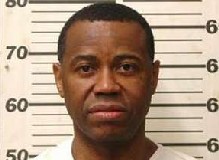 Henry Lee Jones
Murderer · USA · 2003
Henry Lee “Bam” Jones grew up without a father in Cleveland, Miss. He grew up w…
4 victims
Henry Lee Jones
Murderer · USA · 2003
Henry Lee “Bam” Jones grew up without a father in Cleveland, Miss. He grew up w…
4 victims
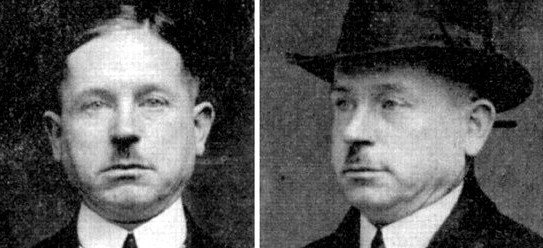 Peter Kürten
Serial killer · Germany · 1913
Peter Kürten Peter Kürten was convicted of nine murders and sentenced to death.…
9 victims
Peter Kürten
Serial killer · Germany · 1913
Peter Kürten Peter Kürten was convicted of nine murders and sentenced to death.…
9 victims
 Anthony & Damian Clemente
Murderers · USA · 1995
November 6, 1995 — Anthony and Damian went to the 99 Restaurant; Anthony used a…
4 victims
Anthony & Damian Clemente
Murderers · USA · 1995
November 6, 1995 — Anthony and Damian went to the 99 Restaurant; Anthony used a…
4 victims
 Erica Lynn Orta
Murderer · USA · 2004
Erica Lynn Orta pleaded guilty to murdering her mother, Diane Acton, in Defianc…
1 victim
Erica Lynn Orta
Murderer · USA · 2004
Erica Lynn Orta pleaded guilty to murdering her mother, Diane Acton, in Defianc…
1 victim
- Gender
- male
- Country
- USA
- Location
- Northampton County, North Carolina, USA
- Date of birth
- August 25, 1964
- Age at first offence
- 29
- Characteristics
- alcohol, armed robbery, rape, robbery
- Victim profile
- Herman Smith, Jr., 77 ( former boyfriend of Hartman's mother )
- Method of murder
- Shooting
- Date(s) of murder
- June 3, 1993
- Years active
- 1993
- Date of arrest
- June 24, 1993
- Status
-
Executed
Executed by lethal injection in North Carolina in October 3, 2003
Case information
Defendant: Edward Ernest Hartman DOC Number: 0172549 Date of birth: 08/25/1964 Sex: Male Race: White
Timeline
- June 3, 1993 — Hartman shot Herman Smith, Sr. at close range in the back of the head while Mr. Smith was sitting in his recliner watching television.
- May 4, 1994 — A motions hearing occurred; the State made clear it sought to convict Hartman of first degree murder on a theory of premeditation and sought the death penalty based on an aggravating factor, namely that the murder was committed during the course of a robbery.
- October 20, 1994 — Hartman was sentenced to death in Northampton County Superior Court for the murder of Herman Smith Jr.; Hartman received a 40-year concurrent sentence for armed robbery.
- January 13, 1995 — Judgment was entered on the robbery conviction; the trial court imposed a sentence of forty years’ imprisonment to run consecutive to the sentence of death for the first-degree murder conviction.
- October 14, 1999 — Hartman filed a federal habeas action.
- January 29, 2002 — Execution scheduled for 2 a.m. Feb. 28 at Central Prison in Raleigh; Hartman was scheduled for execution next month.
- January 25, 2002 — The case was argued in the United States Court of Appeals for the Fourth Circuit.
- March 5, 2002 — The Fourth Circuit decided the appeal and affirmed the denial of habeas relief.
- 1/29/03 — Correction Secretary Theodis Beck set Edward Hartman’s execution date for Feb. 28, 2003.
- 2/6/03 — Northampton County Superior Court Judge Cy Grant issued an execution stay for Edward Hartman while the State Supreme Court considered whether murder indictments must include the “aggravating circumstances” that elevate first-degree murder to a capital offense.
- 1/13/03 — US Supreme Court denied Hartman’s petition for a writ of certiorari.
- 2/6/03 — Northampton County Superior Court Judge Cy Grant issued an execution stay.
- February 28, 2003 — An execution date was set for Edward Hartman.
- September 4, 2003 — Correction Secretary Theodis Beck set Friday, Oct. 3, 2003 as the execution date.
- Oct. 3, 2003 — Hartman was executed by lethal injection; he was pronounced dead at 2:14 a.m.
Background
Hartman was living at Herman Smith’s house at the time of the murder. Smith was described as Hartman’s mother’s former boyfriend. Hartman told a friend Smith was wealthy and carried thousands of dollars in his pocket.
During the trial and capital sentencing proceeding, defense evidence addressed Hartman’s psychiatric and alcohol-related issues and history of sexual abuse. Hartman maintained he was unfairly treated during his trial because the prosecutor repeatedly referred to his homosexuality. Hartman’s last meal was Greek salad, linguini with clam sauce, garlic bread, cheesecake with cherry topping and a Coke. Hartman issued no final statement.
The offence
On June 3, 1993, Hartman shot Herman Smith, Sr.
In his second statement to police after arrest, Hartman stated that on Thursday, 3 June 1993, he was working in the yard and drinking beer all afternoon, that at approximately 11:00 p.m. Smith was sitting in a recliner watching the news, and that Hartman was about five to six feet behind him with the loaded revolver. Hartman described:
“Herman was sitting in a recliner in the den. I picked the gun up off the table, walked up behind Herman, pointed the gun at the back of Herman's head. The sight of blood makes me sick so I turned my head and at very close range, pulled the trigger and shot Herman Smith in the back of the head.”
Hartman stated that he considered and decided against calling his mother or the police, gathered the gun, remaining beer, a change of clothes, his dog, and Smith’s car keys, and left Smith’s body in the recliner, then drove in Smith’s car to his mother’s house in Norfolk, Virginia, for one day.
Investigation
Beginning on Saturday, 8 June 1993, Smith’s relatives could not get in touch with him and became concerned. On 10 June 1993, SBI Agent Malcolm McLeod found in a trash can in Hartman’s home a ripped-up personal check of Smith and a piece of paper on which Smith’s name was written several times where Hartman had apparently practiced Smith’s signature in order to forge Smith’s name on his personal checks.
Agent Dennis Honeycutt, SBI crime technician, processed Smith’s residence. A luminal test revealed an uninterrupted blood line running from the recliner in the den out a side door towards the backyard. Smith’s body was recovered from the grave in the stables in the backyard.
SBI Agent Jennifer Elwell, a forensic serologist, testified that she examined the gun recovered from under Smith’s car seat after Hartman was arrested. When she wiped the inside of the gun barrel, she found a positive reaction for blood.
Dr. Marcella F. Fierro, a professor of pathology at East Carolina University, performed an autopsy and concluded that the contact gunshot wound to the back of Smith’s head was the cause of Smith’s death.
Arrest and police statements
Hartman was arrested for Smith’s murder on 24 June 1993. Hartman gave two statements to police after his arrest. In the first statement, Hartman indicated Smith’s death was the result of an accidental shooting. Hartman later recanted that statement and confessed in a second statement to murdering Smith.
Hartman later led officers to the burial spot after being identified as a suspect.
Offender’s conduct after the killing
After the killing, Hartman left the body in the recliner and took Smith’s car. After about five days, Hartman took the body to a stable and buried it. In the second statement, Hartman stated that on Saturday, 5 June 1993, Smith’s body was still in the recliner when he returned home, and that he went to Roanoke Rapids, North Carolina, to play bingo.
On three separate occasions between Saturday, 5 June 1993, and Tuesday, 8 June 1993, Hartman used Smith’s personal checks to write checks to himself. He cashed three checks in the amount of $50.00 each at the bingo site and attempted to cash one for $2,500 at a bank, but the teller refused after the signature did not match the signature on file at the bank.
On Tuesday, 8 June 1993, Hartman awoke at 3:00 a.m. to the smell of Smith’s body, which was still in the recliner. He dug a hole in the stables in the backyard, covered Smith’s body in a blanket, dragged it out to the hole, and buried him.
Before he buried the body, Hartman removed a diamond ring from Smith’s hand because Hartman said he “did not have any money.”
Hartman drove Smith’s car back to Norfolk, Virginia. On 9 June 1993, Hartman drove to Augusta, Georgia, to visit friends. Friends testified that Hartman drove Smith’s car to Georgia and tried to sell items belonging to Smith, including the diamond ring, the car, a shotgun, and the .38-caliber pistol with which Hartman shot Smith.
Friends in Augusta testified they saw Hartman with Smith’s television, VCR, leather jacket, and “a large ... lump of money.”
On Monday, 14 June 1993, Hartman returned to Norfolk, where he pawned Smith’s ring.
Trial
Charges and verdict
Hartman was indicted for first-degree murder and armed robbery and was tried capitally.
The state presented evidence tending to show that Hartman and Smith became acquainted through Hartman’s mother, Dot Simpson, who had lived with and cared for Smith some years earlier in Virginia and then later in Northampton County, North Carolina. One year prior to the murder, after Ms. Simpson moved back to Virginia, Hartman moved in with Smith.
The trial court and jury found Hartman guilty of:
- first-degree murder based upon premeditation and deliberation and under the felony murder rule with robbery as the underlying felony; and
- robbery with a firearm.
In addition, the trial court entered a prayer for judgment continued with respect to the robbery conviction, and later judgment was entered on the robbery conviction.
Capital sentencing proceeding
Following a capital sentencing proceeding pursuant to N.C.G.S. § 15A-2000, the jury recommended a sentence of death for the first-degree murder conviction, and the trial court sentenced Hartman accordingly.
The jury recommended death for first-degree murder; the robbery sentence was imposed as a forty-year imprisonment term.
Prosecution’s references to homosexuality and jury instructions
During jury selection, the prosecutor asked the first twelve veniremembers whether “the sexual persuasion of someone[ ] would ... have any bearing upon [their] decision in this case.” Defendant immediately objected, and the trial court sustained the objection.
During cross-examination of defendant’s aunt, the prosecutor had her clarify her earlier response on direct examination concerning her knowledge of defendant’s sexual abuse as a child. She testified that she had heard about the abuse but that she herself had no direct knowledge of it. The prosecutor then asked, “Well, you knew that Mr. Hartman is a homosexual. You've heard that.” Defendant objected; the trial court sustained the objection and instructed the jury to disregard the improper statement.
Then the prosecutor asked, “Did you know what sexual persuasion the defendant was?” Again, defense counsel objected, and the trial court sustained the objection.
Hartman contended he was entitled to a new sentencing hearing because the prosecutor sought to inflame the jurors by bringing before them Hartman’s purported homosexuality to undercut evidence of Hartman’s sexual abuse. The assignment of error was overruled.
Sentencing
Hartman was sentenced to death on October 20, 1994 in Northampton County Superior Court for the murder of Herman Smith Jr.
Hartman also was sentenced to forty years’ imprisonment for armed robbery. The sentence ran consecutive to the sentence of death for the first-degree murder conviction.
Appeals and post-conviction
State appeal (North Carolina Supreme Court)
State v. Hartman, 476 S.E.2d 328 (N.C. 1996) (Direct Appeal) included findings and holdings that:
- the judge’s ex parte conversation with prospective juror was harmless error;
- denial of challenge for cause was not abuse of discretion;
- the judge did not improperly express his opinion to jury;
- statutory mitigating instructions that were combined in the conjunctive were proper;
- Hartman’s proposed nonstatutory mitigating circumstances were subsumed in given instructions or not supported by evidence;
- Hartman was not entitled to instruction on lesser included offense of larceny;
- the mitigating instruction on mental disturbance that included conjunctive was proper;
- victim’s age was an aggravating factor; and
- the death sentence was not disproportionate.
Federal habeas and Fourth Circuit
The Fourth Circuit affirmed the denial of Hartman’s federal habeas corpus petition. The Fourth Circuit concluded its rejection of the short-form indictment notice claim was neither contrary to nor an unreasonable application of clearly established federal law as determined by the Supreme Court of the United States.
The Fourth Circuit described that Hartman contended his constitutional right to adequate notice of the charges violated by use of a short-form indictment, and that under North Carolina law first and second degree murder comprised different essential elements.
The Fourth Circuit concluded that under North Carolina law, first and second degree murder were not distinct crimes, but variations of common law murder; therefore the Due Process Clause did not require the factors distinguishing degrees to be alleged in the indictment.
The Fourth Circuit affirmed: “AFFIRMED.”
U.S. Supreme Court
Hartman’s petition for a writ of certiorari was denied on 1/13/03.
Execution stays and execution dates
- 28, 2003**.
- 2/6/03 — Northampton County Superior Court Judge Cy Grant issued an execution stay while the State Supreme Court considered whether murder indictments must include “the ‘aggravating circumstances’ that elevate first-degree murder to a capital offense.”
- September 4, 2003 — Theodis Beck set Friday, Oct. 3, 2003 as the execution date.
Outcome
Edward Hartman was executed by lethal injection in North Carolina on October 3, 2003. Hartman was pronounced dead at 2:14 a.m.
Aftermath and prison/last meal details
Hartman met with his lawyers on Thursday prior to the execution.
Hartman’s final meal was Greek salad, linguini with clam sauce, garlic bread, cheesecake with cherry topping and a Coke.
Hartman issued no final statement before his execution.
He was described as turning to greet one of his lawyers and then turning back to stare at the ceiling of the death chamber, before prison medical workers began to administer lethal drugs at 2 a.m.
None of Hartman’s family witnessed the execution. Larry Smith, Herman Smith’s son, watched stoically, and witnesses declined to comment after Hartman’s death.
Department of Correction spokeswoman Pam Walker stated Hartman was pronounced dead at 2:14 a.m.
Other details
Victim details and circumstances
Herman Smith, Sr. was described as 77 years old at the time of the murder. The trial description said Smith was in poor health, weighed ninety-three pounds, and was suffering from emphysema.
The murder occurred in Northampton County.
Hartman’s motive was described as robbery in the appellate discussion.
Hartman’s age statements across proceedings
Hartman was described in multiple places as 38, 39, and as “twenty-eight-year-old” at the time of the offense in the appellate narrative; the case record also listed his date of birth as 08/25/1964.
Prosecution and defense positions on mitigation
The state’s lawyers maintained that the jury did not consider Hartman’s childhood abuse as a mitigating factor because there was not credible evidence of it.
Hartman’s defense lawyers argued Hartman had various psychological and alcohol related problems and had been a victim of sexual abuse. They argued he was targeted for death because he was gay.
Statements attributed in the trial record
At a motions hearing context within the Fourth Circuit discussion, the State made clear it sought to convict Hartman of first degree murder on a theory of premeditation and that it intended to seek the death penalty based on at least one aggravating factor, “namely that the murder was committed during the course of a robbery.”
During sentencing proceedings, a prosecutor asked during testimony by an aunt: “Well, you knew that Mr. Hartman is a homosexual. You've heard that?” The trial court sustained objections and instructed the jury to disregard improper statements.

Spotted an error, or have more information about this case?