Priscilla Biggadike
Murderer Margaret Waters
Murderer · United Kingdom · 1866
Margaret Waters was an English murderess who was hanged by executioner William…
19 victims
Margaret Waters
Murderer · United Kingdom · 1866
Margaret Waters was an English murderess who was hanged by executioner William…
19 victims
 Christiana Edmunds
Murderer · United Kingdom · 1871
Christiana Edmunds (3 October 1828–1907) was an Englishwoman known as The Choco…
1 victim
Christiana Edmunds
Murderer · United Kingdom · 1871
Christiana Edmunds (3 October 1828–1907) was an Englishwoman known as The Choco…
1 victim
 Frances Kidder
Murderer · United Kingdom · 1867
Frances Kidder (c. 1843 – 2 April 1868) was executed by hanging in front of Mai…
1 victim
Frances Kidder
Murderer · United Kingdom · 1867
Frances Kidder (c. 1843 – 2 April 1868) was executed by hanging in front of Mai…
1 victim
 Marguerite Dixblanc
Murderer · United Kingdom · 1872
Marguerite Dixblanc was a Belgian cook. She entered the Park Lane household of…
1 victim
Marguerite Dixblanc
Murderer · United Kingdom · 1872
Marguerite Dixblanc was a Belgian cook. She entered the Park Lane household of…
1 victim
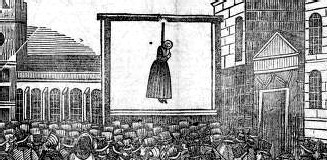 Catherine Wilson
Murderer · United Kingdom · 1854
Catherine Wilson was a British nurse who poisoned victims after befriending the…
7 victims
Catherine Wilson
Murderer · United Kingdom · 1854
Catherine Wilson was a British nurse who poisoned victims after befriending the…
7 victims
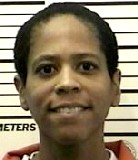 Malaika Griffin
Murderer · USA · 1999
May 11, 1971 — Malaika Tamu Griffin was born. · May 18, 1999 — Malaika Griffin…
1 victim
Malaika Griffin
Murderer · USA · 1999
May 11, 1971 — Malaika Tamu Griffin was born. · May 18, 1999 — Malaika Griffin…
1 victim
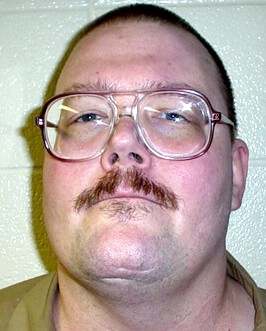 Gregory Scott Johnson
Murderer · USA · 1985
Gregory Scott Johnson was scheduled to be executed by lethal injection at the I…
1 victim
Gregory Scott Johnson
Murderer · USA · 1985
Gregory Scott Johnson was scheduled to be executed by lethal injection at the I…
1 victim
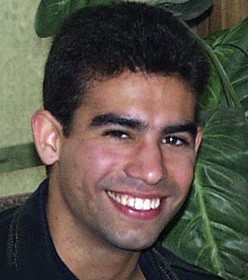 Ricky Rodriguez
Murderer · USA · 2005
Ricky Rodriguez committed suicide by shooting himself the same day. Ricky Rodri…
1 victim
Ricky Rodriguez
Murderer · USA · 2005
Ricky Rodriguez committed suicide by shooting himself the same day. Ricky Rodri…
1 victim
 Angel Serna
Murderer · USA · 1947
Angel Serna was executed by asphyxiation-gas in Arizona on July 29, 1950. Angel…
1 victim
Angel Serna
Murderer · USA · 1947
Angel Serna was executed by asphyxiation-gas in Arizona on July 29, 1950. Angel…
1 victim
 Marvallous Keene
Murderer · USA · 1992
Marvallous Keene was a Black male executed by lethal injection in Ohio on July…
5 victims
Marvallous Keene
Murderer · USA · 1992
Marvallous Keene was a Black male executed by lethal injection in Ohio on July…
5 victims
- Gender
- female
- Country
- United Kingdom
- Location
- Lincolnshire, England, United Kingdom
- Date of birth
- 1833
- Age at first offence
- 35
- Characteristics
- parricide, poisoner
- Victim profile
- Richard Biggadike, 35 (her husband)
- Method of murder
- Poisoning (arsenic)
- Date(s) of murder
- September 30, 1868
- Years active
- 1868
- Date of arrest
- October 11, 1868
- Status
-
Executed
Executed by hanging at Lincoln on December 28, 1868
Case record: Priscilla Biggadike
Background
Priscilla Biggadike was the wife of Richard Biggadike. She lived with her husband, their three children, and two lodgers in a two-room hovel in the small Lincolnshire village of Stickney. Richard Biggadike was a labourer and described as a labourer in the prime of life. He was about thirty-five years old, and the prison reporting later described his age as about 35 years and also about 30 years of age. Priscilla was described as about thirty-one years old and also as 29 and as aged thirty-nine in later coverage.
The lodgers were George Ironmonger and Thomas Proctor. George Ironmonger was described as a fisherman aged about twenty-one and also as young men lodgers with him and Thomas Proctor. Thomas Proctor was described as a rat-catcher and also as a labourer. He was described as thirty years old. Proctor was described as “very repugnant” and also as having a very repugnant countenance. One description stated that Proctor’s countenance was “very repugnant” and included a description of his appearance and physical features.
Richard Biggadike and Priscilla argued constantly for some time, with quarrels becoming fierce and very frequent. The dispute was ongoing. Jealousy arose from suspicions and then exasperation after Richard became suspicious, jealous, and finally exasperated. It was alleged that Priscilla had an affair with one of the lodgers, and it was reported that Proctor may even have been responsible for the youngest of the Biggadike brood.
The offence
Richard Biggadike died after taking tea that included short cakes and mutton. On Wednesday afternoon, September 30, 1868, Priscilla, Thomas Proctor, and George Ironmonger sat down to tea and cakes. A cake was saved for Richard, and he ate it when he returned home around six o’clock. Within minutes Richard was seized with sickness and purging, with symptoms of poisoning. He died about twelve hours later and was dead by the following morning.
An autopsy and later post-mortem examination established that death was caused by arsenic, described as an irritant poison, and that there was “not the slightest doubt” that death had been caused by arsenic. The jury was later told that accidental or suicidal death was quite out of the question.
Investigation
Dr Maxwell was sent for. Dr Maxwell made a post mortem examination and expressed a suspicion of foul play, and he expressed that death had been caused by an irritant poison. At the inquest he expressed an opinion that the death had been caused by an irritant poison, and the coroner ordered the stomach contents to be sent to Doctor A. S. Taylor and the inquest adjourned.
Professor Taylor was described as Professor of Medical Jurisprudence at Guys Hospital and a fellow of the College of Physicians. He deposed at the inquest that on Tuesday 6th October he received certain jars from Supt. Wright containing the contents of the stomach of Richard Biggadike, and he put in his report. The report was read and terminated by stating that there was “not the slightest doubt deceased had died through the administration of Arsenic.”
In testimony, Professor Taylor said that he had no doubt in his own mind that death was caused by arsenic, and he explained that it was “impossible to state what the arsenic was taken in” because it always mixes with whatever is in the stomach. He also described the timing as an average time from eleven to twelve hours and said the case was “so perfectly clear” that portions of the arsenic were found even in its perfect state. The court heard that there was enough arsenic left in the body to destroy the life of another person.
The case included witness evidence about prior knowledge or remarks concerning poison and quarrels. Eliza Fenwick deposed that she had remarked that “mice had eaten a hole in my dour bag” and that Priscilla replied, “if you like I will give you a little white mercury to kill the mice”. Eliza Fenwick also described that she once heard Biggadike and his wife quarrelling and that on Friday 2nd Oct she went to see Biggadike. She described Priscilla’s statements to Proctor and to Mr Biggadike that included the words “mind what yah say.” and Priscilla’s reply, “Do yah think I’m a fool and knows note (sic)?: don’t tell me more than I know”.
Mary Ann Clark deposed that on Wednesday night, September 30, about seven o’clock, she heard a noise in Biggadike’s house as of several people talking and that Proctor sat against the door. She asked what was the matter and Proctor replied: “Dicks took very bad since he got his tea.” She described going back in the morning at quarter-past six and Proctor calling her in saying: “will you come, Dicks dying.” She said she picked up a tea cup and asked what it was laid on the floor for. Priscilla replied that Biggadike had thrown it at her. Mary Ann Clark said Priscilla also said that while ill Biggadike had knocked her backwards.
Jane Ironmonger deposed that on Monday, September 28, Priscilla came into her house and began to tell her that one of their dogs was poisoned last winter and then asked how those Garners got on about their poisoning. Jane Ironmonger reported that Priscilla replied that she thought they were transported and that the police and doctors, she understood, could not find poison in the meal or sago. Jane Ironmonger also reported hearing that Biggadike told her he could not either read or write. Jane Ironmonger stated that she had heard Mrs Biggadike say she wished her husband would be brought home dead and stiff.
There were also statements made by Priscilla while she was in custody. John Yarr Phillips, governor of the House of Correction, Spilsby, testified. He said that on the 15th October, Priscilla Biggadike, in his custody, applied to see him and said she wished to make some statement and tell him all about her husband’s death. He cautioned her that whatever she said would be obliged to be taken down and produced against her at the inquest and in her trial.
Priscilla then made a statement described in the testimony. The statement included: Priscilla said she was standing against the tea-table and saw Thomas Proctor put a white powder of some sort into a tea-cup and then pour milk into it, and Richard Biggadike came into the room and sat down, and she then poured his tea out and he drank it and additional milk besides that. She said half-an-hour afterward he was taken ill, he went out of doors, was sick, came in, sat a few minutes, then went out again and was sick again, and then went to bed, and he asked her to send for the doctor. She said the doctor was an hour before he came, and she went to the doctor’s about a quarter of an hour after he left. She described being instructed how to give medicine to Richard, and she described putting mustard plaster on the stomach. She said Proctor was then asked to go upstairs and sit with her husband. She then said that when she went upstairs she saw Proctor putting some white powder into the medicine bottle with a spoon and that he left downstairs, leaving her in the room with her husband. She then said she poured some medicine into the cup and gave it to her husband, and she tasted it herself. She said she was sick about an hour afterwards and was sick for two days. She stated that “What I have just stated about the medicine took place about two o’clock in the morning, and after the doctor had gone.” She said she wished to send a copy of what she said to the Coroner and to be present at the inquest to state the case before them, “as it is the truth.” The statement was signed: “Priscilla Biggadike X her mark.”
At the same time, Supt. Wright of Spilsby gave deposition about receiving and handling jars and bottles sealed and delivered to Dr Taylor at Guy’s Hospital. He also described apprehending Priscilla and charging her with wilfully murdering her own husband and said he cautioned her strongly not to incriminate herself. He described her reply as: “It’s hard work I should bear all the blame, I am innocent.” He described transportation from Spilsby and that near the railway station the last train was not in yet. He said Priscilla replied: “I was not thinking about the trains, I was thinking what I should say that I haven’t yet.” Supt. Wright stated Priscilla said she had found a piece of paper in his pocket stating that he had done it himself, and that the reason was stated as being “he was so much in debt.” Supt. Wright said he understood that her husband could neither read nor write, and Priscilla replied: “No, some one must have done it for him, he could not write himself.” Supt. Wright asked what he had done with the paper and Priscilla replied: “I have burn’t it, will you tell the gentlemen?” He said he apprehended Proctor and charged him with murder and described Proctor’s reply: “I am innocent. I know no more about it than I stated at the inquest.”
Arrest
Supt. Wright testified that on the 3rd he apprehended the female prisoner and charged her with wilfully murdering her own husband. He also apprehended Proctor and charged him with the murder.
Trial
After the inquest, Priscilla Biggadike and Thomas Proctor underwent an examination before the Revs. D Rawnsley and T. H. Lister, with Captain Bicknall present and an immense crowd in the school-room. The evidence was described as exceedingly voluminous but in substance the same as appeared above. Both prisoners were then formally committed for trial at the next Lincoln Assizes on a charge of wilfully murdering Richard Biggadike.
The trial took place at the Winter Assizes at Lincoln. Priscilla was tried alone after Proctor was discharged by the judge, Justice Byles. The judge told the jury they could discharge Proctor and this was done. Priscilla faced trial alone.
In the sentencing coverage from the Winter Assizes, the prosecution counsel and defence counsel were named: Mr Bristowe and Mr Horace Smith appeared for the prosecution, and Mr Lawrence defended the prisoner. Mr Bristowe detailed facts and circumstances and revealed a depth of moral depravity and social degradation. Mr Lawrence made an address appealing to the jury. The judge summed up carefully and patiently, and the jury returned a verdict of guilty with a recommendation to mercy. The foreman was perplexed when asked on what grounds and then consulted briefly again before answering that the only grounds were that the evidence was entirely circumstantial.
The clerk of the assigns asked Priscilla what she had to say why sentence of death should not be passed upon her. The report said she made no reply, and that tears fell down her cheeks.
The trial judge addressed Priscilla. The judge said:
“Priscilla Biggadike, altho’ the evidence against you is only circumstantial, yet more satisfactory, and conclusive evidence I never heard in my life. You must now prepare for your impending fate, by attending to the religious instruction you will receive, to which if you had given heed before, you would never have stood in your present unhappy position. The sentence of the court is that you will be taken to the place from whence you came, and thence to the place of execution, there to be hanged by the neck until you be dead, and may the Lord have mercy upon your soul! Your body to be buried within the precincts of the prison.”
The report stated the trial lasted 7 hours and Priscilla walked firmly away from the dock.
A report also stated that in December the pair appeared before the Winter Assizes at Lincoln, that the judge, Justice Byles, told the jury they could discharge Proctor, and that this was done and Priscilla faced trial alone. It said the jury took only a few minutes to return a guilty verdict and that Priscilla was sentenced to death. Another section reported that after conviction the jury took only a few minutes to return a guilty verdict and she was sentenced to death.
A further report included the accusation and details of the meal and death, and stated that evidence had arisen since the murder to prove she had arsenic in her possession fully three or four months ago. It stated that Richard returned from daily toil in the perfect enjoyment of health only a few minutes before he was suddenly taken ill immediately after tea on Wednesday evening, the 30th of September. It said he died at six o’clock the following morning after enduring 11 hours’ pain of the most agonising description.
Sentencing
Priscilla Biggadike was sentenced to death. The sentence stated she would be taken to the place from whence she came, and thence to the place of execution, there to be hanged by the neck until she be dead, and that her body would be buried within the precincts of the prison.
Appeals
The material did not describe any appeal.
Outcome
Priscilla Biggadike was executed by hanging. The execution occurred at Lincoln on December 28, 1868. She was hanged at 9.00 a.m. on Monday, the 28th of December, 1868, at Lincoln.
At the execution, she ascended the steps to the platform where she said: “Surely all my troubles are over” and “Shame on you, you are not going to hang me.” The executioner was Thomas Askern. The report said she died hard and struggled violently for several minutes after the drop fell and eventually succumbed.
Another report stated she was pinioned by Askerne at a quarter to nine, and although she fainted she immediately recovered. The procession left the Castle five minutes afterwards and proceeded to the drop erected on the east side of the Crown Court, a distance of 200 yards from the prison door.
In the final minutes, the chaplain asked her whether she still persisted in the declaration of innocence, and she replied “I had not, Sir.” Another block recorded a longer exchange between the chaplain and the prisoner. The chaplain addressed her:
“I have spent half an hour with you this morning in endeavouring to impress upon you a proper sense of your condition, for you are about to pass from this world into another, and to stand before God, to whom the secrets of all hearts are known. I implore you not to pass away without confessing all your sins, not only generally, but especially this particular one for which you are about to suffer. I had hoped that you would have made that confession, and thus have enabled me, as a minister of Christ, to have pronounced the forgiveness of your sins, under the promise that Christ came into this world to save sinners. It has grieved me very much to find that you still persist in the declaration that you are not accountable for you husbands death; that you still say you did not administer the poison yourself, that you did not see any other person administer it, and that you are entirely free of the crime. Do you say so now?” The condemned woman replied: “Yes.”
The chaplain continued:
“There is only one hope left- that you have endeavoured to confess your sins to God, though you will not to your fellow-creatures. All I can now say is that I leave you in the hands of God, and may He have mercy upon your soul. What a satisfaction it would be to your children, to your friends, and to your relatives it would be to know that you had passed from death into life in the full persuasion that your sins were forgiven you, and that you would be admitted into the blessed kingdom of God. I fear I can hold out no further consolation to you. The matter rests between yourself and the Almighty. Had you made a declaration of your sins, I should have done what, as a minister of Christ I am entitled to do. I should have told you that your sins, though many, are forgiven. I am sorry that I cannot exercise that authority at the present moment. I must leave you to God.”
The condemned woman was assisted up the steps of the platform, and placed on the trap door. When the noose was affixed she stood firmly, without assistance. When the cap was drawn over her face, she exclaimed: “All my troubles are over; shame, you’re not going to hang me. Surely my troubles are over.”
The report said the bell of the Cathedral tolled forth the hour of nine, and at that instant the bolt was drawn, and her struggles lasted at least three minutes.
A crowd of people had assembled out of curiosity on Castle Hill, and they were informed of completion of the execution by raising of a black flag on the keep tower. The report stated a city report circulated that she struggled for at least twenty minutes and that her shrieks were heartrending, and said it was devoid of truth.
The body was cut down after hanging an hour.
Aftermath
After hanging, an inquest was held in accordance with the new act of private execution. The inquest was held on the body in the afternoon by Dr Mitchinson in the Debtor’s Court. The jury viewed the body lying in a cell near the place of execution. Mr Broadbent, surgeon of the Castle, was examined about the execution. He stated that the execution was carried out with decency, humanity, and the average amount of skill, and he described that the rope had been adjusted differently: “so that deceased breathed for some minutes before death.” The surgeon also stated the executioner had told him that by the body hanging in that way the head was thrown backwards on the spine of the back so that all sensation was destroyed, “but at all events it did not prevent the deceased from breathing.” The surgeon also described that she was “about three and a half minutes in dying, from the fall of the drop” and discussed possibilities about head position and sensation.
The jury returned a verdict that they were satisfied as to identity and that the execution was carried out according to the sentence, properly, and with humanity.
In a later report, it was stated that fourteen years later Thomas Proctor confessed to the killing on his deathbed.
The execution report also stated other details about the period in prison. It said Priscilla had been in Spilsby House of Correction and had made a statement to the governor that was written down and to which she attached her mark. It said she declined to make any confession of her guilt. It said last week she addressed a letter to the employer of George Ironmonger, and authorities did not publish it “for certain reasons.” It stated she implored Ironmonger to seek forgiveness of his sins, mourn her sad end, and hoped he would not despise those she left behind. It said Ironmonger presented himself at the Castle and begged for permission to see the prisoner, which was refused. It said a brother and three sisters visited her and stayed about two hours and a half. It also said none of her children had seen her since her conviction. It stated it was believed she intended to commit suicide and that opportunities were taken away, including a garter and a handkerchief. It said she ate heartily and attended a divine service on Sunday, slept well, and was visited by the Rev. H. W. Richter, chaplain, at seven in the morning, who again implored her without avail to confess her guilt. It also said that at a quarter to nine she was pinioned by Askerne.
During the execution procession, she was supported on by two warders, moaned, and appeared to take little heed of the chaplain while reading the service for the dying. While on her way to the place of execution, she said to the warders, “I hope my troubles are ended.” She also asked, “shall we be much longer?” and a warder replied, “No, not much.” The service was brought to a close at the foot of the drop.
Other details
A press report described details about the household arrangement and the lived circumstances: that Biggadike rose early and quitted the room before the lodgers left their bed, and that the result was an improper intimacy between Mrs Biggadike and one lodger. It also stated that the cottage contained only one bedroom and that the two beds stood not more than 15 inches apart.
The Boston Guardian reporting also described the inquest evidence including depositions and remarks about poison. It included that Dr Taylor received jars from Supt. Wright containing contents of Richard Biggadike’s stomach and that the analysis found arsenic. It included testimony by Eliza Fenwick, Edwin Fenwick, Mary Ann Clark, Jane Ironmonger, and depositions by John Yarr Phillips, governer of the House of Correction, and Supt. Wright of Spilsby. It included a note that Proctor was not in the room when Biggadike died, as deposed by Mary Ann Clark.
The January 9, 1869 report also described Priscilla’s condition during the execution and her responses to the chaplain, including whether she had anything to do with the crime in thought, word, or deed.
In additional reporting it was stated that this was the first execution for some years took place within the precincts of the castle, and that the last execution in this City took place in 1859, when Pickett and Carey suffered the penalty of the law for the shocking murder in Sibsey.


Spotted an error, or have more information about this case?