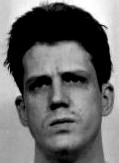
David Earl Gibbs
Murderer Brian Kevin Rosenfeld
Murderer · USA · 1985
Brian Kevin Rosenfeld Brian Kevin Rosenfeld was sentenced to three concurrent l…
23 victims
Brian Kevin Rosenfeld
Murderer · USA · 1985
Brian Kevin Rosenfeld Brian Kevin Rosenfeld was sentenced to three concurrent l…
23 victims
 Marvin Gray
Murderer · USA · 1975
Marvin Gray was convicted killer who claimed responsibility for 23 slayings and…
23 victims
Marvin Gray
Murderer · USA · 1975
Marvin Gray was convicted killer who claimed responsibility for 23 slayings and…
23 victims
 Yahweh ben Yahweh
Murderer · USA · 1980
Yahweh ben Yahweh was born and legally named Hulon Mitchell Jr. (October 27, 19…
23 victims
Yahweh ben Yahweh
Murderer · USA · 1980
Yahweh ben Yahweh was born and legally named Hulon Mitchell Jr. (October 27, 19…
23 victims
 Russell Ellwood
Murderer · USA · 1991
Russell Ellwood was a former taxi driver. Authorities suspected him of killing…
20 victims
Russell Ellwood
Murderer · USA · 1991
Russell Ellwood was a former taxi driver. Authorities suspected him of killing…
20 victims
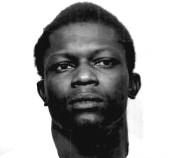 Charles Rector
Murderer · USA · 1974
Charles Rector was convicted in 1982 and sentenced to death for the murder of C…
2 victims
Charles Rector
Murderer · USA · 1974
Charles Rector was convicted in 1982 and sentenced to death for the murder of C…
2 victims
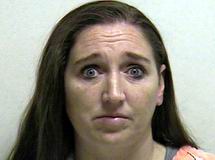 Megan Huntsman
Murderer · USA · 1996
Megan Huntsman was 40 at sentencing. She was a mother of three children who wer…
6 victims
Megan Huntsman
Murderer · USA · 1996
Megan Huntsman was 40 at sentencing. She was a mother of three children who wer…
6 victims
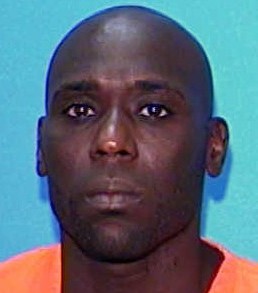 William Earl Sweet
Murderer · USA · 1990
William Earl Sweet was sentenced to death on August 30, 1991. The case was in t…
2 victims
William Earl Sweet
Murderer · USA · 1990
William Earl Sweet was sentenced to death on August 30, 1991. The case was in t…
2 victims
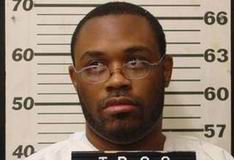 Corinio Pruitt
Murderer · USA · 2005
Corinio Pruitt (also identified as Corinio Allen Pruitt) was convicted of first…
1 victim
Corinio Pruitt
Murderer · USA · 2005
Corinio Pruitt (also identified as Corinio Allen Pruitt) was convicted of first…
1 victim
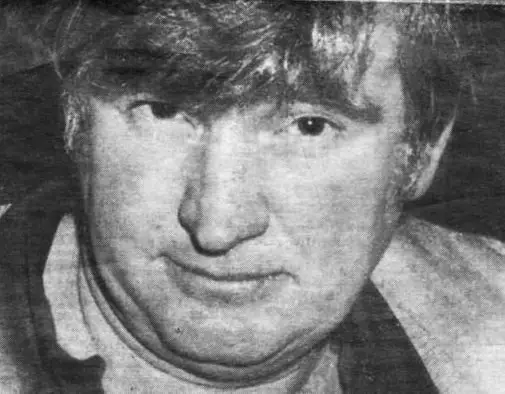 Raymond Edmunds
Murderer · Australia · 1966
Raymond Edmunds Raymond Edmunds was serving a life sentence for the 1966 murder…
2 victims
Raymond Edmunds
Murderer · Australia · 1966
Raymond Edmunds Raymond Edmunds was serving a life sentence for the 1966 murder…
2 victims
- Gender
- male
- Country
- USA
- Location
- Montgomery County, Texas, USA
- Date of birth
- March 17, 1961
- Age at first offence
- 24
- Characteristics
- rape, robbery, drug addict
- Victim profile
- Marietta Bryant, 29, and Carol Ackland, 46 / Calvin Williams ( death row inmate )
- Method of murder
- St abbing with knife
- Date(s) of murder
- 1985 / 1990
- Years active
- 1985–1990
- Date of arrest
- J uly 1985
- Status
-
Executed
Executed by lethal injection in Texas on August 23, 2000
Case details
David Earl Gibbs was convicted and sentenced to death for the July 1985 murder of 29-year-old Marietta Bryant.
Gibbs raped and murdered Bryant and her roommate, Carol Ackland. Gibbs worked and lived at the Conroe, Texas apartment complex where Bryant and Ackland lived. Both women were outpatients of the Texas Department of Mental Health and Mental Retardation.
Gibbs confessed after fingerprints were found at the scene and human blood was found on his boots. In his statement, Gibbs said: "While I was having sex with her, I cut her throat. I don't know why I did it."
Timeline
- July 1, 1985 — Marietta Bryant and Carol Ackland were killed inside their apartment in Conroe, Texas.
- June 19, 1991 — Texas Court of Criminal Appeals affirmed Gibbs' conviction and death sentence.
- Feb. 12, 1992 — Supreme Court denied his petition for writ of certiorari.
- Mar. 16, 1992 — Trial court set an execution date of April 20, 1992.
- April 16, 1992 — Gibbs filed his first application for state writ of habeas corpus.
- April 16, 1992 — The trial court modified Gibbs' execution date to June 2, 1992.
- May 27, 1992 — Trial court stayed Gibbs' execution pending resolution of state habeas.
- Aug. 1, 1994 — Trial court recommended that relief be denied.
- Oct. 12, 1994 — Court of Criminal Appeals denied relief by written order.
- Jan. 17, 1995 — Trial court set Gibbs' execution date for July 18, 1995.
- July 5, 1995 — Gibbs filed his second state habeas application.
- July 14, 1995 — Trial court recommended that relief be denied.
- July 15, 1995 — Court of Criminal Appeals denied relief and denied stay of execution.
- July 17, 1995 — Gibbs filed a federal petition for writ of habeas corpus; execution stayed.
- May 15, 1997 — District court entered final judgment denying habeas relief.
- July 29, 1997 — District court denied permission to appeal.
- Sept. 8, 1998 — Fifth Circuit Court of Appeals denied permission to appeal.
- Jan. 25, 1999 — Gibbs filed a petition for writ of certiorari in the Supreme Court.
- April 26, 1999 — Supreme Court denied the petition.
- April 5, 1999 — Court of Criminal Appeals found that Gibbs' third state habeas application was properly filed and remanded to the trial court.
- Feb. 8, 2000 — Trial court held an evidentiary hearing and recommended that relief be denied.
- April 5, 2000 — Court of Appeals denied Gibbs' subsequent habeas application as abuse of writ.
- July 5, 2000 — Gibbs filed a petition for writ of certiorari in the Supreme Court.
- June 28, 2000 — Gibbs sought permission to file a second federal habeas writ from the Fifth Circuit.
- August 23, 2000 — Gibbs was executed by lethal injection in Texas.
The offence
In July 1985, Gibbs barged into the Conroe apartment of Marietta Bryant, 29, and Carol Ackland. The women were killed inside the apartment.
Both women had mental and emotional health problems and had recently been released from hospitals after treatment for mental health and emotional problems. The women's throats were cut.
Court documents described Bryant as having the emotional maturity of an adolescent.
Gibbs forced Ackland to have sex with him after getting into an argument with Ackland. Afterward, he killed Ackland and then raped Bryant and slashed her throat with a butcher knife. He ransacked the place to make it look like the women were killed in a burglary.
Gibbs gave police a written statement admitting the rape and murder of Marietta Bryant and her roommate, Carol Ackland. Gibbs wrote: "While I was having sex with her, I cut her throat. I don't know why I did it."
Gibbs also ransacked the place to make it look like a burglary had occurred.
Investigation
The apartment complex where Gibbs worked and lived was the location where Bryant and Ackland lived.
The MHMR caseworker assigned to Bryant and Ackland alerted police after he had been informed that neither of the women had shown up at work for several days. When police, the caseworker and family members arrived at the apartment, they found Bryant and Ackland dead inside. The bodies were in an advanced stage of decomposition.
Forensic evidence connected Gibbs to the murders.
Police found fingerprints linking Gibbs to the crime scene. Gibbs' fingerprints were found on the inside of the front entrance of the door to Bryant and Ackland's apartment. His fingerprints were also found on a band-aid box taken from the crime scene.
Police also found a pair of boots in Gibbs' apartment with human blood on them.
Police searched Gibbs' apartment and found a pack of cigarettes that were the same brand as the cigarette butt found at the murder scene.
Police went to the residence of Wanda McNeil, a friend of Gibbs, where they found a radio that belonged to Bryant.
Gibbs was arrested soon thereafter and gave a written statement admitting the rape and murder.
Police interviewed a friend of Gibbs who had been with him the night of the murders. The friend told police that Gibbs was wearing boots that night and that Gibbs left the bar around midnight. The friend told police that when Gibbs returned, he was wearing different clothes and shoes.
Arrest
Gibbs was arrested at the home of a friend in Cleveland, Texas, a month after the killings.
Trial
Police found Gibbs' fingerprints on the entrance to the apartment and on a band-aid box taken from the crime scene, and human blood was found on his boots.
The state charged Gibbs with the assault and death of Marietta Bryant.
Gibbs was found guilty of killing Marietta Bryant and was sent to death row without being tried for killing Carol Ackland.
Sentencing
The jury convicted Gibbs and sentenced him to death.
Appeals
State appeals and habeas
- The Texas Court of Criminal Appeals affirmed Gibbs' conviction and death sentence on June 19, 1991.
- The Supreme Court denied his petition for writ of certiorari on February 12, 1992.
- The trial court set an execution date of April 20, 1992; on April 16, 1992, the execution date was modified to June 2, 1992.
- On May 27, 1992, the trial court stayed Gibbs' execution pending resolution of state habeas.
- On Aug. 1, 1994, the trial court recommended that relief be denied.
- On Oct. 12, 1994, the Court of Criminal Appeals denied relief by written order.
- On Jan. 17, 1995, the trial court set Gibbs' execution date for July 18, 1995.
- On July 14, 1995, the trial court recommended that relief be denied on Gibbs' second state habeas application.
- On July 15, 1995, the Court of Criminal Appeals denied relief and denied stay of execution.
- Gibbs filed a third state habeas application, and on April 5, 1999, the Court of Criminal Appeals found it properly filed and remanded to the trial court.
- On Feb. 8, 2000, the trial court held an evidentiary hearing and recommended on Feb. 8, 2000 that relief be denied.
- On April 5, 2000, the Court of Appeals denied Gibbs' subsequent habeas application as abuse of writ.
Federal appeals and habeas
Gibbs filed a federal petition for writ of habeas corpus on July 17, 1995; execution stayed.
The United States District Court denied relief and refused a certificate of probable cause. The district court entered final judgment denying habeas relief on May 15, 1997, and district court denied permission to appeal on July 29, 1997.
The Fifth Circuit Court of Appeals denied permission to appeal on Sept. 8, 1998.
Gibbs filed a petition for writ of certiorari in the Supreme Court on Jan. 25, 1999; the Supreme Court denied the petition on April 26, 1999.
On July 5, 2000, Gibbs filed a petition for writ of certiorari in the Supreme Court, and he sought permission to file a second federal habeas writ from the Fifth Circuit on June 28, 2000; both cases were stated as pending.
United States Court of Appeals, Fifth Circuit
Gibbs petitioned the federal courts to set aside his conviction and sentences contending the State of Texas violated his constitutional rights in two ways:
- the prosecution failed to disclose evidence relevant to the jury's sentencing decision; and
- the state trial judge admitted evidence of an offense for which he had been found innocent.
Gibbs also urged that the federal district court denied him the opportunity to conduct discovery in support of his federal habeas petition.
The Fifth Circuit discussed Gibbs' contentions about Moody testimony in the punishment phase and the failure to disclose evidence. It stated:
Moody was not listed as a witness before trial.
The Fifth Circuit also set out Gibbs' argument and the court's reasoning on materiality. It discussed the undisclosed jail record with notation ":Dism:Self Defense" and described the punishment-phase testimony from Moody.
Moody testimony (verbatim)
Moody testified in the punishment phase. The questioning included:
Q: Did you have occasion to have any kind of confrontation or fight with Mr. Gibbs back on January 15th?
A: Yes; we did.
Q: Would you tell the jury in your own words what happened, please?
A: I asked him to turn his radio down 'cause it woke me up and he said no, so I unplugged it and that's when he hit me in this eye and then hit me over here in the ear and then pounded with both hands on the back of my neck and choked me and told me he'd kill me.
Q: And, this happened on January 15th?
A: I'm not sure.
Q: Around that time anyway?
A: Yeah.
Q: Had you done anything other than unplug the radio?
A: No; I did not.
Q: Had you and he ever had any problems before?
A: No.
Q: Did you ever see the defendant get in a fight or beat up on anybody else while you were up there in that cell?
A: One other person.
Q: Would you tell the jury what you saw?
A: David jumped across the table and beat the hell out of that boy.
Other details
Evidence described in appeals discussion
Nearly a decade later, defense counsel found a jail record (Montgomery County Jail incident report) with the notation ":Dism:Self Defense." The incident occurred on January 15, 1986, at 5:20.
Gibbs signed an offense report advising: "You are charged with violation of the Montgomery County Jail Rules 003-Fighting w/another person."
The notice read:
You will appear before the disciplinary committee of the Montgomery County Jail within Seven (7) but not less than twenty four (24) hours, to answer to the charges brought against you. If found guilty, you have the right to appeal the decision of the committee in writing to the jail captain. The jail captain's decision will be final and returned to you within ten (ten) days. This appeal must be initiated within ten (10) days from the date of their decision.
Moody appeared at the punishment phase on March 19, 1986, long after the disciplinary hearing set for January 22, 1986.
The jail offense report also included:
On 01.15.86 at approximately 5:20 p.m. I, Sgt. Jones and Deputy P. Harris were working the 4th floor desk when I Sgt. Jones heard our medic R. Owens hollar [sic] for me, Sgt. Jones that there was a fight in L-2. Deputy Harris being in front of the booking desk was the first to respond. Upon opening the door to L-2, Deputy P. Harris found inmate Roy Moody on his hands and knees bent over with his hands on his head. After getting coverage at the 4th floor desk I, Sgt. Jones went upstairs and entered L-2. I found inmate Roy Moody standing in the corner of the day room. All of L-2 started saying that R. Moody was having a bad dream. After looking at R. Moody I noticed he had some redness around the left eye. I pulled R. Moody out of L-2 and asked him what happened. He said that David Earl Gibbs had hit him and tried to choke him....I Sgt. Jones seen [sic] what appeared to be red marks around R. Moody's throat and found redness around his left eye. I asked R. Moody if he wanted to press charges.
Witness testimony and mitigation (punishment phase)
The state called six witnesses in the punishment phase, including Moody. Those witnesses testified about Gibbs's background and behavior, including that Gibbs bragged about fights he had been in, spent most of his teenage years and adult life in foster homes, jails, and prisons, had observed his mother having sexual relations with another woman, and had attempted suicide.
There was testimony that Gibbs was not violent when sober and liked prison life.
Charlie Thomas testified that several weeks after he fired Gibbs for stealing some checks from his business Gibbs broke into Thomas's apartment, found Thomas's rifle, and threatened to kill Thomas; Thomas talked him out of it, and later bought him a beer.
The defense called four mitigation witnesses, including co-workers at a convalescent center who testified that Gibbs was a good worker and well-mannered.
A social worker testified that Gibbs confided in her that his mother had taught him to rob and steal as a young boy, and that he got along well in a half-way house such that she let him stay with her family on occasion.
Criminal history
Gibbs previously convicted of theft of a motor vehicle, auto theft, robbery and burglary. He was jailed in Michigan for the theft of a motor vehicle charge and was jailed in Texas for the robbery conviction.
In 1990, while in jail for Ms. Bryant's rape and murder, Gibbs was convicted of voluntary manslaughter for killing another death row inmate, Calvin Williams. Gibbs received a 20-year sentence for that homicide.
Death row and related statements (verbatim quotes included)
At his execution, Gibbs told Mickey Bryant, Marietta's brother:
"I have wronged you and your family, and for that I am truly sorry. I forgive and have been forgiven."
Afterward, Mickey Bryant told a reporter:
"the apology doesn't cover the crime that he committed. He needed to die for that crime. But, I did appreciate the statement and the fact that in his mind, he has been forgiven as best as I understood it and I hope that's the case. The Lord will judge in the end, and whether or not he truly repented as was forgiven, in my mind, he paid the price he needed to pay. I guess if I was a vindictive person, I would think that he should die in the way that he murdered Marietta ... (but) we live in a humane society and that's the humane way to do it."
Gibbs was pronounced dead at 6:18 p.m.
Background statements and roles
Gibbs described himself as a "country gentleman" in an interview several years earlier. He said:
"This is a blow to everything I believe in,"
"I don't believe in hitting women. But for me to turn around and rape and murder two women ... the point is, I did it."
In another interview several years earlier, Gibbs said:
"We can blame it on my past, but that doesn't take away what I did,"
Additional context in federal appeal discussion
The Fifth Circuit described the case procedural history and contentions, including that it vacated the stay of execution and denied the application for a certificate of probable cause.
Spotted an error, or have more information about this case?