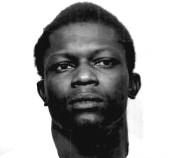
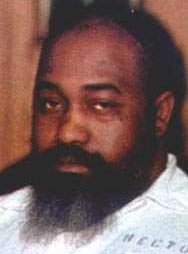
Charles Rector
Murderer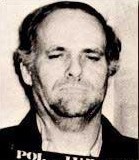 Ervil LeBaron
Murderer · USA · 1972
Ervil Morrell LeBaron (1925 to August 16, 1981) was the leader of a polygamous…
35 victims
Ervil LeBaron
Murderer · USA · 1972
Ervil Morrell LeBaron (1925 to August 16, 1981) was the leader of a polygamous…
35 victims
 Marvin Gray
Murderer · USA · 1975
Marvin Gray was convicted killer who claimed responsibility for 23 slayings and…
23 victims
Marvin Gray
Murderer · USA · 1975
Marvin Gray was convicted killer who claimed responsibility for 23 slayings and…
23 victims
 Yahweh ben Yahweh
Murderer · USA · 1980
Yahweh ben Yahweh was born and legally named Hulon Mitchell Jr. (October 27, 19…
23 victims
Yahweh ben Yahweh
Murderer · USA · 1980
Yahweh ben Yahweh was born and legally named Hulon Mitchell Jr. (October 27, 19…
23 victims
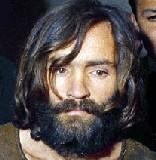 Charles Manson
Murderer · USA · 1969
Charles Milles Manson (born November 12, 1934) was an American criminal and mus…
9 victims
Charles Manson
Murderer · USA · 1969
Charles Milles Manson (born November 12, 1934) was an American criminal and mus…
9 victims
 Matthew Hoffman
Murderer · USA · 2010
Matthew Hoffman was an unemployed tree trimmer and had an obsession with trees…
3 victims
Matthew Hoffman
Murderer · USA · 2010
Matthew Hoffman was an unemployed tree trimmer and had an obsession with trees…
3 victims
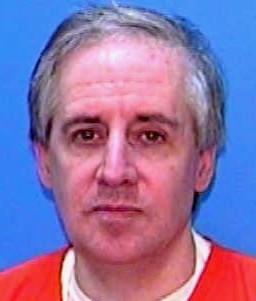 Richard Lynch
Murderer · USA · 1999
Name: Richard Lynch · Date of birth: 06/19/53 · Case citation: Florida Supreme…
2 victims
Richard Lynch
Murderer · USA · 1999
Name: Richard Lynch · Date of birth: 06/19/53 · Case citation: Florida Supreme…
2 victims
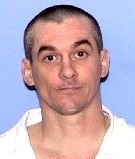 William Irvan
Murderer · USA · 1987
Name: William Irvan TDCJ Number: 999472 Date of Birth: 07/11/1966 Gender: Male…
1 victim
William Irvan
Murderer · USA · 1987
Name: William Irvan TDCJ Number: 999472 Date of Birth: 07/11/1966 Gender: Male…
1 victim
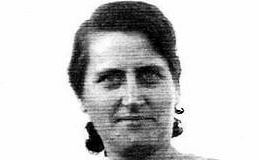 Lila Gladys Young
Murderer · Canada · 1928
Lila Gladys Young was also named Lila Gladys Lila Coolen. Lila Gladys Young was…
100 victims
Lila Gladys Young
Murderer · Canada · 1928
Lila Gladys Young was also named Lila Gladys Lila Coolen. Lila Gladys Young was…
100 victims
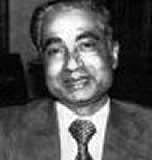 Dr. John Baksh
Murderer · Spain · 1983
Dr. Madhu Baksh was a 42-year-old woman who was attacked at Keston Ponds, near…
1 victim
Dr. John Baksh
Murderer · Spain · 1983
Dr. Madhu Baksh was a 42-year-old woman who was attacked at Keston Ponds, near…
1 victim
- Gender
- male
- Country
- USA
- Location
- Travis County, Texas, USA
- Date of birth
- April 16, 1954
- Age at first offence
- 20
- Characteristics
- robbery, rape
- Victim profile
- ??? / Carolyn Kay “Katy” Davis (female, 22)
- Method of murder
- Shooting / Drowning
- Date(s) of murder
- 1974 / 1981
- Years active
- 1974–1981
- Date of arrest
- October 17, 1981
- Status
-
Executed
Executed by lethal injection in Texas on March 25, 1999; clemency petition rejected; execution date referenced as March 26, 1999
Case overview
Charles Rector was convicted in 1982 and sentenced to death for the murder of Carolyn Kay “Katy” Davis.
Rector was executed by lethal injection in Texas on March 25, 1999. A clemency petition was rejected by the Texas Board of Pardons and Paroles. The execution date was also referenced as March 26, 1999.
Timeline
- October 15, 1981 — An Austin used car dealer sold Rector a 1969 green Buick Skylark.
- October 17, 1981 — Carolyn Kay Davis was abducted, beaten, and raped; her apartment was ransacked; she was taken to the Town Lake area; she was shot in the head and drowned after repeated forced head underwater.
- October 17, 1981 (around 8:45 p.m.) — Mark Arnold saw Davis turn down a street headed to their La Paz apartment.
- October 17, 1981 (around 9:15 p.m.) — Mark Arnold returned to the apartment and found it unlocked and the groceries overturned.
- October 17, 1981 (around 9 p.m.) — Two neighbors heard a woman's short, startled scream, the shuffle of feet, and a door slam.
- October 17, 1981 (around 11 p.m.) — Investigating police left the scene; a fingerprint technician was still processing fingerprints when he heard footsteps approaching.
- October 17, 1981 (around 11:15 p.m.) — A resident saw Rector jogging through the apartment complex and testified Rector asked, "Did you see two other black dudes around here?"
- October 17, 1981 (11:30 p.m.) — Officer William Matthews responded to a call; he stopped a green 1969 Buick Skylark with the trunk open containing two rifles, a vinyl bag, and clothing. Rector was driving.
- October 18, 1981 (morning) — The nude body of Davis was discovered in the Colorado River just off of Redbud Island in Austin.
- October 18, 1981 (approximately 3 p.m.) — Officials removed Davis's body from the river.
- October 24, 1981 — Officer Allen Anderson wrote a report based on a statement from Carolyn Stillwell regarding the suspects at a convenience store.
- 1982 — Rector was convicted and sentenced to die for the capital crime of intentional murder in the course of committing and attempting to commit burglary, kidnaping, and robbery.
- 1986 — The Texas Court of Criminal Appeals affirmed Rector's conviction and sentence in Rector v. State, 738 S.W.2d 235 (Tex.Crim.App.1986).
- 1987 — The United States Supreme Court denied certiorari in Rector v. Texas, 484 U.S. 872 (1987).
- May 19, 1988 — Rector filed a petition for habeas corpus in the United States District Court for the Western District of Texas.
- April 3, 1990 — The federal district court dismissed Rector's petition without prejudice for failure to exhaust state remedies.
- December 8, 1992 — Rector filed a third habeas petition with the trial court.
- February 29, 1993 — The Texas Court of Criminal Appeals denied habeas relief.
- November 12, 1993 — Rector sought to "reinstate and/or reactivate" his federal habeas petition.
- June 10, 1994 — Rector moved to withdraw his federal habeas petition.
- June 22, 1994 — Rector re-filed in federal court his petition for habeas corpus.
- March 29, 1996 — A magistrate judge denied Rector relief in a 54-page report.
- May 14, 1996 — The district court adopted the magistrate judge's findings and conclusions and entered final judgment; it also denied a request for a CPC.
- June 10, 1996 — Rector filed a timely notice of appeal.
- August 18, 1997 — The United States Court of Appeals, Fifth Circuit decided the appeal in Charles Rector, Petitioner-Appellant, v. Gary L. Johnson, Director, Texas Department of Criminal Justice, Institutional Division, Respondent-Appellee (No. 96-50443), declining to issue a CPC and affirming the conviction and sentence of death.
- March 25, 1999 — The execution by lethal injection occurred as stated in the clemency/execution status.
- March 26, 1999 — The execution date was referenced as March 26, 1999 in connection with the clemency petition and execution date of record.
People
- Charles Rector — offender; #721; executed after conviction.
- Carolyn Kay “Katy” Davis — victim; University of Texas student; 22-year-old; disappeared from her Austin apartment on Oct. 17, 1981.
- Mark Arnold — Davis's apartment roommate; shared apartment number 204 of the La Paz apartments.
- Howard Ray Simon — accomplice/suspect; escaped from jail; fatally shot while committing a robbery; implicated Rector as the killer; implicated Anthony Miller.
- Anthony Miller — charged co-defendant in the kidnapping and murder case; acquitted.
- Roy Greenwood — appellate attorney for Rector.
- Phil Nelson — prosecutor in the case; also described as another prosecutor.
- Rosemary Lehmberg — Travis County assistant district attorney who prosecuted Rector.
- Howard Ray Simon — referenced as a suspect and later killed during a robbery.
- Thomas “Hollywood” Henderson — former Dallas Cowboy; described as an Austin businessman active in community programs; one of Rector's witnesses.
- Gary L. Johnson — Director, Texas Department of Criminal Justice, Institutional Division; respondent in the federal appeal.
- Officer William Matthews — Austin Police Department officer who stopped the vehicle containing items taken from Davis's apartment.
- Officer Allen Anderson — officer who visited convenience stores and later wrote a report based on information from Stillwell.
- Carolyn Stillwell (“Candy”) — convenience store clerk who provided statements about suspects at a convenience store.
- Dr. Bayardo — medical expert who testified about the time-of-death estimate.
- Medical Examiner — performed the autopsy and testified regarding gunshot wound, drowning evidence, and time of death estimate.
- JOLLY, JONES, STEWART — Circuit Judges listed for the Fifth Circuit case decision.
- STEWART — Circuit Judge who authored the opinion.
The offence
On October 17, 1981, Carolyn Kay Davis was beaten and raped by Charles Rector and several accomplices.
Davis shared apartment number 204 of the La Paz apartments in Austin, Texas with Mark Arnold. After Davis turned down a street headed to their La Paz apartment, she was later abducted. Multiple witnesses described screams, a door slam, voices in the hallway, and seeing three black men standing in front of the apartment.
Authorities alleged that Davis's abduction was accompanied by events including a scream, slam, and a sound like someone diving into a pool. Davis was forced to open the door after her stepfather gave chase; apartment items were ransacked.
Davis was taken to the Town Lake area. She was gang-raped, shot in the head, and dumped in Town Lake. The assailants repeatedly forced her head underwater until she drowned. There was also evidence that she had been sexually assaulted.
Investigation
Fingerprint processing occurred at Davis's apartment around 9:35 p.m. with an Austin Police Department fingerprint technician arriving to process possible fingerprints. Investigating police left the scene at about 11 p.m. while the fingerprint technician was still packing up.
The fingerprint technician heard footsteps approaching toward Davis's apartment; he saw two black men walking quickly and radioed for officers to look for them. Davis's stepfather gave chase. Another resident testified that at about 11:15 p.m. she saw Rector jogging through the apartment complex and that Rector asked: "Did you see two other black dudes around here?" She testified she answered in the negative.
Officer William Matthews responded to a call at 11:30 p.m. on October 17, 1981. Matthews saw a green 1969 Buick Skylark stopped diagonally in the street with the trunk open. The car reversed, accelerated forward, ran a stop sign, and then ran a flashing red light. Matthews stopped the car. In the trunk he observed two rifles, a vinyl bag, and clothing. Rector was the driver and sole occupant.
When Rector exited the car, Matthews saw he was wearing tight designer blue jeans and no shirt. Rector told Matthews he had bought items found in the trunk from a black male in a white Ford pickup. Matthews arrested Rector and brought him to the city jail. Upon arrival at the jail, Matthews searched Rector and found multiple items including a silver colored watch, several gold chains, a gold ring with a cross, and a 1978 Anderson High School graduation ring with the initials "CKD" inside. Matthews exchanged Rector's jeans for jail clothes; Rector was not wearing any underwear. The blue jeans taken from Rector were size 6 with a Calvin Klein brand name.
An expert witness testified that the crotch area of the jeans tested positive for the presence of seminal stains. Mark Arnold testified that the jeans taken from Rector were identical to those Davis was wearing when he last saw her alive. Arnold identified items found on Rector's person or in Rector's car as linking Rector to the burglary, abduction, and murder, including:
- the watch found in the blue jeans belonged to Arnold (in Arnold's dresser drawer),
- the necklaces taken from Rector's car were similar to those Davis was wearing,
- the rings found in Rector's car belonged to Davis,
- the two rifles and strain gauge recovered from Rector's car were missing from the apartment,
- a blue-striped blouse found among clothing in Rector's car matched the blouse Davis was wearing,
- a jar of pennies and miscellaneous clothing.
The jury also heard that Rector owned the 1969 Buick and that items inside the car linked him to the burglary and abduction.
An Austin used car dealer testified he sold Rector a 1969 green Buick Skylark on October 15, 1981 and identified a receipt taken from a billfold found in the car as the document provided at sale. Police found bib overalls on the right front seat and a copy of a traffic citation issued to Rector in the overalls' pocket; a leather sheath bearing the name "Schrade" was also found and fit the knife found in Davis's apartment. Police also found a Rohm .22 caliber, six-shot revolver on the right front floorboard of the car; the cylinder held two live rounds, two spent shells, and two empty chambers.
A key issue described in the proceedings involved a statement from a convenience store clerk. At some point during the week following Davis's murder, Officer Allen Anderson was informed that the suspects were looking for a convenience store to rob. Anderson visited convenience stores. After speaking with Stillwell, Anderson wrote a report dated October 24, 1981 stating details of Stillwell's identification of Rector and Anthony Miller as being in her store on the evening of October 17, 1981, including that she was sure about Rector and especially about Miller, described the men at the back of the store, that they got four quarters for a dollar bill and played a video game for awhile, and that they left before closing at midnight and that she did not see what they left in.
In the same context, the federal opinion described Stillwell's statement and testimony at Anthony Miller's trial. It included that her testimony included the timing of Rector and Miller's presence around closing and that they stayed for approximately 15-20 minutes. Stillwell described the pickup truck leaving towards Lamar, up Airport, northwest. On cross-examination, Miller's counsel impeached Stillwell on inconsistencies related to the time she told Anderson and whether they played the video game.
Arrest
Officer William Matthews stopped Rector's green 1969 Buick Skylark at about 11:30 p.m. on October 17, 1981 and arrested Rector.
Rector was searched at the city jail and found in possession of items including multiple gold chains, a silver watch, a ring, and a graduation ring with initials "CKD" inside. He was also described as wearing Davis's size 6 Calvin Klein blue jeans, with a jail exchange of the jeans for jail clothes, and described as not wearing underwear.
Trial
Rector was charged with the capital crime of intentional murder in the course of committing and attempting to commit burglary, kidnaping, and robbery. Rector was convicted in 1982 and sentenced to die.
The jury deliberated for 90 minutes and convicted Rector in only 90 minutes.
Rector did not testify in his own defense and made several outbursts during trial.
Rector had a criminal record dating back to age 12 and was on parole for a previous murder at the time of Katy Davis's brutal killing.
The proceedings also addressed co-defendant outcomes. Three people were charged in the kidnapping and murder of Carolyn Kay “Katy” Davis; only one was convicted. Anthony Miller was acquitted. Howard Ray Simon escaped from jail and was fatally shot while committing a robbery.
In the federal appellate decision, it was also stated that Rector's conviction and sentence were affirmed by the Texas Court of Criminal Appeals and that the United States Supreme Court denied certiorari.
Sentencing
Rector was sentenced to die after conviction in 1982.
Appeals
U.S. Supreme Court
The United States Supreme Court declined to issue a writ of certiorari in Rector v. Texas.
State habeas proceedings
Rector sought state habeas relief after denial of certiorari. After an evidentiary hearing, the state trial court denied Rector relief through findings of fact and conclusions of law.
Later state habeas applications involved outcomes including a dismissal under Texas abstention doctrine and a denial of relief, including a February 29, 1993 denial concluding Rector's claims were meritless.
Federal habeas proceedings and Fifth Circuit appeal
Rector filed a petition for habeas corpus in federal court on May 19, 1988, followed by procedural developments including a dismissal without prejudice for failure to exhaust state remedies on April 3, 1990, and subsequent filing on June 22, 1994.
A magistrate judge denied Rector federal habeas relief in a 54-page report on March 29, 1996; the district court adopted the magistrate's findings and entered final judgment on May 14, 1996, also refusing to grant a Certificate of Probable Cause (CPC). Rector appealed on June 10, 1996.
In the Fifth Circuit (No. 96-50443) on August 18, 1997, the panel treated the appeal as a request for a CPC, declined to issue a CPC, and affirmed Rector's conviction and sentence of death. The decision addressed arguments including:
- Alleged Brady violations involving a statement by Carolyn Stillwell, a convenience store clerk, and whether there was suppression, favorable evidence, materiality, and due diligence.
- Alleged reversible error related to forwarding exhibits from the State habeas hearing for inclusion in the federal habeas case.
- Ineffective assistance of counsel claims related to investigation of time-of-death evidence and failure to present mitigating evidence.
The opinion included verbatim statements attributed to defense counsel and prosecutors, including the following quotations:
- Roy Greenwood said:
- "I’ve represented 56 guys (convicted of capital crimes) and only lost two of them,"
- "Rector was the first."
- "It was the most political case I can remember,"
- Phil Nelson referred to an asserted defense explanation as: "Something the defense came up with."
- Phil Nelson also said: "It was just too coincidental."
- Rosemary Lehmberg said: "It’s been a long trail,"
- Phil Nelson added: "It’s been a long trail,"
- Rosemary Lehmberg stated:
- "The information we had was 3 men followed her home and to her apartment, kidnapped her, took her to a remote area, sexually assaulted and murdered her and threw her body into the water,"
- Phil Nelson described a version of events as: "Something the defense came up with."
- The opinion also quoted the Fifth Circuit's discussion of probabilities and materiality but did not present additional attributed trial-level direct statements beyond the above.
Outcome
The Fifth Circuit declined to issue a CPC and affirmed the conviction and sentence of death.
The Texas Board of Pardons and Paroles rejected a clemency petition, clearing the way for execution.
Rector was executed by lethal injection in Texas on March 25, 1999, with the execution date also referenced as March 26, 1999.
Aftermath
Rector issued a final statement at the execution. The statement included the following verbatim words:
"I want you to know that every thing that is said, every move that is made, every motion, I hold it true to my heart. I hold it in my soul. I want you to know that I am not guilty and I will say this to the family. I did not kill your daughter. Take it the way you want. Sorry for the pain. Sister, I love you and will be there with you, to help you. I want to talk to you about being there by her. You know what I am saying. I want to thank you, thank you for the words. The dying words, you know. They mean a lot. Make sure he knows what I want him to know. I want to quote a song that I wrote called "God Living with Us 24 Hours." It goes: Tell the kids I love them and I’ll be there. That’s all I have to say. Charles RECTOR"
A separate quoted line attributed to Rector was also included in connection with his final statement:
- "I want you to know I'm not guilty"
- "And I'll say this to the family - I did not kill your daughter. Take it the way you want. I'm sorry for the pain,"
Rector was described as pronounced dead at 6:22 p.m., 8 minutes after lethal drugs began flowing into his body.
It was also stated that one of Rector's witnesses fainted and had to be assisted out of the viewing area after Rector slipped into unconsciousness.
Rector maintained his innocence throughout the proceedings and stated in an interview on death row that:
- "I ain't scared,"
- "They can take my life, but they can't make an innocent man guilty." He also stated:
- "I'm not sorry to have not taken the life sentence,"
- "I'd rather die than say I'm guilty." He also said:
- "It's not my crime."
- "It's not my nature to kill for blue jeans."
- "C'mon, it would take an animal to kill for a pair of blue jeans."
Rector was described as spending more than 16 years on death row and as among the longest-serving condemned prisoners in Texas.
Spotted an error, or have more information about this case?