Larry Gilbert
Murderer Ervil LeBaron
Murderer · USA · 1972
Ervil Morrell LeBaron (1925 to August 16, 1981) was the leader of a polygamous…
35 victims
Ervil LeBaron
Murderer · USA · 1972
Ervil Morrell LeBaron (1925 to August 16, 1981) was the leader of a polygamous…
35 victims
 Brian Kevin Rosenfeld
Murderer · USA · 1985
Brian Kevin Rosenfeld Brian Kevin Rosenfeld was sentenced to three concurrent l…
23 victims
Brian Kevin Rosenfeld
Murderer · USA · 1985
Brian Kevin Rosenfeld Brian Kevin Rosenfeld was sentenced to three concurrent l…
23 victims
 Marvin Gray
Murderer · USA · 1975
Marvin Gray was convicted killer who claimed responsibility for 23 slayings and…
23 victims
Marvin Gray
Murderer · USA · 1975
Marvin Gray was convicted killer who claimed responsibility for 23 slayings and…
23 victims
 Yahweh ben Yahweh
Murderer · USA · 1980
Yahweh ben Yahweh was born and legally named Hulon Mitchell Jr. (October 27, 19…
23 victims
Yahweh ben Yahweh
Murderer · USA · 1980
Yahweh ben Yahweh was born and legally named Hulon Mitchell Jr. (October 27, 19…
23 victims
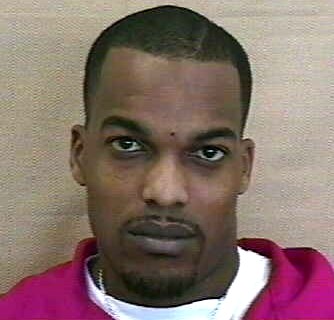 Earl Richmond
Murderer · USA · 1991
Earl Richmond was convicted of first-degree rape and three counts of first-degr…
4 victims
Earl Richmond
Murderer · USA · 1991
Earl Richmond was convicted of first-degree rape and three counts of first-degr…
4 victims
 Virginia Krall
Murderer · USA · 2006
Virginia Ann Krall was the defendant and appellant. The case was titled: The Pe…
1 victim
Virginia Krall
Murderer · USA · 2006
Virginia Ann Krall was the defendant and appellant. The case was titled: The Pe…
1 victim
 James Robertson
Murderer · USA · 1997
James Robertson was sentenced to death in June 1999 after he was convicted of m…
2 victims
James Robertson
Murderer · USA · 1997
James Robertson was sentenced to death in June 1999 after he was convicted of m…
2 victims
 Howard Arthur Allen
Serial killer · USA · 1974
Howard Arthur Allen was sentenced to death on June 11, 1988. August 1974 — Alle…
3 victims
Howard Arthur Allen
Serial killer · USA · 1974
Howard Arthur Allen was sentenced to death on June 11, 1988. August 1974 — Alle…
3 victims
- Gender
- male
- Country
- USA
- Location
- Lexington County, South Carolina, USA
- Date of birth
- 1955
- Age at first offence
- 22
- Characteristics
- armed robbery, alcohol, drugs, history of mental illness
- Victim profile
- Ralph Stoudemire, 44 (gas station owner)
- Method of murder
- St abbing with knife and shooting
- Date(s) of murder
- July 12, 1977
- Years active
- 1977
- Date of arrest
- Next day
- Status
-
Executed
Executed by lethal injection in South Carolina on December 4, 1998
Case overview
Larry Gilbert, who was 43, was executed by lethal injection in South Carolina on December 4, 1998. He and his half-brother J. D. Gleaton were convicted for the murder and armed robbery of Ralph Stoudemire and received death sentences.
Timeline
- July 12, 1977 — Half-brothers Gilbert and Gleaton drove around Cayce, South Carolina intending to purchase drugs, traveled toward South Congaree, noticed a lone attendant, Ralph Stoudemire, at a service station, and decided to rob him. Gleaton entered first, requested cigarettes, pulled out a hunting knife, and told Stoudemire it was a robbery; a scuffle ensued with slash and stab wounds to Stoudemire’s torso and wrists; Gilbert entered with a gun and shot Stoudemire once; Gilbert and Gleaton then ran out of the station; Gilbert grabbed a pocketbook left by Stoudemire’s wife; Stoudemire died approximately forty-five minutes later.
- July 13, 1977 — Police arrested Gilbert and Gleaton.
- February 1980 — The men were resentenced to death at a resentencing trial.
- 1984 — Gilbert and Gleaton filed separate petitions for writs of habeas corpus in federal district court.
- August 26, 1996 — A district court granted Gilbert’s and Gleaton’s habeas corpus petitions.
- March 5, 1997 — Oral arguments were heard in the United States Court of Appeals for the Fourth Circuit.
- July 29, 1997 — The United States Court of Appeals for the Fourth Circuit affirmed the district court’s order granting the petitions for writs of habeas corpus.
- December 4, 1998 — Gilbert was executed by lethal injection in South Carolina.
The offence
On July 12, 1977, half-brothers Larry Gilbert and J. D. Gleaton drove around Cayce, South Carolina intending to purchase drugs. After unsuccessful inquiries in Cayce, they drove toward South Congaree. Along Highway 51 they noticed Ralph Stoudemire, a lone attendant in a service station, and decided to rob him.
Gleaton entered the station first. After requesting some cigarettes, he pulled out a hunting knife and told Stoudemire that it was a robbery. As Stoudemire reached into his pocket, Gleaton made a stabbing motion and a scuffle ensued. Gleaton inflicted slash and stab wounds to Stoudemire’s torso and wrists. During the scuffle, Gilbert entered the station carrying a gun and shot Stoudemire once. Gilbert and Gleaton then ran out of the station.
On his way out, Gilbert grabbed a nearby pocketbook left in the station by Stoudemire’s wife. From across the street, Stoudemire’s son witnessed the men drive off and saw his father stagger out of the service station pointing at the car. Stoudemire died approximately forty-five minutes later.
An autopsy established that Gilbert and Gleaton collectively inflicted Stoudemire with one superficial gunshot wound to the chest, two superficial slash wounds to the wrists, and five stab wounds to the torso; one stab wound pierced Stoudemire’s heart and caused his death.
Investigation and arrest
Police arrested Gilbert and Gleaton the next day. While the men were in police custody, each man admitted to driving around looking for a business to rob so they would have money with which to purchase drugs. Gilbert confessed to shooting Stoudemire with the gun, and Gleaton confessed to assaulting Stoudemire with the knife.
Trial
Joint trial and convictions
In October 1977, Gilbert and Gleaton were jointly tried and convicted for the murder and armed robbery of Stoudemire.
Sentencing trials
At the subsequent sentencing trial, both men received death sentences.
On direct appeal, the Supreme Court of South Carolina affirmed the convictions but reversed the sentences because of the solicitor’s improper closing argument during the sentencing phase of the trial.
At the resentencing trial in February 1980, both men again received death sentences, and the Supreme Court of South Carolina affirmed their new sentences. After the United States Supreme Court declined discretionary review of their appeals, the Petitioners filed applications for post-conviction relief in state court.
Post-conviction relief and federal habeas
The applications for post-conviction relief were denied by separate orders following a joint hearing. The Supreme Court of South Carolina refused to consider their appeals, and the United States Supreme Court denied certiorari review.
In 1984, Gilbert and Gleaton filed separate petitions for writs of habeas corpus in federal district court. In June 1988, the district court granted the State’s motion for summary judgment on all claims raised in the PCR applications.
Three years later, in August 1991, the district court vacated its order and remanded the petitions to a magistrate judge with instructions to hold the pleadings in abeyance for sixty days while the Petitioners pursued additional remedies in state court.
The Petitioners immediately filed second PCR applications in state court. In March 1994, the judge who presided over the joint hearing on their applications declined to grant relief, and the Supreme Court of South Carolina denied the Petitioners’ petitions for certiorari review. Neither Gilbert nor Gleaton petitioned the United States Supreme Court for writs of certiorari.
During the four years in which their second PCR applications were litigated in state court, the parties continued to file pleadings in federal district court. In May 1992, the State moved to expedite the district court’s decision, and the State waived exhaustion as to all claims pending before the district court. The Petitioners opposed the motion and urged the district court to wait until the state court concluded review of their pending PCR applications, but the district court granted the State’s motion to expedite in late July 1992.
Appeals
Case posture in the Fourth Circuit
The United States Court of Appeals for the Fourth Circuit considered consolidated appeals in:
- Larry Gilbert, Petitioner-Appellee, v. Michael W. Moore, Director of the South Carolina Department of Corrections, in his official capacity; Attorney General of the State of South Carolina, Respondents-Appellants. No. 96-12 - No. 96-15.
- J. D. Gleaton, Petitioner-Appellee, v. **Michael W. No. 96-13 - No. 96-16.
The appeals were argued on March 5, 1997 and decided on July 29, 1997, before RUSSELL, MURNAGHAN, and MOTZ, Circuit Judges. The judgment of the district court was affirmed by published opinion, with Judge Russell writing and Judge Murnaghan and Judge Motz joining.
Habeas corpus grant based on implied malice instruction
The district court’s final order granting the petitions for writs of habeas corpus was affirmed on the basis of the implied malice instruction.
The key issue on appeal was the implied malice instruction. At the close of the guilt phase of the Petitioners’ trial, the trial court instructed the jury that murder was “the killing of any person with malice aforethought, either expressed or implied.” The trial court explained that malice may be expressed as where previous threats of vengeance or lying in wait or other circumstances show directly that an intent to kill was really entertained. The trial court also instructed that malice may be implied from the “facts and circumstances of the case which are proven.”
In addition, the trial court instructed that the “willful, deliberate and intentional doing of any unlawful act without just cause” or the “conduct of the defendant in the use or handling of a deadly weapon” created a rebuttable presumption of malice.
The district court held that this implied malice instruction violated due process because it shifted the burden of proof as to malice from the prosecution to the defendant, referencing Yates v. Evatt. The district court found the instruction was harmful error in the Petitioners’ case and granted habeas relief, concluding it was not harmless error.
The appellate court described the relevant habeas standard as whether the error “had substantial and injurious effect or influence in determining the jury’s verdict.” The Petitioners were required to establish actual prejudice.
The reviewing court was described as applying the analysis established in Yates and Arnold v. Evatt: it must determine whether the error was unimportant relative to the other evidence considered by the jury independently of the erroneous presumption. The appellate court described that the reviewing court must: (1) ask what evidence the jury actually considered in reaching its verdict; and (2) weigh the probative force of that evidence against the probative force of the erroneous presumption standing alone.
The appellate court explained that throughout its charge on malice, the trial court reminded the jurors to base their determination of malice on all evidence presented, that any malice presumption was rebuttable, and that the State must establish malice beyond a reasonable doubt. The appellate court stated that jurors were presumed to have followed the trial court’s instructions.
The appellate court also identified evidence tending to rebut malice. It stated that the solicitor presented Gleaton’s statement that the killing of Stoudemire was the result of a “scuffle.” It concluded that, as in Yates and Arnold, the jury was free to look beyond the unlawful presumption and consider all the evidence on malice.
The appellate court contrasted Arnold, where it had found implied malice instruction not prejudicial based on evidence of express malice, including evidence of premeditation, and where the solicitor referred to the implied malice instruction in closing argument. The appellate court stated that, unlike the solicitor in Arnold, the solicitor in the Petitioners’ case offered no evidence of express malice. It described the stabbings as taking place as part of a scuffle based on Gleaton’s statement to police and physical evidence.
The appellate court described the sequence: Gleaton entered the store carrying a knife while Gilbert waited outside; only after Gleaton and Stoudemire began to scuffle did Gilbert enter the station with a gun and shoot at Stoudemire; Stoudemire was still alive and mobile when the Petitioners left the station.
The appellate court addressed the State’s argument that the probative force of the physical evidence outweighed the probative force of the erroneous presumptions, including reliance on six cases from the Eleventh Circuit pre-dating Yates. The appellate court stated these cases were distinguishable based on facts and that the courts found intent instructions harmless because the extreme nature of the crimes demonstrated overwhelming intent to ensure the death of the victims. The appellate court stated that in this case, the Petitioners assaulted Stoudemire but made no effort to ensure his death.
The appellate court referred to Houston v. Dutton as offering guidance when a burden-shifting instruction constituted harmful error. It described Houston as involving a robbery killing where the defendant shot the owner of a gasoline service station three times, twice at point-blank range, and claimed accident during struggle over the gun, and that the use of a deadly weapon raised a rebuttable presumption of malice. The appellate court stated that, on habeas review, the Sixth Circuit held the instruction was harmful error despite the arguably more indicative nature of the crime.
The appellate court also stated that the solicitor in the Petitioners’ case exacerbated the prejudicial effect by referring to one of the rebuttable presumptions in closing argument. It cited Hyman v. Aiken as having found an identical malice instruction given in a South Carolina case to be prejudicial and emphasizing the importance of the malice instructions when relied on by the solicitor in closing argument.
The appellate court adopted the district court’s view that because the source of the jury’s malice determination “may well have been the constitutionally infirm jury charge, it cannot be said to be harmless and the convictions cannot stand.” It agreed, explaining it was not whether a guilty verdict would surely have been rendered without the error, but whether the guilty verdict actually rendered was surely unattributable to the error.
The appellate court concluded that while a reasonable jury might have inferred malice from the presence of weapons, wounds, and Stoudemire’s death, the presumptions were prejudicial in the absence of overwhelming evidence of express malice. It stated it harbored “agrave doubt as to [the] harmlessness” of the implied malice instruction.
The appellate court accordingly affirmed the district court’s order granting habeas relief to the Petitioners.
Outcome
The district court’s grant of habeas relief to Larry Gilbert and J. D. Gleaton was affirmed. Gilbert was later executed by lethal injection in South Carolina on December 4, 1998.
Other details
Gilbert and Gleaton were described as half-brothers who lived in Salley, South Carolina. Ralph Stoudemire was described as 44 years old, and Stoudemire’s widow was Betty Slusher, who was married to Stoudemire for 25 years. During the events leading to the offense, the appellate opinion described that the Petitioners drove around intending to purchase drugs, and that in police custody each man admitted looking for a business to rob so they would have money with which to purchase drugs.


Spotted an error, or have more information about this case?