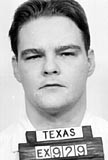
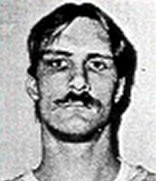
Timothy Gribble
Murderer Brian Kevin Rosenfeld
Murderer · USA · 1985
Brian Kevin Rosenfeld Brian Kevin Rosenfeld was sentenced to three concurrent l…
23 victims
Brian Kevin Rosenfeld
Murderer · USA · 1985
Brian Kevin Rosenfeld Brian Kevin Rosenfeld was sentenced to three concurrent l…
23 victims
 Yahweh ben Yahweh
Murderer · USA · 1980
Yahweh ben Yahweh was born and legally named Hulon Mitchell Jr. (October 27, 19…
23 victims
Yahweh ben Yahweh
Murderer · USA · 1980
Yahweh ben Yahweh was born and legally named Hulon Mitchell Jr. (October 27, 19…
23 victims
 Russell Ellwood
Murderer · USA · 1991
Russell Ellwood was a former taxi driver. Authorities suspected him of killing…
20 victims
Russell Ellwood
Murderer · USA · 1991
Russell Ellwood was a former taxi driver. Authorities suspected him of killing…
20 victims
 Eleazar Paula Mendez
Murderer · USA · 2006
Eleazar Paula Mendez pleaded guilty to three counts of capital murder. She was…
3 victims
Eleazar Paula Mendez
Murderer · USA · 2006
Eleazar Paula Mendez pleaded guilty to three counts of capital murder. She was…
3 victims
 Jerry Mark
Mass murderer · USA · 1975
Jerry Mark (32 at conviction) was the brother of Leslie Mark and was convicted…
4 victims
Jerry Mark
Mass murderer · USA · 1975
Jerry Mark (32 at conviction) was the brother of Leslie Mark and was convicted…
4 victims
 Sidney Harry Fox
Murderer · United Kingdom · 1929
October 23, 1929 (11:40pm) — Sidney Fox raised the fire alarm at the Hotel Metr…
1 victim
Sidney Harry Fox
Murderer · United Kingdom · 1929
October 23, 1929 (11:40pm) — Sidney Fox raised the fire alarm at the Hotel Metr…
1 victim
 Melinda Loveless
Homicide · USA · 1992
Defendant: Melinda Loveless Victim: Shanda Renee Sharer Shanda Renee Sharer was…
1 victim
Melinda Loveless
Homicide · USA · 1992
Defendant: Melinda Loveless Victim: Shanda Renee Sharer Shanda Renee Sharer was…
1 victim
 Gregory Thompson
Murderer · USA · 1985
Gregory Thompson was diagnosed with undifferentiated schizophrenia, delusions a…
1 victim
Gregory Thompson
Murderer · USA · 1985
Gregory Thompson was diagnosed with undifferentiated schizophrenia, delusions a…
1 victim
- Gender
- male
- Country
- USA
- Location
- Galveston County, Texas, USA
- Date of birth
- August 27, 1963
- Age at first offence
- 24
- Characteristics
- kidnapping, rape, drug addict
- Victim profile
- Donna Weis / Elizabeth Jones, 36
- Method of murder
- Strangulation
- Date(s) of murder
- June 13 / September 8, 1987
- Years active
- 1987
- Date of arrest
- September 30, 1987
- Status
-
Executed
Executed by lethal injection in Texas on March 15, 2000
Case details
Timothy Gribble was convicted of capital murder in connection with the kidnapping of Elizabeth Jones and was sentenced to death.
Background
Elizabeth Jones lived alone in a house in Clear Lake Shores, Texas, near the IBM facility where she worked as a manager on the NASA shuttle project. At about 7:30 p.m. on Sept. 8, 1987, Jones called her boyfriend Terry Hahn and told him she was not feeling well and planned to go to bed early. Jones told Hahn that a roofer was still hammering on the roof over her bedroom. Jones was in the midst of remodeling her home.
Jones did not appear for work the next day. Some friends went to her house in the evening to check on her. They found the doors locked, Jones’s car parked in the driveway, and no forced entry and no one at home. The friends entered the house, found no evidence of forced entry or bloodshed, and reported her missing to police. Jones had apparently left without taking any of her clothing or jewelry. Only her purse and bathrobe were missing.
Police investigators learned from Jones’s construction contractor that Timothy Gribble was the man working on Jones’s roof the evening of Sept. 8, 1987. Police also searched the house and discovered numerous cigarette butts and ashes in different locations about the house and an almost empty bottle of wine in the trash can, although neither Jones nor her boyfriend smoked and Jones did not drink.
Gribble was not considered a suspect at that time. Gribble told police that after completing the day’s work he had knocked on Jones’s door and told her he would have to return the next day to complete the job. He claimed that Jones allowed him to enter her house so he could wash his hands, after which he left.
Despite continued search efforts during the next couple of weeks, friends and authorities were unable to locate Jones. Several days after Jones’s disappearance, Jones’s ex-husband hired a private detective agency to assist in the investigation. Private investigators and police questioned Gribble again on Sept. 21 and 22, 1987. At this point, Gribble admitted to being the source of the cigarette butts and wine bottle found in Jones’s home but still disclaimed any involvement in Jones’s disappearance.
Several days after that interview, Gribble fled the state and traveled to Tennessee, where he stayed with relatives.
The offence
On Sept. 8, 1987, Elizabeth Jones disappeared. Later, Gribble confessed to the sexual assault, kidnaping, and murder by strangulation of Jones.
Gribble stated that he returned to Jones’s house several hours after work claiming that he had dropped his wallet. Jones allowed him to enter on that pretense. Gribble stated that once inside, he took Jones to the bedroom and had sexual intercourse with her. He claimed that Jones was afraid at first but then enjoyed it. He told police that he asked Jones not to tell anyone about the incident and that when Jones told him she would have to report the incident to police, he took her from her home while wearing only her bathrobe and drove her around various county roads until they arrived at a dark and desolate area near League City, north of Galveston.
Gribble claimed that he told Jones he wanted to spend some time with his wife and stepchildren before he was arrested for what he had done. He told Jones he was going to tie her naked to a tree in the dark woods. Gribble stated that Jones began to cry out and scream, that he tried to cover her mouth and that she bit him. He then took the sash of Jones’s bathrobe, tied it around her throat, and strangled her until she was dead.
Gribble told police he dragged Jones’s body a short distance and left her lying, clothed only in her robe, under a tree with a tree branch on top of her. He then drove to a nearby park and disposed of Jones’s purse.
During his confession, Gribble drew a map showing the location of Jones’s body. He then led officers to the lake where he had thrown Jones’s purse, which was recovered by police divers. He led officers to Jones’s body. Officers found Jones’s body 26 days after Jones’s disappearance in an advanced state of decomposition, with the robe sash still wrapped around her neck.
The Court of Criminal Appeals described the events as follows: Gribble said Jones was dressed only in a robe when he knocked on the front door and that he claimed he had lost his wallet. Jones consented to him entering her house. The Court of Criminal Appeals stated that Gribble claimed they drank wine, talked, and had consensual sex, and that he claimed Jones expressed a desire to visit Paris, France and that he took her to the Houston Intercontinental Airport the next morning in exchange for the promise of substantial payment. The Court of Criminal Appeals stated those latter statements were proved by police to be false. The Court of Criminal Appeals also stated Gribble admitted that once inside Jones’s residence he grabbed Jones’s wrist after which she resisted, though Gribble claimed she willingly participated in sexual relations with him for several hours, and that they later watched television. The Court of Criminal Appeals stated that Gribble fell asleep on Jones’s bed, that he woke before dawn to coffee and that Jones urged him to leave so she could dress for work. The Court of Criminal Appeals stated Jones told Gribble she was going to notify police about how he had sexually abused her, and that Gribble ordered her into his truck and made her lie down in his lap so she would not know where they were going. The Court of Criminal Appeals stated that after driving aimlessly for an hour, Gribble stopped at a secluded place in the county about ten miles from Jones’s residence, and that Gribble’s intention at that time was apparently to tie Jones up so he could see his family and leave town before she reported him. The Court of Criminal Appeals stated that when Jones’s refusal made his intentions clear, he looped the sash from her robe around her neck and pulled it tight, and that she was dead within a few minutes. The Court of Criminal Appeals stated he dragged her body beneath a tree and covered it with brush, and that he discovered Jones’s purse after returning to the truck, filled it with rocks, and threw it into a nearby lake. The Court of Criminal Appeals stated that police investigators found Jones’s body and purse in the locations Gribble described and that they were found almost a month after she had been reported missing.
Investigation and arrest
Police investigators initially searched Jones’s house and discovered cigarette butts and ashes in different locations and an almost empty bottle of wine in the trash can. Police learned Gribble worked on Jones’s roof. Police contacted Gribble to ask questions and Gribble was not considered a suspect at that time.
Gribble was questioned again on Sept. 21 and 22, 1987. He admitted he was the source of the cigarette butts and wine bottle found in the home but denied involvement in the disappearance.
Gribble fled the state and traveled to Tennessee, where he stayed with relatives. On Sept. 30, 1987, 22 days after Jones’s disappearance, Tennessee law enforcement officers took Gribble into custody. A Texas Ranger and an officer from the Galveston County Sheriff’s Department traveled to Tennessee to speak with Gribble.
On Oct. 3, 1987, Gribble was transported to the Harris County Sheriff’s Department in Houston where, after being advised of his rights, he confessed to the sexual assault, kidnaping, and murder by strangulation of Jones.
Trial
Gribble was indicted on Oct. 14, 1987, in the 122nd Judicial District Court of Galveston County, Texas, for the capital offense of murdering Elizabeth Jones in the course of committing and attempting to commit the offense of kidnaping, which occurred on or about Sept. 9, 1987.
On Nov. 14, 1990, Gribble was found guilty of capital murder by a jury and sentenced to death. On retrial, Gribble was tried before a different jury upon a plea of not guilty. On April 23, 1992, this jury found him guilty of the capital offense. On April 29, 1992, the trial court assessed Gribble’s punishment at death.
At trial, prosecutors presented the jury with testimony from three women who testified he raped them.
Sentencing
At the penalty phase of trial, Gribble admitted to arrests for possession of marijuana, possession of a prohibited weapon, and public intoxication. He admitted to committing the following offenses:
- On Jan. 11, 1981, burglarizing a motor home owned by his father.
- In the early morning hours of April 10, 1981, using false pretenses to gain entry into the home of a 54-year-old woman whose 15-year-old daughter he knew, and sexually assaulting the mother.
- On Oct. 24, 1981, possessing a controlled substance.
- On Aug. 12, 1983, forcing and threatening a 15-year-old girl he knew from the community and had offered a ride home to engage in oral sex and sexual intercourse over a period of several hours.
- In early Sept. 1987, purchasing a pick up truck knowing it was stolen.
- On Sept. 17, 1987, nine days after committing the instant capital offense, using false pretenses to gain entry into the apartment of his ex-wife where he subsequently choked her into submission and threatened and forced her to engage in oral sex and sexual intercourse.
Gribble was initially sentenced to 10 years probation for the April 1981 offense. When he subsequently pleaded guilty to the Aug. 1983 offense and received a five-year prison sentence, his probation was revoked and he received a 5-year prison sentence for the April 1981 offense.
At the punishment phase, Gribble also testified that the majority of his life of crime was related to alcohol, marijuana, and illegally-obtained prescription drug abuse, and that his sexual assault offenses were attributable to what he termed a sex problem.
Appeals
Gribble appealed his conviction and sentence to the Court of Criminal Appeals, which affirmed on Feb. 1, 1995. The United States Supreme Court denied Gribble’s petition for writ of certiorari on Oct. 2, 1995.
The Texas Court of Criminal Appeals overturned his first conviction in 1988, stating jurors should have received better instructions about defense claims that Gribble suffered mental disorders and was sexually abused as a child. Following this reversal, a new trial was ordered.
The United States Supreme Court denied the State’s petition for writ of certiorari on June 24, 1991.
On April 28, 1997, Gribble filed an application for state writ of habeas corpus with the convicting court. The trial court recommended that relief be denied, and the Court of Criminal Appeals agreed on Oct. 29, 1997.
On Jan. 6, 1998, Gribble filed a pro se motion to file an out-of-time application for state writ of habeas corpus, which the Court of Criminal Appeals dismissed as an abuse of the writ on Feb. 2, 1998.
On Jan. 20, 1998, while his second application for state writ of habeas corpus was pending, Gribble filed in the United States District Court for the Southern District of Texas, Galveston Division, a motion for appointment of counsel to assist him in filing a federal habeas petition. After counsel was appointed, Gribble filed a federal habeas petition on April 3, 1998. On June 25, 1998, the district court entered final judgment denying Gribble’s federal habeas petition. The district court subsequently denied permission to appeal. The United States Court of Appeals for the Fifth Circuit denied permission to appeal on Sept. 20, 1999, and denied rehearing on Oct. 26, 1999.
Gribble thereafter filed a petition for writ of certiorari to the United States Supreme Court, which was pending before the Court.
Other criminal history and related matters
Gribble had previously served less than a year and a half of a 5 year sentence on a rape and false imprisonment conviction and was released under mandatory release in May 1985.
Gribble was also indicted in the June 13, 1987 strangulation death of Donna Weis in Galveston County. Gribble confessed to the murder of Donna Weis, but was never tried. The AP account stated that Donna Weis was 23 years old, her remains were found in Galveston County 18 months after she disappeared in June 1986, and authorities never were able to confirm his claim of a third slaying.
The AP account further stated that at his trial prosecutors presented to the jury three women who testified he raped them.
Death penalty opponents and execution-day reporting
Texas Attorney General media advisory stated that Timothy Lane Gribble was scheduled to be executed after 6 p.m. Wednesday, March 15, 2000.
On March 15, 2000, AP reported that Gribble welcomed his execution. In a final statement, Gribble apologized for the killings and said: "I was wrong what I did." He added: "Just please, find peace." A handwritten statement read by prison chaplain James Brazzil included the lines: "although I have no regrets in my case," and "The death penalty is an unnecessary punishment for a society who has other means to protect itself." Gribble also said: "I go with God."
AP reported that Mike Guarino, the Galveston County district attorney who prosecuted Gribble, said: "I feel very satisfied justice has been served," and: "I sincerely hope he meant what he said." Guarino also said: "I hope, sincerely, that he has come to grips with the horrible things he did."
Elizabeth Jones was described by AP as 36 years old, a former city councilwoman in Clear Lake Shores, and a manager who worked in the space shuttle program. AP reported that Gribble, 36, led authorities to Jones’s body left under brush in a Galveston County field after she had been missing for almost a month. AP reported Gribble said in a death row interview: "I'm guilty," and "I've confessed to my crimes." He said: "I'd like to say I was a killer with a conscience. I was being eaten up."
AP also reported that Sister Helen Prejean spoke at a prayer vigil in downtown Houston while Gribble was being executed in Huntsville. Sister Helen Prejean was quoted as saying: "We are caught in this; it's like a machine," and: "It relentlessly runs until we stop it, until the people of Texas stop it. Every citizen of Texas is participating in this execution tonight. Anybody who's not standing up against it and working against it is . . . involved in the killing." She was also quoted: "We can't take torture out of the death penalty no matter how we change it." She said: "Of the victims' families I've known, the ones who have healed and been able to move on when a loved one has been killed are people in community, who have love and faith and people accompanying them." She was quoted saying: "Those who haven't healed were the ones who wanted the execution the most, watched it and afterward said, `He died too quickly. We hope he burns in hell.'"
As part of the vigil, the group read a statement by Jaeger quoting: "The capacity for mercy and compassion is what sets us apart from the rest of creation. Our laws should call us to higher moral principles than the practice of primitive acts of more murders to resolve our conflicts, hatreds, fears and frustrations. We violate our own honor and dignity by unabashedly killing a chained, restrained defenseless person, however deserving of death we deem that person to be."
Timeline
- Sept. 8, 1987 — Elizabeth Jones called Terry Hahn and later disappeared.
- Sept. 9, 1987 — Jones missed work; she was missing after failing to appear.
- Sept. 21 and 22, 1987 — Private investigators and police questioned Gribble again; he admitted being the source of cigarette butts and wine bottle found in Jones’s home.
- Sept. 30, 1987 — Tennessee law enforcement officers took Gribble into custody.
- Oct. 3, 1987 — Gribble was transported to the Harris County Sheriff’s Department in Houston and confessed after being advised of his rights.
- Oct. 14, 1987 — Gribble was indicted in the 122nd Judicial District Court of Galveston County, Texas, for capital murder connected to kidnapping Elizabeth Jones.
- June 24, 1991 — The United States Supreme Court denied the State’s petition for writ of certiorari.
- Nov. 14, 1990 — A jury found Gribble guilty of capital murder and sentenced him to death; later reversed.
- April 23, 1992 — On retrial, a jury found Gribble guilty of the capital offense.
- April 29, 1992 — The trial court assessed Gribble’s punishment at death.
- Feb. 1, 1995 — The Court of Criminal Appeals affirmed the conviction and sentence.
- Oct. 2, 1995 — The United States Supreme Court denied Gribble’s petition for writ of certiorari.
- April 28, 1997 — Gribble filed an application for state writ of habeas corpus.
- Oct. 29, 1997 — The Court of Criminal Appeals agreed relief should be denied.
- Jan. 6, 1998 — Gribble filed a pro se motion to file an out-of-time application for state writ of habeas corpus.
- Feb. 2, 1998 — The Court of Criminal Appeals dismissed the out-of-time motion as an abuse of the writ.
- Jan. 20, 1998 — Gribble filed in the United States District Court for the Southern District of Texas, Galveston Division, a motion for appointment of counsel for federal habeas.
- April 3, 1998 — Gribble filed a federal habeas petition.
- June 25, 1998 — The district court entered final judgment denying the federal habeas petition.
- Sept. 20, 1999 — The Fifth Circuit denied permission to appeal.
- Oct. 26, 1999 — The Fifth Circuit denied rehearing.
- March 15, 2000 — Gribble was executed by lethal injection in Texas.
Outcome
Gribble was executed by lethal injection in Texas on March 15, 2000.
He was scheduled to be executed after 6 p.m. Wednesday, March 15, 2000. After the chaplain finished reading his statement, Gribble began chanting a prayer and gasped and snorted as the drugs began taking effect. AP reported that eight minutes later he was pronounced dead.

Spotted an error, or have more information about this case?