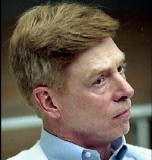
Jerry Mark
Mass murderer
4known / alleged victims
Similar offenders
HU
Humberto de la Torre
Mass murderer · USA · 1982
Humberto de la Torre pleaded guilty to first-degree murder for setting fire to…
25 victims
 James Huberty
Mass murderer · USA · 1984
James Oliver Huberty was a 41-year-old unemployed security guard. He was born i…
21 victims
James Huberty
Mass murderer · USA · 1984
James Oliver Huberty was a 41-year-old unemployed security guard. He was born i…
21 victims
 Charles Whitman
Mass murderer · USA · 1966
Charles Joseph Whitman (June 24, 1941 – August 1, 1966) shot and killed 14 peop…
15 victims
Charles Whitman
Mass murderer · USA · 1966
Charles Joseph Whitman (June 24, 1941 – August 1, 1966) shot and killed 14 peop…
15 victims
 George Emil Banks
Mass murderer · USA · 1982
George Emil Banks was an American mass murderer and a former Camp Hill prison g…
13 victims
George Emil Banks
Mass murderer · USA · 1982
George Emil Banks was an American mass murderer and a former Camp Hill prison g…
13 victims
 James Edward Pough
Mass murderer · USA · 1971
James Edward Pough (1948 – 18 June 1990) was an American mass murderer. On 18 J…
12 victims
James Edward Pough
Mass murderer · USA · 1971
James Edward Pough (1948 – 18 June 1990) was an American mass murderer. On 18 J…
12 victims
 James Ruppert
Mass murderer · USA · 1975
James Ruppert killed his mother, brother, sister-in-law, and eight nieces and n…
11 victims
James Ruppert
Mass murderer · USA · 1975
James Ruppert killed his mother, brother, sister-in-law, and eight nieces and n…
11 victims
Random profiles
 Sadashiv Sahu
Serial killer? · India · 2000
Sadashiv Sahu was identified as the suspect in a series of mystery killings of…
22 victims
Sadashiv Sahu
Serial killer? · India · 2000
Sadashiv Sahu was identified as the suspect in a series of mystery killings of…
22 victims
 James Allen Paul
Murderer · USA · 1984
James Allen Paul was sentenced to life imprisonment in New Jersey on July 27, 1…
3 victims
James Allen Paul
Murderer · USA · 1984
James Allen Paul was sentenced to life imprisonment in New Jersey on July 27, 1…
3 victims
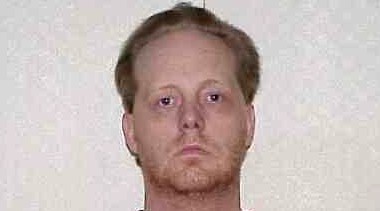 Donald Herb Johnson
Murderer · USA · 1989
Donald Herb Johnson was sentenced to death on October 1, 1997. Donald Herb John…
1 victim
Donald Herb Johnson
Murderer · USA · 1989
Donald Herb Johnson was sentenced to death on October 1, 1997. Donald Herb John…
1 victim
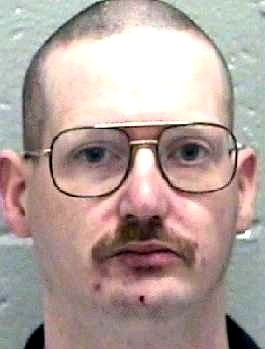 William David Riley
Murderer · USA · 2000
William David Riley, Sr. was a 32-year-old married man with three children. His…
3 victims
William David Riley
Murderer · USA · 2000
William David Riley, Sr. was a 32-year-old married man with three children. His…
3 victims
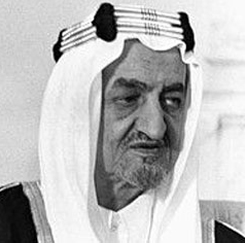 Faisal bin Musaid
Assassin · Saudi Arabia · 1975
Faisal bin Musaid bin Abdul-Aziz (April 4, 1944 - June 18, 1975) was the assass…
1 victim
Faisal bin Musaid
Assassin · Saudi Arabia · 1975
Faisal bin Musaid bin Abdul-Aziz (April 4, 1944 - June 18, 1975) was the assass…
1 victim
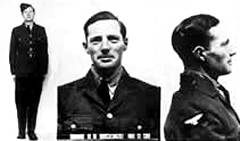 Gordon Cummins
Spree killer · United Kingdom · 1942
Gordon Frederick Cummins was called “The Count” due to his claims of noble birt…
4 victims
Gordon Cummins
Spree killer · United Kingdom · 1942
Gordon Frederick Cummins was called “The Count” due to his claims of noble birt…
4 victims
Case Facts
- Gender
- male
- Country
- USA
- Location
- Cedar Falls, Black Hawk County, Iowa, USA
- Date of birth
- 1943
- Age at first offence
- 32
- Characteristics
- —
- Victim profile
- His brother Leslie Mark, 25, his brother's wife Jorjean, 25, and their two children, Julie, 5, and Jeff, 1
- Method of murder
- Shooting
- Date(s) of murder
- November 1, 1975
- Years active
- 1975
- Date of arrest
- —
- Status
-
Life imprisonment
Sentenced to four consecutive life sentences in 1976
Case Summary
Names and relationships
- Jerry Mark (32 at conviction) was the brother of Leslie Mark and was convicted for the deaths of his brother, sister-in-law, and their two children.
- Leslie Mark was shot to death at their rural home in Cedar Falls.
- Jorjean (Jorjean) Mark was shot to death at their rural home in Cedar Falls.
- Julie Mark was shot to death (5-year-old).
- Jeffery Mark (Jeff) was shot to death (18-month-old).
- Dorothy Mark found the bodies of her younger son and his family at dawn on Nov. 1, 1975.
- Jerry Mark’s girlfriend lived in California; Jerry Mark called from Alda, Nebraska to his residence in California between 3:00 p.m. and 4:00 p.m. on Nov. 1, 1975, when her mother answered the phone.
- Wayne Mark was Leslie Mark’s father and was described as the brothers’ ailing father.
- Jean Doyle was a witness discussed in connection with an alleged sighting in North Platte, Nebraska.
- Leslie Warren was a maintenance employee at an eastbound rest area in Chappell, Nebraska.
- Robert Anton was an officer who testified about shoe prints at the crime scene.
- Donald Shearer testified and referenced a man named Larry Holmes.
- Larry Holmes was referenced as being at Stuckey’s and attended to Mark on Oct. 31, 1975.
- Karelyn Kemp and Mary Stinson were employees at the Shamrock Café in Atlantic, Iowa.
- James Prosser was referenced as being present at the café and denied Mark was there.
- Barbara Ann Smith was the manager of a Stuckey’s roadside store in Newton, Iowa.
- Delbert Van Hauen testified at trial regarding a gas station in Ackley, Iowa.
- Jayathan Hurd identified Mark as having patronized his gas station in Williams, Iowa.
- Rosalie McGinnis testified regarding a Conoco gas station in Stuart, Iowa.
- Deputy James Weiser was identified in connection with cigarette butt evidence.
- Criminalist Robert Harvey testified regarding blood typing tests on saliva from cigarette butts.
- Prosecutor Harry W. Zanville acknowledged a March 1976 memorandum.
- David Dutton was described as Mark’s trial prosecutor.
- Judge Donald O’Brien was described as a federal judge who ordered a retry or release.
- Senior U.S. District Judge Donald O’Brien wrote: “This court is not ruling that Mark is not guilty of the crimes,” “only that in a careful detailed review of the cumulative effect of all the evidence that was not disclosed, Mark did not receive a fair trial.”
- Iowa Supreme Court and Iowa Court of Appeals handled appeals and postconviction proceedings; Iowa Supreme Court denied discretionary review.
- U.S. Court of Appeals for the Eighth Circuit judges were MELLOY, SMITH and GRUENDER (August 16, 2007).
- Warden John Ault and Warden Herb Maschner and Warden Ken Burger were named as defendants in the Eighth Circuit case caption.
- Counsel who presented argument:
- AAG Robert P. Ewald (for the appellant/cross-appellee).
- Paul Herschel Rosenberg (for the appellee/cross-appellant).
- Attorneys and officials discussed:
- Assistant Attorney General Bob Ewald.
- Iowa attorney general’s office spokesman Bob Brammer.
- Mark’s co-counsel Jim Cleary.
- Defense attorney Paul Rosenberg.
Status / outcome
- Jerry Mark was convicted in 1976 of killing his brother and sister-in-law and their two children in their Cedar Falls home.
- He received a sentence of life imprisonment, and the case status field stated “Sentenced to four consecutive life sentences in 1976.”
- Mark filed another appeal and sought post-conviction relief arguing the 1976 murder trial was unfair and that he should be released from prison.
- In August 2007, an order for a new trial in U.S. District Court was reversed, and the conviction was upheld, after appeal to the U.S. Eighth Circuit Court of Appeals.
- In the Eighth Circuit decision dated August 16, 2007, the court:
- reversed the district court’s grant of Mark’s petition for writ of habeas corpus; and
- affirmed the denial of Mark’s motion to expand the record;
- remanded with instructions to enter an order denying Mark’s petition with prejudice.
Timeline
- Nov. 1, 1975 (between 1:00 a.m. and 3:00 a.m.) — Four persons were shot to death in their home at the Leslie Mark farm in Black Hawk County, Iowa: Leslie Mark, Jorjean Mark, Julie (5-year-old), and Jeffery (18-month-old).
- Oct. 3, 1975 — Mark purchased a white helmet and a used 450cc Honda motorcycle near his residence in Berkeley, California.
- Oct. 20, 1975 — Mark purchased one box of fifty .38 caliber Winchester Western Long Colt bullets manufactured in 1975 from Ken’s Sport Shop in Paso Robles, California, using his Iowa driver’s license for identification.
- Oct. 28, 1975 — Mark bought a black Belstaff riding suit and a pair of motorcycle gloves from a Honda dealership in Berkeley, California.
- Oct. 29, 1975 (morning) — Jerry Mark left his apartment in Berkeley on his 450cc motorcycle.
- Oct. 31, 1975 (morning) — He arrived in Chappell, Nebraska.
- Oct. 31, 1975 (approx. 8:00 p.m.) — He stopped at a Holiday gas station at approximately 8:00 p.m. on Oct. 31 in Ackley, Iowa.
- Nov. 1, 1975 (approx. early morning hours) — He was at the Leslie Mark farm in the early morning hours of Nov. 1.
- Nov. 1, 1975 (approx. 5:00 a.m.) — He was next observed in Williams, Iowa, sixty-six miles west of the Mark farmhouse.
- Nov. 1, 1975 (7:30 a.m.) — He was seen in Stuart, Iowa.
- Nov. 1, 1975 (between 3:00 p.m. and 4:00 p.m.) — He called his residence in California from Alda, Nebraska, and her mother answered the phone.
- 1976 — An Iowa jury convicted Jerry Mark on four counts of first-degree murder; he was sentenced to life imprisonment (stated as four consecutive life sentences in the case status field).
- 1979 — The Iowa Supreme Court upheld Mark’s conviction (as described in the case materials).
- 1995 — Mark filed a postconviction relief petition that was denied by the Iowa District Court for Black Hawk County; Mark’s conviction was upheld through postconviction proceedings described as involving Brady claims.
- 1997 — Mark filed a pro-se petition for writ of habeas corpus in U.S. District Court (Northern District of Iowa); the Iowa Supreme Court denied discretionary review of Mark’s appeals, and the Iowa Court of Appeals had previously upheld the conviction (as described).
- Feb. 3, 1995 — The Iowa District Court denied Mark’s PCR petition, holding there was no reasonable probability the trial results would have been different had the material been disclosed.
- 1997 (as described) — Mark’s appeals twice reached Iowa’s appellate courts, including the Iowa Court of Appeals in 1997, with conviction upheld.
- Sept. 2, 2006 — A federal jurist rules Iowa prosecutors hid facts in ’75 slayings; a judge ordered Iowa authorities to retry or release a man convicted of the Cedar Falls murder case.
- Sept. 2006 — An order for a new trial was granted in U.S. District Court, later reversed on appeal.
- Aug. 31, 2006 — Mark v. Burger, No. 97-4059, 2006 WL 2556577, at *12, 22, 77 (N.D. Iowa Aug. 31, 2006) is referenced in discussion of issues the district court addressed.
- June 12, 2007 — Case back in court (AP) described attorneys arguing the fate of the convicted man and stated his conviction had been overturned last year and was pending appeal.
- Aug. 2007 — A decision reversed the earlier order in U.S. District Court; the conviction was upheld after appeal to the U.S.
- Aug. 16, 2007 — The Eighth Circuit issued its decision in Mark v. Ault (Nos. 06-3476, 06-3513), affirming denial of the motion to expand the record and reversing the grant of the writ of habeas corpus; remanded with instructions to deny the petition with prejudice.
- 2005 — The FBI Laboratory permanently discontinued bullet lead analysis after the National Research Council expressed concerns over interpretation of test results.
- In the 1990s — After DNA testing became available, the butts from the farmhouse were examined and excluded Jerry Mark as the smoker (as described).
- two years ago (from 2005 narrative) — DNA excluded Mark from saliva found on cigarette butts recovered from several rooms in the farmhouse.
The offence
On Nov. 1, 1975, between 1:00 a.m. and 3:00 a.m., four persons were shot to death in their home at the Leslie Mark farm in Black Hawk County, Iowa.
- The four victims were related to Mark: Leslie Mark, Mark’s brother; Leslie’s wife Jorjean; their five-year-old daughter Julie; and their eighteen-month-old son Jeffery.
- The Eighth Circuit background section described how the murders were carried out:
- Mark cut the wires in the telephone terminal box across the road from the Leslie Mark farmhouse and dropped two .38 caliber Long Colt bullets on the ground.
- Mark walked up the driveway to the Mark residence, walked past the house to a camper where Leslie occasionally slept, returned to the house, used a key that normally hung by the back door, and entered the house.
- In the basement, he turned off the power and smoked two Marlboro cigarettes.
- He shot Leslie and Jorjean in their bedroom on the main floor, killing them with multiple gunshots described as fatal.
- He fatally shot Julie twice, including one shot through the heart and one through her right eye.
- He shot the infant Jeffery twice, including one in the left chest and one above the right eye, killing him.
- After leaving the farm, he was next observed in Williams, Iowa at about 5:00 a.m. and seen in Stuart by 7:30 a.m., and he made a phone call to California from Alda between 3:00 p.m. and 4:00 p.m.
Motive and dispute
- The materials described a dispute over inheritance of the family farm, stating Mark killed the family because of disagreement over inheritance.
- Prosecutors invoked the biblical brothers Cain and Abel, contending at Mark’s trial that he told a friend: “My little brother screwed me out of my farm.”
- The Eighth Circuit discussion described that Mark and his brother had disagreed over the distribution of their father’s estate, and Mark was repeatedly heard saying that he “hated his little brother and would never forgive him for screwing him out of the farm.”
Investigation and evidence
Firearms and purchases
- The Eighth Circuit background described that on Oct. 20, 1975, Mark purchased one box of fifty .38 caliber Winchester Western Long Colt bullets manufactured in 1975 from Ken’s Sport Shop in Paso Robles, California, using his Iowa driver’s license.
- The background also described access to a pistol capable of firing these bullets.
- The background described that Mark removed the Iowa license plate from his 100cc Honda and put the plate on the 450cc Honda.
- The background described that Mark cut telephone wires across from the farmhouse on the night of the murders and dropped two .38 caliber Long Colt bullets on the ground during the process.
Route, motorcycle, and sightings
- The Eighth Circuit background described a route through multiple locations from Oct. 29 to Nov. 1, with stops including Lovelock, Nevada; Cheyenne, Wyoming; Chappell, Nebraska; Brady, Nebraska (at a Stuckeys Pecan Shoppe); Atlantic, Iowa (at the Shamrock Cafe); Newton (at another Stuckeys Pecan Shoppe); Ackley (Holiday gas station at approximately 8:00 p.m. on Oct. 31); and then the early morning hours of Nov. 1 at the farm.
- Mark’s route statements to police were discussed:
- Mark admitted going on a road trip but contended he never reached Cedar Falls.
- He initially lied to police about the route of a motorcycle trip and his purchase of .38-caliber Long Colt bullets in California a month earlier.
- In the Eighth Circuit discussion, Mark originally stated he left California on Oct. 29 and traveled south to the Mojave Desert, later admitted traveling as far east as the panhandle of Nebraska, but denied traveling farther than fifty miles east of Chappell, Nebraska.
Telephone wiring and entry
- Investigators learned that telephone wires leading to a neighboring farm had been cut on the night of the murders.
- The telephone wires had been re-routed during the summer of 1974, and investigators described that Mark would have been familiar with the wires only as they existed before they were re-routed.
- Evidence included that Mark knew the key to the back door of the house hung from a nail on the back porch.
Shoe prints
- Officer Robert Anton testified at trial that shoe prints indicated the murderer had a shoe length of twelve inches and that the sole pattern indicated Converse brand shoes called “Indy 500.”
- Anton measured size eleven Converse Indy 500 shoes and reported measurements for the two shoes.
- Anton also stated that when Mark tried on size eleven and size eleven-and-a-half shoes, Mark complained the former did not fit properly and that the latter fit “rather well.”
- Two podiatrists also testified that Mark had the same unusual, if not unique, combination of gait characteristics as those exhibited by the shoe prints.
- The actual shoes worn by the murderer were never recovered.
Cigarettes, saliva, and DNA evidence
- At trial, the State presented evidence that all four cigarette butts were smoked by a person with “type-O secretor blood,” the same type of blood as Mark.
- Criminalist Robert Harvey testified at trial that tests indicated all four cigarettes were smoked by a person with type-O blood, and Mark’s blood was type-O and he also smoked Marlboro cigarettes.
- The postconviction dispute included discovery that before trial it was discovered that the cigarette in the upstairs room was smoked by Deputy James Weiser, whose blood type was type-A, and that “it is “not uncommon for a small saliva sample taken from a type-A secretor to have a type-O test result.”
- DNA testing later excluded Mark as the smoker:
- In the 1990s, the butts were examined and excluded Jerry Mark as the smoker (as described in the narrative).
- The Eighth Circuit cross-appeal section described specific DNA testing results from four cigarette butts designated “AJ,” “CO,” “DM-1,” and “DM-2”:
- “CO” eliminated Mark’s profile.
- “DM-2” eliminated Mark’s and Deputy Weiser’s profiles.
- Insufficient sample size prevented DNA profiles for “AJ” and “DM-1.”
Bullet lead analysis
- The trial introduced evidence that lead from the fatal bullets was similar to other bullets of the same caliber on the shelf of a California store where Jerry Mark had purchased ammunition before the murders.
- The materials stated this technique had later come under fire, and in 2005 the FBI Laboratory permanently discontinued bullet lead analysis after the National Research Council expressed concerns over interpretation of test results.
- Mark argued in court records that bullet analysis from his trial was misleading and the cigarette butt testimony was improper and prejudicial.
Other physical evidence sought for DNA testing
- Mark sought DNA tests for other evidence found at the farmhouse, including:
- fingernail scraping from Les and his wife,
- the wife’s nightgown,
- bedding,
- the interior of two leather gloves,
- and two condoms.
- Mark described one of the mystery cigarette butts—one found in the daughter’s room—as pivotal and stated: “It alone will prove my innocence,” in court records.
Arrest and police interviews
- The materials described that Mark initially lied to police about the route of a motorcycle trip and about his purchase of a box of rare .38-caliber Long Colt bullets.
- During police questioning after the murders, Mark lied about his route.
- In the Eighth Circuit background, the evidence included telephone records and a phone call where Mark’s girlfriend’s mother asked him, “Jerry, where are you?” and Mark replied, “I can’t say.”
Trial
Charges and conviction
- Mark was charged with four counts of first-degree murder.
- A trial took place in Iowa District Court for Woodbury County.
- The Eighth Circuit stated the jury convicted Mark on all four counts.
- The materials also stated Mark did not testify at trial.
Prosecution theory and evidence used
- Prosecutors argued that Mark drove his motorcycle from his home in California to the farm, committed the murders, then fled.
- The prosecution theory included motive drawn from inheritance dispute and jealousy associated with Cain and Abel.
- Prosecutors introduced evidence including:
- purchases of bullets and ammunition and clothing,
- timing and route evidence including witness sightings,
- telephone wiring being cut across the road from the farmhouse,
- entry into the house using a back-door key,
- evidence about shoe prints,
- and evidence about cigarette butts and blood typing.
Witness testimony disputes
- Mark’s appeals included disputes about withheld evidence relating to witness identifications and alibi evidence, including:
- Jean Doyle’s identification involving a truck stop in North Platte, Nebraska,
- witness Leslie Warren and disputed work/appointment timing,
- inconsistent testimony from witnesses connected to Stuckey’s, Shamrock Cafe, gas stations in Ackley, Williams, and Stuart,
- and issues related to shoe prints and bullet availability.
- Defense attorney Paul Rosenberg argued:
- “The place was a mess, everyone was smoking - in styrofoam cups, everywhere,”
- and “... It was Jerry Mark that was trying to get to the truth and the state stood in the way.”
Sentencing
- Mark was sentenced to life imprisonment for the gunshot slayings of Leslie and Jorjean Mark and their children.
- The case status field stated he was sentenced to four consecutive life sentences in 1976.
Appeals and post-conviction proceedings
Iowa appellate review
- The Iowa Supreme Court concluded on direct appeal that the jury could have determined the course of events described, and affirmed Mark’s conviction and sentence.
- Mark claimed that the State suppressed numerous pieces of material exculpatory evidence in violation of due process rights under Brady v. Maryland.
- Mark’s direct appeal was affirmed by the Iowa Supreme Court; the Iowa Supreme Court upheld the conviction and sentence.
- Mark filed a petition for postconviction relief in the Iowa District Court for Black Hawk County. The district court denied the PCR petition on Feb. 3, 1995, holding there was no reasonable probability the trial results would have been different had the material been disclosed.
- On appeal of denial of PCR, the Iowa Court of Appeals addressed Mark’s Brady claims in detail and arranged them into six categories, ultimately affirming the district court’s denial of postconviction relief in its entirety.
- Mark sought discretionary review in the Iowa Supreme Court, which denied review.
Federal habeas and Eighth Circuit
- In 1997, Mark filed a timely pro-se petition for writ of habeas corpus in the U.S. District Court for the Northern District of Iowa, raising the same Brady claims as in state court.
- After counsel was appointed, Mark requested discovery/testing for DNA profiling on the four cigarette butts found at the crime scene.
- Initially, the district court granted the DNA discovery motion and expanded the record with DNA-profile test results, but later reversed and denied the motion to expand the record with the DNA results.
- The district court then granted Mark’s habeas petition, holding that the State’s suppression of twenty-four pieces of evidence violated Mark’s due process rights.
- Warden Ault appealed the grant of habeas relief; Mark cross-appealed the denial of his motion to expand the record with DNA results.
- The Eighth Circuit decision dated August 16, 2007:
- affirmed denial of Mark’s motion to expand the record;
- reversed the district court’s grant of the petition for writ of habeas corpus;
- and remanded with instructions to enter an order denying Mark’s petition with prejudice.
Claims on appeal described
- The district court had ruled that prosecutors withheld key evidence that could have proven Mark’s innocence and described suppression as a “gross” and “flagrant” violation of prosecutors’ duties by Senior U.S. District Judge Donald O’Brien.
- O’Brien wrote: “This court is not ruling that Mark is not guilty of the crimes,” only that after reviewing the cumulative effect of all undisclosed evidence, Mark did not receive a fair trial.
- Mark filed applications arguing actual innocence and the unfairness of the 1976 trial due to developments in forensic science, including DNA testing availability and issues with bullet lead analysis.
Other details
Mark’s statements and claims of innocence
- Mark continued to deny any involvement in the slayings and sought new trial relief.
- In the most recent application for post-conviction relief, Mark said: “I am innocent. I did not shoot my brother, Les, and his family, and I come before the court claiming actual innocence.”
- The materials described Mark’s assertion in court records that he believed one cigarette butt was “pivotal” and included: “It alone will prove my innocence,”.
- Mark said in court records: “Here’s why I got convicted. I lied to the cops, and I bought the bullets.”
- During a postconviction hearing, a trial attorney testified about obtaining information from prosecutors, stating: “was like tooth and nail. You couldn't get anything out of them,” and “Nobody volunteered anything.”
- Mark’s account about his lies included:
- he initially misled police about his trip because he didn’t want his girlfriend to know he took a female hitchhiker to Wyoming;
- he denied ever entering Iowa;
- witnesses put him within 30 miles of Cedar Falls.
Additional disputes mentioned
- The materials described disputes over:
- blood typing tests and the possibility that a particular upstairs-room cigarette butt might not have been a Marlboro cigarette,
- whether witness Jean Doyle’s testimony involved a tentative identification and contradictions about timing,
- whether maintenance employee Leslie Warren was seen at work or at a doctor’s appointment,
- inconsistencies in identifications by witnesses at Stuckey’s and gas stations,
- and bullet availability in Iowa based on an undisclosed police report about a partial box of bullets being obtained by police from Olson’s Boathouse in Waterloo, Iowa.
DNA testing results specifics (cigarette butts)
- The Eighth Circuit described the cigarette butts by designation and discovery locations:
- “AJ” was discovered on the floor of Julie Mark’s upstairs bedroom.
- “CO” was discovered in an unused upstairs bedroom.
- “DM-1” and “DM-2” were discovered in the basement near an electrical box.
- The Eighth Circuit described that at trial the State presented evidence that all four cigarette butts were smoked by a person with type-O secretor blood, and Mark cross-examined to establish the error rate of blood-type testing and that Mark’s blood type was common among the general population.
- The Eighth Circuit stated the State did not mention the blood-type test results on the cigarette butts in closing or rebuttal arguments.
Bullet lead analysis discontinuation
- The materials stated that in 2005, the FBI Laboratory permanently discontinued bullet lead analysis after the National Research Council expressed concerns over interpretation of test results.
Court procedure related to evidence expansion
- The Eighth Circuit’s cross-appeal section discussed Mark’s motion to expand the record and the exhaustion issue:
- Mark did not present the new DNA evidence to the state courts.
- The Eighth Circuit affirmed denial of the motion to expand the record.
- The Eighth Circuit described requirements under 28 U.S.C. § 2254(b)(1), § 2254(e)(2), and Rule 7, and concluded Mark failed to show that the new DNA evidence was clear and convincing evidence such that no reasonable factfinder would have found him guilty.
Quotes
- Mark said: “I am innocent.
- “...
- Senior U.S. District Judge Donald O’Brien wrote:
- “This court is not ruling that Mark is not guilty of the crimes,”
- “only that in a careful detailed review of the cumulative effect of all the evidence that was not disclosed, Mark did not receive a fair trial.”
- Mark’s statement in court records: “It alone will prove my innocence,”
- Mark’s statement in late February at prison: “Here's why I got convicted.
- The biblical Cain and Abel motivation included a quoted statement at Mark’s trial attributed to Mark: “My little brother screwed me out of my farm.”
- In the Eighth Circuit background, Mark’s girlfriend’s mother asked him: “Jerry, where are you?” and Mark replied: “I can’t say.”
- A trial attorney testified about discovery efforts: “was like tooth and nail.
- In the Eighth Circuit discussion, Mark was described as having said: “hated his little brother and would never forgive him for screwing him out of the farm.”

Spotted an error, or have more information about this case?