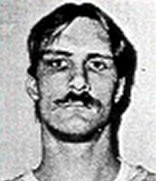
Douglas Gretzler
Serial killer Donald Henry Gaskins
Serial killer · USA · 1969
Donald Henry Gaskins, also known as Donald “Pee Wee” Gaskins, was a serial kill…
200 victims
Donald Henry Gaskins
Serial killer · USA · 1969
Donald Henry Gaskins, also known as Donald “Pee Wee” Gaskins, was a serial kill…
200 victims
 Carl Eugene Watts
Serial killer · USA · 1974
Carl Eugene Watts (born November 7, 1953; died September 21, 2007), also known…
100 victims
Carl Eugene Watts
Serial killer · USA · 1974
Carl Eugene Watts (born November 7, 1953; died September 21, 2007), also known…
100 victims
 Rodney Alcala
Serial killer · USA · 1977
Rodney James Alcala (born August 23, 1943) was also known as Rodrigo Jacques Al…
100 victims
Rodney Alcala
Serial killer · USA · 1977
Rodney James Alcala (born August 23, 1943) was also known as Rodrigo Jacques Al…
100 victims
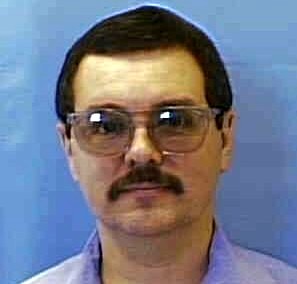 Donald Harvey
Serial killer · USA · 1970
Donald Harvey was known as an American serial killer and a self-professed “Ange…
87 victims
Donald Harvey
Serial killer · USA · 1970
Donald Harvey was known as an American serial killer and a self-professed “Ange…
87 victims
 Donald Leroy Evans
Serial killer · USA · 1975
Donald Leroy Evans (born July 5, 1957) was an American serial killer who murder…
60 victims
Donald Leroy Evans
Serial killer · USA · 1975
Donald Leroy Evans (born July 5, 1957) was an American serial killer who murder…
60 victims
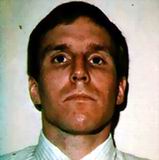 Michael Swango
Serial killer · USA · 1981
Michael Swango (Joseph Michael Swango) was a physician and American serial kill…
60 victims
Michael Swango
Serial killer · USA · 1981
Michael Swango (Joseph Michael Swango) was a physician and American serial kill…
60 victims
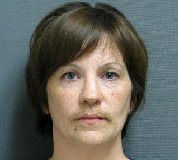 Christine Billis
Murderer · USA · 2009
Christine Billis drove the family car into a towering pine tree in Charleston,…
1 victim
Christine Billis
Murderer · USA · 2009
Christine Billis drove the family car into a towering pine tree in Charleston,…
1 victim
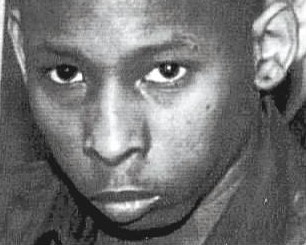 Ronald Lee Fitzgerald
Murderer · USA · 1993
January 29, 1993 — Ronald Lee Fitzgerald was convicted of capital murder in sla…
2 victims
Ronald Lee Fitzgerald
Murderer · USA · 1993
January 29, 1993 — Ronald Lee Fitzgerald was convicted of capital murder in sla…
2 victims
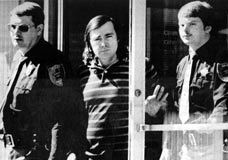 Randall Lee Smith
Murderer · USA · 1981
Randall Lee Smith (1954 – 10 May 2008) was from Pearisburg, Virginia. He was 54…
2 victims
Randall Lee Smith
Murderer · USA · 1981
Randall Lee Smith (1954 – 10 May 2008) was from Pearisburg, Virginia. He was 54…
2 victims
 David Rocheville
Murderer · USA · 1991
David Rocheville (1967 or 1968 – December 3, 1999) was executed by lethal injec…
2 victims
David Rocheville
Murderer · USA · 1991
David Rocheville (1967 or 1968 – December 3, 1999) was executed by lethal injec…
2 victims
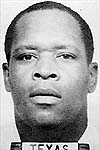 Curtis Lee Johnson
Murderer · USA · 1983
Curtis Lee Johnson was executed by lethal injection in Texas on August 11, 1992…
1 victim
Curtis Lee Johnson
Murderer · USA · 1983
Curtis Lee Johnson was executed by lethal injection in Texas on August 11, 1992…
1 victim
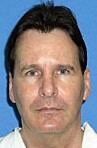 Robert Rowell
Murderer · USA · 1993
Robert Dale Rowell was a white male. He was 50 years old at the time of executi…
3 victims
Robert Rowell
Murderer · USA · 1993
Robert Dale Rowell was a white male. He was 50 years old at the time of executi…
3 victims
- Gender
- male
- Country
- USA
- Location
- Arizona/California, USA
- Date of birth
- May 21, 1951
- Age at first offence
- 22
- Characteristics
- crime spree, robbery
- Victim profile
- Men and women
- Method of murder
- Shooting
- Date(s) of murder
- October-November 1973
- Years active
- 1973
- Date of arrest
- November 10, 1973
- Status
-
Executed
Executed by lethal injection in Arizona on June 3, 1998
Case record: Douglas Gretzler
Status / outcome
Douglas Gretzler was executed by lethal injection in Arizona on June 3, 1998.
Timeline
- November 3, 1973 — Douglas Gretzler and Willie Luther Steelman forced Michael Sandberg at gunpoint from the parking lot of his condominium complex into their home in Tucson; they bound and gagged Michael and Patricia Sandberg. Gretzler shot Michael Sandberg, then shot Patricia Sandberg in the head; Steelman fired another shot into her body. They took the Sandbergs’ credit cards, checks, a camera, and their car, and left for California.
- November 6, 1973 — Gretzler and Steelman arrived at the ranch house of Walter Parkin and Joanne Parkin while they were away bowling; they abducted those present, shot the Parkins to death, and stuffed additional bodies into a closet.
- November 8, 1973 — Steelman was recognized when he checked into a Sacramento hotel.
- November 15, 1976 — Sentencing occurred.
- October 23, 1981 — Resentencing occurred.
- October 14, 1975 — Start of trial occurred.
- November 5, 1975 — Verdict occurred.
- June 3, 1998 — Douglas Gretzler was executed by lethal injection in Arizona.
Background
Douglas Gretzler was born in 1951 and was described as a native of the Bronx. When he was sentenced to death for murdering a Tucson couple, he was 25.
Gretzler and Willie Luther Steelman met on October 11, 1973. Steelman was described as 28 years old at the time they met. Steelman had been committed to a mental institution and had a record of arrests around Lodi, California, including prison time on a conviction of forgery. The men became inseparable and traveled in search of victims, stealing to finance their travels and Steelman’s heroin addiction.
Gretzler’s criminal record before the events described included minor traffic charges and one count of vagrancy, and later it included nine prior convictions punishable by either death or life imprisonment in Arizona.
The offence
Armed robbery and abduction involving Michael and Patricia Sandberg (Tucson)
On November 3, 1973, Gretzler and Steelman forced Michael Sandberg at gunpoint from the parking lot of his condominium complex into his home in Tucson. Patricia Sandberg was studying.
They bound and gagged the Sandbergs. When night fell:
- Gretzler shot Michael Sandberg while Michael was bound and lying on the bed.
- Gretzler then shot Patricia Sandberg in the head as Patricia lay bound on the living room couch; Patricia was later entirely covered by a blanket during the killing.
- Steelman fired another shot into Patricia’s body.
Gretzler and Steelman then took Michael and Patricia Sandberg’s credit cards, checks, a camera, and their car, and left for California.
During the Sandberg incident, Gretzler dyed his blond hair to brown, and Gretzler and Steelman changed from jeans to slacks and coats belonging to Michael Sandberg. They drove away in the Sandbergs’ car. They also wiped down the condominium in an attempt to eliminate their fingerprints.
Additional killings and robberies during a multi-state crime spree
In the period described, Gretzler and Steelman committed crimes across Arizona and California. The material described multiple kidnappings, murders, and thefts connected to the overall spree.
The material described the following connected events in the underlying facts section of the federal appellate decision:
- On 11 October 1973, Gretzler, Steelman, and a woman friend left Denver for Phoenix, Arizona.
- In Globe, Arizona, the two men committed an armed robbery of a sunbathing couple, netting five dollars.
- Later the same day, they picked up a hitchhiker, tied him to a tree, and stole his clothes, a ring, and twenty dollars.
- On 15 October, they arrived in Phoenix where they pawned the ring and robbed a woman of twenty dollars and some checks.
- Shortly after arriving in Phoenix, Steelman and an Arizona acquaintance known as “Preacher” went out to settle a drug-related dispute involving Preacher’s brother; both Preacher and his brother died in the resulting melee.
- Through two young men, Ken Unrein and Mike Adshade, Gretzler and Steelman learned that acquaintances of Steelman named Bob Robbins and Yafah Hacohen were living at an area trailer park; all four visited the couple.
- Following the visit, Gretzler and Steelman kidnapped Unrein and Adshade in their Volkswagen van and drove to Stanislaus County, California.
- On 17 October 1973, they garroted and stabbed Unrein and Adshade to death, hid the bodies, and continued driving until the Volkswagen stopped running, after which they began to hitchhike.
- On 20 October, they kidnapped a young couple who stopped for them near Petaluma, California.
- Steelman raped the woman captive.
- Eventually both victims were released at an underground garage, where Gretzler and Steelman stole another car.
- Concerned about being connected to the disappearance of Unrein and Adshade, they decided to return to Arizona and silence the couple.
- On the way to Phoenix, they picked up a hitchhiker named Steve Loughren.
- They stayed overnight with Robbins and Hacohen; the following evening, Gretzler and Steelman murdered Loughren near the Superstition Mountains.
- They returned to their friends’ trailer.
- On 25 October, while Hacohen was at work, they garroted and shot Robbins to death and hid his body; when Hacohen returned home, she was also murdered.
- They moved on to Tucson and shared a “crash pad” with local street people.
- On 2 November, while hitchhiking with Tucson acquaintances, they were picked up by Gilbert Sierra, whom they murdered later that night. The material described that they drove the victim’s car to a parking lot, wiped fingerprints off the vehicle, and abandoned it.
- On 3 November, Gretzler and Steelman kidnapped Vincent Armstrong who stopped for them while hitchhiking; Armstrong escaped from his moving car and notified police of his abduction and the theft of his vehicle.
- Gretzler and Steelman drove Armstrong’s Pontiac Firebird to a Tucson condominium complex where Michael Sandberg was washing his white Datsun in the parking lot.
- After forcing Sandberg to their condominium, the Sandbergs were bound, gagged, and killed as described above.
- After leaving Tucson, the material described meeting acquaintances planned for California; the only person at the meeting-place was Donald Scott.
- Scott testified he rode in a stolen car and saw Steelman pay for motel rooms and automobile service with Michael Sandberg’s American Express card.
- Scott said he was told he could leave if things became “too much,” and that Scott left when Gretzler and Steelman stopped for gas in Pine Valley, California.
- In California, Gretzler and Steelman continued to Lodi, California and entered the home of the Walter Parkin family, taking as hostages all present and others who arrived later; the material described a theft of between $3,000 and $4,000 from a store safe after forcing Walter Parkin to open it.
- Afterwards, Gretzler shot to death seven adults who had been previously bound and gagged. The material described the killing of two sleeping children as well, with a blanket over their heads and Gretzler killing one child while waiting for Steelman to shoot the second.
- A few days later, Gretzler and Steelman were arrested in California as suspects in the Parkin homicides.
- When Tucson police discovered the Sandbergs’ bodies after learning that Gretzler and Steelman had been driving Michael Sandberg’s car, Gretzler confessed to the murders of Michael and Patricia Sandberg.
- The material described that Gretzler had already killed other people in Arizona before the Tucson Sandberg murders, including a kidnapping and robbery of Vincent Armstrong and a separate murder described involving Gilbert Sierra.
Investigation and arrest
The material described that authorities in Arizona had issued warrants for Gretzler and Steelman before they reached Victor, California, on November 6.
The material described that police published mug shots of Steelman, and that Steelman was recognized when he checked into a Sacramento hotel on November 8. The material stated that Gretzler was arrested in the hotel by police armed with shotguns, and Steelman was later apprehended in a nearby building.
After the apprehension, Gretzler and Steelman were booked on nine charges of first-degree murder, and the material described that:
- Gretzler cracked under interrogation and directed police to the scattered bodies of other victims.
- Steelman kept silent and refused to enter a plea on the charges.
The material described that Tucson police traced the car registered to Michael Sandberg to the Tucson condominium complex, where they found the decomposing bodies of University of Arizona students Michael and Patricia Sandberg. Shortly thereafter, Gretzler confessed to the murders of Michael and Patricia Sandberg.
Trial
Proceedings and judges
The material provided trial and post-conviction procedural details, including:
- Presiding Judge: William E. Druke
- Prosecutors: David G. Dingeldine (trial and sentencing), Lynn Gallagher (resentencing)
- Start of Trial: October 14, 1975
- Verdict: November 5, 1975
- Sentencing: November 15, 1976
- Resentencing: October 23, 1981
In the Arizona proceeding described, the jury found Gretzler guilty on all counts. The material also stated that Gretzler pleaded guilty in California to nine counts of first degree murder for the Parkin killings and was sentenced to nine concurrent terms of life imprisonment for those convictions. Gretzler and Steelman were extradited to Arizona to stand trial for the murders, burglary and robbery of Michael and Patricia Sandberg, and for the kidnapping and robbery of Vincent Armstrong.
Guilty findings and sentencing scope
The material stated:
- The jury found Gretzler guilty on all counts.
- Gretzler was sentenced to death for the two murders (Michael and Patricia Sandberg).
- Gretzler received concurrent terms of imprisonment, ranging from twenty-five to fifty years, on the remaining counts.
The material also described that:
- The Arizona Supreme Court affirmed Gretzler’s convictions on all counts.
- The Supreme Court upheld sentences on the kidnapping, robbery, and burglary counts but remanded for resentencing on the two murder counts.
- On remand, the trial court resentenced Gretzler to death on both counts.
- The sentences were affirmed on appeal.
Sentencing and aggravating/mitigating circumstances
The material described the aggravating circumstances found on resentencing:
- Gretzler had nine prior convictions punishable by either death or life imprisonment in Arizona.
- The nine prior convictions involved crimes of violence.
- The two Arizona murders were committed for pecuniary gain.
- The killings were especially heinous, cruel, or depraved.
Mitigating circumstances were described as none sufficient to call for leniency, and the material described the trial court found a mitigating circumstance of significantly impaired capacity to appreciate the wrongfulness of conduct and/or to conform conduct to the requirements of the law, but rejected that it was substantial enough to warrant leniency.
Appeals and habeas corpus
The material included multiple published opinions:
State v. Gretzler, 126 Ariz. 60, 612 P.2d 1023 (1980).
State v. Gretzler, 135 Ariz. 42, 659 P.2d 1 (1983).
Gretzler filed a petition for post-conviction relief (“PCR”) in state court in 1983.
Following a hearing with oral argument, the trial court denied relief in 1984 and rejected Gretzler’s request for rehearing in 1985.
After the Arizona Supreme Court denied review, Gretzler filed a second PCR in state court, subsequently amended.
The district court stayed proceedings pending resolution of Gretzler’s second PCR.
In 1986, the state court denied relief and rehearing in the second PCR, and the Arizona Supreme Court denied review in 1987.
The district court lifted its stay in 1987.
In the following year, the district court granted a motion for partial summary judgment for the respondent and again stayed proceedings pending resolution of the appeal in Adamson v. Ricketts, 865 F.2d 1011 (9th Cir. 1988) (en banc), cert. denied sub nom. Lewis v. Adamson, 497 U.S. 1031.
In 1991, the district court lifted its second stay, and Gretzler filed an amended petition for writ of habeas corpus in 1992.
In 1995, the district court granted summary judgment for the respondent and dismissed the amended petition.
Gretzler appealed, and the material included the Ninth Circuit case:
- 112 F.3d 992, Douglas Edward Gretzler, Petitioner-appellant, v. Terry L. Stewart, Director of the Arizona Department Of Corrections, Respondent-appellee.
- Argued and submitted Sept. 27, 1996; decided April 30, 1997.
- The panel included FARRIS, PREGERSON, and LEAVY, Circuit Judges.
- The court affirmed the district court’s decision granting summary judgment to the respondent.
The material also listed the issues Gretzler asserted on appeal in the federal proceedings:
- Denial of access to psychiatric experts.
- Ineffective assistance of counsel for failure to pursue psychiatric or drug intoxication defense.
- Admission of custodial statements after invoking Miranda rights.
- Consideration of California guilty pleas as death penalty aggravating factors.
- Unconstitutionally vague aggravating factor.
- Double jeopardy from considering California convictions as two aggravating factors.
- Failure to require proof beyond a reasonable doubt for aggravating factors.
- Consideration of non-statutory aggravating factors in Arizona Supreme Court review.
- Improper consideration of a pro-death penalty statement from the father of a victim.
- Ex parte communication with a deputy prosecutor concerning publicity around the death penalty.
The Ninth Circuit’s majority concluded there was no merit to any of the arguments and affirmed the denial of habeas relief.
The material included a dissent by PREGERSON, which said Gretzler was sentenced to death following a trial that lacked fundamental fairness and argued that the trial court’s failure to provide an independent psychiatrist violated due process rights; the dissent stated it would reverse and grant a new trial.
The material included the Arizona Supreme Court’s discussion in sentencing related to Arizona statutory aggravation standards, including the “heinous, cruel, or depraved” aggravating circumstance.
Quotations (verbatim)
Douglas Gretzler apologized before his execution, saying:
"From the bottom of my soul, I am so deeply sorry and have been for years for murdering Patricia and Michael Sandberg. Though I am being executed for that crime, I apologize to all 17 victims and their families."
The material included a statement attributed to the family of Walter Parkin:
"Hopefully this will bring some closure to a very sad chapter in our lives."
The material included a statement from Assistant Attorney General Paul McMurdie:
"if you are going to have a death penalty, it is tailor-made for Douglas Gretzler."
The material included a statement from Carla Ryan:
"I just don't think it's just for the government to kill anybody. These people should not be outside of prison walls but they should not be executed."
The material included a statement from Judge Betty Fletcher denying a stay of execution for Jose Ceja:
"if Ceja is executed, his de facto sentence will be 23 years of solitary confinement in the most horrible portion of the prison -- death row-- followed by execution. There has never been such a sentence imposed in this country--or any other to my knowledge. Neither Arizona nor any other state would ever enact a law calling for such a punishment."
The material included a statement from McMurdie in response to Judge Fletcher’s dissent:
"I can't imagine a more hypocritical statement"
The material included, within the plea proceedings, a court exchange quoted verbatim:
THE COURT: Now, Mr. Gretzler, and Mr. Dedekam, if it has been explained to you, all right, but if not, I would like to explain to you, that you understand that the pleas you have entered in this proceeding, of course, will not affect any other charge or charges which may be pending in any other jurisdiction? You understand that?
DEFENDANT GRETZLER: Yes.
THE COURT: This only takes care of the matters that are before this court in this county. DEFENDANT GRETZLER: That means they do not affect either way? THE COURT: That's right. That's correct. It has nothing to do with any other proceeding which may or has been initiated. Excuse me. I have been advised by counsel there is some proceeding in another state. And there's some proceeding in one or two other counties. Now I am not certain of that. But you understand, of course, whatever action is taken here, and your plea here does not affect those proceedings at all. You understand that? DEFENDANT GRETZLER: Right. I understand that.
The material also included a quotation attributed to Jack Earl:
(The quotation above appeared in the material as part of Gretzler’s apology; it was also present in the included excerpt near the end.)
The material also included the following quoted remarks by Jack Earl and others:
- "I realized quick that this wasn't about having my name on the front page. It was about my aunt and uncle. It was about me and Doug Gretzler."
- "I became a collector of his life."
- "I have taken this thing so far. I have sacrificed money and time and, oh hell, my marriage,"
- "To not see it through, I might regret it someday."
- "It dawned on me -- the magnitude of this -- and yet we didn't know why,"
- "One day it will come out. We'll find out why,"
- "Someday there'll be movie done, or somebody will write a book."
- "It was like a dream. There was never any reason,"
- "They were buried on Monday. Tuesday we all went our separate ways."
- "I can't even say that I spent tons of time thinking about it. It wasn't like I went to the trials and consumed myself with it,"
- "It was done and it was over."
- "It was just one of those moments when you sit down and say, `What have I done with my life? Why am I here in this place?'"
- "My aunt and uncle were still alive at this time. I knew what was going to happen. I wanted to jump into those pages and warn them."
- "One night I just opened up the binder and started reading. It was just like stepping back in time,"
- "I never looked at it as a commercial piece. It was just something I had to do. Like painting the picture, playing the piano."
- "Everything was a revelation. I got down there and it just became almost more than I could bear. I had to step on every piece of ground where he stepped,"
- "It was out of control."
- "I had to have all the little things that came together. I couldn't feel comfortable until I had every little piece of the puzzle."
- "I put it all together,"
- "Without even thinking. Because that was easier for Doug at the time,"
- "When I met him, that was the one thing he felt he had to explain to me -- that it went quick."
- "I didn't need to see him die,"
- "I didn't want to see him die. It's useless."
- "I understand. Have you ever told a lie that you can't take back and it eats at you? Figure killing 17,"
- "He wakes up every morning thinking about what he has done. It is with him 24 hours a day. He will never hurt anyone again."
- "He figured out what to steal, how to score and whom to kill, making sure to keep his partner, Gretzler, well-supplied with drugs."
- "Willie kept him loaded, and he appreciated it."
- "Steelman had reminded him, "No witnesses.""
- "Gretzler responded by snuffing out nine lives in a matter of seconds."
- "They could do in that third person what neither of them could do as an individual,"
- "Steelman didn't have the guts to pull the trigger on anyone. Gretzler never had the inclination."
- "The energy was immediate. Each filled a void in the other. Steelman was looking for an equal in this drug deal,"
- "Gretzler was looking to disappear. He was looking for unconsciousness. He was looking for someone to make the decisions from here on out."
Other details
Confessions and plea
The material described that Gretzler confessed to the murders of Michael and Patricia Sandberg shortly after Tucson police discovered the bodies.
It also described that Gretzler pleaded guilty in California to nine counts of first degree murder for the Parkin killings. The material said no trial was held in California based on those plea bargains.
Last meal
The material described Gretzler’s last meal as: Six fried eggs over easy, four strips of bacon (chewy), two slices of white bread toast (buttered), one cup of real coffee, two Classic Cokes over ice.
Cooperation with trial proceedings and legal representatives
The material described that Gretzler spent 7 years appealing his sentence in Arizona courts and that, for 14 years, his case had been tied up in federal courts.
The material described that Carla Ryan helped Gretzler get a stay of execution in 1983 and that she represented Steelman from 1983 until his death in 1986.
Victims and counts mentioned in the material
The material described deaths tied to the spree, including:
- The Sandbergs: Michael Sandberg and Patricia Sandberg.
- The Parkins: Walter Parkin and Joanne Parkin.
- Additional victims described in the federal facts section: Ken Unrein, Mike Adshade, Bob Robbins, Yafah Hacohen, Steve Loughren, Gilbert Sierra, Vincent Armstrong, and others connected to the Parkin household (including two children named Lisa and Robert in one portion of the material).
- The material stated that Gretzler admitted killing 17 people in California and Arizona in 1973.
- The federal facts section described kidnappings, murders, and a total of nine bodies removed/shot described in the Arizona portion, with the Parkin episode involving nine people present/hostages and the material also describing another total in the narrative portions.
(These counts and victim names were preserved as stated in the included material.)
Spotted an error, or have more information about this case?