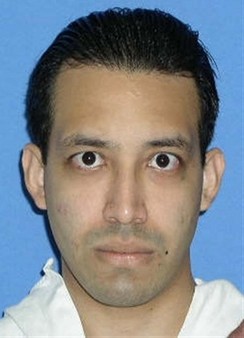
Vincent Gutierrez
Murderer Russell Ellwood
Murderer · USA · 1991
Russell Ellwood was a former taxi driver. Authorities suspected him of killing…
20 victims
Russell Ellwood
Murderer · USA · 1991
Russell Ellwood was a former taxi driver. Authorities suspected him of killing…
20 victims
 Robert Martines Perez
Murderer · USA · 1994
Name: Robert Martines Perez · Other name used in proceedings: Robert Martinez P…
15 victims
Robert Martines Perez
Murderer · USA · 1994
Name: Robert Martines Perez · Other name used in proceedings: Robert Martinez P…
15 victims
 Billy Frank Vickers
Murderer · USA · 1993
Billy Frank Vickers Vickers was executed by lethal injection in Texas on Januar…
14 victims
Billy Frank Vickers
Murderer · USA · 1993
Billy Frank Vickers Vickers was executed by lethal injection in Texas on Januar…
14 victims
 Helge Fossmo
Murderer · Sweden · 1999
Helge Arnold Fossmo (1971-) was a Pentecostal pastor. He was involved in the Kn…
2 victims
Helge Fossmo
Murderer · Sweden · 1999
Helge Arnold Fossmo (1971-) was a Pentecostal pastor. He was involved in the Kn…
2 victims
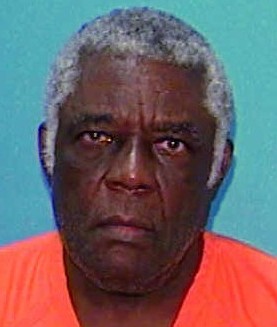 Seburt Nelson Connor
Murderer · USA · 1992
Seburt Nelson Connor was charged and tried in the Eleventh Judicial Circuit, Da…
2 victims
Seburt Nelson Connor
Murderer · USA · 1992
Seburt Nelson Connor was charged and tried in the Eleventh Judicial Circuit, Da…
2 victims
 Connie Williams
Murderer · USA · 1974
Connie Williams murdered and dismembered his wife, Francesca. The Supreme Court…
2 victims
Connie Williams
Murderer · USA · 1974
Connie Williams murdered and dismembered his wife, Francesca. The Supreme Court…
2 victims
 Marion Albert Pruett
Serial killer · USA · 1981
Marion Albert Pruett was born circa 1950 and was executed in Arkansas on April…
5 victims
Marion Albert Pruett
Serial killer · USA · 1981
Marion Albert Pruett was born circa 1950 and was executed in Arkansas on April…
5 victims
- Gender
- male
- Country
- USA
- Location
- Bexar County, Texas, USA
- Date of birth
- October 1, 1978
- Age at first offence
- 19
- Characteristics
- robbery, kidnapping
- Victim profile
- Jose Cobo, 40 ( U.S. Air Force Captain)
- Method of murder
- Shooting ( .357 caliber handgun)
- Date(s) of murder
- March 11, 1997
- Years active
- 1997
- Date of arrest
- —
- Status
-
Executed
Executed by lethal injection in Texas on March 28, 2007
People
- Vincent Gutierrez — defendant
- Jose Cobo — victim, U.S. Air Force Captain
- Randy Arroyo — companion
- Christopher Suaste — roommate of Gutierrez
- Officer George Saidler — testifying officer
- Maria Morales — Bexar County Community Supervision Department employee
- Jesus Gonzalez — inmate supervisor with the Bexar County Detention Center
- Nancy Roell — former teacher
- Bert Richardson — among the Bexar County assistant district attorneys prosecuting Cobo’s accused killers
- Alex Calhoun — Gutierrez’s lawyer
- Doris Moore — sister Doris Moore, spiritual advisor to the Gutierrez family; also described as a nun pen pal correspondent
- Roy Lee Pippin — referenced as set to die for slayings of two men shot in a Houston warehouse during a drug dispute
- Gerald Becker — prospective juror referenced in appellate habeas discussion
- Rosemary Harrell — prospective juror referenced in appellate habeas discussion
Timeline
- March 10, 1997 — Vincent Gutierrez, Randy Arroyo, and several other persons met at the residence of Christopher Suaste to discuss Arroyo’s desire to steal a Mazda RX-7 automobile for parts.
- March 11, 1997 (dawn) — Suaste, Arroyo, and Gutierrez drove to an apartment complex where a red Mazda RX-7 owned by Air Force Captain Jose Cobo was parked, and Suaste parked his vehicle nearby while Gutierrez and Arroyo approached the target vehicle.
- March 11, 1997 — Gutierrez forced Cobo at gunpoint to move to the front passenger seat of the Mazda; Gutierrez climbed into the rear of the vehicle; Arroyo directed Gutierrez to shoot Cobo when Cobo tried to escape.
- March 11, 1997 (morning rush-hour traffic; later) — Cobo was shot in the back and the body was dumped along a highway; Cobo was pronounced dead at a hospital about 2 hours later.
- March 28, 2007 (after 6 p.m.) — Vincent Gutierrez was scheduled to be executed in Texas.
- March 28, 2007 (6:23 p.m.) — Gutierrez was pronounced dead seven minutes after lethal drugs began to flow.
- March 29, 2007 — A separate article reported that Gutierrez was executed at 6:23 p.m.
- May 28, 1997 — Gutierrez was indicted by a Bexar County grand jury for the capital murder of Jose Cobo.
- May 19, 1996 — A police officer arrested Gutierrez and Suaste for shoplifting at a K-Mart.
- February 1996 — Gutierrez was involved in a string of burglaries, including the home of a frightened elderly woman.
- March 1996 — Gutierrez was involved in burglaries as part of the string of burglaries.
- June 19, 2000 — Gutierrez filed a state habeas application in the trial court.
- October 10, 2001 — The Texas Court of Criminal Appeals denied relief in Gutierrez’s state habeas proceedings.
- April 30, 2002 — Gutierrez filed a habeas corpus petition in a San Antonio U.S. District Court.
- September 27, 2005 — The federal district court denied Gutierrez’s petition.
- September 21, 2006 — The 5th U.S. Circuit Court of Appeals denied permission to appeal.
- February 20, 2007 — The U.S. Supreme Court denied Gutierrez’s petition for certiorari review.
- March 6, 1998 — After a separate punishment hearing, the court assessed Gutierrez’s punishment at death.
- March 2, 1998 — A jury found Gutierrez guilty of capital murder.
- April 12, 2000 — The Texas Court of Criminal Appeals affirmed Gutierrez’s conviction and sentence.
Background
Vincent Gutierrez was a Texas state prisoner convicted of capital murder and sentenced to death.
Gutierrez was described as a San Antonio man known to friends as “Flaco,” Spanish for “Skinny.” Gutierrez was 28 at the time of execution and was 18 at the time of the murder.
Bert Richardson stated: “He put himself through school. He had the American dream. He became an Air Force officer.”
The offence
On the evening of March 10, 1997, Vincent Gutierrez, Randy Arroyo, and several other persons met at the residence of Christopher Suaste to discuss Arroyo’s desire to steal a Mazda RX-7 automobile for parts for a similar vehicle Arroyo had recently acquired.
The following morning, Suaste, Arroyo, and Gutierrez drove to a nearby apartment complex where a red Mazda RX-7 owned by U.S. Air Force Captain Jose Cobo was parked. Arroyo directed Suaste to park his vehicle a short distance from Cobo’s red Mazda. As soon as Suaste did so, Gutierrez and Arroyo got into Cobo’s Mazda and drove away from the complex.
In a conversation with Suaste several hours later, Gutierrez explained the murder, stating that at gunpoint he forced Cobo, who was leaving for work at the time, to move to the front passenger seat of the Mazda. Gutierrez then climbed into the rear of the vehicle. Arroyo told Gutierrez to shoot Cobo when Cobo tried to escape from the vehicle. Gutierrez shot Cobo in the back and the body was dumped along a highway.
Later that evening, after television news report about Cobo’s murder was aired, Gutierrez again described his fatal shooting of Cobo and laughingly told others at Suaste’s apartment that Cobo got what he deserved for trying to escape.
Authorities said Arroyo and Gutierrez chose Cobo’s car because Gutierrez had the same model and needed some parts.
Cobo was abducted at gunpoint outside his apartment and forced to the passenger side of his car. When Cobo tried to escape in slow rush-hour traffic, he was shot from the back while trying to jump out of his own car. Cobo’s body was shoved from his car and dumped on the shoulder of Interstate 410 during a morning rush hour.
Cobo was confronted at gunpoint and pleaded for his life and offered his wallet. Gutierrez assured Cobo that he would be released; Cobo attempted to exit the vehicle, but he was restrained by his seat belt. Gutierrez grabbed Cobo to prevent him from jumping from the vehicle after Arroyo yelled “Shoot him. Shoot him. He’s trying to escape.” Gutierrez fired his pistol twice, and Cobo began choking and coughing up blood. Gutierrez stated he did not want to drive around with a “dead man” in the car and directed Arroyo to reduce the vehicle’s speed. Gutierrez then shoved Cobo out of the moving vehicle onto the shoulder of the highway.
Cobo was pronounced dead at a hospital about 2 hours later.
Investigation and evidence
Arroyo went to the police and voluntarily confessed to his involvement in Cobo’s murder. Arroyo led police to a .357 caliber handgun used to kill Cobo, and a .25 caliber handgun Arroyo had carried during Cobo’s robbery and kidnapping.
The murder weapon, a .357-caliber Magnum pistol, plus another gun Gutierrez was carrying, were recovered from the San Antonio River. Cobo’s car was recovered and had been abandoned but not stripped.
Gutierrez’s clothes, splattered with Cobo’s blood, were found in a trash bin.
Other witnesses testified about seeing the car being driven erratically, a man struggling inside, and the shooting. Witnesses also testified seeing Gutierrez—described as 5' 6"—awkwardly wearing the much larger victim’s clothing, with the clothing later identified as coming from the back of Cobo’s car.
A civil proceeding discussion identified that the state presented evidence matching bloodstains on Gutierrez’s clothing with Cobo’s blood.
Arrest and pre-trial
Gutierrez was arrested with Christopher Suaste on May 19, 1996 for shoplifting at a K-Mart.
During pre-trial detention, Jesus Gonzalez testified that Gutierrez was involved in a fight. Gonzalez stated that although he gave verbal commands to break up the fight, Gutierrez would not respond and Gonzalez was forced to call for assistance. Gonzalez also stated that Gutierrez had a bad attitude.
Trial
Gutierrez was indicted by a Bexar County grand jury on May 28, 1997 for the capital murder of Jose Cobo.
On March 2, 1998, a jury found Gutierrez guilty of capital murder.
On March 6, 1998, after a separate punishment hearing, the court assessed Gutierrez’s punishment at death.
The offense was described as an intentional killing by firearm while in the course of kidnapping and robbery.
On direct appeal, the Texas Court of Criminal Appeals affirmed Gutierrez’s conviction and sentence on April 12, 2000.
Gutierrez appealed and raised the issues that included (1) jury instruction on accomplice liability and (2) facial challenge to the constitutionality of Texas’s death penalty.
Sentencing
After a separate punishment hearing, the court assessed Gutierrez’s punishment at death.
A Bexar County jury also decided that Randy Arroyo should receive lethal injection; Arroyo’s sentence was commuted to life after the U.S. Supreme Court ruled people could not be executed for crimes committed when they were under the age of 18. Arroyo was 17 at the time of Cobo’s killing, while Gutierrez was 18.
Appeals and habeas
Gutierrez appealed to the Texas Court of Criminal Appeals, which affirmed his conviction and sentence on April 12, 2000.
Gutierrez filed a state habeas application in the trial court on June 19, 2000. The Texas Court of Criminal Appeals adopted the trial court’s findings of fact and conclusions of law from an evidentiary hearing and denied relief on October 10, 2001.
Gutierrez filed a habeas corpus petition in a San Antonio U.S. District Court on April 30, 2002. On September 27, 2005, the federal district court denied Gutierrez’s petition.
Gutierrez sought permission to appeal from the 5th U.S. Circuit Court of Appeals, and on September 21, 2006, the appeals court denied Gutierrez’s request.
Gutierrez petitioned the U.S. Supreme Court for certiorari review. On February 20, 2007, the Supreme Court denied Gutierrez’s petition.
Ex parte Gutierrez (state habeas subsequent application)
On March 19, 2007, a subsequent application for writ of habeas corpus was dismissed as an abuse of the writ, and a motion for stay of execution was denied. The application was dismissed under Texas Code of Criminal Procedure, Article 11.071, Section 5.
The claims described included:
- A claim that Gutierrez might be mentally ill and possibly sexually abused by family members.
- A Brady evidence claim that the prosecutor failed to divulge information after allegedly promising a witness a favor for testimony.
The court determined that counsel did not complete investigation of the mental illness/sexual abuse claim and that due diligence was not shown. The court also determined the Brady-related claim did not constitute a Brady violation under the described circumstances and found the subsequent application did not meet requirements for consideration.
Gutierrez v. Quarterman (certificate of appealability denied)
A certificate of appealability was denied. The analysis included claims involving:
- A due process claim regarding the prosecution’s failure to disclose information about a prospective juror’s prior offense and bond forfeiture.
- Claims that were procedurally defaulted regarding jury impartiality based on juror questionnaire misrepresentation and another prospective juror for-cause challenge.
- A claim that denial of request for severance at the penalty phase violated the Eighth Amendment.
- A claim involving ineffective assistance related to appellate counsel failing to challenge for-cause dismissal and failing to raise severance denial.
- Requests connected to investigative assistance funding, including denial of further investigative assistance.
The discussion included that a prospective juror referenced was Rosemary Harrell, who had responded in a questionnaire that she had never been charged or arrested with theft or shoplifting, and during voir dire had stated she believed the incident had been “totally dismissed.” The discussion described that the prosecutor learned almost 20 years earlier that Harrell had been arrested in 1979 for theft under five dollars, and was told that she had neither a conviction nor an active case but that bond had been forfeited.
The discussion included that Gerald Becker was challenged for cause based on his Catholic faith, and that his statements included that it would be “very difficult, if not virtually impossible, ... to impose [the death penalty]” and that he would be “more inclined to say ... there is sufficient mitigat[ing evidence]” not to impose a death sentence.
The certificate of appealability decision stated: “A COA is DENIED.”
Prior criminal history and evidence of future dangerousness
Officer George Saidler testified that when Gutierrez was arrested, he was laughing and joking and stated that he could beat the charges, and that during the interview Gutierrez laughed, smiled, and terminated the interview when Saidler suggested that Gutierrez did not believe that it was wrong to kill. Saidler also testified about Gutierrez showing no remorse when police took pictures of his tattoos.
Another detective testified that Gutierrez had a tattoo indicating he was in a gang involved in narcotics trafficking and drive-by shootings.
Suaste read a letter written to him by Gutierrez in which Gutierrez stated that he could not wait to go to court so he could be on television. In the letter, Gutierrez essentially said that when he got out of jail, he would shoot any police officer who approached him.
Gutierrez was involved in a string of burglaries in February and March of 1996, including the home of a frightened elderly woman, and he pled guilty to these offenses. A Bexar County Community Supervision Department employee Maria Morales testified that she interviewed Gutierrez in connection with the burglaries. Morales testified that Gutierrez told her he was the leader of his gang and used inhalants on a weekly basis. Morales testified that Gutierrez was not remorseful about the burglaries and that Morales recommended boot camp rather than probation. After Gutierrez completed boot camp, he was placed on probation. Gutierrez’s probation officer testified that Gutierrez never reported to the supervising officer when he was released.
During middle school, the state showed Gutierrez stole a library book, threatened to kill another student, and attempted to obtain a pistol and have it delivered to him during lunch. As a result of these incidents, Gutierrez was expelled. Two other witnesses testified about an incident where Gutierrez was involved in trying to get a .22 pistol on campus.
Nancy Roell testified that Gutierrez wrote an essay in her class describing in graphic detail his plan to murder another person with an automatic rifle and then escape to Mexico.
Other details
Individuals and relationships
- Gutierrez thanked relatives and friends during his final statement and expressed love to them.
- Gutierrez gave a sendoff to his brother, Phillip.
- Sister Doris Moore was described as spiritual advisor to the Gutierrez family and as a pen pal correspondent who discussed his statements.
Gutierrez’s final statement and execution conduct
Vincent Gutierrez said: “I'd like to tell everybody I'm sorry the situation happened. My bad - everybody is here because of what happened.''
It was unclear whether he was apologizing for the fatal shooting.
He said: “Where's a stunt double when you need one?''
He said a brief prayer and was pronounced dead at 6:23 p.m., seven minutes after the lethal drugs began to flow.
A quote attributed to Phillip Gutierrez stated: “That's a good man, right there. A damn good man. He paid his debt like a man.”
Sister Doris Moore said: “This is so inhuman” and “We're just like terrorists.”
In another report, Gutierrez’s lawyer Alex Calhoun said: “At this point, it's basically over,''
Companion case and related custody
Christopher Suaste surrendered to police after his two companions were arrested and was serving a 35-year prison sentence for aggravated robbery. He and Arroyo gave statements implicating Gutierrez as the shooter.
Dates and constitutional-age execution context (as described)
Arroyo’s death sentence was commuted to life after a U.S. Supreme Court ruling that people could not be executed for crimes committed when they were under the age of 18. Arroyo was 17 when Cobo was killed, and Gutierrez was 18.
Mention of other scheduled execution
A former Houston air conditioning contractor, Roy Lee Pippin, 51, was referenced as set to die for slayings of two men shot 13 years ago in a Houston warehouse during a drug dispute.

Spotted an error, or have more information about this case?