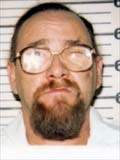
Marion Albert Pruett
Serial killer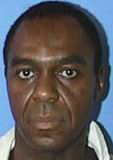 Carl Eugene Watts
Serial killer · USA · 1974
Carl Eugene Watts (born November 7, 1953; died September 21, 2007), also known…
100 victims
Carl Eugene Watts
Serial killer · USA · 1974
Carl Eugene Watts (born November 7, 1953; died September 21, 2007), also known…
100 victims
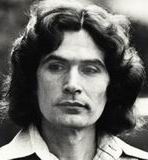 Rodney Alcala
Serial killer · USA · 1977
Rodney James Alcala (born August 23, 1943) was also known as Rodrigo Jacques Al…
100 victims
Rodney Alcala
Serial killer · USA · 1977
Rodney James Alcala (born August 23, 1943) was also known as Rodrigo Jacques Al…
100 victims
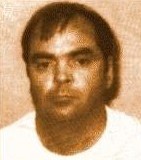 Donald Leroy Evans
Serial killer · USA · 1975
Donald Leroy Evans (born July 5, 1957) was an American serial killer who murder…
60 victims
Donald Leroy Evans
Serial killer · USA · 1975
Donald Leroy Evans (born July 5, 1957) was an American serial killer who murder…
60 victims
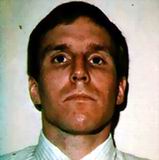 Michael Swango
Serial killer · USA · 1981
Michael Swango (Joseph Michael Swango) was a physician and American serial kill…
60 victims
Michael Swango
Serial killer · USA · 1981
Michael Swango (Joseph Michael Swango) was a physician and American serial kill…
60 victims
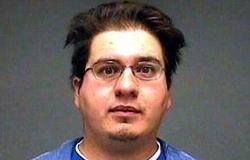 Efren Saldivar
Serial killer · USA · 1989
Efren Saldivar (born 30 September 1969) was an American serial killer who murde…
50 victims
Efren Saldivar
Serial killer · USA · 1989
Efren Saldivar (born 30 September 1969) was an American serial killer who murde…
50 victims
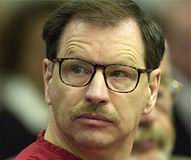 Gary Ridgway
Serial killer · USA · 1982
Gary Leon Ridgway Ridgway was born 18-February-1949 in Salt Lake City, UT. He w…
49 victims
Gary Ridgway
Serial killer · USA · 1982
Gary Leon Ridgway Ridgway was born 18-February-1949 in Salt Lake City, UT. He w…
49 victims
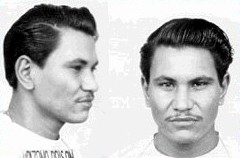 Angel Serna
Murderer · USA · 1947
Angel Serna was executed by asphyxiation-gas in Arizona on July 29, 1950. Angel…
1 victim
Angel Serna
Murderer · USA · 1947
Angel Serna was executed by asphyxiation-gas in Arizona on July 29, 1950. Angel…
1 victim
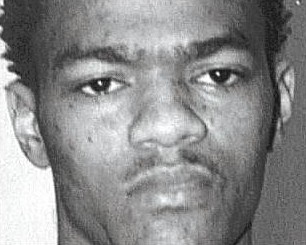 Lance Chandler
Murderer · USA · 1993
February 7, 1993 — Lance Chandler, Geral-dine Fernandez, Dwight Wyatt, and Geor…
1 victim
Lance Chandler
Murderer · USA · 1993
February 7, 1993 — Lance Chandler, Geral-dine Fernandez, Dwight Wyatt, and Geor…
1 victim
 Robert Joe Wagner
Serial killer · Australia · 1992
Robert Joe Wagner (born 28 November 1971 in Parramatta, New South Wales) was an…
10 victims
Robert Joe Wagner
Serial killer · Australia · 1992
Robert Joe Wagner (born 28 November 1971 in Parramatta, New South Wales) was an…
10 victims
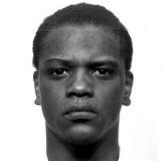 Bruce Edwin Callins
Murderer · USA · 1980
Bruce Edwin Callins filed a petition for certiorari that was docketed in Johnso…
1 victim
Bruce Edwin Callins
Murderer · USA · 1980
Bruce Edwin Callins filed a petition for certiorari that was docketed in Johnso…
1 victim
- Gender
- male
- Country
- USA
- Location
- New Mexico/Mississippi/Colorado/Arkansas, USA
- Date of birth
- 1949
- Age at first offence
- 32
- Characteristics
- drugs, robbery
- Victim profile
- Pamela Sue Barker (his common-law wife) / Bobbie Jean Robertson (convenience store clerk) / Peggy Lowe ( bank loan officer) / James R. Balderson and Anthony Taitt (store clerks)
- Method of murder
- Beating with a hammer / Shooting
- Date(s) of murder
- 1981
- Years active
- 1981
- Date of arrest
- —
- Status
-
Executed
Executed by lethal injection in Arkansas on April 13, 1999
Case record: Marion Albert Pruett
Personal details
Marion Albert Pruett was born circa 1950 and was executed in Arkansas on April 13, 1999. He was 49 years old at the time of execution.
Background
In 1979, Pruett was released from a 23-year federal penitentiary sentence for bank robbery, apparently in exchange for his testimony against an underworld figure with whom he was serving time. Pruett was placed in the Federal Witness Protection Program, in New Mexico, where he lived under an assumed identity with his wife, Pamela Sue Carnuteson.
In April 1981, Carnuteson was found murdered; her body was beaten with a hammer and burned with gasoline.
Before authorities could gather enough evidence against him, Pruett fled and embarked on a cross-country spree of armed robberies, abductions, and murder. The spree included the murder of Peggy Lowe, a savings and loan officer whom he abducted during a robbery in Jackson, Mississippi, and later shot in the back of the head. It also included the murders of James R. Balderson and Anthony Taitt, two store clerks whom he shot during separate robberies on the same day in two Colorado cities.
Pruett arrived in Fort Smith, Arkansas, on October 11, 1981, and began scouting the city for a place to commit yet another robbery. He looked for a bank or a store, but since it was Sunday and most establishments were closed he decided to park his car in a secluded, wooded area known as Horseshoe Bend.
He injected himself with cocaine and consumed whiskey for several hours.
The offence
Pruett’s offences included the kidnapping and murder of Arkansas convenience store clerk Bobbie Jean Robertson. Robertson worked the 11:00 p.m. to 7:00 a.m. shift.
As Pruett recalled during his confession:
"I pulled in and was going to get gas and I seen that there was a girl working there by herself and I said well hell, I think I'll just rob her and kill her so that's what I done."
Pruett entered the store armed with a .38 caliber revolver and instructed Robertson to place the money from the cash register in a paper bag. He told her to get her pocketbook and then ordered her into his car. As he drove to the secluded area where he had earlier parked, he assured Robertson that if she cooperated she would be released. When they reached Horseshoe Bend, he instructed Robertson to get out of the car.
Robertson began walking away, then turned and asked if she could have her purse. While she was still in the car, Pruett raised his revolver and fired. The first bullet struck Robertson on the upper left thigh, fracturing her femur. As Robertson struggled and tried to run away, she was struck by a bullet in the right shoulder and fell to the ground. Pruett pulled his car around, got out, and walked over to her. He bent down, pressed the muzzle of his revolver against the young woman’s left temple, and fired the third and fatal shot.
Pruett returned to his car and drove off with the pocketbook and approximately $165.00 from the store. The next day, police discovered Robertson’s body in a thicket of weeds and small brush just a few feet from the dirt road where she had been murdered.
Pruett’s offences also included the murder of Peggy Lowe in Jackson, Mississippi. Additionally, he abducted and killed Lowe and later shot her in the back of the head. During the sentencing phase of his trial in Arkansas, the State called witnesses about the robbery of Unifirst Federal Savings and Loan Association in Jackson, Mississippi, and about Lowe’s abduction.
Investigation
While awaiting trial in Mississippi for Lowe’s murder, Pruett was interviewed by Detective Larry Hammond of the Fort Smith Police Department, to whom he provided a detailed confession to the murder of Bobbie Jean Robertson.
The next day after Robertson’s murder, police discovered Robertson’s body in a thicket of weeds and small brush just a few feet from the dirt road where she had been murdered.
After the Unifirst Federal Savings and Loan Association robbery, Sergeant O. T. McAlphin testified that Pruett had confessed to shooting Ms. Lowe and had provided information that allowed police to recover her body. McAlphin also testified that Ms. Lowe had died from "a gunshot wound to the back of the head."
Arrest
Five days later, Pruett was stopped for speeding in Texas. The officer saw the holster containing Pruett’s .38 caliber revolver protruding from beneath the front seat of Pruett’s automobile and arrested him.
Pruett was returned to Mississippi, where he was charged in state court with the murder of Peggy Lowe.
Trial
State court proceedings: Mississippi
A jury convicted Pruett of Ms. Lowe’s murder and he was sentenced to death.
Trial in Colorado
Pruett pled guilty to the murders of Balderson and Taitt and received consecutive life sentences.
Arkansas capital murder trial
Pruett was returned to Arkansas to face charges in Robertson’s death. He was arraigned on a capital murder charge on June 12, 1982, in the circuit court of Sebastian County and pled not guilty.
A public defender was appointed to assist Pruett, who asked to represent himself. After discussions with counsel, the court set trial for August 30, 1982.
In late July, the defense filed a motion for a continuance, which the court denied. In early August, the defense filed a motion for change of venue. At a subsequent pre-trial hearing, the defense renewed its motion for continuance. The court again denied the motion, but informed the public defender that it would grant a continuance in all other cases set for trial in which he was involved.
Three days later, the court granted the motion for change of venue and transferred the trial to Van Buren in Crawford County, which is adjacent to Sebastian County and in the same judicial district.
On August 30, voir dire began as scheduled. The defense moved to have the jury panel quashed, for continuance, and for a second change of venue; these motions were denied. After voir dire was completed, the defense renewed its motions to quash the jury panel and for a second change of venue; these motions were denied.
On September 9, 1982, after a trial that featured Pruett himself delivering a closing argument in which he admitted to having killed Ms. Robertson, the jury found Pruett guilty of capital murder.
At the conclusion of the penalty phase of the trial, the jury sentenced Pruett to death by electrocution. The court entered judgment on the verdict and sentence and set Pruett’s execution for March 10, 1983.
In June of 1987, Governor Clinton filed a demand that Pruett be returned to Arkansas to face execution for Robertson’s murder. In March of 1988, Pruett was extradited from Mississippi to Arkansas and remanded to the Department of Correction to await execution of sentence. Execution was set for April 7, 1988.
New Mexico trial for murder of his wife
Pruett was remanded to New Mexico to face charges for the murder of his wife.
Pruett’s common-law wife, Pamela Sue Barker (also known as Michelle Lynn Pearson), was found dead in Rio Rancho, New Mexico. She had been bludgeoned with a ballpeen hammer and had been burned.
At his New Mexico trial for Barker’s murder, Pruett said that he had killed people and committed robberies to support a cocaine habit that sometimes ran up to $4,000 a week. However, he denied killing his wife.
Pruett was convicted of murdering Carnuteson and sentenced to life imprisonment.
Sentencing
During the sentencing phase of his Arkansas trial, the State called two witnesses to testify regarding Pruett’s robbery of Unifirst Federal Savings and Loan Association in Jackson, Mississippi, and the abduction of Peggy Lowe.
The State first called Betty Sibley, who was working as a teller when the robbery occurred. Sibley testified:
Q: . . . and what were the circumstances of that robbery?
A: . . . [A] man came in and got all of our attention and said, hey, you know, this is a hold-up. He said if we set off an alarm, he would blow our damn brains out and he looked around and he wanted to know who the manager was and Miss Brown said that she was and he told her that he wanted $100,000.00 out of the vault. She said, we don't have that kind of money in the vault and he said, how much money do you have. She told him $10,000.00 and he said, get that. Then he looked around and he said, and I'm taking her as hostage and he pointed to me and he told me to get my keys to my car. . . . . A: At that point, a customer came in the other side of the building and went to the other teller for them to wait. That left Peggy Lowe and Pruett in the lobby. At that point, he had sent the branch manager to get the money and he made Miss Lowe move over to the desk and sit on the inside of the desk like she was waiting on him. He was sitting on the outside. Then someone come [sic] to the drive- in window and he motioned for me to go wait on the drive-in window. The branch manager had the money and about that time, he and Mrs. Lowe went to Mrs. Lowe's office and her phone rang and he let her answer her phone and he was making her get her keys to her car and it was her son on the phone wanting to come and have lunch with her. Then, he started walking like they were going out of the office and he had the gun behind Mrs. Lowe's back forcing her -- not forcing her, making her go out of the office. Mrs. Lowe came around behind the counter -- I left that out -- Miss Lowe came around behind the counter and got the money from the branch manager and then put it in a sack that Pruett had given her and then they went out of the office.
Following Sibley’s testimony, the State called Sergeant O. T. McAlphin, a Jackson police officer, who testified that Pruett had confessed to shooting Ms.
Lastly, the State introduced documents proving that, as a result of those events, Pruett had been convicted on federal charges of armed robbery and kidnapping, pursuant to his guilty plea.
By way of mitigation, the defense called Detective Hammond, who related some minor details regarding his investigation of Ms. Robertson’s death, and Dr. Douglas A. Stevens, a clinical psychologist, who testified to his opinion that Pruett was suffering from the combined effects of cocaine and amphetamine psychosis to the point that he was "not clearly in contact with reality" when he killed Ms. Robertson.
Pruett chose not to testify on his own behalf.
The jury found that Ms. Robertson’s murder was committed under two aggravating circumstances:
- that Pruett had previously committed another felony involving "the use or threat of violence to another person or creating a substantial risk of death or serious physical injury to another person,"
- that he had committed the murder of Ms. Robertson for pecuniary gain.
Although the jury found that Pruett presented some evidence that his mental capacity was impaired as a result of drug abuse, the jury concluded that no mitigating circumstances existed at the time of the murder. Agreeing that the aggravating circumstances outweighed beyond a reasonable doubt any mitigating circumstances, the jury unanimously sentenced Pruett to death.
In 1988, Pruett’s attorneys learned that in September of 1981, Sibley had undergone hypnosis in connection with the FBI’s investigation of the Unifirst robbery. The district court found that the State was unaware of this fact when it called Sibley as a witness at the sentencing phase. The district court found that the admission of Sibley’s testimony violated Pruett’s Sixth and Fourteenth Amendment right to confrontation and granted Pruett’s petition on that ground.
Appeals
United States Court of Appeals for the Eighth Circuit
Pruett had habeas proceedings under 28 U.S.C. § 2254.
The United States Court of Appeals for the eighth circuit case listings included:
- Marion Albert Pruett, Appellee, v. Larry Norris, Appellant. No. 97-2004
- Marion Albert Pruett, Appellant, v. Larry Norris, Appellee. No. 97-2236
The appeals were submitted February 11, 1998 and filed August 7, 1998. They were appeals from the United States District Court for the Eastern District of Arkansas. Judges included WOLLMAN and LOKEN, Circuit Judges, and BOGUE, 1 District Judge.
The court stated: "We reverse." It reversed the order granting Pruett’s habeas petition and remanded for entry of judgment dismissing the petition.
The appellate decision addressed refusal to grant a second change of venue and refusal to grant a continuance, and concluded that the record did not support the district court’s finding that prejudice from pretrial publicity prevented Pruett from receiving a fair trial. It also concluded that the refusal to grant a second change of venue and to postpone the trial did not result in constitutional error.
The appellate decision also addressed the admission of hypnotically refreshed testimony and held that any error resulting from post-hypnotic testimony was harmless beyond a reasonable doubt.
Pruett also cross-appealed from the denial of relief that the jury was not instructed that the death penalty could not be imposed without a finding that Pruett acted with "reckless indifference to human life." The appellate court agreed with the district court that the jury instruction satisfied constitutional requirements and denied the cross-appeal.
The appellate decision stated:
The order granting Pruett's habeas petition is reversed, and the case is remanded for entry of judgment dismissing the petition.
Supreme Court of Arkansas
Pruett’s conviction and sentence for Robertson’s murder were affirmed by the Supreme Court of Arkansas. The cited case was Pruett v. Arkansas, 669 S.W.2d 186, 191 (Ark.), with cert. denied, 469 U.S. 963 (1984). The court denied Pruett’s subsequent petition for postconviction relief, cited as Pruett v. Arkansas, 697 S.W.2d 872, 879 (Ark. 1985) (per curiam).
Federal habeas proceedings in the district court
The district court granted Pruett’s habeas petition after proceedings extending about nine years and vacated Pruett’s conviction and sentence. The order directed the State to release him or retry him within 120 days.
The district court held that:
- Pruett had been denied a fair trial because of pretrial publicity,
- the admission of hypnotically refreshed testimony during the penalty phase violated Pruett’s right of confrontation.
The district court denied the State’s motion to stay its order granting habeas relief, and the appellate court stayed the district court’s order pending appeal.
Outcome
Pruett was executed by lethal injection in Arkansas.
The execution was reported to have occurred at 9:00 p.m. at the Cummins Unit of the Arkansas Department of Correction.
From death row, Pruett asked a Mississippi newspaper to pay him $20,000 to disclose the location of Barker’s engagement ring; the offer was refused. He also offered to reveal the location of a Florida victim’s body in exchange for a paid appearance on Geraldo.
Pruett had confessed to killing a cellmate in a Georgia prison.
Aftermath
The case involved federal witness protection, assumed identities, and multiple killings across jurisdictions including Mississippi, Colorado, New Mexico, and Arkansas.
Pruett had been interviewed by the A&E Television Networks show American Justice in an episode titled "Dealing With The Devil". The episode included footage of Pruett two weeks before he was executed and interviews with his victims' relatives and the government official who put him in the witness protection program.
At execution, Pruett asked God and his victims for forgiveness and asked for forgiveness from the people he hurt and their family members. The following were quoted:
"I would also like to ask all the people that I ever hurt, and their family members, to forgive me for all the pain," he said. "And I forgive everybody for what's about to happen to me."
Other details
The appellate decision noted a procedural and factual record about jury selection, including that the first eleven jurors were selected from an original panel of 65 residents of Crawford County. Each juror was accepted by the defense; none was challenged for cause or sought to be challenged peremptorily. A supplemental panel of twelve potential jurors was summoned; eight were examined before a twelfth juror, Girlie Row, was seated. The defense challenged Row for cause, which the court denied. The defense then stated it likely would have exercised a peremptory challenge against Row had it not already exhausted its allotted twelve, and the defense made no motion or request for additional challenges.
The appellate decision included a list of jurors in order of selection: Randy E. Rider, Dee Ann Wilcox, Marilyn Richmond, J. C. Hodges, Mary Carter, Deloyd Burr, Therese Picco, Carolyn Hailey, Lee Wright, Maureen LaRue, and Richard Allured. It also discussed Row’s voir dire exposure.
The appellate decision addressed the trial court’s instruction regarding capital murder under Arkansas law and stated that the instruction required the jury to make the finding necessary to support the imposition of the death penalty.
The appellate decision included footnotes identifying:
- the Honorable ANDREW W. BOGUE, United States District Judge for the District of South Dakota, sitting by designation,
- that a summary of Pruett’s record of criminal violence could be found in Perry v. Norris, 879 F. Supp. 1503, 1538-40 (E.D. Ark. 1995), aff'd, 107 F.3d 665 (8th Cir.), cert. denied, 118 S. Ct. 15 (1997),
- that Pruett was charged in federal court with the robbery of a federally insured savings and loan institution and with abducting Ms. Lowe in connection with that incident, in violation of 18 U.S.C. § 2113(a), (d) & (e), and pled guilty and received consecutive sentences of 25 years and life,
- that Pruett’s conviction and sentence were affirmed by the Supreme Court of Mississippi in Pruett v. Mississippi, 431 So. 2d 1101, 1110 (Miss.) (en banc), cert. denied, 464 U.S. 865 (1983), that his petition for writ of error coram nobis was denied in Pruett v. Thigpen, 444 So. 2d 819, 828 (Miss. 1984) (en banc), that subsequently a district court in Mississippi granted him a new trial holding participation of an admittedly biased juror over the objections of both the defendant and the state entitled him to habeas corpus relief, and that in February of 1988 he was retried in Mississippi and once again convicted of Ms. Lowe's murder with a life sentence imposed after the penalty phase ended with no agreement.
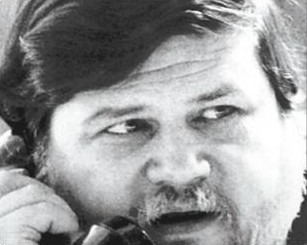
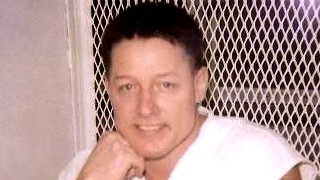
Spotted an error, or have more information about this case?