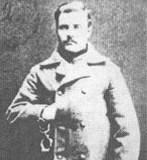
Matti Haapoja
Murderer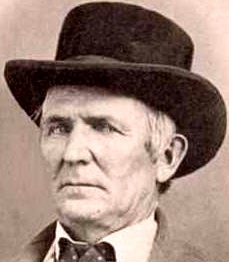 John Doyle Lee
Murderer · USA · 1857
Name: John Doyle Lee Lifespan: September 12, 1812 - March 23, 1877 Legal outcom…
120 victims
John Doyle Lee
Murderer · USA · 1857
Name: John Doyle Lee Lifespan: September 12, 1812 - March 23, 1877 Legal outcom…
120 victims
 Champ Ferguson
Murderer · USA · 1861
Champ Ferguson was born November 29, 1821 in Clinton County, Kentucky, near the…
100 victims
Champ Ferguson
Murderer · USA · 1861
Champ Ferguson was born November 29, 1821 in Clinton County, Kentucky, near the…
100 victims
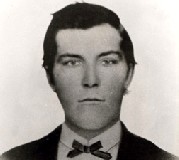 John Wesley Hardin
Murderer · USA · 1867
John Wesley (Wes) Hardin (1853-1895) was an American outlaw, gunfighter, and co…
42 victims
John Wesley Hardin
Murderer · USA · 1867
John Wesley (Wes) Hardin (1853-1895) was an American outlaw, gunfighter, and co…
42 victims
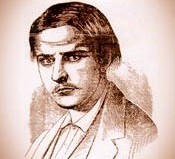 Vincenzo Verzeni
Murderer · Italy · 1869
Vincenzo Verzeni was born in Bettanuco, in the Bergamasco region, in 1849. He m…
12 victims
Vincenzo Verzeni
Murderer · Italy · 1869
Vincenzo Verzeni was born in Bettanuco, in the Bergamasco region, in 1849. He m…
12 victims
 Henry Wirz
Murderer · USA · 1864
Henry Wirz (also known as Heinrich Hartmann Wirz) (November 25, 1823 – November…
11 victims
Henry Wirz
Murderer · USA · 1864
Henry Wirz (also known as Heinrich Hartmann Wirz) (November 25, 1823 – November…
11 victims
 Melissa Lucio
Murderer · USA · 2007
Melissa Elizabeth Lucio was convicted of capital murder for the death of her 2-…
1 victim
Melissa Lucio
Murderer · USA · 2007
Melissa Elizabeth Lucio was convicted of capital murder for the death of her 2-…
1 victim
 Sabine Hilschenz
Murderer · Germany · 1988
Sabine Hilschenz was a German woman convicted of infanticide involving eight of…
9 victims
Sabine Hilschenz
Murderer · Germany · 1988
Sabine Hilschenz was a German woman convicted of infanticide involving eight of…
9 victims
 Quincy Javon Allen
Murderer · USA · 2002
Quincy Javon Allen was sentenced to death in South Carolina on February 20, 200…
4 victims
Quincy Javon Allen
Murderer · USA · 2002
Quincy Javon Allen was sentenced to death in South Carolina on February 20, 200…
4 victims
 Mark William Hofmann
Murderer · USA · 1985
Mark William Hofmann (born December 7, 1954) was an American counterfeiter, for…
2 victims
Mark William Hofmann
Murderer · USA · 1985
Mark William Hofmann (born December 7, 1954) was an American counterfeiter, for…
2 victims
 Vasily Petrovich Losev
Murderer · USA · 1999
Vasily Petrovich Losev, 45, was the father who killed his three sons and set th…
3 victims
Vasily Petrovich Losev
Murderer · USA · 1999
Vasily Petrovich Losev, 45, was the father who killed his three sons and set th…
3 victims
- Gender
- male
- Country
- Finland / Russia
- Location
- Finland / Russia
- Date of birth
- September 16, 1845
- Age at first offence
- 22
- Characteristics
- robbery, fugitive
- Victim profile
- Men and women
- Method of murder
- St abbing with knife / Strangulation
- Date(s) of murder
- 1867 - 1894
- Years active
- 1867–1894
- Date of arrest
- —
- Status
-
Died in custody
Committed suicide by hanging himself in his cell on January 8, 1895
Case record: Matti Haapoja
Identity and biographical details
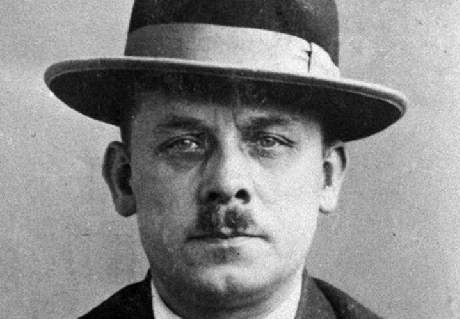
Matti Haapoja was a Finnish murderer. He was born on September 16, 1845 in Isokyrö, Finland. He died on January 8, 1895 in Turku, Finland.
Overview of offences and victim count
The exact number of Haapoja’s victims was unknown. He was convicted of two murders and was scheduled for a trial for his third murder trial when he committed suicide in his cell.
Haapoja could be linked to seven other identified murder cases, but most of those happened during his exile in Siberia and were poorly documented, so his involvement was not certain. It was claimed that he confessed to 18 murders, but there were no details about the supposed confession, and the figure was regarded as unreliable. Some sources estimated his total number of murders as 22–25.
Haapoja non-fatally wounded at least six men in knife fights.
Haapoja started his criminal career as a brawler and then graduated quickly to stealing horses. His criminal notoriety developed through robberies and jailbreaks, and he gained further fame after the newspapers reported that he had robbed and shot at Esa Nyrhinen on August 12, 1876.
Timeline
- December 6, 1867 — Haapoja stabbed his drinking partner Heikki Impponen in a drunken brawl.
- 1869 (November 15) — Farmers Matti Heikkilä and Hermanni Hautamäki were clubbed to death by an unidentified man at Hämeenkyrö; Haapoja was in the area and years later confessed an unspecified murder that had happened in November 1869.
- August 12, 1876 — Newspapers reported that Haapoja robbed and shot at Esa Nyrhinen.
- 1879 (January) — Haapoja was apprehended after his last prison escape; he stabbed a farmer identified as "Koivuniemi from Vähäkyrö".
- 1879 (January 8) — Not applicable to a separate dated event; his death occurred later (see January 8, 1895).
- 1880 — After his petition for exile, he was sent to Omsk oblast.
- 1886 — During his stay in Siberia, he was reputed to have killed a man in 1886.
- 1889 (around 1889) — Haapoja decided to escape Siberia and return to Finland.
- September 1890 — Haapoja returned to Finland in September 1890.
- 1890 (October 8) — Haapoja murdered and strangled prostitute Maria Jemina Salo.
- 1890 (a couple of days later after capture at Porvoo) — Haapoja was captured at Porvoo and recognized.
- 1894 (October 10) — During an escape attempt, he killed a guard and wounded two others.
- 1895 (January 8) — Haapoja committed suicide in his cell by hanging himself.
Background and early criminal history
Haapoja began as a brawler and moved quickly to stealing horses. His first known murder occurred on December 6, 1867, when he stabbed his drinking partner Heikki Impponen during a drunken brawl. He was sentenced to serve 12 years in prison at Turku for his murder.
During the next 10 years he escaped from prison four times, spending months at large after each escape. Around this time he gained notoriety as a jailbreaker and a thief. As a result of his escapes and continued thievery, Haapoja was sentenced to life in prison in 1874.
After his last escape, Haapoja petitioned for his sentence to be changed to exile to Siberia. The petition was accepted and he was sent to Omsk oblast in 1880.
Exile in Siberia and alleged killings
While in Omsk oblast, Haapoja was reputed to have killed a man in 1886, and he was exiled to East Siberia after that.
Folk stories claimed that during this time Haapoja killed two other famous Finnish criminals, Anssin Jukka and Kaappo Sutki, but these tales were likely false because they offered no conclusive proof.
Around 1889 Haapoja decided to escape Siberia and return to Finland. He later claimed that he intended to emigrate to America. He raised money for this escape by committing a series of robberies and murders. He probably killed at least three men and participated in the murder of a fourth. He also obtained a passport that belonged to a Russian man whose fate remained unclear.
Return to Finland and murder of Jemina Salo
Haapoja returned to Finland in September 1890. A month later, he murdered and robbed a prostitute, Jemina Salo. He was captured at Porvoo a couple of days later and recognized.
At his trial, Haapoja behaved arrogantly. He confessed to the murder of Jemina Salo as well as to one of the murders he had committed in Siberia. He hoped that he would be sent back to Siberia but the court instead gave him a second life term in prison.
Prison escape attempt and death
On October 10, 1894, Haapoja tried to escape from prison again. During this attempt he killed a guard and wounded two others. When he realized that he could not get out, he attempted to commit suicide by stabbing himself, but the wound was not fatal. After he had recovered from the self-inflicted stabbing wound, he hanged himself in his cell on January 8, 1895.
Notable later details
Haapoja’s skeleton was kept in the Museum of Crime in Vantaa for a long time, until he was finally buried in Ylistaro in 1995.
Writer Kaijus Ervasti wrote a book about Matti Haapoja called Murhamiehen muotokuva - Matti Haapoja 1845-1895 ("Portrait of a murderer - Matti Haapoja 1845-1895").
The offence
Certain victims
The three certain victims of Matti Haapoja were:
- Farmer Heikki Antinpoika Impponen, who was stabbed to death on December 6, 1867.
- Prostitute Maria Jemina Salo, strangled on October 8, 1890.
- Prison guard Juho Rosted, stabbed on October 10, 1894.
Other likely victims and disputed certainty
In addition, Haapoja likely killed seven other persons:
- Farmers Matti Heikkilä and Hermanni Hautamäki, who were clubbed to death by an unidentified man at Hämeenkyrö on November 15, 1869. Haapoja was in the area at the time and years later confessed an unspecified murder that had happened in November 1869.
- An unknown man who was killed in Siberia in 1886.
- A convict identified only as "Jaakko H." from Alajärvi, Finland, who was killed in Siberia in 1888.
- Estonian barkeeper Rugis, killed by Haapoja and another convict "Rich-Matti" Kuivalainen in Tomsk in 1889.
- "Rich-Matti" Kuivalainen, who was killed in Tomsk in 1889.
- Estonian convict Gustaf Sepp, who vanished without trace in Simonjovka, Siberia, in 1889, after he was last seen in the company of Haapoja.
- It was possible that there were more victims, but only these ten cases were identified as certain or probable.
Victims mentioned as linked but not certain
Haapoja could be linked to seven other identified murder cases; most of those happened during his exile in Siberia and were poorly documented, so his involvement was not certain.
Investigation, arrest, and trial
Esa Nyrhinen incident
Haapoja’s fame as a robber started to grow after the newspapers reported that he had robbed and shot at Esa Nyrhinen on August 12, 1876. Later it was found that Nyrhinen had been hiding Haapoja at his home and the men had had an argument.
Capture and recognition at Porvoo
Haapoja was captured at Porvoo a couple of days after murdering and robbing Jemina Salo and was recognized.
Trial behaviour and sentencing outcomes
He confessed to the murder of Jemina Salo and to one of the murders he had committed in Siberia. He hoped he would be sent back to Siberia, but instead the court gave him a second life term in prison.
Sentencing and incarceration
Haapoja was sentenced to serve 12 years in prison at Turku for the December 6, 1867 murder of Heikki Impponen.
As a result of his escapes and continued thievery, he was sentenced to life in prison in 1874.
After his last escape, his petition to change his sentence to exile to Siberia was accepted, and he was sent to Omsk oblast in 1880.
After his trial for the murder of Jemina Salo, the court gave him a second life term in prison.
Aftermath and legacy
Haapoja committed suicide by hanging himself in his cell on January 8, 1895 in Turku, Finland. His skeleton was kept in the Museum of Crime in Vantaa for a long time, until he was finally buried in Ylistaro in 1995. Kaijus Ervasti wrote a book about him titled Murhamiehen muotokuva - Matti Haapoja 1845-1895 ("Portrait of a murderer - Matti Haapoja 1845-1895").
Other details
Escapes and other prison violence
During the next 10 years after being sentenced for his first murder, he escaped from prison four times, spending months at large on each occasion.
After the last escape, he petitioned for exile to Siberia, and this was accepted.
On October 10, 1894, during an escape attempt, Haapoja killed a guard and wounded two others. He attempted suicide by stabbing himself, but the wound was not fatal, and he later hanged himself in his cell on January 8, 1895.
Non-fatal injuries inflicted on others in knife fights
In six cases, Haapoja wounded someone:
- Brawler Juho Tenkku, who was stabbed around Christmas, 1866.
- Farmer Hermanni Hösö, who was stabbed on December 6, 1867.
- Farmer Esa Nyrhinen, who was shot three times (twice in the leg, once in the face) on August 12, 1876.
- A farmer identified as "Koivuniemi from Vähäkyrö", who was stabbed when Haapoja was apprehended after his last prison escape in January 1879.
- Prison guards Juho Jernvall and Sven Nyman, who were stabbed during Haapoja’s last escape attempt.
- During his last escape he had a chance to attack one more guard, but did not, because this guard had always been nice to the prisoners.
Passport and intended emigration
Haapoja claimed that he intended to emigrate to America. He obtained a passport that belonged to a Russian man whose fate remained unclear.
Alleged confessions and unreliability of numbers
It was claimed that Haapoja confessed to 18 murders, but
Spotted an error, or have more information about this case?