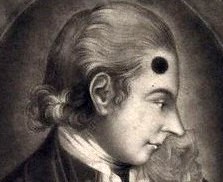
Rev. James Hackman
Murderer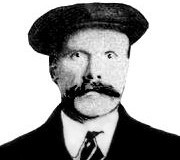 Albert Burrows
Murderer · United Kingdom · 1920
Albert Burrows (also named Albert Edward Burrows): married farm labourer who to…
4 victims
Albert Burrows
Murderer · United Kingdom · 1920
Albert Burrows (also named Albert Edward Burrows): married farm labourer who to…
4 victims
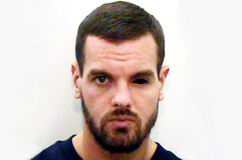 Dale Cregan
Murderer · United Kingdom · 2012
Dale Christopher Cregan (born 6 June 1983) was convicted in the United Kingdom…
4 victims
Dale Cregan
Murderer · United Kingdom · 2012
Dale Christopher Cregan (born 6 June 1983) was convicted in the United Kingdom…
4 victims
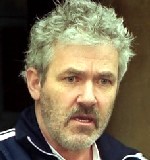 John Cooper
Murderer · United Kingdom · 1985
John Cooper was a serial killer from Milford Haven, Pembrokeshire. Cooper was c…
4 victims
John Cooper
Murderer · United Kingdom · 1985
John Cooper was a serial killer from Milford Haven, Pembrokeshire. Cooper was c…
4 victims
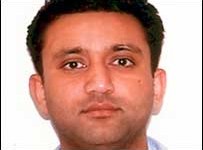 Rahan Arshad
Murderer · United Kingdom · 2006
Rahan Arshad (born 1970) was a taxi driver. He lived at Turves Road, Cheadle Hu…
4 victims
Rahan Arshad
Murderer · United Kingdom · 2006
Rahan Arshad (born 1970) was a taxi driver. He lived at Turves Road, Cheadle Hu…
4 victims
 Maurice Boucher
Murderer · Canada · 1997
Maurice "Mom" Boucher (born June 21, 1953) was a convicted murderer, a reputed…
2 victims
Maurice Boucher
Murderer · Canada · 1997
Maurice "Mom" Boucher (born June 21, 1953) was a convicted murderer, a reputed…
2 victims
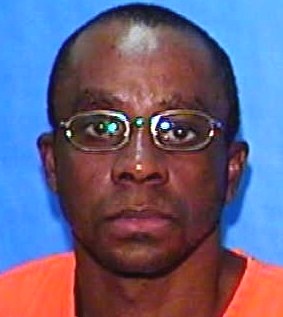 Merrit Alonso Sims
Murderer · USA · 1991
Merrit Alonso Sims was indicted in the 11th Judicial Circuit, Dade County, Case…
1 victim
Merrit Alonso Sims
Murderer · USA · 1991
Merrit Alonso Sims was indicted in the 11th Judicial Circuit, Dade County, Case…
1 victim
 Antti Sitavuori
Murderer · Finland · 1989
Antti Veikko Ilmari Siltavuori — Finland; also known as Jammu Siltavuori and Ja…
2 victims
Antti Sitavuori
Murderer · Finland · 1989
Antti Veikko Ilmari Siltavuori — Finland; also known as Jammu Siltavuori and Ja…
2 victims
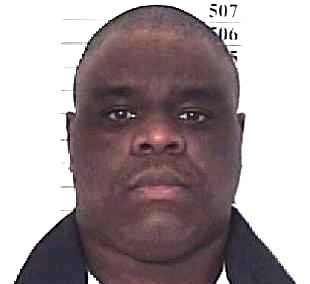 Scotty Morrow
Murderer · USA · 1994
Scotty Morrow began dating Barbara Ann Young in June 1994. Young broke up with…
2 victims
Scotty Morrow
Murderer · USA · 1994
Scotty Morrow began dating Barbara Ann Young in June 1994. Young broke up with…
2 victims
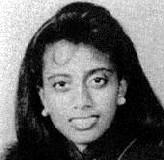 Sinedu Tadesse
Murderer · USA · 1995
Sinedu Tadesse (1974 - May 28, 1995) was a junior at Harvard University when sh…
1 victim
Sinedu Tadesse
Murderer · USA · 1995
Sinedu Tadesse (1974 - May 28, 1995) was a junior at Harvard University when sh…
1 victim
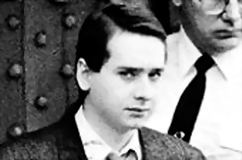 Robert Sartin
Homicide · United Kingdom · 1989
Robert Sartin was found to be unfit to stand trial and was being held in Moss S…
1 victim
Robert Sartin
Homicide · United Kingdom · 1989
Robert Sartin was found to be unfit to stand trial and was being held in Moss S…
1 victim
- Gender
- male
- Country
- United Kingdom
- Location
- London, England, United Kingdom
- Date of birth
- December 13, 1752 (baptized)
- Age at first offence
- 27
- Characteristics
- jealousy
- Victim profile
- Martha Ray, 36 (singer and mistress of John Montagu, 4th Earl of Sandwich)
- Method of murder
- Shooting
- Date(s) of murder
- April 7, 1779
- Years active
- 1779
- Date of arrest
- Same day (suicide attempt)
- Status
-
Executed
Executed by hanging at Tyburn on 19 April 1779
Case record: Rev. James Hackman
Timeline
- 13 December 1752 — James Hackman was baptized at Gosport, Hampshire.
- 1772 — Hackman was purchased a commission as an ensign in the 68th Regiment of Foot.
- 1776 — Hackman was promoted lieutenant.
- early 1777 — Hackman resigned from the army to become a clergyman.
- 24 February 1779 — Hackman was ordained a deacon of the Church of England.
- 28 February 1779 — Hackman was ordained a priest of the Church of England.
- 1 March 1779 — Hackman was instituted as Rector of Wiveton.
- 7 April 1779 — Hackman followed Martha Ray to Covent Garden, shot her dead, attempted to shoot himself, and was arrested; Martha Ray was later placed in custody with her body.
- 14 April 1779 — Martha Ray was entombed inside the parish church of Elstree, Hertfordshire.
- 16 April 1779 — Hackman was tried for murder at the Old Bailey.
- 19 April 1779 — Hackman was executed by hanging at Tyburn.
Background
James Hackman (baptized 13 December 1752) was the son of William and Mary Hackman. His father had served in the Royal Navy as a lieutenant. Hackman was apprenticed to a mercer. Although some accounts said he became a member of St John's College, Cambridge, no record of this could be traced at Cambridge.
Hackman purchased a commission as an ensign in the 68th Regiment of Foot in 1772. In 1776 he was promoted lieutenant. By early 1777 he had resigned from the army to become a clergyman.
Hackman was ordained a deacon of the Church of England on 24 February 1779 and ordained a priest on 28 February 1779. On 1 March 1779 he was instituted as Rector of Wiveton. This was a place which he may never have visited.
Martha Ray was a singer and mistress of John Montagu, 4th Earl of Sandwich. She had lived with Lord Sandwich as his wife since the age of seventeen and had given birth to nine of his children. Sandwich also had a wife who was considered mad and who lived in an apartment at Windsor Castle.
Hackman met Martha Ray at Lord Sandwich’s house at Hinchingbrooke, where Hackman was reported to have visited as a serving army officer. Hackman was later reported to have become besotted with her and they may have discussed marriage, though this was disputed.
Rich but usually in debt, Sandwich offered Martha Ray no financial security. Hackman and Martha Ray were reported to have been involved until he was posted to Ireland, when whatever was between them ended.
After ordination, Hackman followed Martha Ray to Covent Garden on 7 April 1779.
The offence
On 7 April 1779, a few weeks after his ordination as a priest of the Church of England, Hackman followed Martha Ray to Covent Garden, where she had gone to watch a performance of Isaac Bickerstaffe’s comic opera Love in a Village. When Hackman saw Ray in the theatre with William Hanger, Lord Coleraine, he left, fetched two pistols, and waited in a nearby coffee house.
When Ray came out of the theatre, Hackman put one pistol to her forehead and shot her dead. With the other he then tried to kill himself but made only a flesh wound. He then beat himself with both discharged pistols until he was arrested and taken, with Martha Ray’s body, into a tavern in St James’s Street.
Investigation and immediate custody
Two letters were found on Hackman: one addressed to his brother-in-law, Frederick Booth, and a love letter to Martha Ray. Both later appeared in evidence at the murder trial.
After Martha Ray was killed, Hackman was quickly committed to the Tothill Fields Bridewell.
Arrest and treatment
A constable, Richard Blandy, gave evidence that as he came by the piazzas in Covent Garden he heard two pistol shots and heard someone say two people were killed. Blandy approached and saw the surgeon had Hackman and a pistol in his hand. A Mr Mahon had given Blandy the pistol and asked him to take care of the prisoner and to take him to Mahon’s house.
Blandy searched the prisoner’s pocket and found two letters, which he gave to Mr Campbell, master of the Shakspeare tavern. James Mahon, an apothecary, gave evidence that he saw Hackman bleeding copiously with a pistol in his left hand and beating himself violently. Mahon wrenched the pistol out of his hand and gave it to Blandy, asking that the prisoner be taken to Mahon’s house to have the wound dressed and to stop the effusion of blood. Mahon saw Martha Ray lying at the bar with a mortal wound and said he could not help her.
Dennis O’Bryan, a surgeon, examined Martha Ray’s body at the Shakspeare tavern on the night of the murder. He found the wound to be mortal and pronounced her dead. The wound was in the “centra coronalis” and the ball had come out under the left ear.
Trial
Charges and plea
Hackman was indicted for “the wilful murther of Martha Ray, spinster” on the inquisition of the coroner. He was tried for murder at the Old Bailey on 16 April 1779.
Despite having previously decided to plead guilty, in the event he pleaded not guilty. He explained that “the justice of my country ought to be satisfied by suffering my offence to be proved”.
Evidence and witness testimony
John McNamara, Esq., gave evidence that on the evening of 7 April, he believed at some time after eleven o’clock, he came out of the playhouse with Martha Ray and, having seen her “in some difficulties at the playhouse”, offered his help in handing her to her carriage. She took his arm. McNamara testified that as they came out into the Covent Garden playhouse passage and were two steps from the carriage, he heard the report of a pistol while Miss Ray was still holding his right arm with her left hand. She fell instantly. He thought the pistol had been “fired out of wantonness” and that Miss Ray had fainted. He knelt to help her, found blood on his hands, and got her into the Shakspeare tavern.
McNamara testified that he did not see Hackman at the time, but after McNamara had been arrested, he asked Hackman what had possessed him, and Hackman answered:
- “that it was not a proper place to ask that question, or something to that effect... I asked him his name, and I understood from him that his name was Hackman; I think he pronounced his name with an H. I asked him if he knew anybody. He said, he knew a Mr. Booth, in Craven-street in the Strand, and desired he might be sent for. He desired to see the lady. I did not tell him she was dead; somebody else did. I objected to his seeing her at that time. I had her removed into another room. From the great quantity of blood I had about me I got sick, and was obliged to go home. I know no more about it.”
McNamara said he knew no more about it.
Mary Anderson, a fruit seller, gave evidence that she was standing close by the carriage. She said:
- “I was standing at the post. Just as the play broke up I saw two ladies and a gentleman coming out of the playhouse; a gentleman in black followed them. Lady Sandwich's coach was called. When the carriage came up, the gentleman handed the other lady into the carriage; the lady that was shot stood behind. Before the gentleman could come back to hand her into the carriage the gentleman in black came up, laid hold of her by the gown, and pulled out of his pocket two pistols; he shot the right hand pistol at her, and the other at himself. She fell with her hand so [describing it as being on her forehead] and died before she could be got to the first lamp; I believe she died immediately, for her head hung directly. At first I was frightened at the report of the pistol, and ran away. He fired another pistol, and dropped immediately. They fell feet to feet. He beat himself violently over the head with his pistols, and desired somebody would kill him”.
Richard Blandy, a constable, gave evidence that he heard two pistol shots and someone said two people were killed. He testified that he saw the surgeon had Hackman and a pistol in his hand. Blandy said Mr Mahon gave him the pistol and asked him to take care of the prisoner and take him to Mahon’s house. He testified that when Blandy came to the corner by the Red Lion, the door was shut, and he was then asked to take the prisoner back to the Shakspeare tavern, where Mr Mahon was. Blandy testified he searched the prisoner’s pocket and found two letters.
James Mahon, an apothecary, gave evidence that he heard two pistols go off and went back. He said he saw a gentleman lying on the ground with a pistol in his left hand, beating himself violently. Mahon said the prisoner was the gentleman and that he wrenched the pistol out of his hand. Mahon testified he gave the pistol to Blandy and asked that the prisoner be taken to his house. He testified that he saw Martha Ray lying at the bar with a mortal wound and said:
- “I said I could give her no assistance.”
Dennis O’Bryan, a surgeon, testified that he was called upon to view Miss Ray’s body, examined the wound, found it mortal, and pronounced the woman dead. O’Bryan testified that the wound was received in the front of the head in the “Centra coronalis” and the ball had been discharged under the left ear.
Hackman’s evidence and defence
Hackman gave evidence for himself. He admitted that he had killed Ray but claimed he had only meant to kill himself. He said:
“I stand here this day the most wretched of human beings, and confess myself criminal in a high degree; yet while I acknowledge with shame and repentance, that my determination against my own life was formal and complete, I protest, with that regard to truth which becomes my situation, that the will to destroy her who was ever dearer to me than life, was never mine till a momentary phrensy overcame me, and induced me to commit the deed I now deplore. The letter, which I meant for my brother-in-law after my decease, will have its due weight as to this point with good men. Before this dreadful act, I trust nothing will be found in the tenor of my life which the common charity of mankind will not excuse. I have no wish to avoid the punishment which the laws of my country appoint for my crime; but being already too unhappy to feel a punishment in death, or a satisfaction in life, I submit myself with penitence and patience to the disposal and judgement of Almighty God, and to the consequences of this enquiry into my conduct and intention”.
Hackman’s defence counsel submitted to the court that Hackman was insane and that the killing of Martha Ray was unpremeditated, as shown by the letter to her found on him.
William Halliburton was sworn and produced the other letter found in the prisoner's pocket. Halliburton testified the letter had been delivered to him by Mr Bond at Sir John Fielding’s and that it was delivered to Bond by Mr Booth. Halliburton testified that Booth opened and read it in his presence.
The letter addressed to “Frederick Booth, Esq. Craven street, in the Strand” was read into the record:
My dear Frederick, When this reaches you I shall be no more, but do not let my unhappy fate distress you too much; I have strove against it as long as possible, but it now overpowers me. You well know where my affections were placed; my having by some means or other lost her's [ sic ] (an idea which I could not support) has driven me to madness. The world will condemn me, but your good heart will pity me. God bless you my dear Fred. Would I had a sum to leave you, to convince you of my great regard: you was my only friend. I have hid one circumstance from you, which gives me great pain. I owe Mr. Knight, of Gosport, 100 ℓ. for which he has the writings of my houses; but I hope in God, when they are sold, and all other matters collected, there will be nearly enough to settle our account. May Almighty God bless you and yours with comfort and happiness; and may you ever be a stranger to the pangs I now feel. May heaven protect my beloved woman, and forgive this act, which alone could relieve me from a world of misery I have long endured. Oh! if it should ever be in your power to do her any act of friendship, remember your faithful friend, J. Hackman.
Mr Justice Blackstone presided at the trial. In his summing up, he told the jury that the crime of murder did not demand “a long form of deliberation” and that Hackman’s letter to Frederick Booth showed “a coolness and deliberation which no ways accorded with the ideas of insanity”.
Verdict and sentencing
Hackman was convicted. He was sentenced “to be hanged”.
In a newspaper report of the trial, Hackman was described as five feet nine inches tall, “very genteely made, and of a most polite Address”.
Execution and aftermath
Execution
Hackman was executed by hanging at Tyburn on 19 April 1779. He traveled there in a mourning coach, accompanied by the sheriff’s officer and two fellow clergymen: the Rev. Moses Porter and the Rev. John Villette, the chaplain of Newgate Prison. James Boswell later denied rumours that he had also been in the coach.
At Tyburn, “Hackman... behaved with great fortitude; no appearances of fear were to be perceived, but very evident signs of contrition and repentance”.
After he was hanged, his body was later publicly dissected at Surgeons’ Hall, London.
Post-trial burial and related events
On 14 April 1779, Martha Ray was entombed inside the parish church of Elstree, Hertfordshire. Her body was later moved into the cemetery. On the instructions of Lord Sandwich, she was buried in the clothes she had been wearing when killed.
Later commentary and cultural impact
After the trial, James Boswell told Frederick Booth that Hackman had behaved “with Decency, Propriety, and in such a Manner as to interest everyone present”.
Horace Walpole remarked that the murder fascinated much of London during April 1779.
The Newgate Calendar later noted that:
- “This shocking and truly lamentable case interested all ranks of people, who pitied the murderer's fate, conceived him stimulated to commit the horrid crime through love and madness. Pamphlets and poems were written on the occasion, and the crime was long the common topic of conversation”.
At first, given Sandwich’s position as First Lord of the Admiralty, a political motive was suspected, and Sandwich and Martha Ray had previously been fleeing from Admiralty House amid a mob rioting against the government and in particular against what it saw as the mistreatment of Admiral Keppel.
Sir Herbert Croft’s epistolary novel Love and Madness (1780) was an imagined correspondence between Hackman and Martha Ray in which Hackman was dealt with sympathetically.
Samuel Johnson and Topham Beauclerk debated whether Hackman had meant to kill only himself. Boswell wrote that the case showed “the dreadful effects that the passion of Love may produce”.
A mezzotint of Hackman by Robert Laurie, after Robert Dighton, was published in 1779. Another engraving of Hackman (artist unknown) was used as an illustration in The Case and Memoirs of the Late Rev. Mr James Hackman (1779).
The affair inspired ongoing discussion and re-interpretation in later retellings.
Spotted an error, or have more information about this case?