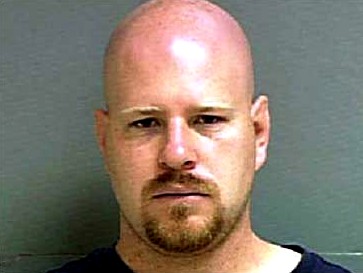
Mark Hacking
Murderer Robert Martines Perez
Murderer · USA · 1994
Name: Robert Martines Perez · Other name used in proceedings: Robert Martinez P…
15 victims
Robert Martines Perez
Murderer · USA · 1994
Name: Robert Martines Perez · Other name used in proceedings: Robert Martinez P…
15 victims
 Robert Glen Jones
Murderer · USA · 1996
Defendant: Robert Glenn Jones (ADC#070566) · Co-defendant: Scott Nordstrom (ADC…
7 victims
Robert Glen Jones
Murderer · USA · 1996
Defendant: Robert Glenn Jones (ADC#070566) · Co-defendant: Scott Nordstrom (ADC…
7 victims
 Joshua Wayne Andrews
Murderer · USA · 2000
Joshua Wayne Andrews was a serial killer accused of killing several people in V…
5 victims
Joshua Wayne Andrews
Murderer · USA · 2000
Joshua Wayne Andrews was a serial killer accused of killing several people in V…
5 victims
 Juan Carlos Alvarez
Murderer · USA · 1998
Juan Carlos Alvarez, born on March 9, 1977, in San Luis, Mexico, was a Hispanic…
5 victims
Juan Carlos Alvarez
Murderer · USA · 1998
Juan Carlos Alvarez, born on March 9, 1977, in San Luis, Mexico, was a Hispanic…
5 victims
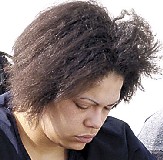 Shonda Walter
Murderer · USA · 2003
Name: Shonda Walter Victim: James Sementelli (83-year-old) Shonda Walter was se…
1 victim
Shonda Walter
Murderer · USA · 2003
Name: Shonda Walter Victim: James Sementelli (83-year-old) Shonda Walter was se…
1 victim
 Laisha Landrum
Homicide · USA · 2004
Laisha Landrum, 18, was convicted in January 2006 and sentenced on February 20,…
1 victim
Laisha Landrum
Homicide · USA · 2004
Laisha Landrum, 18, was convicted in January 2006 and sentenced on February 20,…
1 victim
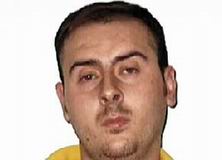 Alfredo Galán
Serial killer · Spain · 2003
Alfredo Galán Sotillo (born April 5, 1978) was a Spanish serial killer. · Janua…
6 victims
Alfredo Galán
Serial killer · Spain · 2003
Alfredo Galán Sotillo (born April 5, 1978) was a Spanish serial killer. · Janua…
6 victims
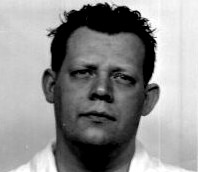 Ronald Clark O'Bryan
Murderer · USA · 1974
Ronald Clark O'Bryan (also recorded as Ronald C. O’Bryan) was executed by letha…
1 victim
Ronald Clark O'Bryan
Murderer · USA · 1974
Ronald Clark O'Bryan (also recorded as Ronald C. O’Bryan) was executed by letha…
1 victim
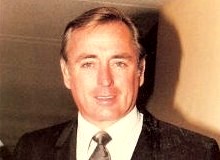 Jack Roland Murphy
Murderer · USA · 1967
Jack Roland Murphy (also known as “Murph the Surf”) was born in 1938 in Los Ang…
1 victim
Jack Roland Murphy
Murderer · USA · 1967
Jack Roland Murphy (also known as “Murph the Surf”) was born in 1938 in Los Ang…
1 victim
- Gender
- male
- Country
- USA
- Location
- Salt Lake City, Utah, USA
- Date of birth
- 1976
- Age at first offence
- 28
- Characteristics
- parricide
- Victim profile
- Lori Kay Soares Hacking, 37 (his wife)
- Method of murder
- Shooting
- Date(s) of murder
- July 19, 2004
- Years active
- 2004
- Date of arrest
- August 2, 2004
- Status
-
Life imprisonment
Sentenced to 6 years to life in prison on June 6, 2004
Case identification
Mark Hacking
Background
Lori Kay Soares Hacking (December 31, 1976 – July 2004) was a Salt Lake City, Utah, woman who was killed by her husband, Mark Hacking, in 2004.
The offence
Lori was killed by Mark Hacking. Police believed Mark acted alone, killing Lori in their apartment with a .22-caliber rifle while she was asleep and disposing of her body in a dumpster.
Mark allegedly shot Lori in the head at around 1 a.m. while she was sleeping.
Victims
Lori Kay Soares Hacking
Investigation
Mark Hacking was reported missing by her husband at 10:49 a.m. on July 19, 2004. A woman who said she had seen Lori near the grove that day later withdrew her claim.
According to some family members, Lori Hacking was about five weeks pregnant when she vanished. Lori planned to move to North Carolina, where Mark Hacking had said he was to study at the University of North Carolina-Chapel Hill medical school, having recently graduated from college.
Police said Mark had never completed an undergraduate degree at the University of Utah as he led family and friends to believe, and the medical school had no record of him having ever applied. Less than a week following Lori’s disappearance, police gathered evidence pointing to the possibility that Mark had murdered Lori in their apartment sometime in the early morning hours of July 20 and disposed of her body in an unknown location later that same day.
The investigation involved evidence collected from the apartment and other locations. Evidence collected at the apartment included the couple’s box spring, a receipt for a new mattress and bedding, a bloody knife found in the bedside drawer in the couple’s bedroom, pieces of carpet, clothing, and a letter found in a spare bedroom allegedly written by Lori. Other important pieces of evidence taken from various locations included a trash bin from outside the couple’s apartment, a cut up mattress that matched the couple’s box spring found in a trash bin near the University of Utah hospital where Mark worked as an orderly, and a clump of dark hair found in a Dumpster outside a Chevron gas station near the hospital.
Material was taken from two cars owned by Mark and Lori. Surveillance video tapes were taken from three locations: a hospital, a Mormon church located near the park where she allegedly disappeared, and a convenience store.
Between 9:45 and 10:23 a.m. on the day Lori went missing, police believed Mark was buying a new queen-size mattress at a local bedding store, despite his claim that he had searched the park and called police. The front seat of Lori’s car, found near the park, was adjusted to fit a much larger person. Lori was only 5'4" but the seat was moved back to accommodate someone around 6' tall.
Lori’s car keys were found at the apartment. Investigators said that if Lori had driven to the park to jog, her car keys would be expected to have been with her. Police also discovered a letter allegedly written by Lori days before her death that said: "I hate coming home from work because it hurts to be home in our apartment...I can't imagine life with you if things don't change," The article further quoted Lori as saying: "I got someone I don't want to spend the rest of my life with unless changes are made."
Genetic testing matched Lori’s blood to blood found in Lori’s car, on the couple’s bed rail, headboard and mattress, as well as blood found on the bedroom carpet and on the knife found in its sheath in the kitchen, which was believed to have been used to cut up the mattress.
Police received critical information on July 25, 2004 from Scott and Lance Hacking, who claimed Mark had made a confession. On July 24, Lance and Scott went to the psychiatric ward where Mark was admitted and pleaded for him to tell them what happened to Lori. They returned later that evening, and Mark admitted he had murdered Lori.
Court documents stated that around 5 p.m. on July 16, Lori called an employee at the University of North Carolina and left a voicemail suggesting Mark told her the reason why he was not enrolled was due to a computer malfunction. The voicemail suggested a reason, and police said there was no known computer malfunction and records indicated Mark was never enrolled at the school. Lori’s colleagues noticed she was "visibly upset" and that she "started to cry." She left work early and went home.
On Sunday, July 18, Mark admitted to Lori that he "lied about his education and future plans," which resulted in an argument between the couple. After the argument, Lori went to bed and Mark stayed up, played Nintendo games, and packed some moving boxes. During the packing, Mark allegedly came across a .22-caliber rifle. At around 1 a.m., Mark went into the bedroom where Lori was sleeping and shot her in the head. Mark told his brothers that after he murdered Lori, he wrapped her body up in some garbage bags and the bloody top of the mattress, which he cut away with a knife, and disposed of her body in a Dumpster at around 2 a.m. Investigators were also said to have found that Mark purportedly disposed of the bloodied mattress in a church trash bin and the gun in another unidentified Dumpster.
Police discovered surveillance evidence of Mark. One surveillance video showed Mark entering a Maverick County Store to buy cigarettes, checking his hands and fingers, and then driving away in his wife’s car approximately "18 minutes after the time police believe Lori died."
On October 1, 2003, searchers found human remains in the Salt Lake County landfill. By the afternoon police had confirmed the remains were those of Lori Hacking.
Medical examiners could not determine whether Lori was pregnant due to the condition of the body. They were unable to find the rifle that ended Lori’s life.
Police Sgt. J. R. Nelson was quoted saying: "I pulled this group of trash out of a bag and hair came out of the bag." The quote continued that upon closer inspection he saw that the bag also contained what appeared to be a human jawbone and teeth.
Arrest and custody
Mark Hacking was arrested on August 2, 2004 on suspicion of the aggravated murder of his wife.
He was admitted to hospital for mental evaluation after he was reportedly found running naked through the streets and was later admitted to the University of Utah’s psychiatric unit for a mental breakdown.
After his confession, he was transferred from the psychiatric clinic to Salt Lake County Jail.
First-degree murder charges were filed against Mark Hacking on August 9, 2004.
His bail was initially posted at $500,000 but later increased to one million dollars.
Trial and court proceedings
Mark Hacking pleaded innocent to first-degree murder on October 29, 2003.
On April 15, 2004, Mark Hacking pleaded guilty to first-degree murder in exchange for prosecutors dropping other charges. Because a firearm was involved, the statutory sentence was six years to life. Some additional hearings were scheduled before actual sentencing.
On June 6, 2004, Mark Hacking was sentenced 6 years to life in prison, the maximum the judge could give under Utah law. Under Utah’s system of indeterminate criminal sentences, first-degree felony murder brought a mandatory five years to life, and Mark’s minimum was increased to six years because he used a firearm.
On October 30, 2004, Mark attended his arraignment hearing at the 3rd District Court. His lawyers entered a plea of "not guilty." Lori’s mother, Thelma Soares, "berated her son-in-law for prolonging her family's agony" and was quoted saying: "In pleading not guilty, Mark continues to hurt us."
On April 15, 2005, Mark Hacking stood before Third District Judge Denise Lindberg and admitted publicly that he shot his pregnant wife Lori Hacking in the head with a .22 rifle as she lay sleeping on the morning of July 19, 2004. Mark pleaded guilty to the murder charge in exchange for prosecutors dismissing the obstruction charge. The hearing lasted around 10 minutes and Mark showed no visible signs of emotion.
Lori’s father, Eraldo Soares, was quoted saying Mark’s admission of guilt was "like a knife going right through my heart." Lori’s mother, Thelma Soares, was quoted and described as being chilled by her son-in-law's "gruesome confession" and relieved that he took responsibility for his actions.
Sentencing
Mark Hacking was sentenced to 6 years to life in prison on June 6, 2004. Under Utah’s system of indeterminate criminal sentences, first-degree felony murder brought a mandatory five years to life, but the minimum was increased to six years because he used a firearm. The sentence was described as the maximum the judge could give under Utah law.
Appeals
No appeals were described.
Outcome
Lori Kay Soares Hacking was killed by her husband, Mark Hacking, in 2004.
Aftermath
In July 2004, the Utah Board of Pardons decided Mark Hacking’s first parole hearing would come in August of 2034.
Thelma Soares made the statement: "While it is a terrible waste of his life, [the decision] lifts a great burden from my mind and heart. The six-year minimum imposed by law is an insult not only to Lori and the baby, but to me and my family as well. I thank the members of the State Board of Pardons and Parole for their diligence and sense of justice in dealing with this tragic case. My faith in our justice system has been upheld."
Afterwards, The Soares family removed the name "Hacking" from Lori’s headstone. The mother, Thelma Soares, was quoted saying: "We just felt that Mark obviously didn't want her anymore," Where Lori’s married name once was on the headstone is now engraved the Portuguese word "Filhinha," which translates to "little daughter."
On March 20, 2005, Utah House Bill 102, also known as "Lori's Law," was signed into law, increasing the minimum penalty for a person convicted of first degree murder in Utah to fifteen years to life.
A memorial service for Lori took place at the LDS Windsor Stake Center in Orem, Utah on August 14, 2004. More than 600 people attended the service, which included a display of Lori’s "wedding dress, a poster-sized photograph of her and a plastic bucket used to gather donations for the search effort." Dr. Douglas Hacking gave the opening prayer and was quoted saying: "We truly appreciate the influence [Lori] has had in our lives...We've all been touched by her in some way...We hope she can feel our love for her today." Thelma Soares set up a scholarship fund in Lori’s name. By mid-September 2004, the fund grew from $12,000 to $81,000, with $50,000 donated by Oprah Winfrey, who interviewed Mrs. Soares. The scholarship was described as being awarded to a woman that has been "disadvantaged by financial hardship, abuse, family difficulties or other life circumstances" who attends the University of Utah's David Eccles School of Business and needs financial assistance for her junior and senior years.
Mark announced from his prison cell that he intended to write a book "about everything," with proceeds going to the Lori Kay Soares Hacking Memorial Scholarship Fund. It was stated that it was uncertain how much of the book had been written or whether there was a publishing deal.
Other details
Mark Hacking engaged a locally prominent defense attorney, D. Gilbert Athay. Mark fell from a roof in his early 20s, which resulted in a head injury, and it was stated that evidence of brain damage could support an argument for reduced charges.
Mark appeared before 3rd District Court Judge William Barrett on August 16, 2004 to schedule a date for his preliminary hearing. Stephen Hunt wrote that he appeared wearing a bullet-proof vest and was flanked by seven bailiffs.
The preliminary hearing was scheduled for September 23, 2004. It was stated that Athay may ask the court to "inquire into Hacking's mental competency."
"A series of investigative subpoenas was unsealed" dating from July 21 to August 30 and showed how detectives cast a broad net early in their investigation of Lori’s disappearance. The subpoenas included surveillance videos of a Mormon church located near the park and from the University Neuropsychiatric Institute, cell phone and financial records, television footage of Mark on July 19 and 20 taken by local TV stations, and credit reports.
Legal proceedings described the prosecution team as led by Salt Lake County D.A. David E. Yocom, Deputy D.A. Angela F. Micklos, and attorney Robert L. Stott. Stephen Hunt and Ashley Broughton quoted Assistant Utah Attorney General Thomas Brunker as saying: "The brothers will be good witnesses...they have nothing to personally gain."
A memorial service occurred on August 14, 2004, and the scholarship fundraiser details were included in reporting. Police Chief Rick Dinse was quoted as saying: "We have a good case here. We are hopeful we can find the body but we believe this case is strong enough that we could prosecute without it,"
Before Mark’s sentencing, parole and sentencing system details were described as part of the case narrative.
Some of Mark’s family members claimed Mark confessed to Scott and Lance Hacking on July 24, 2004.
Spotted an error, or have more information about this case?