
Maurice Boucher
Murderer James Roszko
Murderer · Canada · 2005
James Roszko was a Canadian man operating a hydroponic marijuana grow-op in Roc…
4 victims
James Roszko
Murderer · Canada · 2005
James Roszko was a Canadian man operating a hydroponic marijuana grow-op in Roc…
4 victims
 Angelo Colalillo
Murderer · Canada · 1993
Angelo Colalillo was suspected of committing serial sexual assaults and murders…
3 victims
Angelo Colalillo
Murderer · Canada · 1993
Angelo Colalillo was suspected of committing serial sexual assaults and murders…
3 victims
 Douglas Donald Moore
Murderer · Canada · 2003
Douglas Donald Moore died of an apparent suicide in a cell at the Maplehurst De…
3 victims
Douglas Donald Moore
Murderer · Canada · 2003
Douglas Donald Moore died of an apparent suicide in a cell at the Maplehurst De…
3 victims
 Jeremy Steinke
Murderer · Canada · 2006
Jeremy Allan Steinke was sentenced to three life sentences on December 15, 2008…
3 victims
Jeremy Steinke
Murderer · Canada · 2006
Jeremy Allan Steinke was sentenced to three life sentences on December 15, 2008…
3 victims
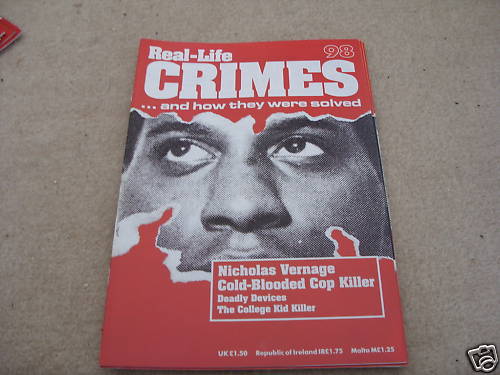 Nicholas Vernage
Murderer · Canada · 1991
Nicholas Vernage (26) murdered Sgt Alan King and also killed Lorna Bogle and Ja…
3 victims
Nicholas Vernage
Murderer · Canada · 1991
Nicholas Vernage (26) murdered Sgt Alan King and also killed Lorna Bogle and Ja…
3 victims
 Wade Frankum
Mass murderer · Australia · 1991
Wade Frankum Committed suicide by shooting himself the same day; in 1991 Wade F…
7 victims
Wade Frankum
Mass murderer · Australia · 1991
Wade Frankum Committed suicide by shooting himself the same day; in 1991 Wade F…
7 victims
 William Woratzeck
Murderer · USA · 1980
Defendant: William Lyle WORATZECK Victim: Linda Louise Leslie · March 6, 1980 —…
1 victim
William Woratzeck
Murderer · USA · 1980
Defendant: William Lyle WORATZECK Victim: Linda Louise Leslie · March 6, 1980 —…
1 victim
 Charles Stuart
Murderer · USA · 1989
Charles Stuart was born in 1959 and died on January 4, 1990. He was described a…
1 victim
Charles Stuart
Murderer · USA · 1989
Charles Stuart was born in 1959 and died on January 4, 1990. He was described a…
1 victim
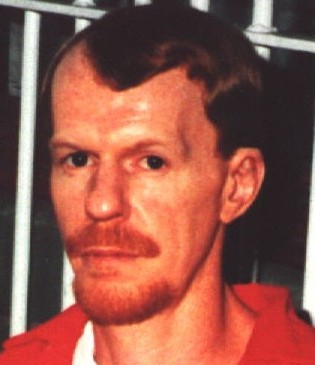 Keith Canaan
Murderer · USA · 1985
Keith Canaan was a white male. He was identified as Keith Canaan, Keith B. Cana…
1 victim
Keith Canaan
Murderer · USA · 1985
Keith Canaan was a white male. He was identified as Keith Canaan, Keith B. Cana…
1 victim
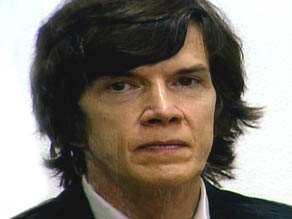 Richard Sharpe
Murderer · USA · 2000
Richard Sharpe was sentenced to life in prison on November 29, 2001. He was fou…
1 victim
Richard Sharpe
Murderer · USA · 2000
Richard Sharpe was sentenced to life in prison on November 29, 2001. He was fou…
1 victim
- Gender
- male
- Country
- Canada
- Location
- Quebec, Canada
- Date of birth
- June 21, 1953
- Age at first offence
- 44
- Characteristics
- history of mental illness, fugitive, drug dealer, armed robbery
- Victim profile
- Diane Lavigne and Pierre Rondeau (correctional officers)
- Method of murder
- Shooting
- Date(s) of murder
- June/September 1997
- Years active
- 1997
- Date of arrest
- Same day
- Status
-
Life imprisonment
Sentenced to life in prison with no parole for at least 25 years in May 2006
Background
Maurice "Mom" Boucher (born June 21, 1953) was a convicted murderer, a reputed drug trafficker, and an outlaw biker. He was the former President of the Hells Angels' Montreal chapter.
Boucher led Montreal's Hells Angels against the rival Rock Machine biker gang during The Quebec Biker War (French: Guerre des motards) of 1994 through 2002 in Quebec, Canada.
In 2002, Boucher was convicted of ordering the murders of two Quebec prison guards and was serving three life sentences in a Canadian prison. He had one known daughter Moragh Boucher and a son Francis Boucher.
Early life
Boucher was born in Causapscal, Quebec, Canada. He was raised in poverty in the Hochelaga-Maisonneuve section of inner-city Montreal, where his family moved when he was two years old.
Boucher dropped out of school in grade 9 to work odd jobs. He was unhappy with his income and desperate to support his drug habit, and he turned to crime.
Boucher was arrested for three break & entries in the fall of 1974 and served nearly six months in detention. In November 1975, Boucher performed an armed robbery, but was caught and sentenced to 40 months in prison.
Around 1982, Boucher was a member of a white-supremacist motorcycle gang named the SS, based in Pointe-aux-Trembles, on the eastern tip of the Island of Montreal. A fellow member of the SS was Salvatore Cazzetta; the two became friends.
As leaders of the gang, they became candidates to join the Hells Angels when that gang decided to expand its operations into the rest of Canada.
The offence
Lennoxville massacre and biker war dynamics
In March 1985, a Lennoxville, Quebec chapter of the Hells Angels suspected the Laval chapter of wasting drug profits by using too much of the product themselves and ripping off the Nova Scotia chapter of $96,000.00. The Laval chapter was invited to a Lennoxville chapter party. When the five Laval members arrived, they were ambushed and murdered.
Two months later, divers located the decomposing bodies of the victims wrapped in sleeping bags and tied to weightlifting plates at the bottom of the St. Lawrence River. What became known as the Lennoxville massacre was considered extreme even for the criminal underworld and gave Quebec's Hells Angels a notorious reputation.
Cazzetta found the ambush—essentially, biker "brothers" killing their own—to be an unforgivable breach of the outlaw code. He refused Boucher's offer to join him at the top of the Quebec Hells Angels and instead formed his own smaller gang with his brother Giovanni—The Rock Machine—in 1986.
Hells Angels expansion and subsequent shootings and bombings
By late 1987, soon after finishing a 40-month sentence for the armed sexual assault of a young teen, Boucher joined the Hells Angels motorcycle club in Montreal and quickly rose through its ranks.
By the early 1990s, he was considered one of the most powerful bikers in the province and was involved in numerous lucrative criminal activities such as cocaine trafficking and loan sharking.
In 1994, following the arrest of Salvatore Cazzetta on charges of conspiring to import 200 kilos of cocaine, the Rock Machine was rendered temporarily leaderless. Boucher, by then president of the Montreal chapter of the Hells Angels, decided to make his move against the Rock Machine and other independent dealers. His ultimate aim was to establish a Hells Angels monopoly over street-level, biker gang drug-dealing in the Montreal area and eventually all of Quebec.
Boucher organized efforts to persuade Rock Machine-controlled bars and their resident drug dealers to surrender their illegal drug business. Resistance from the Rock Machine led to bloodshed.
On July 14, 1994, two members of the Hells Angels' top puppet club entered downtown motorcycle shop and shot down a Rock Machine associate. This incident was described as the spark that set off the Quebec Biker war.
That August, a Jeep wired with a remote-controlled bomb exploded killing an 11-year-old boy, Daniel Desrochers, who was playing in a nearby schoolyard.
A month later, the first full Hells Angels member was shot to death entering his car at a shopping mall. Nine bombs went off around the province during his funeral.
In 1995, Boucher decided to start a new Hells Angels chapter which he would lead. The Hells Angels Nomads chapter was described as a group made up of the most powerful Hells Angels in Quebec, not bound by geographical locations like other Hells Angels chapters.
Legal issues
During the intense war between the Hells Angels and the Rock Machine, Boucher ordered the murders of Quebec correctional officers Diane Lavigne and Pierre Rondeau in 1997. The officers had been chosen at random.
In 1998, a jury acquitted Boucher of having ordered those murders. He was then closely followed by the police.
In 2000, an appeals court dismissed the earlier acquittal, and he was arrested again.
Boucher was convicted for the murders with the help of a police informer in May 2002. The key witness for the prosecution was Stéphane Gagné, nicknamed Godasse, who was involved in both murders. He testified that Boucher ordered him to carry out the killings and was later congratulated by Boucher himself.
After 11 days of deliberation by the jury, Boucher was found guilty of attempted murder and two counts of first-degree murder. He received an automatic life sentence with no possibility of parole for at least 25 years. He was detained in the only Canadian super-maximum security penitentiary located in Sainte-Anne-des-Plaines, north of Montreal.
Trial
During the trial, the jury was shielded from public view by an opaque screen. The jury received final instructions from Superior Court Justice Pierre Beliveau on April 25.
Superior Court Justice Pierre Beliveau instructed the jurors to convict Boucher if they were convinced he had "incited, counselled or brought about" the guards' deaths. He also told them they had to find him guilty of all three charges, or not guilty of all three charges.
This was Boucher's second trial on the same charges. He had been acquitted in 1998, but the Crown successfully appealed that ruling last year challenging the judge's instructions to the jury.
Diane Lavigne was shot and killed while driving home from work in June 1997.
In September 1997, Pierre Rondeau was killed when the prison bus he was driving was ambushed. Robert Corriveau was also working on that bus and escaped injury.
The Crown based its case on wiretaps, video surveillance, documents seized from Boucher when he was arrested, and the testimony of two former bikers.
The key witness for the prosecution was Stephane Gagne, who was involved in both murders. He testified that he was ordered to carry out the killings by Boucher lieutenants Andre (Toots) Tousignant and Paul (Fon Fon) Fontaine and was later congratulated by Boucher himself.
Crown prosecutor France Charbonneau contended that the killings were intended to destabilize the justice system by making targets of guards, police, prosecutors and judges. Charbonneau argued that Boucher wanted crimes committed by bikers that were so serious that prosecutors wouldn't want to make deals to turn bikers into informants.
Defence lawyer Jacques Larochelle did not call any witnesses and challenged the credibility of Gagne and Serge Boutin, the Crown's other key witness. He said the men were career criminals and habitual liars trying to get deals from justice officials. He also argued Gagne worked alone to kill the guards.
Charbonneau said she was not surprised by the verdict and expected Larochelle to appeal.
Sentencing
Boucher received an automatic life sentence with no chance of parole for 25 years.
He was serving three concurrent life sentences for the two murder convictions and for a conviction of attempted murder, with no chance of parole until 2022.
Appeals
Boucher was acquitted in 1998. The Crown successfully appealed that ruling, challenging the judge's instructions to the jury. In 2000, an appeals court dismissed the earlier acquittal, and Boucher was arrested again.
Aftermath
Boucher was reported to have been attacked in jail on October 25, 2010.
Quebec police confirmed that four inmates were involved in a dispute at Sainte-Anne-des-Plaines Penitentiary on a Saturday afternoon, but they would not verify several media reports that Boucher was stabbed and injured during the incident. The prison was located 50 kilometres northeast of Montreal.
Ruefrontenac.com reported that Boucher was attacked with a homemade knife during a prison yard scuffle that broke out Saturday afternoon at the prison. Sources told Ruefrontenac.com that Boucher and one of his bodyguards were attacked by two inmates transferred last week to the super maximum facility.
Prison guards intervened quickly and used pepper spray to break up the altercation, according to sources quoted by Ruefrontenac.com. Boucher was said to have been stabbed in the stomach and foot and treated by a prison doctor.
A Quebec police official, Sûreté du Quebec Sgt. Gregory Gomez del Prado, said: "We're investigating, of course, to try to determine what happened," and he would not confirm that one of the injured prisoners was Boucher.
A Crown prosecutor would review reports of the event to determine whether any charges would be laid.
Organized crime watchers said the attack reflected changing power dynamics in Quebec's criminal underworld. A crime expert, Julian Sher, said the reported attack on Boucher reflected declining influence. Sher said: "We have to see 'Mom' Boucher as the pale reflection of the gang leader he once was," and "I don't think he has clout and can exercise the level of fear that he once had when he was roaming the streets and really ruled the gang world of Quebec."
Sher also said: "If you could harm the once-great 'Mom' Boucher, that's a notch in your belt," explaining that the incident might not have been a planned assassination even though Boucher remained a notable figure inside prison walls.
Sher said Boucher was being housed in a special unit of the prison and had little contact with other inmates. Sher said: "It's very secure, but it's also very isolated, which means he is cut off from the rest of his gang members [who] are in prison."
Sher further said, outside prison, Hells Angels in Quebec had been hampered in recent years by sweeping arrests, notably the 2009 Operation SharQC, when more than 100 full-patch members were arrested based on informant evidence. He described Montreal's organized crime scene as going through a major period of flux and said: "There's a shakeup going on," and "One thing is clear, it won't be 'Mom' Boucher that comes out on top."
It was also described that Boucher had been attacked several times while behind bars, including an assassination attempt shortly after he was incarcerated. A fellow inmate tried to kill Boucher with a homemade knife. Boucher was spared after other inmates rushed to his defence and killed the attacker with his own crude weapon.
Spotted an error, or have more information about this case?