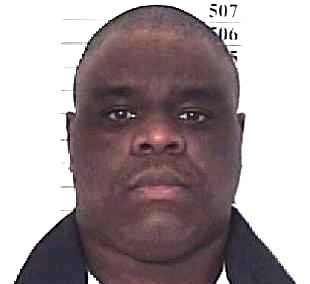
Scotty Morrow
Murderer Brian Kevin Rosenfeld
Murderer · USA · 1985
Brian Kevin Rosenfeld Brian Kevin Rosenfeld was sentenced to three concurrent l…
23 victims
Brian Kevin Rosenfeld
Murderer · USA · 1985
Brian Kevin Rosenfeld Brian Kevin Rosenfeld was sentenced to three concurrent l…
23 victims
 Russell Ellwood
Murderer · USA · 1991
Russell Ellwood was a former taxi driver. Authorities suspected him of killing…
20 victims
Russell Ellwood
Murderer · USA · 1991
Russell Ellwood was a former taxi driver. Authorities suspected him of killing…
20 victims
 Robert Martines Perez
Murderer · USA · 1994
Name: Robert Martines Perez · Other name used in proceedings: Robert Martinez P…
15 victims
Robert Martines Perez
Murderer · USA · 1994
Name: Robert Martines Perez · Other name used in proceedings: Robert Martinez P…
15 victims
 Billy Frank Vickers
Murderer · USA · 1993
Billy Frank Vickers Vickers was executed by lethal injection in Texas on Januar…
14 victims
Billy Frank Vickers
Murderer · USA · 1993
Billy Frank Vickers Vickers was executed by lethal injection in Texas on Januar…
14 victims
 John Ingle
Murderer · USA · 1996
Name: John Ingle Sex/Race: White male Date of birth: 10-29-49 Age: not stated D…
1 victim
John Ingle
Murderer · USA · 1996
Name: John Ingle Sex/Race: White male Date of birth: 10-29-49 Age: not stated D…
1 victim
 Kent Jermaine Jackson
Murderer · USA · 2000
Kent Jermaine Jackson was a male Black defendant. He was a Newport News inmate…
1 victim
Kent Jermaine Jackson
Murderer · USA · 2000
Kent Jermaine Jackson was a male Black defendant. He was a Newport News inmate…
1 victim
 Samuel Smithers
Murderer · USA · 1996
Name: Samuel Smithers · Date of birth: 01/30/53 · Case information: SC96690 opi…
2 victims
Samuel Smithers
Murderer · USA · 1996
Name: Samuel Smithers · Date of birth: 01/30/53 · Case information: SC96690 opi…
2 victims
 Erick Virgil Hall
Murderer · USA · 2000
October 2004 — Erick Virgil Hall received a death sentence for the killing of L…
2 victims
Erick Virgil Hall
Murderer · USA · 2000
October 2004 — Erick Virgil Hall received a death sentence for the killing of L…
2 victims
 John Warren Parsons
Murderer · USA · 2005
John Warren Parsons was from Chillicothe, Ohio. He was wanted as an FBI Ten Mos…
1 victim
John Warren Parsons
Murderer · USA · 2005
John Warren Parsons was from Chillicothe, Ohio. He was wanted as an FBI Ten Mos…
1 victim
 Tonya Ford
Murderer · USA · 2009
Tonya Ford was a Taylor County woman convicted of killing her police officer hu…
1 victim
Tonya Ford
Murderer · USA · 2009
Tonya Ford was a Taylor County woman convicted of killing her police officer hu…
1 victim
- Gender
- male
- Country
- USA
- Location
- Hall County, Georgia, USA
- Date of birth
- 1967
- Age at first offence
- 27
- Characteristics
- domestic violence, abuser, rape, burglary
- Victim profile
- His ex-girlfriend Barbara Ann Young and her friend Tonya Woods
- Method of murder
- Shooting
- Date(s) of murder
- December 29, 1994
- Years active
- 1994
- Date of arrest
- —
- Status
-
Sentenced to death
Sentenced to death on June 30, 1999
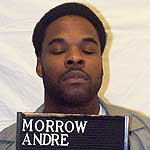
Case record: Scotty Morrow
Background
Scotty Morrow began dating Barbara Ann Young in June 1994. Young broke up with Morrow in December 1994 because of his abusive behavior.
The offence
At 9:52 a.m. on December 29, 1994, Morrow telephoned Ms. Young at her home. Young told him that she wanted him to leave her alone. After hanging up, Morrow drove to Ms. Young's home and entered without permission.
Ms. Young was in the kitchen with two of her friends, Tonya Woods and LaToya Horne. Two of Ms. Young's children, five-year-old Christopher and eight-month-old Devonte, were also present.
There was an argument in the kitchen. Woods told Morrow to leave because Ms. Young did not want to have anything to do with him anymore. Morrow yelled, "Shut your mouth, bitch!" and pulled a nine-millimeter pistol from his waistband.
Morrow shot Ms. Woods in the abdomen and Ms. Horne in the arm. The bullet that struck Ms. Woods severed her spinal cord, paralyzing her from the waist down. Ms. Young fled down the hallway and into her bedroom. Morrow caught her in the bedroom and beat her on the head and face. Ms. Young managed to flee back to the hallway where Morrow grabbed her by the hair and shot her point-blank in the head, killing her.
From his hiding place in a nearby bedroom, Christopher saw Morrow kill his mother. Morrow returned to the kitchen. Testimony as to clicking noises and the fact that a live cartridge was found on the kitchen floor indicated that Morrow either reloaded his pistol or cleared a jam. He then placed the muzzle of the pistol an inch from Ms. Woods' chin and killed her with a shot to the head.
The medical examiner opined that, although she was paralyzed, Ms. Woods had not lost much blood at that time and was probably still conscious when the fatal shot was fired.
Morrow also shot Ms. Horne two more times, in the face and the arm, and fled after cutting the telephone line. Despite her injuries—which included a shattered palate, permanent deafness in one ear, and nerve damage in an arm—Ms. Horne managed to get to her feet and run to a neighbor's house.
Ms. Horne and Christopher told the responding police officers that Morrow was the shooter.
Morrow confessed after his arrest and the murder weapon was found hidden in his backyard. At trial, Morrow admitted that he shot the victims because he "wanted [Ms. Woods] to shut up."
Morrow was convicted of murder. He killed Barbara Ann Young and Tonya Rochelle Woods. The jury convicted him by a finding of malice murder, felony murder, aggravated assault, aggravated battery, cruelty to a child, burglary, and possession of a firearm during the commission of a felony.
Investigation
Arrest
Morrow drove back to his home in Barrow County after the shooting. The police in Hall County informed the Barrow County police that there had been a shooting homicide and that Morrow was the suspect because survivors had identified Morrow as the shooter. The police provided a description of the pickup truck that Morrow had been driving.
The Barrow County police noticed the truck in Morrow's driveway. An investigator called the house and spoke with Morrow's sister, who was a sheriff's deputy. She and Morrow agreed to leave the house and speak with the police in their driveway. They met the police there and Morrow was taken into custody. This warrantless arrest was not improper.
There was sufficient probable cause for this arrest and for the arrest warrant that was issued in Hall County at approximately the same time.
The evidence also showed that Morrow's subsequent videotaped statement to the police was voluntary and admissible.
Morrow was 27 years old and had a 10th grade education. He was in police custody only a short time before the statement. His handcuffs were removed. He read and signed a Miranda rights waiver form and he initialed each enumerated right as it was read to him. He was alert, not intoxicated, and appeared to understand all that was said. He was not threatened, coerced or promised anything. He agreed to speak with the police and did not request an attorney. The trial court denied the motion to suppress Morrow's statement.
Trial
The trial was before Judge Fuller in Hall Superior Court.
Guilt-Innocence Phase
The evidence presented at trial supported the jury's findings. Barbara Ann Young began dating Scotty Morrow in June 1994 and she broke up with him in December 1994 because of his abusive behavior.
At 9:52 a.m. Young at her home. Ms.
Ms. Two of Ms. Young's children, Christopher and Devonte, were also present.
He shot Ms. Woods in the abdomen and Ms. Horne in the arm. The bullet that struck Ms. Ms. Ms. Young fled back to the hallway where Morrow grabbed her by the hair and shot her point-blank in the head, killing her.
Christopher saw Morrow kill his mother from a hiding place in a nearby bedroom. Testimony as to clicking noises and the fact that a live cartridge was found on the kitchen floor indicated that he either reloaded his pistol or cleared a jam.
Morrow also shot Ms. Ms. Ms.
Woods] to shut up."
The evidence was sufficient to enable a rational trier of fact to find proof of Morrow's guilt beyond a reasonable doubt of two counts of malice murder, two counts of felony murder, six counts of aggravated assault, aggravated battery, cruelty to a child, burglary, and possession of a firearm during the commission of a felony.
Prior difficulties evidence (prior difficulties)
Morrow claimed that the trial court erred by permitting evidence of three incidents as prior difficulties. The trial court admitted hearsay concerning Ms. Young's statements about prior difficulties.
December 6, 1994
The State introduced evidence that Morrow hit Barbara Ann Young on this date and blackened her eye. A witness testified that Ms. Young told her that Morrow had threatened her, but she did not observe any injuries. Three witnesses testified that Ms. Young told them Morrow had hit her and they observed that she had a swollen or black eye as if she had been struck. There was a short time between the incident and the statements; she never recanted. Her eye injury corroborated the statements. A fifth witness testified for the State that she personally saw Morrow hit Ms. Young on December 6.
The trial court did not err by admitting hearsay regarding this prior difficulty.
December 9, 1994
The State presented evidence that Morrow picked up Ms. Young to drive her to her classes at Lanier Tech, but instead drove her to another county against her will, hit her, and forced her to have sex with him. Several State witnesses, including friends, teachers, and police officers, testified that Ms. Young told them what had happened shortly after the incident.
An instructor at Lanier Tech testified that Ms. Young called her from a pay phone during the incident when Morrow was stopped at a convenience store. The instructor testified that Ms. Young was hysterical and said, "help me, call the police, he's got me." The instructor identified Morrow as her abductor.
Morrow claimed that the statements were unreliable because no arrest warrant ever issued over this incident. Ms. Young never recanted her statements and several witnesses also testified that they observed knots or bumps on her head. The trial court did not err by admitting this evidence.
The trial court also admitted testimony that Ms. Young did not seek a warrant because she was assured by Morrow's family that he would stay away from her. At trial, Morrow admitted that he took Ms. Young to another county against her will on December 9, but claimed that the sex was consensual.
December 24, 1994
A friend of Ms. Young, who lived in the apartment below Ms. Young's apartment, testified that during a Christmas party Ms. Young came running to her apartment yelling, "He (Morrow) gonna kill me, he got a gun." The neighbor testified that Ms. Young was very afraid. The neighbor heard Morrow telling Ms. Young through the door that he was not going to bother her and that she could go back upstairs. The next day, Ms. Young told the neighbor that Morrow might have had a knife and not a gun, but she never recanted that he had threatened her.
The neighbor did not see Morrow or a gun. The trial court considered the statement's veracity corroborated by Morrow's statement to the police on December 29, in which he admitted that he had a heated argument with Ms. Young on Christmas Eve and that he grabbed her by the shirt. LaToya Horne also testified that she saw Morrow hit Ms. Young at the Christmas party because he was upset that some men wanted to play cards with her.
The trial court held that there was sufficient circumstantial evidence of trustworthiness regarding Ms. Young's statement to her neighbor, and that it did not err by admitting it.
Telephone conversation identification error
Ms. Horne testified that Ms. Young received a telephone call from Morrow on the morning of the murders and that Ms. Young told Morrow to leave her alone. Ms. Horne did not listen on the line and never heard the caller's voice. Ms. Young also never identified the caller as Morrow to Ms. Horne.
Ms. Horne was allowed over defense objection to give her "opinion" that the caller was Morrow based on the content of Ms. Young's comments during the telephone conversation. This was error. The substance of a telephone conversation was not admissible unless the caller could be identified and identification was not sufficient if it rested solely on the contents of the conversation.
The error was harmless because the State introduced telephone records that showed a nine-minute telephone call was placed from Morrow's house to Ms. Young's home at 9:52 a.m., and Morrow admitted at trial that he was the person who made this telephone call.
Jury charges and sufficiency rulings
The trial court held that cruelty to children statute was not void for vagueness. The trial court did not need to define "maliciously" for the jury when charging them on this offense.
The evidence showed that Morrow did not have authority to enter Ms. Young's home on December 29, 1994. The trial court correctly declined to direct a verdict of acquittal on the burglary charge.
The evidence supported a guilty verdict for cruelty to a child for killing Christopher's mother in the child's presence. Christopher testified that he saw Morrow enter the apartment. When the shooting erupted in the kitchen, he grabbed his baby brother and tried to hide with him in a closet in their bedroom. Christopher peeked into the hallway and saw Morrow seize his mother by the hair and shoot her in the head.
The trial court properly denied Morrow's motion for a directed verdict of acquittal on this charge.
Sufficiency and verdict
The jury convicted Morrow on all counts on June 26, 1999. The jury recommended a death sentence on June 29, 1999.
Sentencing
In addition to the death sentence, the trial court sentenced Morrow to consecutive sentences of twenty years for aggravated battery, twenty years for cruelty to a child, twenty years for burglary, and five years for possession of a firearm during the commission of a felony.
The aggravated assault convictions merged with other convictions.
The jury recommended a death sentence after finding beyond a reasonable doubt the following aggravating circumstances:
- that the murder of Ms. Young was outrageously vile, horrible or inhuman in that it involved torture and depravity of mind;
- that the murder of Ms. Woods was outrageously and wantonly vile, horrible or inhuman in that it involved torture, depravity of mind, and an aggravated battery to Ms. Woods before her death;
- that the murder of Ms. Woods was committed while the defendant was engaged in the commission of the murder of Ms. Young and the aggravated battery of LaToya Precal Horne;
- that the murder of Ms. Young was committed while the defendant was engaged in the commission of the aggravated battery of Ms. Horne; and
- that the murders of Ms. Young and Ms. Woods were committed while the defendant was engaged in the commission of a burglary.
The evidence was sufficient to authorize the jury to find beyond a reasonable doubt the statutory aggravating circumstances supporting the death sentence.
OCGA 17-10-30 was not unconstitutional. Execution by electrocution was not unconstitutional. The death sentence was not imposed as the result of passion, prejudice or any other arbitrary factor. The death sentence was not excessive or disproportionate considering both the crimes and the defendant.
The similar cases listed in the Appendix supported the imposition of the death penalty in that all involve the deliberate, unprovoked murder of two or more people, an intentional murder committed during a burglary, or a murder involving the OCGA 17-10-30 (b) (7) aggravating circumstance.
Appeals
Morrow filed an appeal. The case was docketed on October 4, 1999. The case was orally argued on January 18, 2000. It was decided on June 12, 2000, and reconsideration was denied on July 28, 2000.
Pre-trial issues: jury pool composition
Morrow claimed that Hispanics were underrepresented in the composition of the 1994 grand jury pool and the 1999 traverse jury pool in violation of the Sixth Amendment, the Fourteenth Amendment, OCGA 15-12-40, and the Unified Appeal Procedure.
The trial court found that Hispanics were a cognizable group. It found that the second prong of the Sixth and Fourteenth Amendment tests was not met because Morrow's expert's estimate that jury-eligible Hispanics comprised approximately 2.5 times their numbers reported for Hall County in the 1990 Census was unreliable. The trial court was critical of the expert's test census because respondents were told that the survey was intended to benefit the Hispanic community, which may have affected responses. The trial court also noted that the survey was conducted in a 1/86th section of the county picked specifically for having the highest number of Hispanics with results extrapolated to the entire county.
The State argued several errors by Morrow's expert in supporting data and that she assumed a constant growth rate for the entire county population.
The appellate court held that refusing to adopt Morrow's expert's Hispanic population percentage instead of the official 1990 Census statistics was not clearly erroneous.
The 1990 Census reported 3,252 Hispanics over the age of 18 in Hall County out of a total jury-eligible population of 70,969, approximately 4.6% of the total. Morrow's expert found 0.8% Hispanics on the grand jury list, resulting in an absolute disparity of 3.8%, which was not a violation of law. The appellate court also found that absolute disparities were within legal limits. Morrow's expert estimated that 1.6% of people on the 1999 traverse jury list were Hispanic, resulting in an absolute disparity of 3%, within the legal limit.
The appellate court concluded the trial court did not err in ruling that the composition of the grand and traverse jury pools did not violate the Constitution or OCGA 15-12-40 and the Unified Appeal Procedure.
Pre-trial issues: venue remains in Hall County
The trial court ordered a change of venue but later decided that venue would remain in Hall County.
In 1995, Morrow moved for a change of venue and the State consented to grant of the motion. No evidentiary hearing was held on whether the trial setting was inherently prejudicial due to pretrial publicity because the trial court granted the motion based upon parties' consent. The trial was to be conducted in Hall County unless the parties recommended a transfer county for juror selection. There was no record of either party recommending transfer counties and no transfer county was designated by the trial court.
In 1998, the State revoked consent and moved for an evidentiary hearing whether venue should remain in Hall County due to the paucity of media coverage. The trial court initially denied and then reconsidered and ordered an evidentiary hearing whether Hall County was inherently prejudicial due to pretrial publicity. After the hearing, the trial court ruled venue would remain in Hall County.
Morrow argued the trial court erred by ordering the evidentiary hearing and later ordering venue remain after it granted the motion to change venue in 1995. The appellate court held that granting the change of venue in 1995 had been based solely on consent and without a finding that an impartial jury could not be obtained in Hall County. No transfer county had been designated by the trial court. The appellate court held the trial court did not err by ordering the evidentiary hearing and had discretion to order venue remain in Hall County.
The appellate court also found that news coverage was not extensive or inflammatory and most occurred around the time of the crimes, over four years before trial. The trial setting was not inherently prejudicial. Morrow failed to show a high percentage of jurors formed opinions or a relatively high excusal rate due to pretrial publicity. The trial court did not abuse its discretion.
Pre-trial issues: arrest legality
Morrow argued his arrest was illegal. The appellate court held the warrantless arrest in Barrow County after police notified Barrow County of the suspect was not improper and there was sufficient probable cause.
Pre-trial issues: consent to search
Morrow complained that consent for warrantless search of Morrow's house, truck and curtilage was not voluntary. The appellate court held both Morrow and his mother voluntarily consented. The police read the consent to search form which listed the property to be searched and included a caveat that he did not have to give consent. Morrow signed it. Morrow's mother read and voluntarily signed consent forms for the property. The appellate court found no error.
Jury selection issues
The trial court excused prospective juror Wilkerson for cause because his views on the death penalty would prevent or substantially impair performance of juror duties in accordance with instructions and oath. Wilkerson stated he could never vote for the death penalty, even in the worst case he could imagine.
The trial court did not err by excusing several other jurors for bias against the death penalty. The trial court also did not improperly restrict voir dire. The scope of voir dire was left to the trial court's discretion and was sufficient to ascertain bias.
The trial court did not err by refusing to excuse prospective jurors O'Kelley, Hoynes, Callahan, Taylor, and Gibson for cause. The appellate court found they could vote to impose all three sentencing options. It addressed O'Kelley's limited earlier relationship with the district attorney, and stated she could set it aside and decide based on the merits. It addressed Hoynes' and Gibson's potential biases and stated they could set aside any possible bias when deciding the case.
Other issues
The appellate court affirmed that OCGA 16-5-70 cruelty to children statute was not void for vagueness. It held the trial court correctly declined to direct a verdict of acquittal on burglary because Morrow did not have authority to enter the home. It held that evidence sufficed for cruelty to a child because Morrow killed Christopher's mother in Christopher's presence.
Sentencing issues
The appellate court held that Morrow's death sentence was supported by statutory aggravating circumstances and addressed challenges to the constitutionality of OCGA 17-10-30, the constitutionality of electrocution, arbitrariness, and excessiveness or disproportionality.
Outcome
Morrow's conviction and death sentence were affirmed.
A concurring and dissenting opinion stated that the concurring justice agreed with affirmance of guilt but dissented to Division 17 and the affirmance of the death penalty as it required death by electrocution.
Other details
Indictment and trial dates
The crimes occurred on December 29, 1994. The grand jury indicted Morrow on March 6, 1995 for malice murder (two counts), felony murder (two counts), aggravated assault (six counts), aggravated battery, cruelty to a child, burglary, and possession of a firearm during the commission of a felony. The State filed notice of intent to seek the death penalty on May 1, 1995. The trial was held June 7-29, 1999.
The jury convicted Morrow on all counts on June 26, 1999, and recommended a death sentence on June 29, 1999.
Because the jury did not specify on the jury form that it was recommending a death sentence for both murders, the trial court merged the malice murder conviction for the killing of Tonya Woods with the malice murder conviction for the killing of Barbara Ann Young and imposed a single death sentence. The felony murder convictions were vacated by operation of law.
Punishment structure
The trial court imposed a single death sentence and consecutive terms of twenty years each for aggravated battery, cruelty to a child, and burglary, and five years for possession of a firearm during the commission of a felony. Aggravated assault convictions merged with other convictions.
Language and statements
Morrow yelled, "Shut your mouth, bitch!" The Lanier Tech instructor testified that Ms. Young said, "help me, call the police, he's got me." During the Christmas party, a friend of Ms. Young testified that Ms. Young yelled, "He (Morrow) gonna kill me, he got a gun." Woods] to shut up."
Spotted an error, or have more information about this case?