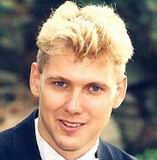
Paul Bernardo
Serial killer Robert Pickton
Serial killer · Canada · 1995
Robert William "Willie" Pickton (born October 26, 1949) of Port Coquitlam, Brit…
49 victims
Robert Pickton
Serial killer · Canada · 1995
Robert William "Willie" Pickton (born October 26, 1949) of Port Coquitlam, Brit…
49 victims
 Clifford Olson
Serial killer · Canada · 1980
Clifford Robert Olson was a Canadian serial killer who abducted, sexually abuse…
11 victims
Clifford Olson
Serial killer · Canada · 1980
Clifford Robert Olson was a Canadian serial killer who abducted, sexually abuse…
11 victims
 John Martin Crawford
Serial killer · Canada · 1981
John Martin Crawford was a Canadian serial killer. · 1981 — John Martin Crawfor…
4 victims
John Martin Crawford
Serial killer · Canada · 1981
John Martin Crawford was a Canadian serial killer. · 1981 — John Martin Crawfor…
4 victims
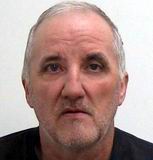 Camille Cleroux
Serial killer · Canada · 1990
Camille Cleroux, 58, pleaded guilty in an Ottawa court to the first-degree murd…
3 victims
Camille Cleroux
Serial killer · Canada · 1990
Camille Cleroux, 58, pleaded guilty in an Ottawa court to the first-degree murd…
3 victims
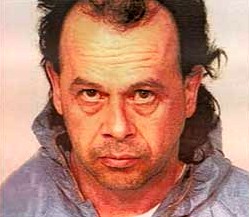 William Patrick Fyfe
Serial killer · Canada · 1979
William Patrick Fyfe was a Canadian serial killer who was convicted of five cou…
25 victims
William Patrick Fyfe
Serial killer · Canada · 1979
William Patrick Fyfe was a Canadian serial killer who was convicted of five cou…
25 victims
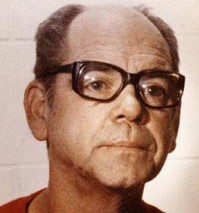 Gilbert Paul Jordan
Serial killer · Canada · 1965
Gilbert Paul Jordan (born December 12, 1931; died July 7, 2006) was known as th…
10 victims
Gilbert Paul Jordan
Serial killer · Canada · 1965
Gilbert Paul Jordan (born December 12, 1931; died July 7, 2006) was known as th…
10 victims
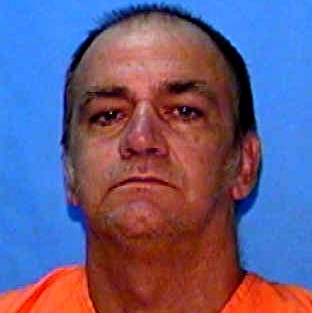 Gary Lawrence
Murderer · USA · 1994
Gary Lawrence (DOB: 06/29/57) was tried in the First Judicial Circuit, Santa Ro…
1 victim
Gary Lawrence
Murderer · USA · 1994
Gary Lawrence (DOB: 06/29/57) was tried in the First Judicial Circuit, Santa Ro…
1 victim
 Paul Dyson
Murderer · United Kingdom · 2005
Paul Dyson was sentenced to life imprisonment with a minimum term of 16 years o…
1 victim
Paul Dyson
Murderer · United Kingdom · 2005
Paul Dyson was sentenced to life imprisonment with a minimum term of 16 years o…
1 victim
 Joseph Donald Ture
Serial killer · USA · 1978
Joseph Donald Ture was indicted by a Stearns County grand jury on four counts o…
6 victims
Joseph Donald Ture
Serial killer · USA · 1978
Joseph Donald Ture was indicted by a Stearns County grand jury on four counts o…
6 victims
 Jiverly Wong
Mass murderer · USA · 2009
December 8, 1967 — Jiverly Antares Wong was born. · late 1980s — Wong first cam…
13 victims
Jiverly Wong
Mass murderer · USA · 2009
December 8, 1967 — Jiverly Antares Wong was born. · late 1980s — Wong first cam…
13 victims
- Gender
- male
- Country
- Canada
- Location
- O ntario, Canada
- Date of birth
- August 27, 1964
- Age at first offence
- 26
- Characteristics
- serial rapist, rape, child molester, torture
- Victim profile
- Tammy Homolka, 15 / Leslie Mahaffy, 14 / Kristen French, 15
- Method of murder
- Poisoning - Strangulation
- Date(s) of murder
- December 1990 - April 1992
- Years active
- 1990–1992
- Date of arrest
- February 17, 1993
- Status
-
Released
Sentenced to 25 years in prison on September 1, 1995; Later declared a "Dangerous Offender", making it unlikely he will ever be released.
Case record: Paul Bernardo
Background
Paul Kenneth Bernardo (born August 27, 1964 in Toronto, Ontario) was a Canadian serial killer and rapist.
Bernardo was born into a wealthy but dysfunctional family. His mother Marilyn had been adopted by well-to-do Toronto lawyer Gerald Eastman and his wife Elizabeth, and Marilyn had been raised in a stable household. His father, Kenneth, was the son of an English woman and an Italian immigrant who created a highly successful marble and tile business, but Kenneth was abusive to his wife and children. Rather than entering the family business, Kenneth became an accountant.
Marilyn became pregnant and gave birth to Paul Kenneth Bernardo on August 27, 1964. Kenneth Bernardo tolerated his wife's affair and was listed as the biological father on Paul's birth certificate.
In 1975, Kenneth Bernardo fondled a girl and was charged with child molestation, and Kenneth also sexually abused his own daughter. Marilyn became depressed over her husband's abuse, withdrew from family life, and lived in the basement of their Scarborough home. After emotional and mental turmoil affected the older children, young Paul appeared unscathed.
Nick Pron described Bernardo in his book Lethal Marriage: "He was always happy. A young boy who smiled a lot. And he was so cute, with his dimpled good looks and sweet smile, that many of the mothers just wanted to pinch him on the cheek whenever they saw him. He was the perfect child they all wanted: polite, well mannered, doing well in school, so sweet in his Boy Scout uniform."
Following an argument between his parents when Bernardo was 16, his mother told him of his actual parentage. Repulsed, he openly called his mother "slob" and "whore".
Bernardo graduated from Sir Wilfrid Laurier Collegiate Institute. He chose to work for Amway, whose sales culture affected him. He bought books and tapes of famous motivational get-rich-and-famous experts.
Bernardo and his friends practised their techniques on young women they met in bars and were fairly successful. By the time Bernardo attended University of Toronto Scarborough, he developed dark sexual fantasies, enjoyed humiliating women in public, and beat up the women he dated.
In June 7, 1987, he met Karla Homolka. They became sexually interested almost immediately. Homolka encouraged his sadistic sexual behaviour and encouraged his acts as the "Scarborough Rapist".
The offence
Sexual assaults attributed to the "Scarborough Rapist"
Bernardo committed multiple sexual assaults in and around Scarborough, Ontario. Most of the assaults targeted young women who he had stalked after they exited buses late in the evening.
May 4, 1987 — Bernardo committed his first rape in Scarborough against a 21-year-old woman in front of her parents' house, after following her home. The attack lasted more than half an hour.
May 14, 1987 — Bernardo committed his second rape, attacking a 19-year-old woman in the back yard of her parents' house. The incident lasted over an hour.
July 27, 1987 — Bernardo attempted his third rape. He beat the young woman but abandoned the attack after she fought back.
December 16, 1987 — Bernardo committed his third rape against a 15-year-old girl. The rape lasted about one hour.
December 17, 1987 — After the third rape, the Toronto Police Service issued a warning to women in Scarborough travelling alone at night, especially those taking buses.
December 23, 1987 — Bernardo committed his fourth rape. During this attack, Bernardo raped the 17-year-old with the knife he used to threaten his victims. At this point he began to be referred to as the 'Scarborough Rapist'.
April 18, 1988 — Bernardo attacked a 17-year-old. This assault lasted 45 minutes.
May 25, 1988 — Bernardo was nearly caught by a uniformed Metro Toronto investigator staking out a bus shelter. The investigator noticed him hiding under a tree and pursued him on foot, but Bernardo escaped.
May 30, 1988 — Bernardo committed his sixth rape in Clarkson, about 25 miles southwest of Scarborough. The attack, against an 18-year-old, lasted 30 minutes.
October 4, 1988 — Bernardo attempted a seventh Scarborough rape. His intended victim fought him off but he inflicted two stab wounds to her thigh and buttock that required 12 stitches.
November 16, 1988 — Bernardo committed his seventh rape against an 18-year-old in the backyard of her parents' house.
November 17, 1988 — Metro Police formed a special task force dedicated to capturing the Scarborough Rapist.
December 27, 1988 — An alerted neighbor chased Bernardo off after he had begun his attempted eighth rape.
June 20, 1989 — Bernardo attempted to rape another young woman. She fought against him and her screams alerted neighbors. Bernardo fled with scratches on his face.
August 15, 1989 — Bernardo committed his eighth rape against a 22-year-old woman. He had stalked her the previous night from outside the window of her apartment and waited for her to arrive home. The particularly vicious attack lasted two hours.
November 21, 1989 — Bernardo committed his ninth rape against a 15-year-old whom he saw in a bus shelter. The attack lasted 45 minutes.
December 22, 1989 — Bernardo committed his tenth rape against a 19-year-old. The attack occurred in a stairwell of an underground parking lot and lasted 30 minutes.
May 26, 1990 — Bernardo committed his eleventh rape. This rape lasted over an hour. The victim’s vivid recollection permitted police to make a computer composite photograph, which was released two days later and published in Toronto and area newspapers.
Investigation and release connected to the Scarborough rapes
Between May and September 1990, police submitted more than 130 suspects' samples for DNA testing when they received two reports that the person they were seeking was Paul Bernardo.
The first report, in June, had been called in by a bank employee.
The second report was received from Tina Smirnis, wife of one of the three Smirnis brothers who were among Bernardo's closest friends. Smirnis told the detectives that Bernardo "had been 'called in' on a previous rape investigation — once in December, 1987 - but he had never been interviewed." She said Bernardo frequently talked about his sex life to Smirnis and liked analingus, rough sex and anal sex. Alex Smirnis’ phrasing was awkward and stilted, leaving the detectives unsure whether to take him seriously. After cross-checking several files, the detectives decided to interview Bernardo.
The interview on November 20, 1990 lasted 35 minutes. Bernardo voluntarily gave samples for forensic testing. When the detectives asked why he thought he was being investigated for the rapes, he admitted that he did resemble the composite.
The detectives concluded that such a well-educated, well-adjusted, congenial young man couldn't be responsible for the vicious crimes. They considered him “far more credible than...Alex Smirnis who, with his awkward, strange way of speaking, might just be trying to collect the reward.”
Bernardo was released the following day.
Following the interview, Bernardo drove to St. Catharines and held a secret meeting with Homolka, assuring her that he was not the Scarborough Rapist. He moved permanently to St. Catharines on February 1, 1991. The sexual assaults in Scarborough had stopped.
Rape in St. Catharines
April 6, 1991 — Bernardo committed his 12th rape in St. Catharines. The victim was young (14).
“Jane Doe” rape described in the ensuing trials
Homolka befriended a then 15-year-old girl when Homolka still worked at a pet shop. On June 7, 1991, Homolka invited the teen, referred to as "Jane Doe" in the ensuing trials, for a "girls' night out."
After shopping and dining, Homolka took "Jane Doe" to 57 Bayview Avenue and began to ply her with alcohol laced with Halcion. After the teenager lost consciousness, Homolka called Bernardo, telling him his surprise wedding gift was ready. They undressed the girl, who was a virgin. Bernardo videotaped Homolka as she raped the girl before Bernardo vaginally and anally penetrated her. The next morning, the teenager was nauseous and believed the vomiting was due to having drunk alcohol for the first time. She did not realize she had been violated.
She was invited back to Port Dalhousie in August to “spend the night.” In a replay of Tammy Homolka, "Jane Doe" stopped breathing after she was drugged and Bernardo had begun to rape her. Homolka called 911 but called back a few minutes later saying that "everything is all right." The emergency crew was recalled without follow-up.
"Jane Doe" visited the couple once more on December 22, 1992, when Homolka pressured her to have sex with Bernardo. She became upset and left.
Murders
Tammy Homolka
By 1990, Bernardo spent large amounts of time with the Homolka family, who liked him. He was engaged to the eldest daughter and flirted constantly with the youngest one. He had not told the family he had lost his job as an accountant and instead was smuggling cigarettes across the U.S.-Canadian border. He became obsessed with Tammy Homolka, peeping into her window and entering her room to masturbate while she slept. Karla Homolka helped him by breaking the blinds in Tammy’s sister’s window to allow access.
In July, Bernardo took Tammy across the border to get beer for a party. Later, Bernardo told his fiancee, "they got drunk and began making out."
According to Bernardo’s testimony at his trial on July 24, 1990, Karla Homolka laced spaghetti sauce with crushed Valium stolen from her employer, Martindale Animal Clinic. Homolka served dinner to her sister, who soon lost consciousness. Bernardo began to rape Tammy while Karla watched.
Over the summer, Bernardo supplied Tammy and her friends with gifts, food, and sodas that had "a film and a few white flecks on the top."
Six months before their 1991 wedding, Karla Homolka stole the anaesthetic agent Halothane from the clinic. On December 23, 1990, Homolka and Bernardo administered sleeping pills to the 15-year-old in a rum-and-eggnog cocktail. After Tammy was unconscious, Homolka and Bernardo undressed her and Karla applied a Halothane-soaked cloth to Tammy’s nose and mouth.
Karla wanted to "give Tammy's virginity to Bernardo for Christmas" because Bernardo was disappointed by not having been Karla's first sex partner. With Tammy’s parents sleeping upstairs, the pair filmed themselves as they raped her in the basement. Tammy began to vomit. They tried to revive her and called 911 but hid evidence first, dressed Tammy, and moved her into her basement bedroom.
Tammy Homolka was pronounced dead at St. Catharines General Hospital without having regained consciousness. The official cause of Tammy Homolka’s death was accidental — choking on her vomit after consumption of alcohol. The pair filmed themselves with Karla wearing Tammy’s clothing and pretending to be her. They moved out of the Homolka house to a rented Port Dalhousie bungalow so Tammy’s parents could cope with their grief.
Leslie Mahaffy
Early in the morning on June 15, 1991, Bernardo took a detour through Burlington to steal licence plates where he found Leslie Mahaffy. The 14-year-old had missed her curfew after attending a funeral and was locked out of her house. Bernardo approached her and told her he was looking to break into a neighbor's house. She asked if he had any cigarettes. He blindfolded her, forced her into his vehicle, and drove her to Port Dalhousie, where he informed Homolka they had a playmate.
Bernardo and Homolka videotaped themselves torturing and sexually abusing Mahaffy while listening to Bob Marley and David Bowie. Bernardo said: "You're doing a good job, Leslie, a damned good job." Then he added: "The next two hours are going to determine what I do to you. Right now, you're scoring perfect."
In another segment of tape, played at Bernardo's trial, the assault escalated. Mahaffy cried out in pain and begged Bernardo to stop. In the Crown description, Bernardo was sodomizing her while her hands were bound with twine.
Mahaffy later told Bernardo her blindfold seemed to be slipping, signalling the possibility she might identify both tormentors if permitted to live.
The following day, Bernardo claimed Homolka fed her a lethal dose of Halcion. Homolka claimed that instead Bernardo strangled her. The pair put Mahaffy’s body into their basement.
After the Homolkas and their remaining daughter, Lori, had left, Bernardo and Homolka decided to dispose of the evidence by dismembering Mahaffy and encasing each piece in cement. Bernardo bought a dozen bags of cement at a hardware store the following day and kept the receipts. Bernardo used his grandfather’s circular saw to cut the body.
Bernardo and Homolka made numerous trips to dump the cement blocks in Lake Gibson, 18 kilometres south of Port Dalhousie. At least one of the blocks weighed 200 pounds and proved unable to sink. It rested near the shore, where a father and son on a fishing expedition discovered it on June 29, 1991. Leslie Mahaffy’s orthodontic appliance proved definitive in identifying her.
Kristen French
On the afternoon of April 16, 1992, Bernardo and Homolka were driving through St. Catharines to look for potential victims, after school hours on the day before Good Friday. As they passed Holy Cross Secondary School, they spotted Kristen French, a 15-year-old student, walking to her nearby home. The couple pulled into the parking lot of nearby Grace Lutheran Church. Homolka got out of the car with a map and pretended to need assistance. As French looked at the map, Bernardo attacked from behind, brandishing a knife, forcing her into the front seat of their car. Homolka controlled French from the back seat by pulling down her hair.
French took the same route home each day. When her parents believed she had met with foul play, they notified police. Within 24 hours, Niagara Regional Police assembled a team, searched along her route, and found witnesses who had seen the abduction from different aspects, giving police a clear picture. One of Kristen's shoes, recovered from the parking lot, underscored the seriousness of the abduction.
Over the three days of Easter weekend, Bernardo and Homolka videotaped themselves torturing, raping, and sodomizing Kristen French, forcing her to drink large amounts of alcohol and to behave submissively.
At Bernardo's trial, Crown prosecutor Ray Houlahan said Bernardo always intended to kill her because she was never blindfolded and was capable of identifying her captors.
While Bernardo was out buying pizza on April 18, he was spotted by Kerry Patrich, who he had stalked the previous month. Her report to NRP was mishandled by police, noted later by Judge Archie Campbell in his 1995 inquiry into police investigation of Bernardo’s crimes.
The following day, the couple murdered French before going to the Homolkas’ for Easter dinner. Homolka testified at her trial that Bernardo strangled French for exactly seven minutes while she watched. Bernardo said Homolka beat French with a rubber mallet because she tried to escape and that French was strangled on a noose tied around her neck secured to a hope chest.
French's nude body was found in a ditch on April 30, 1992 in Burlington, approximately 45 minutes from St. Catharines, and a short distance from the cemetery where Leslie Mahaffy is buried. Her body had been washed and her hair had been cut off. The hair was initially thought removed as a trophy, but Homolka testified the hair had been cut to impede identification.
Other possible victims and related incidents mentioned
Suspicions remained about other possible victims or intended victims of Bernardo and/or Homolka.
January girl — Bernardo abducted a girl on the weekend of January 12, 1991 and took her to the house where he raped her while Homolka watched. He dropped her off on a deserted road near Lake Gibson. Bernardo and Homolka referred to her as "January girl."
April 6, 1991 abducted 14-year-old rowing coxswain — On April 6, 1991 at about 5:30 a.m., Bernardo abducted a 14-year-old warming up for her duties as coxswain on a local rowing team. A blonde woman waved from her car, distracting the girl. Bernardo dragged her into shrubbery near the rowing club, sexually assaulted her, forced her to remove all her clothes, and made her wait five minutes while he disappeared.
July 28, 1991 — Bernardo stalked Sydney Kershen, 21, after seeing her while driving home from work.
August 9, 1991 — Bernardo resumed stalking Sydney Kershen. She stopped at her boyfriend’s house before he arrived. When the boyfriend chased Bernardo, he came across Bernardo’s gold Nissan and noted the licence plate. The couple reported the incident to Niagara Regional Police. NRP established the car belonged to Paul Kenneth Bernardo. An NRP officer visited the Bernardos’ house where the car was parked in the driveway but did not pursue the matter and did not submit an official police report.
Terri Anderson — On November 30, 1991, 14-year-old Terri Anderson vanished about three blocks from the parking lot where Kristen French would be abducted. She never returned. Terri was a grade nine student at Lakeport Secondary School next door to Kristen French’s school. The disappearances of Terri Anderson and Kristen French were within two kilometres of each other. In April 1992, NRP said it had no evidence to suggest a link. In May 1992 Terri Anderson’s body was found in the water at Port Dalhousie. A medical examiner saw no evidence of foul play despite difficulties determining factors in a body in the water for six months. The coroner ruled her death by drowning probably as a result of drinking beer and taking LSD. This ruling was described as controversial in light of Leslie Mahaffy’s and Kristen French’s murders.
Hawaii honeymoon rape newspaper clipping — A newspaper clipping found during police search of the Bernardo house described a rape in Hawaii during the couple’s honeymoon. Police speculated on Bernardo’s involvement based on similarity to modus operandi and the couples’ presence during the time. Law enforcement officials on both sides of the border stated belief Bernardo was responsible, but due to extradition issues the case was never prosecuted.
Elizabeth Bain — Derek Finkle’s 1997 book No Claim to Mercy presented evidence tying Bernardo to the murder of Elizabeth Bain, who disappeared on June 19, 1990. Bain had told her mother she was going to "check the tennis schedule" on the Scarborough campus of the University of Toronto. Three days later Bain’s car was found with a large bloodstain in the back seat.
Robert Baltovich and appeal history — Robert Baltovich consistently maintained his innocence. He was convicted on March 31, 1992 of second-degree murder in the death of his girlfriend. At trial, his lawyers suggested the unidentified “Scarborough rapist” was responsible. Baltovich served eight years of a life term before being released pending his appeal. In September 2004 his appeal was processed. His lawyers alleged wrongful conviction and that Bernardo was guilty. On December 2, 2004, the Ontario Court of Appeal set aside the conviction. On July 15, 2005, Ontario’s Ministry of the Attorney-General announced Baltovich would face a new trial. On April 22, 2008, after pretrial motions including presentation of evidence implicating Bernardo in the murder of Elizabeth Bain, Crown Attorney Philip Kotanen advised the court he would be calling "no evidence" and asked the jury to find Baltovich not guilty of second-degree murder.
Patrich sisters stalking and licence plate reporting — On March 29, 1992, Bernardo stalked and videotaped Shanna and Kerry Patrich from his car and followed them to their parents’ house. The Patrich sisters incorrectly recorded his licence plate number. Shanna Patrich reported the incident to NRP on March 31, 1992 and was given an incident number if further information developed.
Kerry Patrich attempted tracking — With Kristen French under Homolka’s guard on April 18, 1992, Bernardo went out to buy dinner and rent a movie. He was spotted by Kerry Patrich, who attempted to track him to his house. After losing him, she got a better description of his licence plate and car, which she reported to NRP. The information was mishandled by police and slipped into the "black hole" referenced by Judge Archie Campbell in his Campbell Report of 1996 regarding police mishandling of evidence in the case.
Terri Anderson report and medical findings were described above.
1996–2006 references to confessions and other alleged assaults — In 2006 Bernardo confessed to a 1987 assault against a 15-year-old girl. Another man, Anthony Hanemaayer, had been convicted of that assault and served the sentence. On June 25, 2008 the Court of Appeal for Ontario overturned Hanemaayer’s conviction and exonerated him.
Investigation
Detective Constable Steve Irwin of Toronto’s Metropolitan Police was deeply involved in the serial rape case known as the Scarborough Rapist case. Victim accounts showed similarities; police believed one man was responsible. Stephen Williams described serial rapists as distinctive in details, including that early assaults included women leaving buses, accosting from behind, roughness without penetrating as rape, fondling with fingers, and the rapist talking all the time.
One of the rapist’s victims gave a description shortly before Christmas 1987: he was good looking, about six feet tall, clean-shaven, and had no tattoos. The description and the composite picture helped develop an exact likeness of Paul Bernardo. Police did not publish the photo.
An old girlfriend, Jennifer Galligan, went to police several times about Paul’s brutal rape, physical abuse of her, and threats to do her bodily harm. Police filed a report but did nothing further.
By May 1990, police decided to publish the composite picture and offered a $150,000 reward. Police said this initiated a flood of tips. Bernardo had quit his position with Price Waterhouse and was living entirely on cigarette-smuggling income. After former colleagues saw the newspaper picture, they noticed the resemblance.
An employee at Paul’s bank contacted police and reported Bernardo looked like the picture, but the police were inundated and lacked manpower to follow up all calls.
Detective Steve Irwin centralized physical evidence under Kim Johnston in the forensic laboratory. From semen samples, she determined the rapist was a non-secretor and his blood type factors placed him in 12.8 percent of the male population. A number of Bernardo acquaintances contacted police, and Irwin paid Bernardo a visit. Bernardo did not strike Irwin as the kind of personality to be a serial rapist, but Irwin took blood, saliva, and hair samples anyway. Those samples, along with 230 samples from other suspects, were handed to Kim Johnston. Only five of the 230 samples fit the attacker’s blood factors, and Bernardo was one of those five. Bernardo’s sample was resubmitted for additional testing in April 1992.
Authorities suspected Bernardo also in other crimes such as a string of rapes in Amherst, N.Y., and the drowning death of Terri Anderson in St. Catharines, but he had never acknowledged involvement.
After the death of Leslie Mahaffy, Superintendent Vince Bevan was in charge. After Kristen French’s death, the Ontario government formed the Green Ribbon Task Force, with hotlines and a base of operations set up just outside St. Catharines. Forensic experts of the American FBI advised the task force. Later, while tracking a Camaro from a witness who saw a struggle, Bevan focused on tracking ownership of all the Camaros in the region.
Two policemen tried to contact Detective Steve Irwin in Toronto about the Scarborough investigation after visiting Paul at his 57 Bayview home. Eight days later, Irwin responded that final testing of Bernardo’s blood and saliva samples had not been done and that technically Bernardo had not been cleared. Irwin sent the task force some information but neglected to send results of interviews and police reports filed by his former girlfriend Jennifer Galligan, and as a result Bernardo was not pursued as a suspect.
In February 1993, forensic lab analysis proved conclusively that Bernardo had raped three women victims from whom semen samples were taken, and the investigation then intensified. Authorities learned Bernardo had been charged with assault in St. Catharines based on charges filed by his wife Karla.
Arrest and incarceration
When Paul started using Karla as a punching bag in the summer of 1992, physical abuse led Karla to be taken to hospital after her parents intervened in early January 1993. Niagara police were involved and took Karla to the hospital before Toronto police had forensic evidence to convict Paul as Scarborough Rapist.
In early February, Toronto police and the Ontario Green Ribbon Task Force sought to interview Karla and fingerprint her. They also sought information about a Mickey Mouse watch similar to Kristen French’s watch. Several Toronto detectives interviewed Karla for almost five hours. Karla told her uncle that Paul was the serial rapist and that he killed Kristen French and Leslie Mahaffy.
Karla took part in extensive interviews while represented by a lawyer who was described as George Walker, who became unsure of Karla’s portrayed innocence. Karla was arrested in conjunction with the Scarborough rapes and murders of Mahaffy and French in mid-February.
On February 19, police executed search warrants for Paul and Karla’s house and found evidence including a written description of every Scarborough rape and an extensive library of books and videos on sexual deviation, pornography, and serial killers. Police also found a brief home video indicating more than one lascivious person in the Bernardo household; the short video showed Karla as an enthusiastic lesbian in sexual acts with two other women.
A week later, George Walker and Murray Segal discussed the deal for Karla. Karla would get twelve years in prison for each of two victims, but the sentences would be served concurrently. She would be eligible for parole in a little over three years with good behavior, and the government agreed to contact the parole board regarding testimony against Paul. Segal planned efforts for her sentence to be served in a psychiatric hospital instead of prison. The trial would be brief and Karla would waive right to a preliminary hearing. In exchange, Karla would tell the absolute truth about her involvement in the crimes and everything she knew about them.
Karla agreed unconditionally, entered a psychiatric hospital for assessment in early March 1993, and was given heavy doses of drugs. Karla wrote a letter to her parents, Dear Mom, Dad and Lori, which included: "This is the hardest letter I’ve ever had to write and you’ll probably all hate me once you read it. I've kept this inside myself for so long and I just can't lie to you any more. Both Paul and I are responsible for Tammy’s death. Paul was "in love" with her and wanted to have sex with her. He wanted me to help him. He wanted me to get sleeping pills from work to drug her with. He threatened me and physically and emotionally abused me when I refused. No words I can say can make you understand what he put me through. So stupidly I agreed to do as he said. But something – maybe the combination of drugs and the food she ate that night – caused her to vomit. I tried so hard to save her. I am so sorry. But no words I can say can bring her back…I would gladly give my life for hers. I don’t expect you to ever forgive me, for I will never forgive myself. Karla -XOXO"
Bernardo’s trial for the murders of French and Mahaffy took place in 1995. The trial included detailed testimony from Homolka and videotapes of the rapes. The trial was subject to a publication ban that applied to Canadian newspapers and media, and the venue was moved to Toronto from St. Catharines where the murders occurred. The ban did not prevent American newspapers and television stations from nearby Buffalo, New York from reporting trial proceedings.
During trial, Bernardo claimed the deaths were accidental, and later claimed that his wife was the actual killer.
On September 1, 1995, Bernardo was convicted of offences including two first-degree murders and two aggravated sexual assaults and sentenced to 25 years in prison. Later he was declared a "Dangerous Offender", making it unlikely he would ever be released.
Homolka testified against Bernardo in his murder trial in return for a plea bargain of 12 years in prison for manslaughter.
Bernardo was kept in the segregation unit at the penitentiary for his own safety. He was attacked and harassed in custody. He was punched in the face by another inmate while returning from a shower in 1996. In June 1999, five convicts tried to storm the segregation range where Bernardo lived and a riot squad had to use gas to disperse them.
The Toronto Star reported on February 21, 2006 that Bernardo admitted having sexually assaulted at least 10 other women in attacks not previously blamed on him. The majority of those assaults took place in 1986, a year before what police termed the reign of terror by the Scarborough Rapist. Authorities suspected Bernardo was the culprit in other crimes such as a string of rapes in Amherst, N.Y., and the drowning death of Terri Anderson in St. Catharines, and he never acknowledged involvement. It was reported that Bernardo’s lawyer Anthony G. Bryant forwarded this information to legal authorities the previous November.
In 2006, Paul Bernardo gave an interview in prison suggesting he had reformed and would make a good parole candidate. He was not eligible for release in 2010 under the "faint hope" clause because of convictions for multiple murders.
He was serving his term in the maximum security prison at Kingston Penitentiary in the segregation unit. He spent 23 hours a day in an 8' x 4' jail cell.
Trial
Counts and evidence described
Bernardo faced two counts of first-degree murder, two counts of aggravated sexual assault, two counts of forcible confinement, two counts of kidnapping, and one count of performing an indignity on a human body.
The opening address by lead prosecutor Ray Houlahan was described as a day-long opening address and characterized the belief that Paul dominated Karla and used her to exploit his sexual fantasies in the rape of Tammy Homolka, with Karla participating. Crown prosecutor Ray Houlahan described the belief that Karla then took part in the rapes and murders of Kristen French and Leslie Mahaffy.
The trial included videotapes of rapes and testimony from Homolka. During the trial, Bernardo claimed the deaths were accidental and later claimed his wife was the killer.
Nick Pron described an impact in the courtroom from a video: "Gasps of surprise and disgust, perhaps even shock, along with plenty of embarrassed giggles, could be heard throughout the courtroom as the camera lingered on Homolka's exposed body for several minutes as she stimulated herself... For the previous two years, ever since her arrest, Homolka's face had been almost as well known as the prime minister's. She had been seen on television in footage taken at her wedding, with her friends, and at her trial…But few people in the courtroom that day were expecting to see a triple X-rated tape, a close study of the country's most infamous woman in a variety of sexually explicit positions."
The prosecutor described the video dialogue as scripted by Bernardo and as an example of how he forced his will on Karla, and described Bernardo as “the king.”
When the defence had its turn, John Rosen attacked Karla’s credibility and sought to show she was a willing participant.
Sentencing
On September 1, 1995, Bernardo was convicted of a number of offences including the two first-degree murders and two aggravated sexual assaults and was sentenced to 25 years in prison.
Under Canadian law, Bernardo could apply for parole after 25 years in prison, although it was unlikely he would be successful in any parole bid.
Later, Bernardo was declared a "Dangerous Offender", making it unlikely he would ever be released.
Appeals and related outcomes mentioned
After trial, multiple related appeals were discussed in connection with other defendants.
Robert Baltovich — On December 2, 2004, Ontario’s Court of Appeal set aside his conviction. On July 15, 2005, the Ministry announced a new trial. On April 22, 2008, with pretrial motions including presentation of evidence implicating Bernardo, Crown Attorney Philip Kotanen advised the court he would be calling "no evidence" and asked the jury to find Baltovich not guilty of second-degree murder.
Anthony Hanemaayer — On June 25, 2008, the Court of Appeal for Ontario overturned Hanemaayer’s conviction and exonerated him after Bernardo’s 2006 confession to a 1987 assault.
Outcome
Bernardo was sentenced to 25 years in prison on September 1, 1995. Later, he was also declared a "Dangerous Offender", making it unlikely he would ever be released.
Bernardo remained in segregation at Kingston Penitentiary and had been attacked and harassed while in custody.
Aftermath and later updates
Homolka’s release and post-release statements
Homolka was released from prison on July 4, 2005. Several days before her release, Bernardo was interviewed by police and his lawyer, Tony Bryant.
In the interview, Bryant said Bernardo claimed that he had always intended to free the girls he and Homolka kidnapped. Bernardo claimed that once Mahaffy’s blindfold fell off, allowing Mahaffy to see Bernardo’s face, Homolka was concerned Mahaffy would identify Bernardo and report them to police. Bernardo claimed Homolka planned to murder Mahaffy by injecting an air bubble into her bloodstream, eventually causing an embolism.
Latest Update February 2001 by Patrick Bellamy (Homolka safety and detention)
Karla Homolka’s lawyer faced concern about an Internet death pool that allegedly took bets on when Homolka would be killed. Homolka was housed at the Pinel Institute in Montreal after transfer in early February for a treatment program after spending more than two months under psychiatric evaluation in Saskatoon.
The lawyer said Homolka discovered at least two or three websites containing threats, including a site called "Karla Homolka Death Pool: When the Game is Over, We All Win." The site stated it did not condone violence but solicited bets on the exact day she would die. The strongest bets were for June and July 2001. The rules stated players were not allowed to fix the bet by killing her themselves or having someone else do it.
The concerns were described as coming when two out of three psychiatrists recommended Homolka was still too dangerous to be released and corrections officials made recommendations to keep her in prison until her sentence expired in 2005.
On March 8, 2001, Karla Homolka was officially denied early statutory release. The National Parole Board ordered she remain detained past her July release eligibility date and stated: "The board is satisfied that, if released, you are likely to commit an offence causing the death of or serious harm to another person before the expiration of the sentence you are now serving,"
The families of the schoolgirl victims were described as delighted, according to Tim Danson, her lawyer. The order included remarks quoted from the report: "The judge described those acts as monstrous and depraved," "All these crimes are extremely grave ... the fact that you continued your crimes after the death of your sister, which occurred during your sexual abuse of her, demonstrates clearly your difficulty in controlling your violent sexual impulses to the point of putting in danger the safety of others. Your modus operandi demonstrates a high degree of indifference to the consequences of your acts."
The report said corrections didn’t know of any surveillance program Homolka could participate in outside prison that would sufficiently protect the public and noted her worry about her own safety in the community. It said Canadian law required referral to the board at least six months before statutory release, and required annual review after statutory release date until expiry in July 2005. Homolka said she would not contest and indicated she may leave Canada after serving her full sentence.
Spotted an error, or have more information about this case?