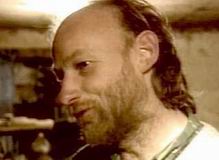
Robert Pickton
Serial killer Camille Cleroux
Serial killer · Canada · 1990
Camille Cleroux, 58, pleaded guilty in an Ottawa court to the first-degree murd…
3 victims
Camille Cleroux
Serial killer · Canada · 1990
Camille Cleroux, 58, pleaded guilty in an Ottawa court to the first-degree murd…
3 victims
 Paul Bernardo
Serial killer · Canada · 1990
Paul Kenneth Bernardo (born August 27, 1964 in Toronto, Ontario) was a Canadian…
3 victims
Paul Bernardo
Serial killer · Canada · 1990
Paul Kenneth Bernardo (born August 27, 1964 in Toronto, Ontario) was a Canadian…
3 victims
 William Patrick Fyfe
Serial killer · Canada · 1979
William Patrick Fyfe was a Canadian serial killer who was convicted of five cou…
25 victims
William Patrick Fyfe
Serial killer · Canada · 1979
William Patrick Fyfe was a Canadian serial killer who was convicted of five cou…
25 victims
 Clifford Olson
Serial killer · Canada · 1980
Clifford Robert Olson was a Canadian serial killer who abducted, sexually abuse…
11 victims
Clifford Olson
Serial killer · Canada · 1980
Clifford Robert Olson was a Canadian serial killer who abducted, sexually abuse…
11 victims
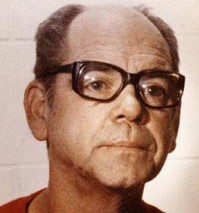 Gilbert Paul Jordan
Serial killer · Canada · 1965
Gilbert Paul Jordan (born December 12, 1931; died July 7, 2006) was known as th…
10 victims
Gilbert Paul Jordan
Serial killer · Canada · 1965
Gilbert Paul Jordan (born December 12, 1931; died July 7, 2006) was known as th…
10 victims
 Russell Maurice Johnson
Serial killer · Canada · 1973
Russell Maurice Johnson (born 1947) was confined to maximum security at the Oak…
7 victims
Russell Maurice Johnson
Serial killer · Canada · 1973
Russell Maurice Johnson (born 1947) was confined to maximum security at the Oak…
7 victims
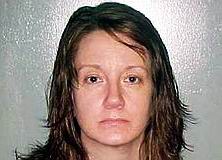 Cheryl McCafferty
Murderer · USA · 2007
Cheryl McCafferty was convicted in the fatal shooting of her husband, Robert Mc…
1 victim
Cheryl McCafferty
Murderer · USA · 2007
Cheryl McCafferty was convicted in the fatal shooting of her husband, Robert Mc…
1 victim
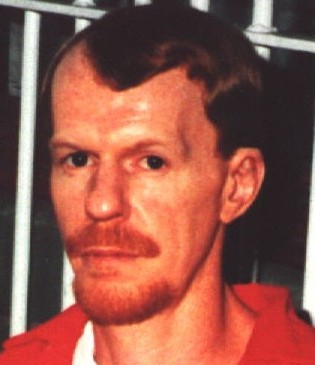 Keith Canaan
Murderer · USA · 1985
Keith Canaan was a white male. He was identified as Keith Canaan, Keith B. Cana…
1 victim
Keith Canaan
Murderer · USA · 1985
Keith Canaan was a white male. He was identified as Keith Canaan, Keith B. Cana…
1 victim
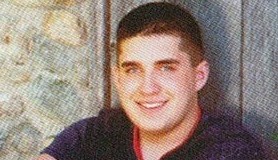 Tyler Peterson
Mass murderer · USA · 2007
Tyler Peterson committed suicide by shooting himself the same day victims. Tyle…
6 victims
Tyler Peterson
Mass murderer · USA · 2007
Tyler Peterson committed suicide by shooting himself the same day victims. Tyle…
6 victims
 Jeffrey MacDonald
Murderer · USA · 1970
Jeffrey Robert MacDonald (M.D.; born on October 12, 1943) was a former member o…
3 victims
Jeffrey MacDonald
Murderer · USA · 1970
Jeffrey Robert MacDonald (M.D.; born on October 12, 1943) was a former member o…
3 victims
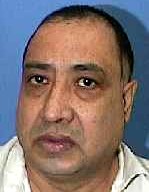 Ramiro Rubi Ibarra
Murderer · USA · 1987
Ramiro Rubi Ibarra was a Hispanic male. His hair color was black, and he weighe…
1 victim
Ramiro Rubi Ibarra
Murderer · USA · 1987
Ramiro Rubi Ibarra was a Hispanic male. His hair color was black, and he weighe…
1 victim
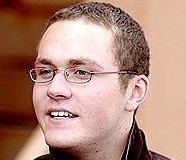 Cody Posey
Homicide · USA · 2004
Cody Posey was a New Mexico teenager who was born October 9, 1989. In 1992, whe…
3 victims
Cody Posey
Homicide · USA · 2004
Cody Posey was a New Mexico teenager who was born October 9, 1989. In 1992, whe…
3 victims
- Gender
- male
- Country
- Canada
- Location
- Port Coquitlam, British Columbia, Canada
- Date of birth
- October 26, 1949
- Age at first offence
- 46
- Characteristics
- dismemberment, rape
- Victim profile
- Sereena Abotsway, 29 / Mona Lee Wilson, 26 / Andrea Joesbury, 22 / Brenda Ann Wolfe, 32 / Marnie Lee Frey, 25 / Georgina Faith Papin, 35
- Method of murder
- Strangulation with a piece of wire - Shooting
- Date(s) of murder
- 1995 - 2001
- Years active
- 1995–2001
- Date of arrest
- February 2, 2002
- Status
-
Life imprisonment
Sentenced to life in prison, with no possibility of parole for 25 years; longest sentence available under Canadian law for murder
Case identity
Robert William "Willie" Pickton (born October 26, 1949) of Port Coquitlam, British Columbia, Canada was a former pig farmer and serial killer convicted of the second-degree murders of six women. He was also charged in the deaths of an additional twenty women, many of them prostitutes and drug users from Vancouver's Downtown Eastside.
Timeline
- October 26, 1949 — Robert William "Willie" Pickton was born.
- January 22, 2007 — The first day of jury evidence during the jury trial.
- January 30, 2006 — Pickton's trial began in New Westminster.
- January 8, 2007 — The date for the jury trial of the first six counts was initially set to start.
- January 9, 2008 — Lawyers for Pickton filed a notice of appeal in the British Columbia Court of Appeal.
- January 27, 1998 — The attempted-murder charge relating to the stabbing of a sex worker was stayed.
- February 5, 2002 — Police executed a search warrant for illegal firearms at the property owned by Pickton and his three siblings.
- February 13, 2002 — Nine days before Pickton was charged with his first murder.
- February 20, 2007 — The items police found inside Pickton's trailer and tapes played for the jury were presented to the court.
- February 22, 2002 — Pickton was arrested and charged with two counts of first-degree murder in the deaths of Sereena Abotsway and Mona Wilson.
- February 23, 2002 — The Pickton police interview took place (referenced in the case status field).
- February 26, 2008 — A family member of one of the 20 women named as alleged victims told the media that the Crown had told her a trial on the further 20 counts might not proceed.
- April 2, 2002 — Three more charges were added for the murders of Jacqueline McDonell, Diane Rock and Heather Bottomley.
- April 3, 2002 — Pickton was charged with three more counts of murder, naming victims Jacqueline McDonnell, Heather Bottomley and Diane Rock.
- April 9, 2002 — A sixth charge for the murder of Andrea Joesbury was laid.
- April 17, 2002 — A multimillion-dollar class-action suit was announced by a lawyer seeking damages for relatives of missing and murdered women.
- August 4, 2010 — Crown prosecutors stayed the balance of the pending murder charges against Pickton; ending the prospect of further trials.
- August 9, 2006 — Justice Williams severed the charges into one group of six counts and another group of twenty.
- August 24, 2009 — Pickton's notice of appeal was filed in the Supreme Court of Canada.
- August 6, 2010 — Various media outlets released a transcript of conversations between an RCMP undercover operator and Pickton in his holding cell.
- December 6, 2007 — Justice James Williams suspended jury deliberations after discovering an error in his charge to the jury.
- December 9, 2007 — The jury returned a verdict of not guilty on 6 counts of first-degree murder and guilty on 6 counts of second-degree murder.
- December 11, 2007 — Pickton was sentenced to life with no possibility of parole for 25 years.
- June 25, 2009 — The British Columbia Court of Appeal issued its decisions.
- June 26, 2009 — Pickton's lawyers confirmed they would exercise his right to appeal to the Supreme Court of Canada.
- June 2009 — The B.C. Court of Appeal rendered judgment on two appeals, one by the Crown and one by the defence.
- June 2001 — Andrea Joesbury was last seen (count described in the victims section).
- June 2007 — A court hearing and later appeal-related events occurred in this period (publication ban context referenced in the trial narrative).
- July 30, 2010 — The Supreme Court of Canada rendered its decision dismissing Pickton's appeal and affirming his convictions.
- November 26, 2009 — The Supreme Court of Canada granted leave to appeal.
- September 2, 2006 — The news of the existence of the "Pickton Letters" was broken by The Vancouver Sun (exclusive published).
- December 17, 2007 — Pickton was convicted of second-degree murder in the deaths of six women (as stated in the victims section).
- December 31, 1998 — Following a New Year's Eve party at Piggy's Palace, the Picktons were slapped with an injunction banning future parties.
- November 23, 2002 — A New York Times reference in the narrative described items found in a freezer and asserts not one body was found intact.
- September 20, 2002 — Four more charges were added for slayings of Georgina Papin, Patricia Johnson, Helen Hallmark and Jennifer Furminger.
- October 3, 2002 — Four more charges for the murders of Heather Chinnock, Tanya Holyk, Sherry Irving and Inga Hall were laid.
- May 26, 2005 — Twelve more charges were laid against Pickton for killings of Cara Ellis, Andrea Borhaven, Debra Lynne Jones, Marnie Frey, Tiffany Drew, Kerry Koski, Sarah Devries, Cynthia Feliks, Angela Jardine, Wendy Crawford, Diana Melnick, and Jane Doe (unidentified woman).
- March 10, 2004 — It was revealed that human flesh may have been ground up and mixed with pork from the farm.
- March 21, 2002 — Police announced the full operation might drag on for as much as a year.
- March 2, 2006 — One of the 27 counts was rejected for lack of evidence.
- February 22, 2002 — Pickton was arrested and charged with two counts of first-degree murder.
Background
Robert William "Willie" Pickton was described as a former pig farmer and serial killer. The case involved missing and murdered women from Vancouver's Downtown Eastside. Forensic analysis of the farm was described as very difficult because bodies may have been left to decompose or allowed to be eaten by insects and pigs on the farm.
During early days of excavations, forensic anthropologists used heavy equipment including two 50-foot (15 m) flat conveyor belts and soil sifters to find traces of remains. In March 2004, it was revealed that human flesh may have been ground up and mixed with pork from the farm. This pork was never distributed commercially but was handed out to friends and visitors of the farm. Another claim made was that he fed the bodies directly to his pigs.
A preliminary inquiry was held in 2003, and testimony was covered by a publication ban until 2010. At the preliminary inquiry it was revealed that in 1997 Pickton had been charged with attempted murder in connection with the stabbing of a sex worker. The woman survived and testified at the 2003 preliminary inquiry that after driving her to the Port Coquitlam farm and having sex with her, Pickton slapped a handcuff on her left hand, and stabbed her in the abdomen. She also had stabbed Pickton. Later both she and Pickton were treated at the same hospital; staff used a key found in Pickton's pocket to remove the handcuffs from the woman's wrist.
The attempted-murder charge against Pickton was stayed on January 27, 1998 because the woman had drug addiction issues and prosecutors believed her too unstable to testify. Clothes and rubber boots Pickton had been wearing that evening were seized by police and left in an RCMP storage locker for more than seven years. Not until 2004 did lab testing show that the DNA of two missing women were on the items seized.
The farm was sealed off by members of the joint RCMP–Vancouver Police Department task force. The property was described as fenced off and under lien by the Crown in Right of British Columbia; in the meantime, all buildings had been demolished.
The offence
Pickton was convicted of second-degree murders in the deaths of six women, and he was also charged in the deaths of an additional twenty women. The jury’s verdict found him not guilty on six counts of first-degree murder and guilty on six counts of second-degree murder. A second-degree murder conviction carried a punishment of a life sentence with no possibility of parole for a period between 10 to 25 years, to be set by the trial judge.
The narrative during the jury trial included descriptions of items and human remains found on Pickton's property, including skulls cut in half with hands and feet stuffed inside; a garbage bag found in the bottom of a trash can and blood-stained clothing found in the trailer in which Pickton lived; part of one victim's jawbone and teeth found in the ground beside the slaughterhouse; and a .22 calibre revolver with an attached dildo containing both his and a victim's DNA in his laundry room. In a videotaped recording played for the jury, Pickton claimed to have attached the dildo to his weapon as a makeshift silencer.
The case narrative also included information about a videotape of Pickton's friend Scott Chubb stating Pickton had told him a good way to kill a female heroin addict was to inject her with windshield-washer fluid. A second tape involved an associate named Andrew Bellwood describing Pickton mentioning killing prostitutes by handcuffing and strangling them, then bleeding and gutting them before feeding them to pigs.
The narrative additionally stated that photos of the contents of a garbage can found in Pickton's slaughterhouse held some remains of Mona Wilson.
Investigation
On February 5, 2002, police executed a search warrant for illegal firearms at the property owned by Pickton and his three siblings. He was taken into custody, and police then obtained a second court order to search the farm as part of the BC Missing Women Investigation after personal items, including a prescription asthma inhaler, belonging to one of the missing women were found.
The following day Pickton was charged with storing a firearm contrary to regulations, possession of a firearm while not being holder of a licence and possession of a loaded restricted firearm without a licence. He was later released and was kept under police surveillance.
Excavations continued through November 2003. The cost of the investigation was estimated to have been $70 million by the end of 2003, according to the provincial government.
Forensic analysis involved heavy equipment such as conveyor belts and soil sifters, and later it was revealed that human flesh may have been ground up and mixed with pork from the farm. In March 2004, it was reported that pork was not distributed commercially but was handed out to friends and visitors of the farm. Another claim stated he fed bodies directly to his pigs.
On March 8, investigators declared DNA recovered from the farm had been conclusively identified as Abotsway’s. The narrative stated that pick-up and searches continued after initial charges, including trial scheduling and continuation of search operations.
The Vancouver Police Department issued a statement that an "exhaustive management review of the Missing Women Investigation" had been conducted, and that VPD intended to make the review available to the public once criminal matters were concluded and publication bans were removed. VPD also disclosed that for several years it had "communicated privately to the Provincial Government that it believes a Public Inquiry is necessary for an impartial examination of why it took so long for Robert Pickton to be arrested."
Arrest and charges
On February 22, 2002, Pickton was arrested and charged with two counts of first-degree murder in the deaths of Sereena Abotsway and Mona Wilson.
A sixth charge for the murder of Andrea Joesbury was laid on April 9, 2002, followed shortly by a seventh for Brenda Wolfe. On April 2, 2002, three more charges were added for the murders of Jacqueline McDonell, Diane Rock and Heather Bottomley.
On September 20, 2002, four more charges were added for slayings of Georgina Papin, Patricia Johnson, Helen Hallmark and Jennifer Furminger. Four more charges for the murders of Heather Chinnock, Tanya Holyk, Sherry Irving and Inga Hall were laid on October 3, 2002, bringing the total to fifteen, making the investigation the largest of any serial killer in Canadian history.
On May 26, 2005, twelve more charges were laid for killings of Cara Ellis, Andrea Borhaven, Debra Lynne Jones, Marnie Frey, Tiffany Drew, Kerry Koski, Sarah Devries, Cynthia Feliks, Angela Jardine, Wendy Crawford, Diana Melnick, and Jane Doe (unidentified woman), bringing the total number of first-degree murder charges to 27.
Additional narrative details included that police searching his pig farm found that human remains may have been mixed with pork and distributed in some form, and that the bodies may have been devoured by insects and pigs.
Trial
Pickton's trial began on January 30, 2006 in New Westminster. He pleaded not guilty to 27 charges of first-degree murder in the Supreme Court of British Columbia. The voir dire phase took most of the year to determine what evidence might be admitted before the jury. Reporters were not allowed to disclose any of the material presented in the arguments.
On March 2, 2006, one of the 27 counts was rejected by Justice James Williams for lack of evidence. On August 9, 2006, Justice Williams severed the charges, splitting them into one group of six counts and another group of twenty. The trial proceeded on the group of six counts. The remaining 20 counts could have been heard in a separate trial but were ultimately stayed on August 4, 2010.
Because of the publication ban, full details of the decision were not publicly available; but the judge explained that trying all 26 charges at once would put an unreasonable burden on the jury and increase the chance of a mistrial. The judge also added that the six counts he chose had "materially different" evidence from the other 20. Much of the evidence heard during the voir dire phase of the trial in 2006 was never heard by the jury due to rulings by the trial judge, and this evidence was covered by a publication ban until August 4, 2010.
Jury selection was completed on December 12, 2006 with 12 jurors and two alternates chosen. The first day of the jury trial when Pickton faced first-degree murder charges in the deaths of Marnie Frey, Sereena Abotsway, Georgina Papin, Andrea Joesbury, Brenda Wolfe and Mona Wilson was January 22, 2007. The media ban was lifted, and Canadians heard details of what was found during the investigation.
In opening, Crown Counsel Derrill Prevett told the jury of evidence found on Pickton's property, including skulls cut in half with hands and feet stuffed inside, remains in a garbage bag with blood-stained clothing in the trailer, part of a jawbone and teeth beside the slaughterhouse, and a .22 calibre revolver with an attached dildo containing his and a victim’s DNA. Pickton claimed in a videotaped recording that he attached the dildo to his weapon as a makeshift silencer.
As of February 20, 2007, the information presented to the court included:
- The items police found inside Pickton's trailer: a loaded .22 revolver with a big, spiky black, hindu made dildo over the barrel and one round fired; boxes of .357 Magnum handgun ammunition; night-vision goggles; two pairs of faux fur-lined handcuffs; a syringe with three millilitres of blue liquid inside; and "Spanish fly" aphrodisiac.
- A videotape of Pickton's friend Scott Chubb saying Pickton had told him a good way to kill a female heroin addict was to inject her with windshield-washer fluid.
- A second tape in which an associate named Andrew Bellwood said Pickton mentioned killing prostitutes by handcuffing and strangling them, then bleeding and gutting them before feeding them to pigs.
- Photos of the contents of a garbage can found in Pickton's slaughterhouse, which held some remains of Mona Wilson.
A juror was accused in October 2007 of having made up her mind that Pickton was innocent. The trial judge questioned the juror, saying:
"It's reported to me you said from what you had seen you were certain Mr. Pickton was innocent, there was no way he could have done this. That the court system had arrested the wrong guy."
The juror denied this completely. Justice Williams ruled she could remain on the jury since it had not been proven she made the statements.
Justice James Williams suspended jury deliberations on December 6, 2007 after he discovered an error in his charge to the jury. Earlier that day, the jury submitted a written question requesting clarification, asking:
"Are we able to say 'yes' [i.e., find Pickton guilty] if we infer the accused acted indirectly?"
On December 9, 2007, the jury returned a verdict that Pickton is not guilty on 6 counts of first-degree murder, but is guilty on 6 counts of second-degree murder.
Sentencing
On December 11, 2007, after reading 18 victim impact statements, British Columbia Supreme Court Judge Justice James Williams sentenced Pickton to life with no possibility of parole for 25 years. The maximum punishment for second-degree murder was described as being equal to the sentence that would have been imposed for a first-degree murder conviction.
Justice James Williams stated:
"Mr. Pickton's conduct was murderous and repeatedly so. I cannot know the details but I know this: What happened to them was senseless and despicable,"
Appeals
British Columbia Court of Appeal
On January 7, 2008, the Attorney General filed an appeal in the British Columbia Court of Appeal against Pickton's acquittals on the first-degree murder charges. The grounds of appeal related to evidentiary rulings, aspects of the trial judge’s jury instructions, and the ruling to sever the six charges Pickton was tried on from the remaining twenty.
Some relatives expressed concern about the effect of a Crown appeal. Attorney-General Wally Oppal apologized to the victims’ families for not informing them about the appeal before it was announced to the general public. Oppal said the appeal was filed largely for "strategic" reasons, in anticipation of an appeal by the defence. The prosecution rationale was that if Pickton appealed his convictions and if the appeal was allowed resulting in a new trial, the prosecution would want to hold that new trial on the original 26 charges of first-degree murder. The Crown would be precluded unless it successfully appealed the original acquittals on first-degree murder charges and the severance of the 26 counts into one group of six and one group of twenty had been addressed.
The time period for the Crown to appeal was described as expiring 30 days after December 9, while the defence time period was described as expiring 30 days after December 11 when Pickton was sentenced, which was why the Crown announced its appeal first.
On January 9, 2008, lawyers for Pickton filed a notice of appeal in the British Columbia Court of Appeal, seeking a new trial on six counts of second-degree murder. The lawyer representing Pickton on the appeal is Gil McKinnon, who had been a Crown prosecutor in the 1970s. The notice enumerated areas where the defence alleged the trial judge erred: the main charge to the jury, the response to the jurors’ question, amending the jury charge, similar fact evidence, and Pickton’s statements to the police.
On June 25, 2009, the British Columbia Court of Appeal issued its decisions, with some parts not publicly released because of publication bans. The Court of Appeal dismissed the defence appeal by a 2:1 majority. Because of a dissent on a point of law, Pickton was entitled to appeal to the Supreme Court of Canada without first seeking leave to appeal.
The Court of Appeal allowed the Crown appeal, finding that the trial judge erred in excluding some evidence and in severing the 26 counts into one group of 20 counts and one group of 6. The order resulting from this finding was stayed, so the conviction on the six counts of second degree murder would not be set aside.
Supreme Court of Canada
On June 26, 2009, Pickton's lawyers confirmed they would exercise his right to appeal to the Supreme Court of Canada. The appeal based on the dissent in the B.C. Court of Appeal was supported by leave to appeal granted on November 26, 2009.
On July 30, 2010, the Supreme Court of Canada rendered its decision dismissing Pickton's appeal and affirming his convictions. The unanimous rejection of the argument for a new trial occurred, and the Justices split in legal analysis. The issue described was whether the trial judge made a legal error in instructions to the jury, particularly in responding to the jury's question about Pickton's liability if he was not the only person involved.
Madam Justice Charron, writing for the majority, found that:
"the trial judge's response to the question posed by the jury did not adversely impact on the fairness of the trial".
She further found that the trial judge's overall instructions captured alternative routes to liability realistically in issue and that the jury could convict Mr. Pickton if the Crown proved participation coupled with requisite intent.
Mr. Justice LeBel, writing for the minority, found the jury was not properly informed:
"of the legal principles which would have allowed them as triers of fact to consider evidence of Mr. Pickton’s aid and encouragement to an unknown shooter, as an alternative means of imposing liability for the murders."
LeBel J. would have applied the so-called curative provision to not overturn Pickton's convictions.
Outcome
Pickton was convicted of second-degree murder in the deaths of six women and received a life sentence with no possibility of parole for 25 years. The Supreme Court of Canada dismissed his appeal and affirmed his convictions. The remaining 20 first degree murder charges were stayed on August 4, 2010, ending the prospect of further trials.
Aftermath
Discontinuance and stay of other counts
B.C. Crown spokesman Neil MacKenzie announced that the prosecution on the 20 other murder charges would likely be discontinued, saying additional convictions could not increase the sentence already received.
On August 4, 2010, Crown prosecutors stayed the balance of the pending murder charges against Pickton, ending the prospect of any further trials. The 20 charges were formally stayed by crown counsel Melissa Gillespie shortly after 4 p.m. during a British Columbia Supreme Court hearing at New Westminster. Most of the publication bans in the case were lifted by the trial judge James Williams after lawyers spent hours in court going through the complicated bans.
On August 6, 2010, various media outlets released a transcript of conversations between an RCMP undercover operator and Pickton in his holding cell. The RCMP censored the undercover officer's name throughout most of the document, but the name was left uncensored in several portions of the document that the RCMP released. This uncensored version was available for about an hour before being pulled and re-edited. It was stated that it was not known the extent of damage caused by the mistake.
Transfer to penitentiary
During a court hearing on August 4, 2010, Judge Williams stated that Pickton should be committed to a federal penitentiary; up to that point he had been held at a provincial pretrial institution.
Victims and victim impact statements
On December 11, 2007, 18 victim impact statements were read before sentencing.
Convicted victims (second-degree murder)
On December 17, 2007, Pickton was convicted of second-degree murder in the deaths of six women:
- Count 1 — Sereena Abotsway (born August 20, 1971), 29, disappeared in August 2001.
- Count 2 — Mona Lee Wilson (born January 13, 1975), 26, last seen November 23, 2001; reported missing November 30, 2001.
- Count 6 — Andrea Joesbury, 22, last seen June 2001.
- Count 7 — Brenda Ann Wolfe, 32, last seen February 1999; last seen and was reported missing in April 2000.
- Count 16 — Marnie Lee Frey, last seen August 1997.
- Count 11 — Georgina Faith Papin, last seen in 1999.
Alleged victims (additional charges stayed)
Pickton stood accused of first-degree murder in the deaths of twenty other women until the charges were stayed on August 4, 2010. The alleged victims listed included:
- Count 3 — Jacqueline Michelle McDonell, 23, last seen January 1999.
- Count 4 — Dianne Rosemary Rock (born September 2, 1967), 34, last seen October 19, 2001; reported missing December 13, 2001.
- Count 5 — Heather Kathleen Bottomley (born August 17, 1976), 25, last seen and reported missing April 17, 2001.
- Count 8 — Jennifer Lynn Furminger, last seen in 1999.
- Count 9 — Helen Mae Hallmark, last seen August 1997.
- Count 10 — Patricia Rose Johnson, last seen March 2001.
- Count 12 — Heather Chinnock, 30, last seen April 2001.
- Count 13 — Tanya Holyk, 23, last seen October 1996.
- Count 14 — Sherry Irving, 24, last seen in 1997.
- Count 15 — Inga Monique Hall, 46, last seen February 1998.
- Count 17 — Tiffany Drew, last seen December 1999.
- Count 18 — Sarah de Vries, last seen April 1998.
- Count 19 — Cynthia Feliks, last seen December 1997.
- Count 20 — Angela Rebecca Jardine, last seen November 20, 1998 between 3:30-4p.m. at Oppenheimer Park at a rally in the downtown Eastside of Vancouver, British Columbia, Canada.
- Count 21 — Diana Melnick, last seen December 1995.
- Count 22 — Jane Doe, charge lifted; see below.
- Count 23 — Debra Lynne Jones, last seen December 2000.
- Count 24 — Wendy Crawford, last seen December 1999.
- Count 25 — Kerry Koski, last seen January 1998.
- Count 26 — Andrea Fay Borhaven, last seen March 1997.
- Count 27 — Cara Louise Ellis aka Nicky Trimble (born April 13, 1971), 25, last seen in 1996; reported missing October 2002.
Jane Doe charge lifted
As of March 2, 2006, the murder charge involving the unidentified victim was lifted. Pickton refused to enter a plea on the charge involving this victim, known in the proceedings as Jane Doe, so the court registered a not-guilty plea on his behalf.
Justice James Williams wrote:
"The count as drawn fails to meet the minimal requirement set out in Section 581 of the Criminal Code. Accordingly, it must be quashed,"
The detailed reasons for the judge's ruling were described as not being reportable in Canada due to a publication ban covering this stage of the trial.
Forensic and investigative management
The narrative described an attempt at public communications and materials released after publication bans were lifted.
Deputy Chief Constable Doug LePard apologized to the victims' families, saying:
"I wish from the bottom of my heart that we would have caught him sooner. I wish that, the several agencies involved, that we could have done better in so many ways. I wish that all the mistakes that were made, we could undo. And I wish that more lives would have been saved. So on my behalf and behalf of the Vancouver Police Department and all the men and women that worked on this investigation, I would say to the families how sorry we all are for your losses and because we did not catch this monster sooner."
British Columbia Attorney General Michael de Jong announced that a decision on whether to hold an inquiry would be made soon. Families of Pickton's victims called for a public inquiry into handling of the case.
B.C. Premier Gordon Campbell said a decision on whether to call a public inquiry into the Pickton investigation would be made by the provincial cabinet in the coming weeks. The narrative stated that VPD and the RCMP supported a public inquiry, and Vancouver mayor Gregor Robertson supported it as well. The RCMP said it continued to investigate the deaths of missing women with a task force including 51 staff.
A Toronto Star editorial noted:
"Now that the legal wrangling is over, there is a bigger question to confront: how did the Port Coquitlam pig farmer manage to lure vulnerable women — many of them prostitutes from Vancouver’s Downtown Eastside — to their deaths for 14 years before police arrested him?"
The Winnipeg Free Press argued:
"the families of all victims deserve fuller answers"
Another argument quoted was:
"Better they take the millions of extra public dollars it would all cost and put it into actual stepped up services to help the street workers and addicts, who still ply their trade on the downtown eastside, get the real medical and psychological help they need."
Other stated allegations and cultural references
The narrative included discussion of "Pickton Letters" in August 2006 involving letters allegedly received by Thomas Loudamy in response to letters sent under an assumed identity. It stated The Vancouver Sun broke the news in an exclusive on Saturday, September 2, 2006, and law enforcement and representatives of Pickton had not verified the letters’ authenticity as of that date. It also described actions to confirm authenticity including checks of outgoing stamps consistent with the North Fraser Pretrial Centre and that Canada Post confirmed outgoing stamps were not forgeries and that the stamp machine matched the one used by the NFPC. Loudamy did not keep copies of his outgoing letters to Pickton.
The narrative included popular culture references including songs by The Accüsed and Mad Sin, a CSI episode titled "Leapin' Lizards," a low-budget horror movie "Killer Pickton" withdrawn after legal complaints, a Criminal Minds episode set in Sarnia, a book "Swastika" by Michael Slade, and a Quebec rock band EXtério song titled "Le seigneur des agneaux" filmed a music video about Robert Pickton in 2009.
Other details
Specific prosecution interview and evidence reporting
The narrative included a sequence where, during the first day of jury evidence, Crown Counsel Derrill Prevett stated evidence found on Pickton's property and included descriptions of items inside the trailer.
The narrative also included a statement that during the trial's first day of jury evidence, January 22, 2007, the Crown stated he confessed to forty-nine murders to an undercover police officer posing as a cellmate. The Crown reported that Pickton told the officer he wanted to kill another woman to make it an even 50 and that he was caught because he was "sloppy".
Witness and juror issues
A juror was questioned by the trial judge after it was reported that she said she was certain Pickton was innocent and that the court system arrested the wrong guy. Justice Williams ruled she could remain on the jury after it was not proven she made the statements.
Calls for accountability
The narrative included dissension among families about lawyers, inquiries, and fundraising, and included quotes from family members and others related to the missing women case.
Additional missing-women context included in the narrative
The narrative included a discussion of Vancouver's Downtown Eastside described as the "Low Track," with statements about the difficulty of linking disappearances without bodies and clear evidence. It included multiple named individuals beyond the convicted counts and alleged victims list, including Linda Grant, and discussed how police removing names from missing women lists occurred after a woman contacted her family and police sought privacy. It also discussed other missing women in long lists associated with the serial killer investigation.
Spotted an error, or have more information about this case?