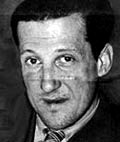
Alain de Bernardy de Sigoyer
 Michael Zabawa
Murderer
Michael Zabawa was a Minnesota man who lived in Matawan, and he worked at a hog…
2007 victims
Michael Zabawa
Murderer
Michael Zabawa was a Minnesota man who lived in Matawan, and he worked at a hog…
2007 victims
 Clinton Lee Young
Murderer · USA
Clinton Lee Young (born July 19, 1983) was convicted of murdering two men in No…
2001 victims
Clinton Lee Young
Murderer · USA
Clinton Lee Young (born July 19, 1983) was convicted of murdering two men in No…
2001 victims
 Ivan Abner Cantu
Murderer · USA
Name: Ivan Abner Cantu · TDCJ number: 999399 · Date of birth: 06/14/1973 · Age…
2000 victims
Ivan Abner Cantu
Murderer · USA
Name: Ivan Abner Cantu · TDCJ number: 999399 · Date of birth: 06/14/1973 · Age…
2000 victims
 John Chamberlain
Murderer
John Chamberlain was sentenced in Florida in connection with a triple murder at…
1998 victims
John Chamberlain
Murderer
John Chamberlain was sentenced in Florida in connection with a triple murder at…
1998 victims
 Michael John Yowell
Murderer · USA
Name: Michael John Yowell · TDCJ number: 999334 · Date of birth: 01/25/1970 · P…
1998 victims
Michael John Yowell
Murderer · USA
Name: Michael John Yowell · TDCJ number: 999334 · Date of birth: 01/25/1970 · P…
1998 victims
 Michael Duane Zack
Murderer · USA
Michael Duane Zack was convicted and sentenced to death for the 06/13/96 murder…
1996 victims
Michael Duane Zack
Murderer · USA
Michael Duane Zack was convicted and sentenced to death for the 06/13/96 murder…
1996 victims
 Carlos Santana
Murderer · USA · 1981
Carlos Santana was a 40-year-old Dominican who was executed by lethal injection…
1 victim
Carlos Santana
Murderer · USA · 1981
Carlos Santana was a 40-year-old Dominican who was executed by lethal injection…
1 victim
 Richard Biegenwald
Serial killer · USA · 1958
Richard Fran Biegenwald (August 24, 1940 – March 10, 2008) was an American seri…
6 victims
Richard Biegenwald
Serial killer · USA · 1958
Richard Fran Biegenwald (August 24, 1940 – March 10, 2008) was an American seri…
6 victims
 Stephen Lawrence Anderson
Mass homicide · New Zealand · 1997
1995 — Stephen Lawrence Anderson was diagnosed with schizophrenic. · 8 February…
6 victims
Stephen Lawrence Anderson
Mass homicide · New Zealand · 1997
1995 — Stephen Lawrence Anderson was diagnosed with schizophrenic. · 8 February…
6 victims
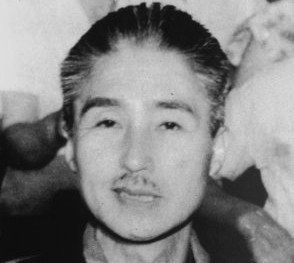 Sadamichi Hirasawa
Mass murderer · Japan · 1948
Sadamichi Hirasawa was a Japanese painter. He was also known as a tempera paint…
12 victims
Sadamichi Hirasawa
Mass murderer · Japan · 1948
Sadamichi Hirasawa was a Japanese painter. He was also known as a tempera paint…
12 victims
 Douglas Franklin Wright
Serial killer · USA · 1969
Douglas Franklin Wright (born 1940-03-25) was executed by lethal injection in O…
7 victims
Douglas Franklin Wright
Serial killer · USA · 1969
Douglas Franklin Wright (born 1940-03-25) was executed by lethal injection in O…
7 victims
 Todd Hall
Homicide · USA · 1996
Todd Hall was described by neighbors as "mentally slow" and was said to have su…
9 victims
Todd Hall
Homicide · USA · 1996
Todd Hall was described by neighbors as "mentally slow" and was said to have su…
9 victims
- Gender
- male
- Country
- —
- Location
- —
- Date of birth
- —
- Characteristics
- torture
- Victim profile
- —
- Method of murder
- —
- Date(s) of murder
- —
- Years active
- —
- Date of arrest
- —
- Status
-
Executed
Executed by guillotine on 11 June 1947
Case record
Alain de Bernardy de Sigoyer was a French offender who presented himself as a marquis. He was recorded by police in almost all European countries as an impostor, including Germany, Austria, Hungary, Rumania, Bulgaria, Italy and Spain. He was also described as an occultist and as a supplier of brandy to the Germans.
Between 1930 and 1940, he was committed twice to a mental asylum. After he was released the first time, in 1937, he bought a large house in Hautvillers, in the Chevreuse Valley, called the “Maison Rouge”. With two other mental-institution companions, he practiced black magic, and a few years earlier he had set up black-magic “schools” in Barcelona and Lisbon.
In 1937, he was accused of the abduction of a person named Petroff Gautcheff, who claimed he had been lured to the marquis’s mansion by deception. Gautcheff was found about a kilometre away from the “Maison Rouge” by peasants; he was naked and exhausted. Long chains hung from his wrists and ankles. He said he had escaped from Bernardy after being tortured to give certain information about “rich and solitary friends”. When the authorities investigated the case, they found in the “Maison Rouge” papers and the passport of a missing American subject. Suspecting the marquis might have killed the American, they began searching the surroundings for the body. On this occasion Bernardy reacted by declaring that he had eaten the American’s body and he was committed again to a mental institution. After a few months, through the intercession of an old lover, Bernardy was again at liberty.
During the war, the marquis ran a restaurant on the “avenue de la Grande Armée” and an “esoteric centre” at number 27 on the “rue Bleu”. He gained a great fortune by selling cognac in bulk to the German occupation army.
He married Janine Kergot, described as “very nice and sporty”. She gave him two children. Their children’s nurse, Irene Lebau, gave him another child in 1943. In 1944, the marquise de Bernardy legally obtained a subsidy of 10,000 francs per month from her husband and moved to live with her mother. She left Irene Lebeau as the owner and mistress of the residence at the boulevard de Bercy.
The offence
In March 1944, Alain de Bernardy de Sigoyer added to his list of crimes the murder of his wife, Janine Kergot.
On 28 March, noticing that the monthly payment was late, Mme. Bemardy decided to visit the marquis. She was last seen when crossing the portal of the house. After the Liberation of Paris in 1945, Bernardy was imprisoned for collaboration activities.
After exhumation, performed on 20 April, he said it was always good to know where the dead rested. The autopsy showed no bullet wounds but signs of death by strangulation.
Irene Lebeau stated that she had seen Bernardy strangle his wife from behind while she sat smiling in a “red armchair”. She also said that she helped bury the corpse in a pit excavated the day before in the wine-store cellar.
Bernardy’s defence was that Irene Lebeau shot his wife during a jealousy-driven episode, and that he had only helped hide the corpse. No bullet trace was found on the body.
Investigation
On 29 March 1944, a Mme. Kergot went to the police station on the Boulevard de Bercy and reported that the previous day her daughter had gone to a house in the same street and had not returned home. The house was that of her husband, M. Bernardy de Sigoyer, from whom she lived separately. She had gone to see him because she had not received the pension established by law. Police went to investigate.
Two servants said that Mme. Bemardy had indeed arrived the previous day, but that they had seen her leave. Bernardy made certain “useful suggestions” and prominently displayed a card intended to show that he enjoyed protection from the Germans.
The police returned to their station and informed the Quai des Orfévres, where the case was referred to the superintendent Massu. Massu found no trace of the missing wife. The wife’s mother, in turn, went to the Gestapo. Bernardy de Sigoyer was called there and, according to Alistair Kershaw’s account which is followed largely, he was subjected to the customary tortures but did not reveal anything. He was then released.
After liberation of Paris, on 24 August, Paris was freed. Two days later, troops under the command of General Leclerc entered the city. Alain de Bernardy de Sigoyer was discovered by two policemen in the Place de I’Hôtel de Ville and was detained. He was detained not for making the strangled wife disappear but for having enthusiastically collaborated with the Germans. He wore an armband identifying him as one of the leaders of Resistance in the 129th district. He was taken to Fresnes to wait to be judged, among many others whose number was growing, by one of the new courts of justice, with the chances of being shot as a traitor.
While in Fresnes, there was a marked change in his judicial situation. Before his separation from his wife, a peasant girl, Irene Lebeau, the servant of the house, had given him a child. From prison in February 1945, he wrote to her, indicating that she should search for a small box containing private documents in the boulevard de Bercy house and put it in a safe place. Irene Lebeau had married a soldier in the meantime and was no longer interested in black magic. She gave the letter to her brother-in-law, who opened the box. It contained not documents but identifiable objects such as a handbag, a ladies’ watch and a fur stole. The brother-in-law brought these to the police. When shown to Mme. Kergot, she stated that the items belonged to her daughter.
In April, Irene Lebeau was summoned to the Quai des Orfévres. Bernardy de Sigoyer had first been detained by inspector-chief Hillard, who was convinced the man had murdered his wife but could not sustain the charges. It was possible that in April 1945 Hillard interrogated Bernardy’s former lover. It was also possible that the interrogation was handled by police officer Émile Casanova, who had a special talent for a certain kind of “soft but effective” interrogation. In his office there was a shabby armchair which, in later years according to André Larue in Les Flics, made interrogated persons nervous by telling them that Petiot had sat there. This was said to have been true, but at that time the Petiot case was still pending sub judice; Irene Lebeau was shown the fur stole, the ladies’ watch, the handbag, etc.
In her original statement made at her local commissariat, she had said only that Mme. De Bernardy de Sigoyer had indeed come to the Reuilly house on 28 March of the previous year but had left after a brief visit. Her new statement was longer and more circumstantial. She said that Bernardy had hanged his wife from behind while she was smiling in a red armchair; she had watched, horrified, while he pulled a cord, pressing his knee against the back of the armchair. After that, she helped her former master and lover bury the corpse in a pit excavated the previous day in the wine-store cellar.
A magistrate signed an arrest statement for Irene Lebeau, who was then taken to the Petite Roquette prison. Bernardy, brought from Fresnes, admitted he had helped make the corpse disappear but claimed that his wife had been killed by shots fired by Irene Lebeau.
Arrest
After 24 August 1944 liberation of Paris and the entry of troops under General Leclerc two days later, Bernardy de Sigoyer was discovered by two policemen at the Place de I’Hôtel de Ville and detained, wearing an armband identifying him as a leader of Resistance in the 129th district. He was taken to Fresnes pending trial before one of the new courts of justice.
Trial
Bernardy de Sigoyer and Irene Lebeau were tried jointly accused of the murder of Janine Sigoyer de Bernardy. On 23 December 1946, the first was found guilty while his companion was acquitted.
For his defence, Bernardy hired the services of Maître Jacques Isorni, who also was preparing at that time, as assistant, the process of the marshal Pétain.
Bernardy de Sigoyer appeared before a court in mid-December 1946. He was sentenced to death on 23 December.
Sentencing
Bernardy de Sigoyer was sentenced to death on 23 December 1946. He was not executed until late spring 1947.
Outcome
Alain de Bernardy de Sigoyer was executed by guillotine on 11 June 1947. In connection with the exhumation, he said: “Siempre es agradable saber dónde reposan nuestros muertos”.
Other details
His wife’s surname was given as Janine Kergot and her reported disappearance began after a visit initiated by Mme. Kergot on 29 March 1944.
During the case, the “sillón rojo” (red armchair) featured in Irene Lebeau’s account of the strangling.
Bernardy wrote from prison in February 1945 and his letters included:
- A letter in which he asked a friend to contact Irene Lebeau and remind her of the “sillón rojo”.
- Another letter, addressed to Irene herself, advising her to hide in a safer place a drawer that “contenía papeles confidenciales” and was still in the boulevard de Bercy house.
Irene Lebeau delivered the drawer to her brother-in-law, who saw that it contained clothing and costume jewellery identifiable as belonging to the marquise and delivered it to the police. Irene Lebeau’s statements led to a detailed investigation of Bemardy’s storehouse at rue de Nuits, where the corpse of madame Bemardy was found buried in the cellar floor.
Explore related records


Spotted an error, or have more information about this case?