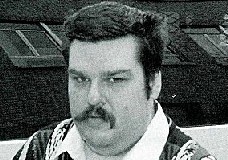
John Martin Crawford
Serial killer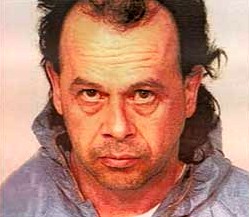 William Patrick Fyfe
Serial killer · Canada · 1979
William Patrick Fyfe was a Canadian serial killer who was convicted of five cou…
25 victims
William Patrick Fyfe
Serial killer · Canada · 1979
William Patrick Fyfe was a Canadian serial killer who was convicted of five cou…
25 victims
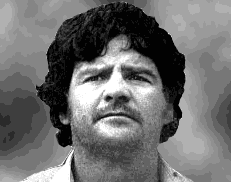 Clifford Olson
Serial killer · Canada · 1980
Clifford Robert Olson was a Canadian serial killer who abducted, sexually abuse…
11 victims
Clifford Olson
Serial killer · Canada · 1980
Clifford Robert Olson was a Canadian serial killer who abducted, sexually abuse…
11 victims
 Russell Maurice Johnson
Serial killer · Canada · 1973
Russell Maurice Johnson (born 1947) was confined to maximum security at the Oak…
7 victims
Russell Maurice Johnson
Serial killer · Canada · 1973
Russell Maurice Johnson (born 1947) was confined to maximum security at the Oak…
7 victims
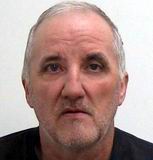 Camille Cleroux
Serial killer · Canada · 1990
Camille Cleroux, 58, pleaded guilty in an Ottawa court to the first-degree murd…
3 victims
Camille Cleroux
Serial killer · Canada · 1990
Camille Cleroux, 58, pleaded guilty in an Ottawa court to the first-degree murd…
3 victims
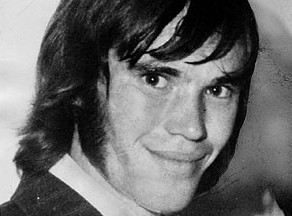 Christian Magee
Serial killer · Canada · 1974
Name: Christian Magee Aliases/nicknames: “Mad Slasher” Christian Magee was foun…
3 victims
Christian Magee
Serial killer · Canada · 1974
Name: Christian Magee Aliases/nicknames: “Mad Slasher” Christian Magee was foun…
3 victims
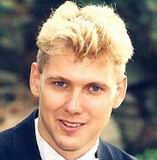 Paul Bernardo
Serial killer · Canada · 1990
Paul Kenneth Bernardo (born August 27, 1964 in Toronto, Ontario) was a Canadian…
3 victims
Paul Bernardo
Serial killer · Canada · 1990
Paul Kenneth Bernardo (born August 27, 1964 in Toronto, Ontario) was a Canadian…
3 victims
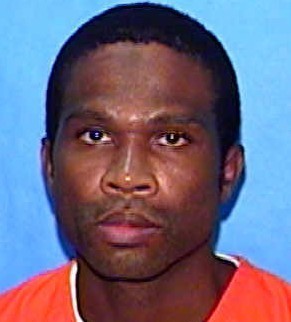 Chadwick Banks
Murderer · USA · 1992
Chadwick Banks was a Black male who was born on June 15, 1971. His aliases incl…
2 victims
Chadwick Banks
Murderer · USA · 1992
Chadwick Banks was a Black male who was born on June 15, 1971. His aliases incl…
2 victims
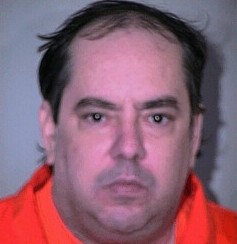 Frank Silva Roque
Murderer · USA · 2001
Frank Silva Roque was born July 8, 1959. He was a Boeing aircraft mechanic at a…
1 victim
Frank Silva Roque
Murderer · USA · 2001
Frank Silva Roque was born July 8, 1959. He was a Boeing aircraft mechanic at a…
1 victim
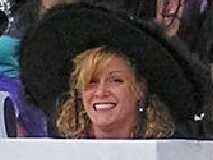 Andrea Roberts
Murderer · USA · 2007
Andrea Roberts was a 41-year-old stay-at-home mother. Her husband, Michael Lewi…
3 victims
Andrea Roberts
Murderer · USA · 2007
Andrea Roberts was a 41-year-old stay-at-home mother. Her husband, Michael Lewi…
3 victims
 Geoffrey Griffin
Serial killer · USA · 2000
Geoffrey Griffin (also referred to as Geoffrey T. Griffin) was convicted of kil…
7 victims
Geoffrey Griffin
Serial killer · USA · 2000
Geoffrey Griffin (also referred to as Geoffrey T. Griffin) was convicted of kil…
7 victims
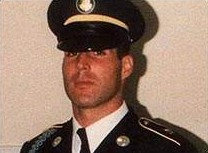 Frank Ronghi
Murderer · Kosovo · 2000
Frank Ronghi was an American Staff Sergeant in the U.S. Army. · Merita Shabiu w…
1 victim
Frank Ronghi
Murderer · Kosovo · 2000
Frank Ronghi was an American Staff Sergeant in the U.S. Army. · Merita Shabiu w…
1 victim
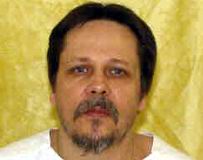 Dennis McGuire
Murderer · USA · 1989
Dennis McGuire was executed by lethal injection in Ohio on January 16, 2014. He…
1 victim
Dennis McGuire
Murderer · USA · 1989
Dennis McGuire was executed by lethal injection in Ohio on January 16, 2014. He…
1 victim
- Gender
- male
- Country
- Canada
- Location
- Alberta/Saskatchewan, Canada
- Date of birth
- March 29, 1962
- Age at first offence
- 19
- Characteristics
- rape, torture, drugs, alcohol, serial rapist
- Victim profile
- Mary Jane Serloin / Eva Taysup / Shelley Napope / Calinda Waterhen
- Method of murder
- St abbing with knife / Strangulation
- Date(s) of murder
- 1981 / 1992
- Years active
- 1981–1992
- Date of arrest
- January 1995
- Status
-
Life imprisonment
Sentenced in 1981 to 10 years imprisonment for manslaughter; released on March 23, 1989; sentenced to three concurrent life sentences in 1996
Overview
John Martin Crawford was a Canadian serial killer.
Timeline
- 1981 — John Martin Crawford was sentenced to 10 years imprisonment for manslaughter in the killing of Mary Jane Serloin in Lethbridge, Alberta.
- March 23, 1989 — John Martin Crawford was released.
- December 1990 — John Martin Crawford was fined $250 for trying to hire a prostitute.
- 1992 — John Martin Crawford murdered Calinda Waterhen, Shelley Napope, and Eva Taysup in Saskatoon.
- April 1984 — John Martin Crawford was transferred to the Regional Psychiatric Centre in Saskatoon.
- 1994 — Human remains were discovered southwest of Saskatoon and John Martin Crawford became a suspect; police put him under surveillance for four months.
- January 1995 — Police took John Martin Crawford into custody.
- May 1996 — John Martin Crawford was convicted on three counts of murder.
- 1996 — John Martin Crawford received three concurrent life sentences in Saskatchewan Penitentiary.
- 1999 — A report prepared by Dr. Semrau was prepared prior to Crawford’s appeal.
- 2001 — John Martin Crawford was discussed in Warren Goulding’s book Just Another Indian: A Serial Killer and Canada’s Indifference.
- 2008 — John Martin Crawford was discussed in a July 2, 2008 piece about him.
The offence
John Martin Crawford killed multiple women.
Killing of Mary Jane Serloin (1981)
In 1981, John Martin Crawford killed 35-year-old Mary Jane Serloin in Lethbridge, Alberta. At the time, he was originally charged with first-degree murder but pleaded guilty to manslaughter and was sentenced to 10 years in prison. Her nude body was found on Christmas Day, and her breasts were mutilated by deep bite marks. Lethbridge police immediately labelled it a sexual attack. A psychiatrist later stated: “He denies having raped the victim and I do not see him as a sex offender.” The psychiatrist also determined that Crawford’s average intelligence made reading and spelling difficult, and the psychiatrist’s assessment included the observation that Mary Jane’s breasts had been mutilated by deep bite marks.
1992 murders in Saskatoon
In 1992, John Martin Crawford killed Calinda Waterhen, Shelley Napope, and Eva Taysup in Saskatoon.
- Shelley Napope: In the same year, John Martin Crawford and former fellow inmate Bill Corrigon picked up 16-year-old Shelley Napope. Both men raped and beat her. Afterward, John Martin Crawford dragged Shelley into the bushes and stabbed her to death.
- Eva Taysup: On September 20, 1992, John Martin Crawford raped, tortured, and strangled Eva Taysup. He sawed off Taysup’s arm and buried her body.
- Calinda Waterhen: On the next day after Eva Taysup’s death, Calinda Waterhen, 22, met the same fate, although he left her body intact.
Investigation
The RCMP suspected John Martin Crawford may also have killed two other women: Shirley Lonethunder and Cynthia Baldhead. Shirley Lonethunder and Cynthia Baldhead had not been seen for almost nine years.
Human remains were discovered southwest of Saskatoon in 1994. John Martin Crawford became a suspect, and police put him under surveillance for four months. During that surveillance period, John Martin Crawford picked up Theresa Kematch, brutally beat and raped her, and dumped her on the street. Police picked her up and promptly arrested her.
Authorities suspected he killed several more women.
Janet Sylvestre was murdered in 1994, and her case remained unsolved.
Arrest
Police took John Martin Crawford into custody in January 1995. Other women came forward with accounts of rape and attempted strangulation by John Martin Crawford and Bill Corrigan.
Trial
In May 1996, John Martin Crawford was convicted on three counts of murder.
His lawyers, Mark Brayford and Hugh Harradence, opted not to present any evidence on behalf of their client at his triple-murder trial in 1996. John Martin Crawford did not utter a word prior to his sentencing. The silence was interpreted by the trial judge, Mr. Justice David Wright, as evidence of a lack of remorse.
At the time of Crawford’s trial, Paul Bernardo and Karla Homolka were also on trial.
During four hours of interviews conducted over two days at the penitentiary in Prince Albert in 1998, Dr. Semrau pushed hard to learn if voices had been a factor in the 1981 killing of Mary Jane Serloin or in the three murders of 1992. Dr. Semrau wrote: “Most of the time he just heard voices, but he recalls on one occasion having an apparent brief visual hallucination of two green ladies, naked from the waist up, whom he believes were the source of the voices. He says that the voices would often tell him to do bad things such as '' kill that person, they're bothering you'' or to do other things such as commit property crimes. He recalls the women's voices also simply advising him on his behaviour such as '' you should get dressed--you shouldn't be naked'' or '' you shouldn't go out with that girl -- she isn't attractive.'' The voices would sometimes tell him to hurt people or to kiss women and he recalls once acting on that advice and being charged with assault.”
Dr. Semrau also documented: “even with repeated careful questioning in this area,” followed by “he was adamant that none of these homicides were in any way associated with hearing voices or any other apparent psychotic symptoms.”
Sentencing
John Martin Crawford was sentenced to 10 years imprisonment for manslaughter in the killing of Mary Jane Serloin in 1981.
After his release on March 23, 1989, John Martin Crawford was later sentenced to three concurrent life sentences in 1996, and he served them in Saskatchewan Penitentiary.
Appeals
A report prepared by Dr. Semrau prior to Crawford’s appeal in 1999 contained the description of the voices.
Other details
Sexual assault while under police surveillance
While under police surveillance, John Martin Crawford sexually assaulted Theresa Kematch, who was herself arrested, while John Martin Crawford was not.
Additional allegation of rape
In May 1992, Janet Sylvestre told police that John Martin Crawford had raped her.
Medical and institutional history
Originally, John Martin Crawford was sent to the federal institution at Drumheller, Alberta. He was later transferred to Prince Albert, and he was several times sent from there to the Regional Psychiatric Centre in Saskatoon. One such visit took place in April 1984, a few months after he had slashed a wrist in the hope of being placed in segregation.
At the psych centre, a staff psychiatrist reviewed his history and concluded that the “cheerful” man before him was “quite co-operative and friendly . . . and does not show any evidence of formal psychiatric disorder.”
Substance use and behaviour
By 1992, John Martin Crawford sniffed solvents, went on drinking binges, and regularly took intravenous drugs. It was not uncommon for him to consume 24 beer and a 26-ounce bottle of hard liquor over the course of a day.
John Martin Crawford also took intravenous drugs.
He was assessed dozens of times over the years.
In 1996, at the Saskatchewan Penitentiary, he told a staff member from the Mental Health Unit of his first sexual encounter, which he shared with two other boys and an 11-year-old girl. They paid the girl $5 to have sex with them. He was 13 at the time.
He later recalled visiting “sex booths” to watch “sex shows.” He came to understand that sex was something women provided for a fee.
Childhood, family, and personal history
John Martin Crawford was born in Steinbach, Manitoba, on March 29, 1962. The birth was difficult, but mother and son survived with no lasting physical damage. His mother was 21 and unmarried. In 1964, his mother married Al Crawford, and a stepbrother was born. A sister arrived in 1967 after the family had moved to Vancouver.
Al Crawford was a taxi driver with alcohol problems. He and Victoria were divorced in the mid-1980s while John was serving his sentence for manslaughter in the death of Mary Jane Serloin.
When John was four years old, he suffered burns to his upper chest, neck, and arm as the result of playing with a cigarette lighter. He spent several days in hospital and emerged with extensive scarring that left him open to teasing from other children. The incident occurred while John was in the care of a babysitter.
John was sexually molested at the age of four, and again at age seven.
As a five-year-old attending kindergarten, John was told that he was stupid, and his teachers recommended that he be transferred to another school for Grade 1. He failed Grade 1.
John ran away repeatedly beginning at the age of three. The police were often called to find him and bring him home.
He was sent to psychologists at Vancouver General Hospital because of behavioural problems and poor academic performance. He was experiencing nightmares and was deathly afraid of the dark.
By the time he was 12, he had developed into a bully, often picking on smaller children.
He became a glue sniffer. He would settle down to what was described as a ritualistic, almost spiritual session of substance abuse, and the ritual included food and drink. He talked to himself and to the glue, the bag he was going to squirt it into, and other paraphernalia. He discussed his expectations with himself and inanimate objects around him, anticipating visions of green grass, swaying trees, majestic mountains, and placid lakes.
He was baptized a Catholic but later became disenchanted with religion based on “how much money a person can make.” Nonetheless, he occasionally had religious experiences, particularly when he was away from the city. In 1992, he told an addictions counsellor: “I don't feel so alone when I offer up a token to the Indians' god,” he said.
As he entered his teens, he began to drink and use street drugs such as marijuana, LSD, hallucinogenic mushrooms, and prescription medications including Valium, Ritalin, and Talwin.
Hearing voices and psychiatric assessments
In a 1998 interview with Stanley Semrau, a Kelowna forensic psychiatrist, John admitted that he began hearing voices at about the age of 16, and that the voices continued to torment him.
Crawford admitted that he lied to Saskatoon psychiatrist Karl Oberdieck when he said he had not heard the voices for two years. Crawford disliked the powerful antipsychotics he had been taking and hoped Dr. Oberdieck would not prescribe any more if he were no longer hearing voices.
He determined that the voices came from UFOs or other planets. The voices would often tell him to do bad things such as “kill that person, they're bothering you” or to commit property crimes. The voices would also advise him on behaviour such as “you should get dressed--you shouldn't be naked” or “you shouldn't go out with that girl -- she isn't attractive.” The voices sometimes told him to hurt people or to kiss women. When intoxicated and hearing commands from the voices, he felt like “a stronger, better person,” and more capable of engaging in aggressive behaviour.
Witness statements and requests for interviews
John Martin Crawford and his mother rejected requests for interviews.
Quoted reflections included in published discussion
Elliott Leyton was quoted: “Their only way of relating is through humiliating and destroying their victims.”
Dr. Leyton was quoted: “People think of these people as being clever,” he says. “They are very rarely that. Their only way of relating is through humiliating and destroying their victims.”
Dr. Leyton was also quoted: serial killers often take out anger against a specific social class, preying on vulnerable members of that class.
Stanley Semrau’s report included the quoted description of voices and the quoted statement that none of the homicides were associated with hearing voices or other apparent psychotic symptoms.
Media reaction and discussion in a book
John Martin Crawford was discussed in Warren Goulding’s book Just Another Indian: A Serial Killer and Canada’s Indifference with the message that crimes by marginalized minorities went unheeded by an uncaring society at large.
The theory was posited that Crawford’s case was played down by the media because his victims were Aboriginal women.
People mentioned
- Mary Jane Serloin — victim; 35-year-old; killed in Lethbridge, Alberta.
- Theresa Kematch — sexually assaulted while John Martin Crawford was under police surveillance; arrested.
- Eva Taysup — victim; killed in 1992.
- Shelley Napope — victim; 16-year-old; killed in 1992.
- Calinda Waterhen — victim; 22-year-old; killed in 1992.
- Janet Sylvestre — reported being raped in 1992; murdered in 1994; case remained unsolved.
- Shirley Lonethunder — suspected victim; not seen for almost nine years.
- Cynthia Baldhead — suspected victim; not seen for almost nine years.
- John Martin Crawford — offender.
- Victoria Crawford — mother of John Martin Crawford; lived with him.
- Al Crawford — Victoria Crawford’s husband; taxi driver with alcohol problems; divorced from Victoria in the mid-1980s.
- Bill Corrigon — former fellow inmate; picked up Shelley Napope with Crawford; both raped and beat her.
- Mark Brayford — lawyer for Crawford.
- Hugh Harradence — lawyer for Crawford.
- Mr. Justice David Wright — trial judge at Crawford’s sentencing.
- Dr. Semrau / Stanley Semrau — Kelowna forensic psychiatrist; conducted interviews with Crawford; prepared a report prior to Crawford’s appeal.
- Karl Oberdieck — Saskatoon psychiatrist Crawford lied to.
- Elliott Leyton — author quoted in published discussion.
- FBI Special Agent Robert Ressler — identified general characteristics of serial sex-murderers, as quoted in the published discussion.
- Warren Goulding — author of Just Another Indian: A Serial Killer and Canada’s Indifference.
- Elliott Leyton — quoted about serial killers.
- Schechter and Everitt — encyclopedia authors referenced in the discussion.
- The StarPhoenix (Saskatoon) — publication referenced in the discussion.
- Drumheller, Alberta; Prince Albert; Regional Psychiatric Centre in Saskatoon; Saskatchewan Penitentiary — institutions mentioned.
Spotted an error, or have more information about this case?