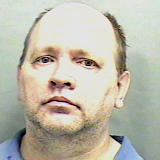
Joseph Donald Ture
Serial killer Donald Henry Gaskins
Serial killer · USA · 1969
Donald Henry Gaskins, also known as Donald “Pee Wee” Gaskins, was a serial kill…
200 victims
Donald Henry Gaskins
Serial killer · USA · 1969
Donald Henry Gaskins, also known as Donald “Pee Wee” Gaskins, was a serial kill…
200 victims
 Carl Eugene Watts
Serial killer · USA · 1974
Carl Eugene Watts (born November 7, 1953; died September 21, 2007), also known…
100 victims
Carl Eugene Watts
Serial killer · USA · 1974
Carl Eugene Watts (born November 7, 1953; died September 21, 2007), also known…
100 victims
 Rodney Alcala
Serial killer · USA · 1977
Rodney James Alcala (born August 23, 1943) was also known as Rodrigo Jacques Al…
100 victims
Rodney Alcala
Serial killer · USA · 1977
Rodney James Alcala (born August 23, 1943) was also known as Rodrigo Jacques Al…
100 victims
 Donald Harvey
Serial killer · USA · 1970
Donald Harvey was known as an American serial killer and a self-professed “Ange…
87 victims
Donald Harvey
Serial killer · USA · 1970
Donald Harvey was known as an American serial killer and a self-professed “Ange…
87 victims
 Donald Leroy Evans
Serial killer · USA · 1975
Donald Leroy Evans (born July 5, 1957) was an American serial killer who murder…
60 victims
Donald Leroy Evans
Serial killer · USA · 1975
Donald Leroy Evans (born July 5, 1957) was an American serial killer who murder…
60 victims
 Michael Swango
Serial killer · USA · 1981
Michael Swango (Joseph Michael Swango) was a physician and American serial kill…
60 victims
Michael Swango
Serial killer · USA · 1981
Michael Swango (Joseph Michael Swango) was a physician and American serial kill…
60 victims
 Darwin Demond Brown
Murderer · USA · 1995
Darwin Demond Brown (32 at execution) was convicted for his part in the bludgeo…
1 victim
Darwin Demond Brown
Murderer · USA · 1995
Darwin Demond Brown (32 at execution) was convicted for his part in the bludgeo…
1 victim
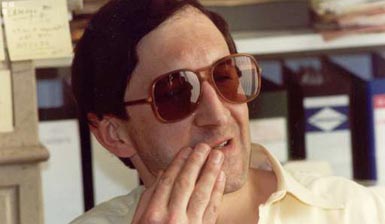 Madani Bouhouche
Murderer · Belgium · 1982
Madani “Dany” Bouhouche (June 14, 1952 - November 22, 2005) was a former Belgia…
2 victims
Madani Bouhouche
Murderer · Belgium · 1982
Madani “Dany” Bouhouche (June 14, 1952 - November 22, 2005) was a former Belgia…
2 victims
 Kristi Koslow
Homicide · USA · 1992
Kristi Koslow was the 17-year-old daughter of Jack Koslow and stepdaughter of C…
1 victim
Kristi Koslow
Homicide · USA · 1992
Kristi Koslow was the 17-year-old daughter of Jack Koslow and stepdaughter of C…
1 victim
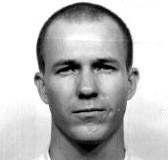 Johnny Dean Pyles
Murderer · USA · 1982
Johnny Dean Pyles (death row inmate; offender number “#724”) was executed by le…
1 victim
Johnny Dean Pyles
Murderer · USA · 1982
Johnny Dean Pyles (death row inmate; offender number “#724”) was executed by le…
1 victim
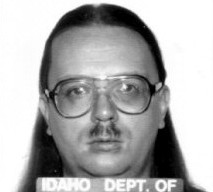 David Leslie Card
Murderer · USA · 1988
David Leslie Card (43), of Nampa, was convicted for the June 5, 1988, shooting…
2 victims
David Leslie Card
Murderer · USA · 1988
David Leslie Card (43), of Nampa, was convicted for the June 5, 1988, shooting…
2 victims
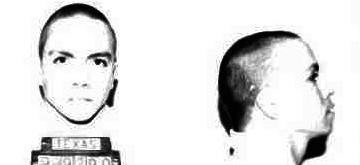 Ignacio Gomez
Murderer · USA · 1996
Ignacio Gomez was a Hispanic male. He was born in 1969 and was a Mexican nation…
3 victims
Ignacio Gomez
Murderer · USA · 1996
Ignacio Gomez was a Hispanic male. He was born in 1969 and was a Mexican nation…
3 victims
- Gender
- male
- Country
- USA
- Location
- Washington County, Minnesota, USA
- Date of birth
- February 7, 1951
- Age at first offence
- 27
- Characteristics
- rape
- Victim profile
- Alice Huling and three of her four children / Marlys Wohlenhaus, 18 / Diane Edwards , 19
- Method of murder
- Shooting / Beating with an axe
- Date(s) of murder
- 1978 - 19 79
- Years active
- 1978
- Date of arrest
- —
- Status
-
Life imprisonment
Sentenced to life in prison on September 23, 1981
Case record: Joseph Donald Ture
Background
Joseph Donald Ture was indicted by a Stearns County grand jury on four counts of first-degree murder in the 1978 shotgun killings of Alice Huling and three of her four children in their home near Clearwater. Alice Huling and the children—Susan, Patti, and Wayne—were shot to death in their beds in the middle of the night. A fourth son, Billy, survived by lying still in his bed after shots were fired at him.
Billy Huling said: "I'm kind of relieved that it's kind of happening. I can't really say I'm happy, but just relieved," and added: "As far as timing goes, I think it all should have gone back 21 years ago, four days after the murder when he was first picked up. Why wasn't anything done then? After that came out, after I got information about that, during this last trial, it kind of upset me, just knowing of the other people he hurt."
Investigators believed Ture broke into the home to rape Susan Huling. Ture denied any involvement in the murders.
Ture was convicted last year of the 1979 murder of Marlys Wohlenhaus. He was already serving time for the murder of West St. Paul waitress Diane Edwards.
The offence
Huling family homicide (1978)
Alice Huling and three of her children were murdered in their home on December 15, 1978. One child, Billy, escaped alive.
Wohlenhaus murder (May 1979)
At about 3:30 p.m. on May 8, 1979, 18-year-old Marlys Wohlenhaus was discovered by her mother in a downstairs room of their Afton home covered in blood with her head "bashed in." Wohlenhaus had several star-shaped cuts on her scalp and her skull was fractured. The injuries caused uncontrollable bleeding and severe brain injury. Wohlenhaus was hospitalized and underwent emergency surgery, but the next day she was taken off a respirator and pronounced dead.
An autopsy revealed broken fingers and bruises on both hands.
Edwards murder (September 26, 1980)
The record described Diane Edwards as a 19-year-old waitress who was abducted from West Saint Paul, sexually assaulted, and killed in 1980. Her body was found in rural Sherburne County approximately two weeks after she went missing. Evidence indicated Edwards had been sexually assaulted and died of stab wounds to her chest.
The record stated that Ture confessed to the Edwards murder while he was in jail waiting to be tried for that murder and again after he was convicted.
Investigation
A Stearns County Sheriff's Department request sought assistance in investigating the 1978 Huling family murder. On September 16, 1994, the Stearns County Sheriff's Department requested the BCA Cold Case Unit to assist in the investigation into the 1978 murder of the Huling family.
For the Marlys Wohlenhaus case, Everett Doolittle, a Special Agent with the Cold Case Unit of the Bureau of Criminal Apprehension (BCA), began investigating the Wohlenhaus murder in the early 1990’s.
The record described leads in the Wohlenhaus investigation: a neighbor saw a car fishtail out of Wohlenhaus's driveway at about 3:15 p.m. on May 8, the day Wohlenhaus was assaulted. A friend testified that on the night before Wohlenhaus's death, she and Wohlenhaus had been at a restaurant in Afton, and Wohlenhaus had appeared upset upon seeing a man sitting in the back of the restaurant. The man had light blond hair and was wearing a leather coat, sunglasses, and a baseball cap. The man apparently followed the two women on a motorcycle after they left the restaurant.
Despite the investigation of several suspects, no one was charged in connection with Wohlenhaus's death.
A reward of $50,000 was offered for the arrest and conviction of the person(s) responsible for Wohlenhaus's death.
The Wohlenhaus case was featured on CBS' 48 Hours and new information was developed that led to Joseph Ture being indicted.
During the postconviction proceedings, the record described evidence presented regarding other acts, including the manner in which the state attempted to offer evidence about the murder of Alice Huling and three of her four children, and another murder, but the court did not allow the state to present this evidence.
Jack Kulseth, a retired Minneapolis homicide investigator, testified that he interviewed Ture in late October 1980 while investigating the Edwards murder. Kulseth testified through offering loose-leaf notebook and various other notebooks and address books found during a 1980 search of Ture's motor vehicle and garage in South Saint Paul. The notebooks and address books contained listings of women's names, license plate numbers, addresses, and phone numbers, including a reference to the West Saint Paul Perkins. The notebooks did not appear to contain any information related to Wohlenhaus.
Arrest
The record described that, for the Wohlenhaus murder case, Ture made detailed written confession to the Wohlenhaus murder while in jail awaiting trial for another crime. The record did not otherwise describe an arrest in this case record beyond the procedural context.
Trial
Huling family homicide trial
A trial took place in February, 2000, and Joseph Ture was convicted of murder in the first degree for Alice, Wayne, Susan and Patti Huling. He was given a life sentence for each victim.
Wohlenhaus murder trial and proceedings
Ture was indicted in 1996 for first-degree premeditated murder in violation of Minn. Stat. § 609.185, subd. 1 (1978), in connection with Wohlenhaus's death. He was tried before a jury beginning in September 1998.
Ture was convicted of first-degree homicide on October 14, 1998, for the May 1979 death of Marlys Wohlenhaus.
Witness testimony concerning the Wohlenhaus murder
In addition to both Krominga and Hofstad, other witnesses testified that Ture directly and indirectly told them about the Wohlenhaus murder.
Former Washington County Deputy Sheriff Jeff Klarich testified that Freeman Stanton, a former cellmate of Ture's in Montana, told him that Ture had said that he had "beat" a young girl to death with an axe or hatchet.
Donald Mampel testified that in 1981 or 1982 when a news story was on television about a girl who had been killed in Afton, Ture stated that the authorities would never be able to prove it against him.
Randall Ferguson testified that in May 1998, at Oak Park Heights Prison, Ture bragged that he had beaten a woman to death in Afton.
Ray Lumsden testified that in 1990 or 1991 Ture described killing a male victim while burglarizing a small house in a rural area of Afton.
Leon Lasley testified that in the summer of 1998 he overheard Ture asking a prisoner with cancer to "take the rap" for him.
Wohlenhaus's friend who had been out with Wohlenhaus the night before she was assaulted testified that Ture could have been the man in the restaurant whom Wohlenhaus was upset upon seeing and who followed them on a motorcycle.
A man who worked at Greg's Body Shop in 1979 identified Ture from a photo array and testified that he could have been a man he had seen riding a motorcycle in the Afton area between 1978 and 1980.
Another man, who lived near the Wohlenhaus residence in Afton, identified a photo of Ture as someone he had seen in the Afton area and testified that he remembered him having a motorcycle.
Spreigl evidence and related testimony
Over Ture's objection, the state offered testimony that in 1980 Ture abducted Diane Edwards as she was walking home after working at the Robert Street Perkins restaurant in West Saint Paul and eventually murdered her. Ture was convicted of the Edwards murder.
The record stated that twenty-four witnesses testified to the details of the Edwards murder, taking up almost three of the twelve total days of trial testimony. The record stated that Ture confessed to the Edwards murder while in jail waiting to be tried for that murder and again after he was convicted.
The state attempted to offer evidence about the murder of Alice Huling and three of her four children, as well as another murder, but the court did not allow the state to present this evidence.
Notes and address books
Over Ture's objection, through Kulseth, the state offered loose-leaf notebook and various other notebooks and address books found during a 1980 search of Ture's motor vehicle and garage in South Saint Paul. The notebooks and address books contained listings of women's names, license plate numbers, addresses, and phone numbers.
Confessions described in the record
The record described that Ture had made a detailed written confession to the Wohlenhaus murder while in jail awaiting trial for another crime.
Ture’s written confession was drafted in November and December 1981 while he was being held in the Sherburne County Jail awaiting trial for the murder of Diane Edwards, a 19-year-old waitress who was abducted from West Saint Paul, sexually assaulted, and killed in 1980.
While in jail, Ture had fellow inmate Toby Krominga draft a confession to the Wohlenhaus murder and "another matter." Ture signed the confession, stating that he was making the confession with the hope of getting to Saint Peter State Hospital for treatment.
The confession stated that in 1978 Ture worked part time for Wohlenhaus's father at Greg's Body Shop in Afton. Ture claimed that Wohlenhaus's father wanted Ture to kill Wohlenhaus's mother and that Ture drove to the Wohlenhaus home to kill the mother.
According to his statement, while Ture waited outside for Wohlenhaus's mother to arrive, Wohlenhaus came home and she invited Ture inside to "smoke dope." Ture asked Wohlenhaus for sex, but she rejected his advances. Ture then got upset and hit her with a hatchet.
A handwriting expert for the BCA testified at Ture's trial that the signatures on each page of the confession were Ture's.
Ture also confessed to David Hofstad, who worked in the Sherburne County Attorney's Office from 1981-1982. Hofstad received a call in November 1981 from a Twin Cities television news cameraman with whom he was acquainted. The cameraman apparently told Hofstad he should talk to Ture about Wohlenhaus.
Ture agreed to meet with Hofstad. Hofstad, who knew nothing about the Wohlenhaus murder, asked Ture about Wohlenhaus and Ture told him that he had known her, she had been a waitress, and he had wanted to date her.
Ture then told Hofstad that he had wanted to talk to Wohlenhaus, so one day he went to her house to wait for her to come home. He got into the house through the garage and, when Wohlenhaus arrived, they talked, argued, and he killed her with either a hatchet or a crowbar.
Hofstad later called the Washington County Sheriff's Office and spoke with someone involved with the investigation of Wohlenhaus's murder about what Ture told him.
The record described that Doolittle discovered that authorities had cleared Ture as a suspect because they believed he was working at the Ford plant at the time of the murder, but Doolittle concluded that this alibi was erroneous because the authorities mistakenly looked up the work schedule of his father, Joseph Ture, Sr.
Defense testimony
Ture did not testify. The record stated that he presented witnesses who lived in the Afton area in 1979.
These witnesses, including persons who worked at Greg's Body Shop, gave testimony directed at contradicting some details of Ture's written confession, including testimony that they did not know a man named Joseph Ture, Jr. or that they did not recognize him in any of the police photo line-ups.
Jury instruction on Spreigl evidence
At the close of trial, the district court instructed the jury on the limited use of Spreigl evidence. The instruction stated:
The state introduced evidence in this case of an occurrence on September 26th, 1980 involving Diane Edwards. As I told you at the time that this evidence was offered, it was admitted for the limited purpose of assisting you in determining whether defendant committed the crimes with which he is charged in the indictment I read to you. [The] defendant is not being tried for and may not be convicted of any crime other than the crime charged in the indictment. You are instructed specifically that you are not to convict [the] defendant on the basis of any occurrence on September 26th, 1980, involving Diane Edwards. To do so might result in unjust double punishment. This instruction was adapted from Criminal Jury Instruction 3.16. See 10 Minn. Dist. Judges Ass'n, Minnesota Practice151Jury Instruction Guides, Criminal , CRIMJIG 3.16 (4th ed. 1999) (hereinafter "CRIMJIG 3.16").
Ture objected to this instruction, arguing that the court should use the Eighth Circuit's instruction for a defendant's prior similar acts because that instruction specifies that the jury could use Spreigl evidence for purposes of identity.
The record stated that Ture was convicted of first-degree premeditated murder and sentenced to life in prison consecutive to other sentences he was serving.
Sentencing
Ture was sentenced to life in prison for the murder of each victim in the Huling family homicide: Alice, Wayne, Susan and Patti Huling.
Ture was also sentenced to life in prison consecutive to other sentences he was serving following his Wohlenhaus conviction.
The case status field stated he was sentenced to life in prison on September 23, 1981.
Appeals
Dismissed direct appeal
Following his conviction in the Wohlenhaus case, Ture filed a direct appeal. After Ture's attorney unsuccessfully sought to supplement the record on the jury instructions requested by Ture at trial, Ture and the state stipulated to a dismissal of the appeal, which the court accepted.
Postconviction appeal to Minnesota Supreme Court
Ture subsequently filed for postconviction relief. The postconviction court denied the petition without conducting a hearing pursuant to Minn. Stat. § 590.04, subd. 1 (2002). On appeal of the denial of postconviction relief, Ture asserted trial errors.
The Minnesota Supreme Court appeal was captioned: Joseph Donald Ture, Jr., petitioner, Appellant, vs. Anderson, Paul H., J., Office of Appellate State of Minnesota, Courts Respondent. Filed: June 3, 2004. The court’s decisions stated the convictions were affirmed.
The syllabus included:
- "Admission of Spreigl evidence that the defendant murdered another young woman was not an abuse of discretion because the evidence was relevant and its probative value was not substantially outweighed by the danger of unfair prejudice."
- "Admission of notebooks and address books containing names, license plate numbers, addresses, and phone numbers of women other than the victim, even if erroneous, was harmless because the verdict was surely unattributable to the error."
- "The district court did not abuse its discretion by providing the jury with CRIMJIG 3.16, adapted to the facts of the case, as a Spreigl evidence instruction."
- "The state's conduct in closing argument was harmless beyond a reasonable doubt and therefore does not warrant a new trial."
- "Affirmed. Heard, considered, and decided by the court en banc."
Ture alleged as errors:
- Admission of Spreigl evidence regarding the murder of Diane Edwards and the manner in which this evidence was presented at trial.
- Admission of numerous pages of women's names, addresses, phone numbers, and license plate numbers.
- The district court's failure to use a more specific cautionary instruction to limit the use of Spreigl evidence.
- The state's conduct during closing argument.
The Supreme Court held that the district court did not abuse its discretion in admitting the Edwards murder evidence and did not abuse its discretion by giving the CRIMJIG instruction instead of the requested Eighth Circuit instruction. The Court also held that any error in admitting the notebooks and address books was harmless and that prosecutorial misconduct during closing argument was harmless beyond a reasonable doubt and did not warrant a new trial.
Outcome
The Minnesota Supreme Court affirmed the denial of postconviction relief, and the syllabus stated the conviction was affirmed.
Aftermath
The record included procedural and interpretive notes stating:
- The phrase "another matter" referred to the 1978 murder of Alice Huling and three of her four children, and Ture was ultimately convicted of these murders as well.
- Ture was ultimately convicted for the murder of Diane Edwards, with reference to State v. Ture, 353 N.W.2d 502 (Minn. 1984), affirming his conviction for first-degree murder of Edwards.
- The decision also referenced that Ture was ultimately convicted of the Huling family murders, with reference to State v. Ture, 632 N.W.2d 621 (Minn. 2001), affirming conviction for four counts of first-degree murder.
Other details
The record described that hearings and review addressed admissibility of Spreigl evidence derived from State v. Spreigl, 272 Minn. 488, 139 N.W.2d 167 (1965).
The record described legal standards applied to admissibility of other-crime evidence under Minn. R. Evid. 404(b) and harmless error analysis under State v. Juarez, 572 N.W.2d 286, 292 (Minn. 1997).
Spotted an error, or have more information about this case?