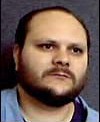
Conan Wayne Hale
Murderer Brian Kevin Rosenfeld
Murderer · USA · 1985
Brian Kevin Rosenfeld Brian Kevin Rosenfeld was sentenced to three concurrent l…
23 victims
Brian Kevin Rosenfeld
Murderer · USA · 1985
Brian Kevin Rosenfeld Brian Kevin Rosenfeld was sentenced to three concurrent l…
23 victims
 Russell Ellwood
Murderer · USA · 1991
Russell Ellwood was a former taxi driver. Authorities suspected him of killing…
20 victims
Russell Ellwood
Murderer · USA · 1991
Russell Ellwood was a former taxi driver. Authorities suspected him of killing…
20 victims
 Robert Martines Perez
Murderer · USA · 1994
Name: Robert Martines Perez · Other name used in proceedings: Robert Martinez P…
15 victims
Robert Martines Perez
Murderer · USA · 1994
Name: Robert Martines Perez · Other name used in proceedings: Robert Martinez P…
15 victims
 Billy Frank Vickers
Murderer · USA · 1993
Billy Frank Vickers Vickers was executed by lethal injection in Texas on Januar…
14 victims
Billy Frank Vickers
Murderer · USA · 1993
Billy Frank Vickers Vickers was executed by lethal injection in Texas on Januar…
14 victims
 Lakhvir Singh
Murderer · United Kingdom · 2009
Defendant: Lakhvir Singh Known alias/nickname: "The Curry Killer" Method used:…
1 victim
Lakhvir Singh
Murderer · United Kingdom · 2009
Defendant: Lakhvir Singh Known alias/nickname: "The Curry Killer" Method used:…
1 victim
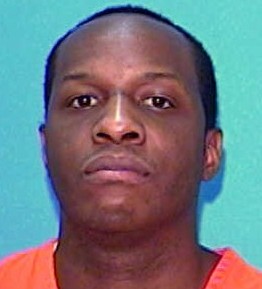 Labrant Dennis
Murderer · USA · 1996
Labrant Dennis was sentenced to death on February 26, 1999. · 04/13/96 — Earl L…
2 victims
Labrant Dennis
Murderer · USA · 1996
Labrant Dennis was sentenced to death on February 26, 1999. · 04/13/96 — Earl L…
2 victims
 Barbara Opel
Murderer · USA · 2001
Barbara Opel was convicted of murdering a 64-year-old man with terminal cancer…
1 victim
Barbara Opel
Murderer · USA · 2001
Barbara Opel was convicted of murdering a 64-year-old man with terminal cancer…
1 victim
 Steven John Grieveson
Serial killer · United Kingdom · 1993
Steven John Grieveson (born 1970) was an English serial killer. Grieveson murde…
4 victims
Steven John Grieveson
Serial killer · United Kingdom · 1993
Steven John Grieveson (born 1970) was an English serial killer. Grieveson murde…
4 victims
 Sarah Kolb
Homicide · USA · 2005
Sarah Kolb was convicted in connection with the murder of 16-year-old Adrianne…
1 victim
Sarah Kolb
Homicide · USA · 2005
Sarah Kolb was convicted in connection with the murder of 16-year-old Adrianne…
1 victim
 Raymond Solano
Murderer · USA · 2001
Raymond Solano was sentenced to death on May 30, 2003 for the murder of Armondo…
1 victim
Raymond Solano
Murderer · USA · 2001
Raymond Solano was sentenced to death on May 30, 2003 for the murder of Armondo…
1 victim
- Gender
- male
- Country
- USA
- Location
- Lane County, Oregon, USA
- Date of birth
- December 28, 1975
- Age at first offence
- 20
- Characteristics
- rape, robbery
- Victim profile
- His ex-girlfriend, Kristal Bendele, 15; her boyfriend, Brandon Williams, 15; and a friend, Patrick Finley, 13
- Method of murder
- Shooting (.38 caliber Taurus revolver)
- Date(s) of murder
- December 20, 1995
- Years active
- 1995
- Date of arrest
- —
- Status
-
Sentenced to death
Sentenced to death on May 29, 1998; judgments of conviction for aggravated murder on counts 20, 21, 27, 29, 35, and 37 were reversed and the sentences of death thereon vacated; judgments of conviction for aggravated murder on counts 19, 25, 26, 28, 33, 34, and 36, and the sentences of death thereon, were affirmed; the case was remanded to the circuit court for further proceedings
Case record: Conan Wayne Hale
Status
Conan Wayne Hale was sentenced to death on May 29, 1998. On automatic and direct review, the judgments of conviction for aggravated murder on counts 20, 21, 27, 29, 35, and 37 were reversed and the sentences of death thereon were vacated. The judgments of conviction for aggravated murder on counts 19, 25, 26, 28, 33, 34, and 36, and the sentences of death thereon, were affirmed. The case was remanded to the circuit court for further proceedings.
Timeline
- 1990 — Susbauer was the subject of a “high-risk felony stop,” in which a police officer ordered Susbauer to lie face down on the ground.
- April 22, 1996 — Fr. Timothy Mockaitis, a priest in Eugene, Ore., visited Hale and heard Hale’s confession.
- December 21, 1995 — Two men found the nude bodies of Brandon Williams and Kristal Bendele at a logging landing on McGowan Creek; Patrick Finley was barely alive nearby.
- December 24, 1995 — Police visited Susbauer at his home and seized the .38 caliber Taurus revolver stolen during the December 19 burglary.
- December 26, 1995 — Police searched defendant’s bedroom and seized a black trench coat and a machete.
- December 14, 1995 — Hale and Susbauer broke into a woman’s home, stole several thousand dollars worth of property, and slashed a couch and a stereo speaker with a knife before leaving.
- December 16, 1995 — Hale and Susbauer drove beside a parked car on an isolated road in a remote wooded area in Eugene; they approached two teenagers, Kara Krause and Jesse Jarvis, and the assault occurred.
- December 19, 1995 — Hale and Susbauer broke into another house and stole thousands of dollars worth of property, including a rabbit-fur jacket, a .38 caliber Taurus revolver with wooden grips, and 25 rounds of ammunition.
- December 20, 1995 — Hale and Susbauer were riding around in the stolen Suburban and encountered Kristal Bendele, Brandon Williams, Patrick Finley, and Michael Black.
- December 21, 1995 — The deaths of Williams and Bendele occurred; Finley died four days later.
- December 12, 1996 — The appeal of the archdiocese of Portland was argued.
- January 7, 2003 — The case was argued and submitted.
- January 27, 2003 — The court reversed and vacated sentences for certain aggravated murder counts and affirmed others on automatic and direct review.
- January 31, 2003 — Leeson, J., resigned and did not participate in the decision.
- 2003 — The opinion was filed on the Supreme Court of Oregon record (Filed: August 14, 2003).
People involved
- Conan Wayne Hale — Defendant; sentenced to death; found guilty on multiple aggravated murder counts and other crimes; convicted of first-degree sodomy for conduct with respect to Bendele.
- Kristal Bendele — Victim; 15-year-old; shot twice (once in the back and once in the left temple).
- Brandon Williams — Victim; 15-year-old; shot five times (three shots to the head and face, one to the chest, and one to the back).
- Patrick Finley — Victim; 13-year-old; found barely alive, shot twice (once in the head and once in the shoulder) and died four days later without regaining consciousness.
- Jonathan Susbauer — Hale’s friend and alleged companion/participant in the crimes; admitted being with Hale during the crimes; pleaded guilty to three counts of aggravated murder.
- Kara Krause — Victim of the assault; present in the attacked car.
- Jesse Jarvis — Victim of the assault; present in the attacked car.
- Michael Black — 15-year-old; present when Hale and Susbauer encountered Bendele, Williams, Finley, and Black; Black declined the ride.
- Fr. Timothy Mockaitis — Priest in Eugene, Ore.; visited Hale and heard Hale’s confession.
- Francis E. George — Bishop of Portland, Ore.; protested the recording of Hale’s confession.
- Doug Harcelroad — Prosecutor; lamented the taping but seemed to think the tape should not be destroyed if it contained evidence the defendant desired to use for his defense.
- Hardy Myers — Attorney General.
- Mary H. Williams — Solicitor General.
- Jonathan Fussner, Timothy Sylwester, Joanna L. Jenkins — Assistant Attorneys General.
- Jack A. Billings — Judge; Lane County Circuit Court.
- Mary M. Reese — Deputy Public Defender.
- David E. Groom — State Public Defender.
- Janet A. Metcalf — Assistant Attorney General.
- Leeson, J. — Resigned January 31, 2003 and did not participate in the decision.
- Carson, Chief Justice, Gillette, Durham, Riggs, De Muniz, and Balmer — Justices named in the Oregon Supreme Court decision.
Background
Conan Wayne Hale, then 20 in the confession-related narrative, was charged with the murder of three young persons on Dec. 21, 1995. Hale was sentenced to death for his role in the slaying of three Springfield, Oregon teenagers in 1995. He was sentenced after being found guilty on all 33 counts that he faced, including 13 charges of aggravated murder. Many family members of the murdered teenagers were on hand at sentencing. Hale did not show any visible reaction to the sentencing, although his mother gasped and began to cry after the verdict was read. Before handing down the sentence, the judge called Hale “a coward” for not confessing to the crimes and stated he had never seen a more miserable excuse for a human being than Hale.
The trial first came to national attention after a tape was made of Hale’s confession to a priest while in prison; the judge ruled that the tape could not be introduced into evidence.
Hale’s prosecution theory in the murders was that Hale killed the teenagers in a fit of jealous rage because Bendele had broken off her relationship with him and started a relationship with Brandon Williams. The defense argued that Jonathan Susbauer, who admitted being with Hale during the crimes, committed the murders.
The offence
Burglary and robbery conduct in the Eugene area
In late 1995, Hale, then 19, and his friend Jon Susbauer, then in his early twenties, began committing a series of burglaries and robberies in the Eugene area.
On December 14, 1995, Hale and Susbauer broke into a woman’s home, stole several thousand dollars worth of her property, and slashed a couch and a stereo speaker with a knife before leaving.
On December 19, 1995, Hale and Susbauer broke into another house and stole thousands of dollars worth of property including, among other things, a rabbit-fur jacket, a .38 caliber Taurus revolver with wooden grips, and 25 rounds of ammunition for the revolver. Before they left, they again slashed the furniture with a knife.
Late in the evening on December 20, defendant and Susbauer were riding around in the stolen Suburban, with Susbauer driving. They saw Hale’s former girlfriend, Kristal Bendele, her current boyfriend Brandon Williams, and two other young people, Patrick Finley and Michael Black. Hale and Susbauer parked. Defendant got out, wearing a black trench coat and jeans, offered the teenagers a ride, and Bendele, Williams and Finley accepted; Black declined.
Assault on Kara Krause and Jesse Jarvis
At around midnight on December 16, 1995, Hale and Susbauer drove beside a car parked on an isolated road in a remote wooded area in Eugene. The men were in a silver, Chevrolet Suburban that Susbauer had stolen a few weeks earlier.
The person on the passenger side of the Suburban got out, approached the parked car, and knocked on the window, telling the couple that they were on his property but that they could stay. He returned to the Suburban, and Jarvis heard laughter. The Suburban drove off. A few minutes later, Jarvis heard a man yelling. Jarvis got out to investigate; he later testified that a man “jumped out of nowhere.” Jarvis described the man as large and stocky, dressed in dark clothing with a long coat, with his head and face covered by a mask or scarf, only his eyes visible. Jarvis testified the man carried something that looked like a machete and was swinging it like a sword. The man spoke in a low rough growl and threatened Jarvis with the machete. The man ordered Krause out of the car and told both to take off their clothes and shoes.
After they complied, the man threw the car keys, clothes, and shoes into the woods. The man forced Jarvis to lie on the ground and Krause to lie across the hood of the car. He threatened Krause with the blade of the machete and sexually assaulted her. Jarvis told police he thought the “property owner” and the rapist were different people.
Weeks later, at two police lineups, Jarvis identified Susbauer as the “property owner” and identified Hale possibly as the rapist. Krause was not able to identify the rapist when shown the same lineups.
McGowan Creek murders of Kristal Bendele, Brandon Williams, and Patrick Finley
On the next afternoon, December 21, 1995, two men found the nude bodies of Williams and Bendele at a logging landing on McGowan Creek. Bendele had been shot twice, once in the back and once in the left temple. Williams had been shot five times; three shots were to the head and face, one to the chest, and one to the back. Finley, barely alive, also was lying nearby and was shot twice, once in the head and once in the shoulder. He was wearing the rabbit-fur jacket stolen in the earlier burglary. Finley died four days later without ever regaining consciousness.
Recovered evidence
Police visited Susbauer at his home on December 24, 1995, and seized the .38 caliber Taurus revolver stolen during the December 19 burglary. On December 26, police searched Hale’s bedroom and seized a black trench coat and a machete.
The Taurus revolver later was proved to be the murder weapon; all bullets recovered at the scene and from the bodies of the victims had been fired from that gun. Testing of the revolver grip revealed a mixture of DNA patterns, the most predominant matching that of Bendele.
Semen obtained from Bendele’s mouth, vagina, and anus was identified as Susbauer’s. Semen on Bendele’s shirt and on the rabbit fur jacket that Finley was wearing was identified as Hale’s.
Charges and roles at trial
Hale and Susbauer were both charged with aggravated murder and various other crimes arising from the murders of Bendele, Williams, and Finley, the assault on Jarvis and Krause, and the December 14 and December 19 burglaries.
Susbauer agreed to cooperate and pleaded guilty to, among other things, three counts of aggravated murder. After Susbauer’s plea, the district attorney decided to seek the death penalty only against Hale.
At the trial, Hale’s theory was that Susbauer was the rapist and killer and that Hale merely was in the wrong place at the wrong time. Susbauer’s story was the opposite: Hale was the director of the abuse and murderer of all the victims, and Susbauer was a secondary—and in part unwilling—accomplice.
The jury rejected Hale’s theory and convicted him of 13 counts of aggravated murder and multiple noncapital crimes arising out of the burglaries and the attack on Krause and Jarvis.
The trial court sentenced Hale on the noncapital crimes at the conclusion of the guilt-phase trial. The trial court then conducted a penalty-phase trial on the aggravated murder convictions, where the jury found that Hale acted deliberately in committing the murders, posed a continuing risk to society, and should receive a death sentence. The trial judge entered a sentence of death.
Hale also was convicted of first-degree sodomy for conduct with respect to Bendele.
Investigation and confession proceedings
While in detention, Hale asked to see a priest. Fr. Timothy Mockaitis visited Hale on April 22, 1996, in Eugene, Ore., and heard Hale’s confession. Prison authorities recorded the confession without the priest’s knowledge. The confession was conducted by telephone while Hale and the priest were separated by a glass partition.
Prison officials claimed that all conversations of prisoners and visitors are recorded except conversations between prisoners and their lawyers. When the confession was revealed as taped, the bishop of Portland, Ore., Francis E. George, protested. A letter to the United States ambassador to the Holy See described the Vatican deploring the recording of the confession.
The uproar focused on prosecutor Doug Harcelroad, who lamented the taping but seemed to think the tape should not be destroyed if it contained evidence the defendant desired to use for his defense. The Oregon attorney general stated that if the tape were not admissible, the government might have to dismiss the charges of murder.
The archdiocese moved in state and federal court to suppress and destroy the tape. In the interim, some contents of the tape were released.
In the confession, Hale sought to blame the murder on his companion in the robbery. It was unclear whether Hale deliberately sought to deny his guilt in the atmosphere of confession with the hope that he could use the tape at a later date to establish his innocence. Hale signaled to visitors not to speak because the conversation would be taped.
Catholic officials, including the U.S. Catholic Conference, requested a federal judge in Oregon to destroy the tape and its written transcript. The court refused to intervene on the basis that federal courts should not enter into matters in litigation in state courts until such matters are resolved according to state law and procedures. The federal judge agreed that the plaintiffs were “justifiably outraged” by the taping, which “should never have occurred.”
During the period in which destruction of the tape was being requested, the state of Oregon announced its intention to seek the death penalty for Hale. Around the same time, defendant’s counsel revealed the audiocassette would be used if it could be helpful to Hale in efforts to defeat the 22 counts of aggravated murder and other crimes brought against him in the indictment.
In the confession, Hale admitted to the priest the burglary he had already confessed to the police, but accused his companion of the murder and asserted his own innocence of any homicide. Hale confessed to anger at what he asserted were false allegations against him, presumably hoping that his denial of the murder charges would be recorded and preserved to help him later.
Judge John Noonan, in the Ninth Circuit Court of Appeals decision, reversed the ruling of a lower federal judge in Oregon regarding the seal of confession. Judge Noonan issued an injunction forbidding law enforcement officials in Oregon from ever wiretapping communications between clergy and those whom they seek to counsel.
The trial judge ruled that the tape could not be introduced into evidence.
Trial
Guilt phase
At the trial, defendant raised nine assignments of error directed at the guilt phase of the trial. The appellate court considered each assignment.
Hale argued for admission of testimony that in 1990 Susbauer had been the subject of a “high-risk felony stop,” in which a police officer ordered Susbauer to lie face down on the ground. Hale contended the evidence was relevant to show it was Susbauer, not Hale, who was the main perpetrator of the crimes in the Jarvis/Krause attack and the McGowan Creek murders, because in both episodes the perpetrator commanded the male victims to lie face down in a prone position. Hale argued that Susbauer’s earlier experience made it more likely he was recreating power and powerlessness.
The prosecutor objected on grounds of irrelevance and that it was “other crimes.” The trial court sustained the objection. The appellate court concluded the proffered evidence was irrelevant and therefore inadmissible, because the connection required series of inferential leaps without factual predicate.
Jury unanimity regarding aggravated murder counts
Hale argued the trial court failed to ensure jury unanimity on many charges of aggravated murder. Counts 20, 21, 27, 29, 35, and 37 were based on underlying third-degree sexual abuse. Hale argued the trial court should have identified for the jury the factual circumstances of those sexual abuse offenses, including which incident and perpetrator and victim, or should have instructed that all jurors had to agree unanimously on the same incident of third-degree sexual abuse in order to convict him of aggravated murder as charged in those counts.
Hale made identical arguments for aggravated murder counts based on the commission of murder: counts 26, 28, 34, and 36. He argued the trial court should ensure jury unanimity on the same murder or same perpetrator.
The trial court instructed the jury generally that to find Hale guilty on each count it would have to find he intentionally caused each victim’s death “in an effort to conceal the crime of sexual abuse in the third degree,” and it instructed on the elements of third-degree sexual abuse. For counts based on concealment of identity of the perpetrator, the trial court instructed that it had to find Hale intentionally caused each victim’s death “in an effort to conceal the identity of the perpetrator of the crime of sexual abuse in the third degree,” but did not identify the victim or surrounding circumstances of the underlying third-degree sexual abuse with respect to any aggravated murder charge.
Likewise, the trial court did not instruct the jury that all jurors had to agree that the murder had been committed to conceal a single incident of sexual abuse committed against a single victim, nor did it instruct that all jurors had to agree on the identity of at least one perpetrator for those underlying sexual abuse offenses.
For aggravated murder counts based on concealment of the commission or identity of the perpetrator of the crime of murder, the trial court instructed the jury that it had to find Hale intentionally caused the victim’s death “to conceal the commission of the crime of murder” or “to conceal the identity of the perpetrator of the crime of murder,” without instructing that all jurors had to agree on the same underlying murder or same perpetrator.
The appellate court held that as a legal matter the jury instructions with respect to counts 20, 21, 26, 27, 28, 29, 34, 35, 36, and 37 were erroneous, applying the rationale that the jury instructions carried an impermissible danger of jury confusion.
The appellate court held the errors were harmless for counts 26, 28, 34, and 36 because the jury unanimously convicted Hale on counts 19, 25, and 33 using instructions requiring the state to prove Hale intentionally caused the death of Kristal Rene Bendele, Brandon Matthew Williams, and Patrick Finley in the same criminal episode.
The appellate court held the errors were not harmless for counts 20, 21, 27, 29, 35, and 37, because Hale was not charged with the predicate third-degree sexual abuse, but the state presented evidence supporting various theories of who committed the underlying sexual abuse, leaving it impossible to determine whether each juror had in mind the same victim, perpetrator, and surrounding circumstances.
The appellate court reversed Hale’s convictions for aggravated murder on counts 20, 21, 27, 29, 35, and 37 and remanded those charges for further proceedings. It affirmed Hale’s seven remaining aggravated murder convictions.
Specific jury instruction language quoted by the appellate court
In Count 19, the trial court instructed:
“In this case, to establish the crime of aggravated murder, in Count 19, the State must prove beyond a reasonable doubt that * * * [defendant] intentionally caused the death of Kristal Rene Bendele, another human being, and Brandon Matthew Williams and Patrick Finley, other human beings, in the same criminal episode. * * * * * ”
In Count 25, the trial court instructed:
“In this case, to establish the crime of aggravated murder, in Count 25, the State must prove beyond a reasonable doubt the following elements: * * * that [defendant] intentionally caused the death of Brandon Matthew Williams, another human being, and Kristal Rene Bendele and Patrick Finley, other human beings, in the same criminal episode. * * * * * ”
In Count 33, the trial court instructed:
“In order to establish the crime of aggravated murder, in Count 33, the State must prove beyond a reasonable doubt that * * * [defendant] intentionally caused the death of Patrick Finley, another human being, and Kristal Rene Bendele and Brandon Matthew Williams, other human beings, in the same criminal episode.”
Sentencing
After the guilt phase, the trial court entered sentence on noncapital crimes. It then conducted a penalty-phase trial. The jury determined Hale had acted deliberately in committing the murders, posed a continuing risk to society, and should receive a death sentence.
Appeals
Hale filed 33 assignments of error on appeal. Most assignments were rejected; the appellate court discussed pretrial, guilt-phase, and penalty-phase issues.
Reversal and affirmance on aggravated murder counts
On automatic and direct review, the appellate court reversed the judgments of conviction for aggravated murder on counts 20, 21, 27, 29, 35, and 37 and vacated the sentences of death thereon. It affirmed the judgments of conviction for aggravated murder on counts 19, 25, 26, 28, 33, 34, and 36, and affirmed the sentences of death thereon.
Corrected judgments and single sentence structure per victim
Hale argued that the trial court erred by entering multiple judgments and sentences of death for aggravated murder of Bendele, of Williams, and of Finley. The appellate court agreed that the judgment entered was erroneous, remanding the case for entry of corrected judgments reflecting Hale’s guilt on aggravated murder charges for each victim. Each corrected judgment was to enumerate separately the aggravating factors on which each conviction was based and each judgment was to impose a single sentence of death for each victim.
The appellate court remanded the case to the circuit court for further proceedings.
Outcome
The appellate court stated:
- The judgments of conviction for aggravated murder on counts 20, 21, 27, 29, 35, and 37 were reversed, and the sentences of death thereon were vacated.
Other details
- The indictment in the case alleged six aggravated murder counts that alleged Hale committed murder to conceal the crime of third-degree sexual abuse and to conceal the identity of the perpetrator of the crime of third-degree sexual abuse (counts 20, 21, 27, 29, 35, and 37). Hale argued the counts were impermissibly vague because the indictment did not specify the particulars of the third-degree sexual abuse offenses, including who the victims were, in what county and when the offense occurred, or who the perpetrators were.
- Hale asked the trial court to send the matter back to the grand jury for clarification of the specific facts and circumstances that constituted third-degree sexual abuse in each aggravated murder count where it was the aggravating factor.
- The trial court denied the demurrer; the appellate court found no error regarding the indictment’s sufficiency because the indictment tracked the wording of the statute and also alleged underlying offenses.
- The appellate court considered pretrial constitutional challenges to the Oregon death-penalty statute and challenges regarding exclusion of convicted felons and nonregistered voters from the jury pool; it found none warranted additional discussion.
- The appellate court noted that most penalty-phase assignment discussions would not benefit the defendant, the public, the bench, or the bar except for the issue requiring corrected judgments and single death sentence per victim.

Spotted an error, or have more information about this case?