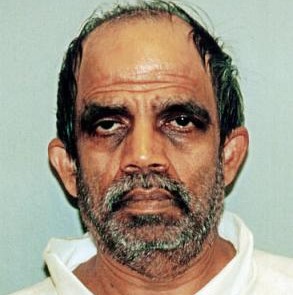
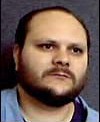
Biswanath Halder
Murderer Robert Martines Perez
Murderer · USA · 1994
Name: Robert Martines Perez · Other name used in proceedings: Robert Martinez P…
15 victims
Robert Martines Perez
Murderer · USA · 1994
Name: Robert Martines Perez · Other name used in proceedings: Robert Martinez P…
15 victims
 Billy Frank Vickers
Murderer · USA · 1993
Billy Frank Vickers Vickers was executed by lethal injection in Texas on Januar…
14 victims
Billy Frank Vickers
Murderer · USA · 1993
Billy Frank Vickers Vickers was executed by lethal injection in Texas on Januar…
14 victims
 Robert Glen Jones
Murderer · USA · 1996
Defendant: Robert Glenn Jones (ADC#070566) · Co-defendant: Scott Nordstrom (ADC…
7 victims
Robert Glen Jones
Murderer · USA · 1996
Defendant: Robert Glenn Jones (ADC#070566) · Co-defendant: Scott Nordstrom (ADC…
7 victims
 Vitaly Kaloyev
Murderer · Switzerland · 2004
Vitaly Konstantinovich Kaloyev was born in 1956 in Vladikavkaz. He was an archi…
1 victim
Vitaly Kaloyev
Murderer · Switzerland · 2004
Vitaly Konstantinovich Kaloyev was born in 1956 in Vladikavkaz. He was an archi…
1 victim
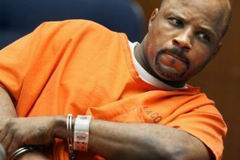 Steven Anthony Jones
Murderer · USA · 2004
Steven Anthony Jones was sentenced to death for killings connected to a robbery…
2 victims
Steven Anthony Jones
Murderer · USA · 2004
Steven Anthony Jones was sentenced to death for killings connected to a robbery…
2 victims
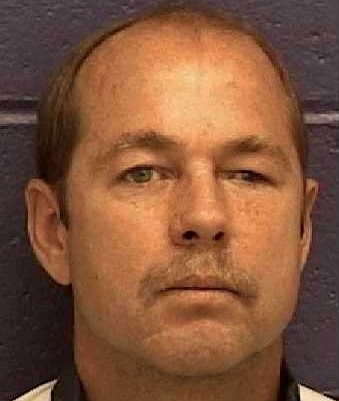 William Lamar Todd
Murderer · USA · 1988
William Lamar Todd was convicted by a jury in Harris County of murder and armed…
1 victim
William Lamar Todd
Murderer · USA · 1988
William Lamar Todd was convicted by a jury in Harris County of murder and armed…
1 victim
 Abbas Baqir Abbas
Mass murderer · Sudan · 2000
Abbas Baqir Abbas was identified as a member of the militant Al-Takfir wa al-Hi…
23 victims
Abbas Baqir Abbas
Mass murderer · Sudan · 2000
Abbas Baqir Abbas was identified as a member of the militant Al-Takfir wa al-Hi…
23 victims
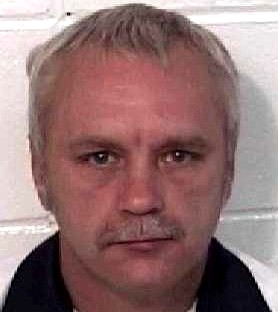 Jonathen Jarrells
Murderer · USA · 1987
Jonathen Jarrells was convicted by a Walker County jury of murder, armed robber…
1 victim
Jonathen Jarrells
Murderer · USA · 1987
Jonathen Jarrells was convicted by a Walker County jury of murder, armed robber…
1 victim
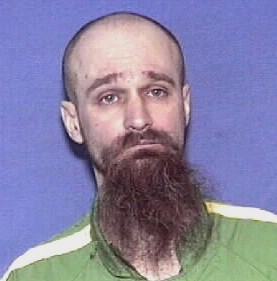 Edward Tenney
Serial killer · USA · 1992
Edward Tenney Edward Tenney was sentenced to death. That sentence had been stay…
3 victims
Edward Tenney
Serial killer · USA · 1992
Edward Tenney Edward Tenney was sentenced to death. That sentence had been stay…
3 victims
- Gender
- male
- Country
- USA
- Location
- Cleveland, Ohio, USA
- Date of birth
- 1941
- Age at first offence
- 62
- Characteristics
- alcohol, history of mental illness
- Victim profile
- Norman Wallace, 30 (graduated student)
- Method of murder
- Shooting
- Date(s) of murder
- May 9, 2003
- Years active
- 2003
- Date of arrest
- Same day
- Status
-
Life imprisonment
Sentenced to life imprisonment without parole on February 17, 2006
Overview
Biswanath Halder was an alumnus of Case Western Reserve University (CWRU) who went on a shooting spree on May 9, 2003. He killed Norman Wallace and wounded a professor and a Ph.D. student at the Weatherhead School of Management at CWRU in Cleveland, Ohio. Halder held off police and SWAT officers for over seven hours in sniper-like gun battles before being apprehended by a SWAT team in a fifth floor classroom closet.
Timeline
- May 9, 2003 — Biswanath Halder went on a shooting spree at Case Western Reserve University in Cleveland, Ohio, killing one student, Norman Wallace, and wounding a professor and a Ph.D. student at the Weatherhead School of Management. Police said the shooting began shortly after 1600 local time (2000 GMT).
- January 17, 2006 — Assistant Cuyahoga County Prosecutor Rick Bell appealed to the jury to sentence Halder to death.
- January 19, 2006 — Forensic Psychologist Jeffrey Smalldon told the jurors that Halder was convinced that his seven-hour long violent siege was justified, during the second day of the sentencing process.
- February 17, 2006 — Halder was sentenced to life imprisonment without parole.
- 2006 — Dateline NBC aired a report on the incident, featuring video footage and interviews with family members and discussions about Halder’s motive.
Background
Biswanath Halder was known around the CWRU campus as a loner. He lived alone in his attic apartment. He stood out because of his odd behavior and clothing, and an obvious toupee he wore. He was often seen spending his time at the computer laboratory.
Halder moved to the United States in 1969 from India. He earned his degree from Case Western Reserve University in 1999 and continued to take classes at the school. Halder had studied at various universities before going to Case Western for a business degree five years prior to the trial coverage referenced in the material.
Halder was described as having “severe problems.” Experts testified that he showed signs of delusion and out of touch with reality. The defense mainly argued that Halder should not be awarded the death sentence because he was “mentally ill,” and they said it was a relief when he received life imprisonment without parole.
A defense witness compared Halder to Mel Gibson’s character in the film Conspiracy Theory. Another defense witness described Halder as “grandly disillusioned.” One defense attorney, Kevin Cafferkey, told the jurors that Halder was mentally ill, calling him “the bizarre little man who no one befriends.” Cafferkey also said Halder could not “never live in society because of his actions of May 9, 2003.”
A defense witness described Halder’s dwelling: Halder lived in an attic in a three-storied house in Cleveland, Ohio, with hardly any furniture but filled with boxes of magazines and newspapers. Halder sat with three court-appointed lawyers in court with an impassive face while taking copious notes passed to his defense team.
Halder was also described as an alcoholic. He had been sober for over 15 years. The material also states that defense counsel said Halder had mental disorders since at least 1980.
Halder was involved in disputes involving the university and Shawn Miller, a Case Western University employee. Halder accused Miller of hacking into a website Halder had set up to help fellow Indians set up businesses. Miller denied again and again that he was the hacker.
The material stated that in July 2000 someone hacked into Halder’s computer and deleted thousands of files. Halder said those files were the groundwork for a multi-million dollar business. The hacker had also left offensive messages in the guestbook on Halder’s Web site. Halder claimed Shawn Miller was responsible.
Halder complained to Case Western school authorities demanding that Miller be punished, and the matter was referred to police. When police dropped the case for lack of evidence, Halder was not satisfied and sued Miller. Halder’s litigation was described as including disputes and a history of suing. The material states that, in the end of April 2003, Halder’s lawsuit was thrown out of court. The prosecutor characterized Halder as picking up a gun with a mission in mind after losing the civil suit, seeking “his own justice.”
The offence
On May 9, 2003, Biswanath Halder went on a shooting spree at Case Western Reserve University in Cleveland, Ohio. The Weatherhead School of Management building was the location described for the incident.
Police said the gunman began firing shortly after 1600 local time (2000 GMT) at the building. Witnesses said Halder was firing indiscriminately. Police said the gunman was reported to be in camouflage and armed with a semi-automatic rifle.
The material states that one student, Norman Wallace, was killed. It also states that a professor and a Ph.D. student were wounded. During the seven-hour standoff, approximately 100 people hid in offices and closets until they were rescued by police.
The material stated that Halder held off police and SWAT officers for over seven hours in sniper-like gun battles. The standoff ended seven hours later after police stormed the building and arrested the alleged gunman.
Investigation
Police chief Edward Lohn stated that they believed Halder “is the shooter or one of the shooters,” while not giving any details.
Arrest
Halder was ultimately apprehended by a SWAT team in a fifth floor classroom closet.
Trial
Biswanath Halder was charged with 338 felony counts, including aggravated murder, kidnapping, aggravated burglary, attempted murder, illegal weapons possession and terrorism. Some charges were dropped on the first day of trial before opening arguments. The terrorism charge was dropped before jury deliberations.
The material also states that Halder was found guilty recently of holding some 150 students and professors hostage and killing one student on May 9, 2003. It also states that Halder faced the death penalty after being convicted on 196 counts.
Defense lawyers did not contest that Halder was involved in the shooting and killing, but argued that Halder had severe problems. Forensic Psychologist Jeffrey Smalldon, who had examined many serial killers, testified to the jurors. The psychologist told the jury that Halder was mentally ill, while also saying Halder still had the capacity to distinguish right from wrong. Smalldon added that Halder expressed regret for his action, but Halder never showed any remorse.
Judge Peggy Foley Jones was the presiding judge for sentencing in the material.
Defence statements and testimony
One defense lawyer, Kevin Cafferkey, told the jurors on January 17 that Halder was mentally ill, saying:
“the bizarre little man who no one befriends”
Cafferkey added that Halder had to “spend the rest of his life in prison,” saying:
“He must spend the rest of his life in prison”
Cafferkey also told the jurors:
“He can ‘never live in society because of his actions of May 9, 2003,’”
A defence lawyer also argued that Halder’s actions were not those of a ruthless killer intent on mass murder. The defence called witnesses to testify to delusions.
The material states that Halder frequently barked orders at his lawyers and made it difficult to prepare a defense, including insisting on two cent stamps.
According to John Laskin, one of the attorneys for Halder, Halder said he went into the Peter B Lewis Building when he expected it to be nearly empty, wanted to protest, and that when he lost his eyeglasses he panicked and shot blindly. Laskin states that Halder killed one student, wounded two others, then fired at police “blindly, because he had lost his eyeglasses,” as part of the lawyers’ argument.
The material states that Halder’s defence team admitted what Halder had done, but begged the jury to convict Halder on lesser charges.
Prosecutor statements
Assistant Cuyahoga County Prosecutor Rick Bell appealed on January 17 to the jury to sentence Halder to death. Bell described Halder as a selfish man who plotted the rampage for over two years, including buying one of the two guns he took to the campus soon after he lost the civil suit against Shawn Miller and the university.
During closing arguments, Bell retorted to the defence argument, saying:
“Are you kidding me?”
Bell said the defence was an affront to the victim’s family and made statements including:
“This [defense] is an affront -- an affront to that [Wallace] family back there in the courtroom.”
Bell said:
“Halder is a sociopath.”
Bell also said:
“It angers me that [Halder] could be portrayed as some sad, strange little man -- that's not the case,”
and Bell said:
“He planned this for a long time.”
The material also says that Bell sought to discredit Smalldon and called the defence arguments that Halder did not commit a premeditated crime “unreal.”
Halder’s statements to experts
Forensic Psychologist Jeffrey Smalldon said that Halder was convinced that his seven-hour long violent siege was justified, and Halder declared:
“Violence is essential!,”
Smalldon stated Halder told him he was fighting cyber criminals. Halder told the psychologist that by striking at the university, which he blamed for allegedly shielding a student and employee Shawn Miller who had reportedly hacked his website, he made the world a safer place.
The material states that Halder’s goal was to “liquidate” the university, and that Halder entered the campus armed with over 1,000 rounds of ammunition. Smalldon quoted Halder:
“By doing what I did I saved the mankind.”
Smalldon also quoted Halder regarding cyber crime:
“Will never be allowed to happen again.”
The material states that Halder believed everyone from the Federal Bureau of Investigation and the judges were corrupt and had a thing or two against him, and that his action “saved the world billions and trillions of dollars,” as reported in the material and told to Smalldon.
The material states Halder boasted about his mastery of mathematics and business, but also admitted to Smalldon that he had “lived a subhuman life” since his arrival in America in 1969 ostensibly to study. The material states Halder said he could never have contact with his family in India, including his only sibling, a sister, or have a girl friend because he was always short of money.
Smalldon also told the jury that he emphasized to them that this was the first time the jury had heard about Halder’s mental illness in the material, and that it was not allowed during trial because Judge Peggy Foley Jones ruled it did not meet the legal definition.
Sentencing
Halder faced the death penalty. The jury recommended life imprisonment without parole, sparing him the death penalty.
The material states that Judge Peggy Foley Jones imposed the formal sentencing “yesterday” after the recommendation for life imprisonment without parole; the sentencing occurred on February 17, 2006.
The material states that Halder had a “grouse against the university” and accused a computer lab employee of hacking into a website. After the judge told him that Wallace’s relatives were present in the courtroom and that he owed them an apology, the material states that Halder apologized to Wallace’s relatives hesitatingly. Halder reportedly told Wallace’s relatives:
“It’s a terrible tragedy and I’m exceptionally sorry,”
Wallace’s brother told Halder:
“I do forgive you.I don’t want to have that on me. I don’t want to be like you.”
The material states that Halder appeared to have shown no remorse during the trial.
The material includes a description of why he received life imprisonment instead of death: Halder won a victory when Judge Peggy Foley Jones dismissed terrorism charges. The material states that if he had been found guilty on that charge, a death sentence seemed certain, but that dismissal made him eligible for a life term with parole after 28 years; however, the final sentence was life imprisonment without parole.
Appeals
No appeals information appears in the provided material.
Outcome
On February 17, 2006, Biswanath Halder was sentenced to life imprisonment without parole.
Other details
The BBC News item described the incident as one person killed and at least another one injured after a gunman opened fire at a university business school in Cleveland. Police said the building housed the Weatherhead School of Management and had 9,500 students. It was believed that few students were inside because final exams had been completed.
The material described Halder as being charged with 338 felony counts, and it included that some charges were dropped before opening arguments and the terrorism charge was dropped before jury deliberations.
The material stated that Dateline NBC aired a report in 2006 that featured video footage, interviews with family members of Halder and Wallace, and discussions about Halder’s motive.
The material includes a university statement thanking law enforcement officers who risked their lives. Lara Kalafatis, Vice President of University Relations, said:
“While the pain of this incident will never completely fade, we hope the jury and the judge's final decisions in this matter will help in the healing process and bring some level of peace to our university family and to the Wallace family,” Lara Kalafatis, Vice President of University Relations, said in the statement. “This is a profoundly sad episode in our university's history, and we are grateful justice has been served.
The material also included testimony from former neighbor Philip Helon, a law student when he lived in the same three-storied building as Halder about five years before the sentencing coverage. Helon described Halder as lonely and said he had:
“a little off” and that Helon was always obsessed with Shawn Miller. The material quoted Helon’s thought: “The very first thought, at least from what I recall, when I heard a sole gunman was in the university, my instinct was, could that possibly be Biswanath,”
Helon said he occasionally invited Halder to a party but he declined. When Helon gave Halder a sweater for Christmas and asked him to join him for a photograph, Halder resisted by saying he was too ugly, but later posed.
The material stated Halder had unsuccessfully sued the university and Miller more than three years before Halder went on a rampage in May 2003. It also stated that Halder was described as dressing in military fatigues, wearing a helmet and a bulletproof west during the rampage.
The material mentioned that Halder reportedly told the psychologist that the cyber crime “Will never be allowed to happen again,” and that he believed he saved the mankind.
Spotted an error, or have more information about this case?