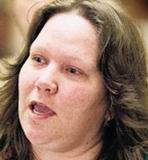
Barbara Opel
Murderer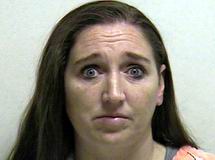 Megan Huntsman
Murderer · USA · 1996
Megan Huntsman was 40 at sentencing. She was a mother of three children who wer…
6 victims
Megan Huntsman
Murderer · USA · 1996
Megan Huntsman was 40 at sentencing. She was a mother of three children who wer…
6 victims
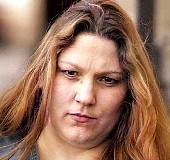 Angela Johnson
Murderer · USA · 1993
Angela Jane Johnson was convicted in federal court of aiding and abetting the m…
5 victims
Angela Johnson
Murderer · USA · 1993
Angela Jane Johnson was convicted in federal court of aiding and abetting the m…
5 victims
 Michele Kalina
Murderer · USA · 1996
Michele Kalina pleaded guilty to murder for one of five infants she initially w…
5 victims
Michele Kalina
Murderer · USA · 1996
Michele Kalina pleaded guilty to murder for one of five infants she initially w…
5 victims
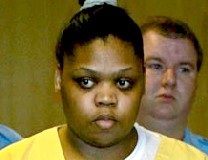 Tiffany Hall
Murderer · USA · 2006
Tiffany Hall was 24 when she was charged in September 2006. She later entered a…
5 victims
Tiffany Hall
Murderer · USA · 2006
Tiffany Hall was 24 when she was charged in September 2006. She later entered a…
5 victims
 Banita Jacks
Murderer · USA · 2007
Banita Jacks was a Washington, DC resident convicted of murdering her four daug…
4 victims
Banita Jacks
Murderer · USA · 2007
Banita Jacks was a Washington, DC resident convicted of murdering her four daug…
4 victims
 Holly Grigsby
Murderer · USA · 2011
Holly Grigsby was sentenced to life in prison without parole on July 15, 2014.…
4 victims
Holly Grigsby
Murderer · USA · 2011
Holly Grigsby was sentenced to life in prison without parole on July 15, 2014.…
4 victims
 Eric Robert
Murderer · USA · 2011
Eric Robert Eric Robert was sentenced to death and later executed by lethal inj…
1 victim
Eric Robert
Murderer · USA · 2011
Eric Robert Eric Robert was sentenced to death and later executed by lethal inj…
1 victim
 Michael Lupo
Serial killer · United Kingdom · 1986
Michael Lupo was a former choir boy in his native Italy. He served in an Italia…
4 victims
Michael Lupo
Serial killer · United Kingdom · 1986
Michael Lupo was a former choir boy in his native Italy. He served in an Italia…
4 victims
 Darick Walker
Homicide · USA · 1996
Darick Demorris Walker was convicted of capital murder for the killings of two…
2 victims
Darick Walker
Homicide · USA · 1996
Darick Demorris Walker was convicted of capital murder for the killings of two…
2 victims
 Thayne Archibald
Murderer · USA · 1959
Thayne Archibald was executed at the Nevada State Prison on August 23, 1961. He…
1 victim
Thayne Archibald
Murderer · USA · 1959
Thayne Archibald was executed at the Nevada State Prison on August 23, 1961. He…
1 victim
 Joel Dale Wright
Murderer · USA · 1983
Joel Dale Wright was sentenced to death on September 23, 1983 after a jury conv…
1 victim
Joel Dale Wright
Murderer · USA · 1983
Joel Dale Wright was sentenced to death on September 23, 1983 after a jury conv…
1 victim
 Cynthia Galens
Murderer · USA · 2009
Cynthia Galens was convicted in Ontario County Court of first-degree manslaught…
1 victim
Cynthia Galens
Murderer · USA · 2009
Cynthia Galens was convicted in Ontario County Court of first-degree manslaught…
1 victim
- Gender
- female
- Country
- USA
- Location
- Snohomish County, Washington , USA
- Date of birth
- 1963
- Age at first offence
- 38
- Characteristics
- murder-for-hire, motive unknown
- Victim profile
- Jerry Duane Heimann, 64
- Method of murder
- Beating with baseball bats - Stabbing with knifes
- Date(s) of murder
- April 13, 2001
- Years active
- 2001
- Date of arrest
- —
- Status
-
Life imprisonment
Sentenced to life in prison without parole on April 24, 2003
Case record: Barbara Opel
Background
Barbara Opel was convicted of murdering a 64-year-old man with terminal cancer in 2001 and she was serving a life sentence without parole.
Jerry Heimann was 64 years old and had terminal cancer. Heimann lived with his 89-year-old mother, whom Opel cared for. Opel lived with Heimann and his mother while her three children lived in the home.
Prosecutors alleged that Opel recruited and paid five teenagers, including her own 13-year-old daughter, to kill Heimann.
Prosecutors alleged that Opel’s motive was financial gain connected to Heimann’s money. The amount described as being targeted included $40,000 and $41,000.
People
- Barbara Opel — defendant; live-in caretaker for Jerry Heimann and caregiver for his 89-year-old mother; recruited and paid five teenagers to kill Heimann.
- Jerry Heimann (Heimann) — victim; 64 years old; terminal cancer.
- Jerry Heimann’s 89-year-old mother — victim’s relative; witnessed the crime and was found abandoned in the house; ate newspapers.
- Heather Opel — Opel’s daughter; 13 years old at the time of the slaying; convicted and sentenced to 22 years in prison.
- Bill Opel — Heather Opel’s father; Opel’s ex-husband; divorced Barbara Opel in 1990; later stopped trying to pursue custody and visitation.
- Greg Heimann — Jerry Heimann’s son; testified in Opel’s trial as a witness.
- Kyle Boston — teenager; 14 years old; pleaded guilty to second degree murder; sentenced to 18 years.
- Marriam Oliver — teenager; 14 years old; convicted; sentenced to 22 years.
- Jeffrey Grote — teenager; 17 years old; Heather Opel’s boyfriend at the time of the attack; pleaded guilty to first degree murder; sentenced to 50 years.
- Boston’s cousin (Mike Boston) — teenager; 13 years old; tried as a juvenile; held in juvenile detention until he was released at 21.
- Peter Mazzone — Opel’s defense attorney.
- Brian Phillips — Opel’s defense attorney.
- Judge Gerald Knight — judge who sentenced Opel to life in prison without parole.
- Chris Dickinson — deputy prosecuting attorney.
- George Appel — prosecutor.
- Sally Toffic — one of the jurors in Opel’s penalty decision.
- Christine Wintch — alternate juror in Opel’s case.
- Colleen Muller — daughter of the victim; confronted Opel at sentencing.
- Greg Heimann — victim’s son; confronted Opel at sentencing with abuse directed at her.
- Mary Lou Cannon — Heimann’s ex-wife.
- Megan Slaker — former neighbor who described praying for Opel’s children.
- Shirley McGee — Opel’s sister.
- Lane Erickson — coach who testified about Heather Opel.
- Jim McNally — former principal of Heather Opel.
- Bill Opel’s current wife — not named beyond description as his current wife.
- Marysville Skate Inn owner Dianne Groves — described events at the skating rink involving Grote and the Opels.
- Detectives — investigators who traced spending and unraveled the scheme.
The offence
On the evening of April 13, 2001, five teenagers ambushed Jerry Heimann as he stepped into his home in Everett, Washington.
Heimann was attacked with baseball bats and knives. The group took turns stabbing Heimann and he was beaten with baseball bats described as a Louisville slugger and souvenirs from the Seattle Mariners. The assault became fatal.
After the killing, the teenagers transported Heimann’s body and dumped the remains in a shallow grave about ten miles from Heimann’s house. His body was found wrapped in sheets on the Tulalip Indian reservation. Acid had been poured on the body in an attempt to prevent identification.
Authorities described Opel as hiding in the basement during the attack and calling out encouragement to the teens while they attacked Heimann.
According to authorities, Opel brought her two smaller children upstairs to help clean up the blood. She instructed her younger children, ages 7 and 11, to help mop up his blood, and the body was wrapped in sheets. The family then drove to a remote site on the Tulalip reservation to dump the remains.
According to trial-related descriptions, after Heimann’s death the teenagers were paid and Opel allegedly used Heimann’s money and credit cards to support a spending spree, including dinner and accommodations at the Rodeway Inn, which was charged to Heimann’s credit card.
Prosecutors said the killing was planned and that Opel had incited and paid teenagers to murder Heimann.
Investigation
Investigators traced the spending spree connected to Heimann’s money and credited cards to Opel, and the scheme was unraveled after detectives identified the involvement of Opel and the teenagers.
After Heimann was killed, police described a scheme in which valuables were taken and a truck was rented using Heimann’s checkbook by a 38-year-old Everett woman, Barbara Opel.
Arrest / custody
Opel was being held without bail.
One article described Opel as being in custody at Snohomish County Jail.
Trial
Opel was charged with aggravated first-degree murder for hiring and inciting five teenagers, including her daughter, to kill Jerry Heimann.
During the trial, prosecutors portrayed Opel as the mastermind who recruited teenagers from broken homes and swayed them to do her bidding. Prosecutors said the motive was the $40,000 Heimann made from the sale of a house.
Defense attorneys portrayed Opel as a victim of circumstance. The defense argued the principal blame belonged to Jeffrey Grote, Heimann’s daughter’s boyfriend, and the defense portrayed Heimann as ill-tempered and too fond of alcohol.
In Opel’s testimony at her own trial in 2003, she said it was the teens who wanted Heimann dead and claimed she only wanted him hurt. She testified:
"I guess I thought that if Jerry got beat up bad he deserved it," she said.
Defense counsel sought to portray the killing as not murder-for-hire.
During the trial, prosecutors presented a confession tape and evidence, and jurors later discussed that those who wanted life were not moved despite repeatedly listening to Opel’s confession tape and reviewing the evidence.
Sentencing
A jury decided that inciting five teenagers to murder her boss was not enough to make Opel the first woman on Washington’s death row. After seven hours of deliberation, the jury could not reach a unanimous sentencing agreement for death.
Because of the deadlock, Opel received a sentence of life in prison without the possibility of parole.
On April 24, 2003, Judge Gerald Knight sentenced Opel to life in prison without parole.
At sentencing, Colleen Muller looked at Opel and said:
"I hope you rot in hell."
Heimann’s family lamented Heimann’s death and heaped abuse on Opel, calling her "a monster" and "an evil piece of trash."
Judge Knight recommended that Opel have no contact with her three children, including Heather, and the judge stated:
"Your fundamental right of seeing your children is lost when you do to your children what Barbara did to hers."
Judge Knight also sentenced Opel to additional terms: 12 months for abandoning Heimann's mother and five months for theft.
Opel declined to speak at her sentencing.
Appeals / co-defendants
All five teenagers were convicted of murder in connection with the killing of Jerry Heimann and they received various sentences:
- Heather Opel (13 at time of slaying) pleaded guilty and was sentenced to 22 years in prison with no possibility of parole. In some descriptions, it was noted she would be released at age 35.
- Kyle Boston (14) pleaded guilty to second degree murder and was sentenced to 18 years.
- Jeffrey Grote (17) pleaded guilty to first degree murder and received a 50-year prison sentence.
- Marriam Oliver was sentenced to 22 years.
- Boston’s cousin (Mike) was tried as a juvenile and was held in juvenile detention until he would be released at 21.
A 2008 description also listed the co-defendants and their outcomes in a consolidated form.
Outcome
Opel was found guilty of aggravated first-degree murder and received life in prison without parole.
The jury did not unanimously agree to death, so Opel was spared the death penalty.
Aftermath / related proceedings
After her conviction, Opel was banned from any contact with her children and was not to be in the same prison as them in connection with the restrictions ordered at sentencing.
Opel’s daughter Heather was sent away and was described as joining Opel at a women’s correctional center once she turned 18, though sentencing restrictions were also described as banning contact.
During Opel’s sentencing confrontation, Colleen Muller and Greg Heimann lamented Heimann’s death and directed abuse toward Opel.
In the trial context, it was described that corrections officers led Opel out of the courtroom and she was asked if she had anything to say. Opel responded:
"I want to thank my attorneys, Pete Mazzone and Brian Phillips, for doing a wonderful job," she said.
Quotes and verbatim statements
Opel testimony (trial)
Sentencing confrontation
Judge Gerald Knight sentencing remark
"Your fundamental right of seeing your children is lost when you do to your children what Barbara did to hers," the judge said.
Opel’s response when asked about her attorneys
Other details
In opening statements, prosecutors alleged Opel had hatched at least four plots to kill her employer and solicited strangers, eventually swaying teenagers from broken homes. Prosecutors said Opel took them in, partied with them, and gave them a place to hang out.
A death sentence required unanimity; otherwise, Opel would be sentenced to life in prison.
One description mentioned a jury penalty phase where the prosecution’s case was limited to facts of the case, the defendant’s criminal record, and testimony from victims, with a defense presenting more than 20 witnesses.
One description said Opel was being held in a facility where center staff would not allow another form of contact due to being “dangerous,” and it included statements attributed to Heather Opel about life inside the detention center, anti-depressants, and her fear about sentencing.

Spotted an error, or have more information about this case?