
James Harrison
Murderer Brian Kevin Rosenfeld
Murderer · USA · 1985
Brian Kevin Rosenfeld Brian Kevin Rosenfeld was sentenced to three concurrent l…
23 victims
Brian Kevin Rosenfeld
Murderer · USA · 1985
Brian Kevin Rosenfeld Brian Kevin Rosenfeld was sentenced to three concurrent l…
23 victims
 Yahweh ben Yahweh
Murderer · USA · 1980
Yahweh ben Yahweh was born and legally named Hulon Mitchell Jr. (October 27, 19…
23 victims
Yahweh ben Yahweh
Murderer · USA · 1980
Yahweh ben Yahweh was born and legally named Hulon Mitchell Jr. (October 27, 19…
23 victims
 Russell Ellwood
Murderer · USA · 1991
Russell Ellwood was a former taxi driver. Authorities suspected him of killing…
20 victims
Russell Ellwood
Murderer · USA · 1991
Russell Ellwood was a former taxi driver. Authorities suspected him of killing…
20 victims
 Robert Martines Perez
Murderer · USA · 1994
Name: Robert Martines Perez · Other name used in proceedings: Robert Martinez P…
15 victims
Robert Martines Perez
Murderer · USA · 1994
Name: Robert Martines Perez · Other name used in proceedings: Robert Martinez P…
15 victims
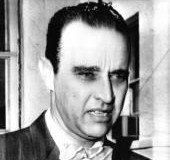 Joseph Peel
Murderer · USA · 1955
Joseph Alexander Peel was sentenced to two life terms in prison on March 30, 19…
2 victims
Joseph Peel
Murderer · USA · 1955
Joseph Alexander Peel was sentenced to two life terms in prison on March 30, 19…
2 victims
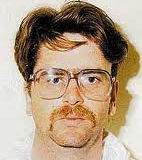 Shaun Anthony Armstrong
Murderer · United Kingdom · 1994
Shaun Anthony Armstrong was sentenced to life imprisonment on July 28, 1995. Sh…
1 victim
Shaun Anthony Armstrong
Murderer · United Kingdom · 1994
Shaun Anthony Armstrong was sentenced to life imprisonment on July 28, 1995. Sh…
1 victim
 Cory Gregory
Homicide · USA · 2005
January 21, 2005 — Cory Gregory and Sarah Kolb killed Adrianne Reynolds in Sara…
1 victim
Cory Gregory
Homicide · USA · 2005
January 21, 2005 — Cory Gregory and Sarah Kolb killed Adrianne Reynolds in Sara…
1 victim
 Robert Alan Shields
Murderer · USA · 1994
Robert Alan Shields Jr. was convicted of capital murder and sentenced to death…
1 victim
Robert Alan Shields
Murderer · USA · 1994
Robert Alan Shields Jr. was convicted of capital murder and sentenced to death…
1 victim
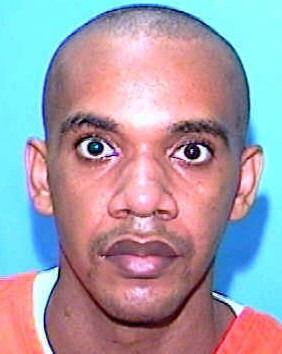 Carlton Francis
Murderer · USA · 1997
Carlton Francis was a neighbor of twin sisters Claire Brunt and Bernice Flegel.…
2 victims
Carlton Francis
Murderer · USA · 1997
Carlton Francis was a neighbor of twin sisters Claire Brunt and Bernice Flegel.…
2 victims
- Gender
- male
- Country
- USA
- Location
- Posey County, Indiana, USA
- Date of birth
- November 9, 1949
- Age at first offence
- 40
- Characteristics
- arson, rape
- Victim profile
- Stacey Forsee, 20 (acquaintance) and her children Tia Forsee, 3, and Jordan Hanmore, 21 months
- Method of murder
- St abbing with knife - F ire
- Date(s) of murder
- January 17, 1989
- Years active
- 1989
- Date of arrest
- —
- Status
-
Sentenced to death
Sentenced to death on December 14, 1991
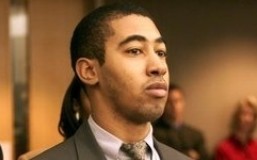
Case record: James Harrison
STATUS
James P. Harrison was sentenced to death on December 14, 1991.
The offence
On January 17, 1989, the bodies of 20-year-old Stacy Forsee and her children Tia (3 1/2 years) and Jordan (21 months) were found among the ruins of the family’s charred home. Stacy Forsee had been stabbed; the children had died as a result of the fire.
James P. Harrison was convicted of the murders of Stacy Forsee and her two children. He was sentenced to death.
Charges and procedural history
Mr. Harrison was charged with arson, with the knowing murders of Stacy and Tia, and with the felony murder of Jordan. Charges were filed in Posey Circuit Court.
Counsel was appointed for Mr. Harrison, and trial was set for January 6, 1992, before Judge James Redwine.
During the course of preparations for Mr. Harrison’s trial, defense counsel learned through depositions that, not long before Forsee was killed, she had told officers of the Indiana State Police (“ISP”) that she feared for her life. She told Detectives Gary Gilbert and Larry Rhoades that she was being followed by a man in a suspicious van, that she had information about drug activity in Posey County involving her ex-boyfriend, Charles Hanmore, and another individual, Roger Greathouse, and that Judge Redwine had been present at Greathouse’s home when drugs were being unloaded on Greathouse’s property.
Based on this information, one defense theory was that members of the local drug community, rather than Mr. Harrison, had targeted Forsee because of her knowledge of drug activity.
Investigation and evidence
An investigation that lasted more than two years preceded Mr. Harrison’s charging.
During the change-of-judge hearing, Detective Rhoades testified that, in 1988, Forsee had reported to the police that Judge Redwine was a person who was aware of drug activity. A tape recording of this interview had been made but subsequently had been misplaced. Detective Rhoades also testified that he could not investigate allegations involving public officials without first securing approval from the Superintendent of the ISP, and that someone recently had made a request to conduct an investigation.
During the change-of-judge hearing, Detective Gilbert testified that he had been present during the interview with Stacy Forsee. During Detective Gilbert’s testimony, Judge Redwine interjected clarifications and questions into the examination.
Arrest
The case record did not describe an arrest.
Trial
Mr. Harrison’s murder trial began on November 6, 1991.
There was evidence admitted that, before the fire trucks arrived, Harrison had been observed near the scene of the fire on the night of the murders. Evidence was also presented that he had purchased kerosene days before the murders and that a flammable liquid had started the fire.
Evidence was presented that Mr. Harrison had informed fellow inmates in a Maryland jail that he had committed the crimes.
The jury acquitted Mr. Harrison of Forsee’s murder but found him guilty of the remaining counts.
The jury recommended that Mr. Harrison be sentenced to death for the murders of both of Forsee’s children. The trial court imposed the death sentence for both counts.
After trial, Judge Redwine refused to compensate defense counsel for their work on the change-of-judge motion and on the mandamus action. He characterized these filings as “a completely false and meritless action for the sole purpose of delaying this trial.”
Defense counsel’s regular appointments from the Posey Circuit Court ended after Mr. Harrison’s trial.
Sentencing
The trial court imposed the death sentence for both counts involving the murders of Forsee’s children.
Mr.
Background and change-of-judge issue
In July of 1991, Judge Redwine was informed by the parties that his name had been mentioned “in conjunction with drug information” that Forsee had provided to the ISP. Judge Redwine indicated that he would not withdraw from the case.
On September 16, 1991, the defense moved for a change of venue from the judge. The motion alleged that Judge Redwine could not rule objectively on the admissibility of evidence pertaining to Forsee’s fear of Greathouse because of the possibility that the Judge’s name might be mentioned during the presentation of the evidence.
On the same day that the motion for a change of judge was filed, Judge Redwine telephoned Greathouse and shared with him the allegations in the motion. The judge requested that Greathouse attend the scheduled hearing.
Change-of-judge hearing: testimonial exchanges and judicial comments
Detective Rhoades testified during the hearing, and the record includes the following colloquy:
The Court: To your knowledge, has [Forsee] ever told anyone that I was at a party at Roger Greathouse's house.
Officer Rhoades: Not to my knowledge.
The Court: To your knowledge, has she ever told anyone that I had any knowledge of drug trafficking in this county.
Officer Rhoades: Just again, as I testified earlier, the information that she said Chuck Hanmore provided her with that you were aware of semi loads of marijuana.
The Court: And do you have any information that would corroborate any of those statements in anyway?
Officer Rhoades: No, I do not. ...
The Court: And at that time did you indicate to them [defense counsel] that Stacy Foresee [sic] had told you that I was at some party where drugs were?
Officer Rhoades: No, I did not.
The Court: You have never told anyone that she told you that?
Officer Rhoades: No.
The Court: And she did not tell you that?
Officer Rhoades: No, she did not.
The Court: Do you have any reason at all to believe I was at a party where drugs were?
Officer Rhoades: No, I don't.
Id. at 568-70.
Judge Redwine also reined in defense counsel and made multiple statements during the hearing. Detective Gilbert’s testimony included the following exchanges:
Defense Counsel: And in that interview did she tell you she had been to the FBI?
Officer Gilbert: It is my understanding that she did, or the FBI was mentioned some time during that interview.
Defense Counsel: And did she mention to you that after she had gone to the FBI this van had started following her?
The Court: She didn't say she had gone to the FBI. The officer said that she had just said that, or it was mentioned in the interview. Please make your questions specific. This is a very important matter, Mr. Warrum. I don't want you confusing the facts.
Id. at 575.
Later in the transcript, Judge Redwine stated: “She has not said, the witness has not said that she went to the FBI. The witness said he doesn't know for sure if she had been or said she was going.”
Judge Redwine admitted from the bench that the allegations contained in the motion reflected “upon the credibility of this Court,” and he reproved defense counsel for “act[ing] so irresponsibly” by not investigating the allegations more thoroughly.
Judge Redwine took judicial notice of records from a criminal case involving Forsee’s brother, over which he had presided, to establish that a factual basis supported the guilty plea.
He ordered records in Forsee’s son’s paternity action to be made public and played the tape of the paternity hearing to show that he had not been biased against Forsee. He called Forsee’s attorney (Ms. McFaddin-Higgins) in the paternity action as a witness to establish that the proceeding had been fair.
Judge Redwine had Forsee’s mother, brother, and former boyfriend (Charles Hanmore) sit in the courtroom and listen to McFaddin-Higgins’ testimony, despite a witness separation order.
Judge Redwine called Greathouse as a witness to testify that he had never known the Judge to be involved in drug activity.
Judge Redwine asked defense counsel if they were alleging that he had any motive to or did kill Forsee. He stated to defense counsel:
“These are serious allegations reflecting on the credibility of the court.... You have brought a lot of people's names up and dragged them through the mud. You have probably ruined a lot of people's lives and reputations....”
Id. at 610.
Judge Redwine ultimately denied the change-of-judge motion.
Mandamus action
After Judge Redwine denied the request, Mr. Harrison filed a mandamus action in the Supreme Court of Indiana to compel a change of judge.
The Supreme Court of Indiana denied relief without opinion.
Appeals and post-conviction proceedings
The convictions were affirmed on direct appeal to the Supreme Court of Indiana (Harrison v. State, 644 N.E.2d 1243 (Ind. 1995)), but the Supreme Court remanded to the trial court for the preparation of a capital sentencing order.
The trial court complied with the remand, and the imposition of the death sentence was affirmed by the state supreme court (Harrison v. State, 659 N.E.2d 480 (Ind. 1995)).
The state trial court subsequently denied Mr. Harrison’s petition for state post-conviction relief; the Supreme Court of Indiana affirmed the denial of relief (Harrison v. State, 707 N.E.2d 767 (Ind. 1999)).
Federal habeas corpus proceedings
After exhausting his state remedies, Mr. Harrison petitioned for a writ of habeas corpus in the district court.
The district court granted the writ. The State of Indiana appealed.
The case proceeded in the United States Court of Appeals for the Seventh Circuit, where the judgment was affirmed. The appeal was argued May 5, 2005 and decided October 27, 2005.
The district court limited its consideration to Mr. Harrison’s judicial bias claim among eleven claims raised in his federal habeas petition.
The judicial bias claim alleged that the circumstances surrounding Judge Redwine’s involvement created “a constitutionally intolerable risk of judicial bias such that the likelihood of bias or its appearance is so substantial as to create a conclusive presumption of actual bias.” It also asserted that Judge Redwine was actually biased against him and his lawyers.
The State of Indiana contended that Mr. Harrison had defaulted procedurally on the judicial bias claim for two reasons: that he had not presented it fairly to the state courts and that the Supreme Court of Indiana adjudicated it on an independent and adequate state procedural ground. The district court rejected both contentions.
The Seventh Circuit concluded that it did not have to decide which further facts beyond those involving the change-of-judge motion were fairly presented to the state supreme court, because the decision relied only on actions taken by Judge Redwine prior to the change-of-judge motion and during the hearing.
Other factual details cited in sentencing/mitigation and aggravation
The case record listed:
- Death Sentence (Tia)
- Death Sentence (Jordan)
Aggravating circumstances included:
- b(12) 2 victims less than 12 years old
- b(1) Arson (Jordan)
Mitigating circumstances included:
- wounded in Vietnam
- suffered emotional, physical and sexual abuse as a child
- 56 years old after remand
- evidence not overwhelming
Quotes and verbatim statements included in the record
- Judge Redwine characterized the defense filings as: “a completely false and meritless action for the sole purpose of delaying this trial.”
- Judge Redwine reproved defense counsel for: “act[ing] so irresponsibly.”
- Judge Redwine said the allegations reflected “upon the credibility of this Court.”
- Judge Redwine stated: “These are serious allegations reflecting on the credibility of the court.... You have brought a lot of people's names up and dragged them through the mud. You have probably ruined a lot of people's lives and reputations....”
- In the hearing transcript, Judge Redwine stated: “She has not said, the witness has not said that she went to the FBI.
Case caption and court details (as stated)
The case proceeded in the United States Court of Appeals for the Seventh Circuit:
- James P. Harrison, Petitioner-appellee, v. Daniel R. Mcbride, Superintendent, Respondent-appellant.
- Argued May 5, 2005. Decided October 27, 2005.
- Before FLAUM, Chief Judge, and RIPPLE and WILLIAMS, Circuit Judges.
- The court affirmed the judgment granting the writ of habeas corpus.
Spotted an error, or have more information about this case?