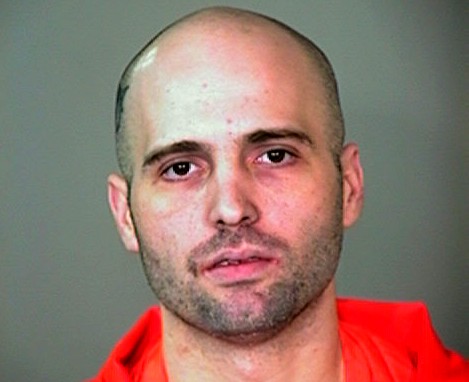
Shaun Anthony Armstrong
Murderer John Cooper
Murderer · United Kingdom · 1985
John Cooper was a serial killer from Milford Haven, Pembrokeshire. Cooper was c…
4 victims
John Cooper
Murderer · United Kingdom · 1985
John Cooper was a serial killer from Milford Haven, Pembrokeshire. Cooper was c…
4 victims
 Andrew Walker
Murderer · United Kingdom · 1985
Royal Scots corporal Andrew Walker killed three Army colleagues in a payroll ro…
3 victims
Andrew Walker
Murderer · United Kingdom · 1985
Royal Scots corporal Andrew Walker killed three Army colleagues in a payroll ro…
3 victims
 Anthony Smith
Murderer · United Kingdom · 2001
Anthony Smith was a former sergeant in the Coldstream Guards. He had left the C…
3 victims
Anthony Smith
Murderer · United Kingdom · 2001
Anthony Smith was a former sergeant in the Coldstream Guards. He had left the C…
3 victims
 David John Copeland
Murderer · United Kingdom · 1999
David John Copeland was born in Isleworth, in the London Borough of Hounslow, a…
3 victims
David John Copeland
Murderer · United Kingdom · 1999
David John Copeland was born in Isleworth, in the London Borough of Hounslow, a…
3 victims
 John Cannan
Murderer · United Kingdom · 1986
John Cannan Susannah “Suzy” Lamplugh was a British estate agent reported missin…
3 victims
John Cannan
Murderer · United Kingdom · 1986
John Cannan Susannah “Suzy” Lamplugh was a British estate agent reported missin…
3 victims
 Jaime Cole
Murderer · USA · 2010
Jaime Piero Cole was a Hispanic male who was 41 when received. He was recorded…
2 victims
Jaime Cole
Murderer · USA · 2010
Jaime Piero Cole was a Hispanic male who was 41 when received. He was recorded…
2 victims
 Matthew de Grood
Mass murderer · Canada · 2014
15 April 2014 — Matthew de Grood, an invited guest, stabbed five young adults a…
5 victims
Matthew de Grood
Mass murderer · Canada · 2014
15 April 2014 — Matthew de Grood, an invited guest, stabbed five young adults a…
5 victims
 Marjorie Orbin
Murderer · USA · 2004
Marjorie Orbin murdered her husband Jay Orbin in Phoenix, Arizona on or about S…
1 victim
Marjorie Orbin
Murderer · USA · 2004
Marjorie Orbin murdered her husband Jay Orbin in Phoenix, Arizona on or about S…
1 victim
 Arthur Paul Baird
Murderer · USA · 1985
Arthur Paul Baird II — defendant (appellant); husband of Nadine Baird; son of K…
3 victims
Arthur Paul Baird
Murderer · USA · 1985
Arthur Paul Baird II — defendant (appellant); husband of Nadine Baird; son of K…
3 victims
 Henry Lee Jones
Murderer · USA · 2003
Henry Lee “Bam” Jones grew up without a father in Cleveland, Miss. He grew up w…
4 victims
Henry Lee Jones
Murderer · USA · 2003
Henry Lee “Bam” Jones grew up without a father in Cleveland, Miss. He grew up w…
4 victims
 Peter Zimmer
Homicide · USA · 1983
Peter Zimmer pleaded no contest to the killings in 1983 and was found delinquen…
3 victims
Peter Zimmer
Homicide · USA · 1983
Peter Zimmer pleaded no contest to the killings in 1983 and was found delinquen…
3 victims
- Gender
- male
- Country
- United Kingdom
- Location
- Hartlepool, County Durham, England, United Kingdom
- Date of birth
- June 30, 1962
- Age at first offence
- 32
- Characteristics
- rape, mutilation
- Victim profile
- Rosie Palmer, 3
- Method of murder
- Undetermined
- Date(s) of murder
- June 30, 1994
- Years active
- 1994
- Date of arrest
- 3 days after
- Status
-
Life imprisonment
Sentenced to life imprisonment on July 28, 1995
Case record: Shaun Anthony Armstrong
Status
Shaun Anthony Armstrong was sentenced to life imprisonment on July 28, 1995.
Background
Shaun Anthony Armstrong was born on 30 June 1962 in Easington, County Durham. He moved in to a council-owned flat on Frederic Street in August 1993. He was unemployed and had a dependency on alcohol and prescription drugs. He had a long history of criminal activity and psychiatric problems, and he was widely disliked in the neighbourhood.
Armstrong was called “Tony the Pervert” on the estate. He was generally considered “a loner, disliked or distrusted by all those who knew him”.
Armstrong’s psychiatric history included a diagnosis of personality disorder and a psychopathic personality. He had been investigated in relation to sex offences against children, although he had never been charged.
Armstrong obtained the flat after his psychiatric consultant wrote a supporting letter to the Housing Department stating that he was “vulnerable”.
The offence
On 30 June 1994, Rosie Palmer, a three-year-old girl, was abducted, raped and murdered in Hartlepool, County Durham, England.
Rosie Palmer had been collected from nursery school by her stepfather, John Thornton, and was playing at a neighbour’s house in Henrietta Street, Hartlepool. At approximately 15:30, Gary Amerigo, the local ice cream vendor, arrived and Palmer went to ask Thornton if she could have money to buy an ice pop. She was the only customer. After serving her, the ice cream salesman left and continued his route.
Amerigo later said: “Only Rosie came up to my van that day. She didn't have enough money but I gave her the ice-cream anyway. She seemed just her usual self, bright and cheerful.”
Armstrong abducted Rosie as she walked away after making her purchase. Armstrong was celebrating his 32nd birthday that day.
It was approximately two hours before John Thornton realised Rosie was no longer at the neighbour’s or playing outside the house. Thornton and other local residents began searching the local area for Rosie. At 20:45, they reported her as a missing person to the police.
Police found Rosie’s partially clothed and mutilated body in a house 50 metres from her own on 3 July 1994. The occupant was Shaun Anthony Armstrong. Her shorts and underwear were found nearby in a separate bag, and her body was found in a bin liner inside an airing cupboard in Armstrong’s flat.
A post mortem examination determined Rosie was dead by 16:30. Pathologists were unable to give a specific cause of death due to the condition of her body.
Detective Superintendent Doug Smith told a news conference: “She had been severely sexually assaulted. That is a possible cause of death – the actual injury itself.”
Investigation
The police search operation was headed by Detective Superintendent Doug Smith of Cleveland Police and involved door-to-door inquiries, tracker dogs, and local volunteers.
Warehouses, industrial buildings, and disused buildings around the adjacent docks were searched. HM Coastguard, a police helicopter, and a Royal National Lifeboat Institution (RNLI) lifeboat searched the sea and shore.
Police first called at Armstrong’s flat on 1 July while conducting initial door-to-door inquiries during which residents were asked to answer a questionnaire aimed at tracing Rosie’s last movements. On 2 July, they returned while carrying out “cursory searches” of houses in the area. On 3 July, two detectives spoke to Armstrong and noticed his demeanour had changed from “co-operative, friendly and helpful” to “very shifty, on edge and looking very worried”. Acting on suspicion, the detectives arrested Armstrong and conducted a second search of his first-floor flat.
On 30 June 1994, at around 16:30, Armstrong called in at a local shop and said he was going to “help look for the little girl who had vanished”. At this time, Armstrong was the only person who knew she was missing.
The shopkeeper noticed blood on Armstrong’s hand. Armstrong said he had been bitten by his dog, despite the absence of any wound.
Armstrong then took his dog and a bottle of cider to the nearby beach and began running in and out of the sea for two hours until neighbours reported him to the police, who arrived and told him to go home.
Arrest and imprisonment
Armstrong was arrested on 3 July 1994.
He was charged with murder and remanded in custody to await trial at Leeds Crown Court.
Armstrong planned to feign mental illness and plead guilty to manslaughter on the grounds of diminished responsibility. However, while on remand he revealed this plan in a letter to Bernard O’Mahoney, who had posed as a woman in hope of getting a written confession from the killer. The letter was given to police and shown to the jury at Armstrong’s trial.
Armstrong changed his plea to guilty of murder.
Trial
Armstrong pleaded guilty to murder at Leeds Crown Court.
Armstrong was sentenced to life imprisonment on 28 July 1995 by Mr Justice Ognall.
The trial judge, Mr Justice Ognall, did not make any recommendation as to how many years Armstrong should serve before he could be considered for parole.
In a High Court ruling of May 2006, Mr Justice Crane set the minimum term to 16 years, “subject to a deduction of 12 months and 21 days for the period on remand”, meaning Armstrong was eligible for parole in July 2010.
On 9 May 2006, in relation to the minimum term, Mr Justice Crane said: “Having regard to all the relevant factors I conclude that the minimum term should be 16 years, as was the tariff set, subject to a deduction of 12 months and 21 days for the period on remand.”
Mr Justice Crane also stated Rosie had been subjected to “gross violation” and that she “had almost certainly died because Armstrong suffocated her when she cried out at the assault”.
Mr Justice Crane said: “The minimum term would likely to have been 28 years and six months on today's principles and even if greater weight was given to his mental state, a term of not less than 25 years would be inevitable. But he said: "The minimum term was not open to criticism on the principles that applied at the time."”
Sentencing
Armstrong was sentenced to life imprisonment on 28 July 1995.
Mr Justice Crane’s May 2006 ruling set the minimum term at 16 years, subject to deduction of 12 months and 21 days for the period on remand.
Appeals
No appeal outcome was described regarding the conviction or sentence.
Aftermath
A report in the psychiatric care given to Armstrong was published in June 1996. The local Health Authority criticised the standard of care as “inadequate and full of shortcomings”, but added that Rosie Palmer’s murder “could not have been predicted”.
In June 1997, Rosie’s mother Beverley launched a £200,000 compensation claim against Tees health authority and Hartlepool and East Durham NHS trust, alleging negligence for allowing Armstrong to be released from their care.
The claim was struck out in February 1998 by High Court official Master Hodgson, who ruled that Armstrong had made no direct threat against Rosie and her family. Master Hodgson said: “In the absence of such a specific threat I think it is impossible, as the law currently stands, for me to hold that the hospital in these circumstances owes effectively a duty (of care) to the world at large.”
In June 1999 the case was heard again at the Court of Appeal. On 1 July 1999, Lord Justice Stuart-Smith upheld the previous High Court ruling that there was no connection between the health authority or the hospital and Rosie.
In September 2001, Armstrong returned to the headlines when he was granted Legal Aid to pursue a £15,000 compensation claim against Bernard O’Mahoney for “breach of confidence”. Armstrong’s solicitors claimed that O’Mahoney had pretended to be a woman and allowed police to see a written statement (the letter in which Armstrong admitted to killing Rosie Palmer and his plan to feign mental illness) which was supposed to be kept secret.
The case was dropped in June 2002 after Armstrong decided he no longer wanted to pursue O’Mahoney for damages. Armstrong also dropped his bid to prevent O’Mahoney from publishing a book, Flowers in God's Garden, which included a section about Shaun Armstrong and the Rosie Palmer murder.
In March 2010, with Armstrong’s earliest possible release date just four months away, Rosie Palmer’s mother Beverley Yates oversaw the launch of a campaign in Hartlepool for Shaun Armstrong to be placed on the sex offender’s register when and if he was paroled. It was stated that as the law stood he would not go onto the register once released because he was not convicted of a sexual offence. Councillor Kevin Kelly warned that community feelings about the case were still very strong and said: “If he ever came back here he would be lynched.”
Armstrong was under a hospital’s care since March 1992 and re-housed on the council estate where Rosie lived. He would be able to apply for parole in June 2010, and would only be released if a parole board was satisfied he no longer posed any risk to the public.
Chronological history of Shaun Anthony Armstrong
- 30.6.62 — Shaun Anthony Armstrong was born at the Littlethorpe Maternity Hospital in Easington, County Durham, to Rachael Teal, who was then unmarried and aged eighteen years; his father was Joseph James Steel.
- about age of 14 — Rachael Teal had psychiatric problems from which she had apparently suffered from about the age of fourteen.
- for the first three years of his life — Shaun Armstrong was brought up by his maternal grandparents.
- When Shaun Armstrong was three years old — his mother married George Armstrong, fifteen years older than herself, and Shaun Armstrong was brought up believing that he was the son of George Armstrong.
- 1969 — Andrew Christopher Steel was killed in a road accident when both children were aged seven years; the event had a profound effect on Armstrong and led to an immediate deterioration in his behaviour.
- 1969 — Armstrong said: “I became a bastard. I became hateful and got mad at everyone”.
- after Andrew Steel’s death — Armstrong was referred to a Child Psychologist and possibly a Psychiatrist (no further details of the referrals were available).
- about one month after Andrew Steel’s death — when Armstrong was aged seven years and two months, he was subjected to inappropriate sexual behaviour by his mother.
- until he was thirteen — the inappropriate sexual behaviour continued.
- from age thirteen to sixteen — the behaviour progressed to full sexual intercourse, which took place on an intermittent basis until he was sixteen.
- 1974 — Armstrong’s mother and stepfather finally separated when Armstrong was twelve years old.
- 1973 — Armstrong attended Easington Secondary Modern School.
- 1976 (aged fourteen) — Armstrong attended the Nautical School at Campden Square, Seaham, and stated he did well academically passing five “O” Levels and two CSE’s in Seamanship and Navigation.
- 25.2.1978 — Dr MR Whalley, consultant Child Psychiatrist, wrote a letter to Armstrong’s GP referring to contact with Durham Joint Child Guidance Services; Armstrong had been referred on account of overt sexual advances made towards his mother; Dr Whalley reassured the mother but considered Armstrong “was a very disturbed boy”; Dr Whalley stated there was a suggestion that Armstrong required psychotherapy.
- 23.7.1978 — Armstrong enlisted for Naval training at Plymouth aged sixteen.
- 2.8.1978 — Armstrong appeared before Easington Juvenile Court and was convicted of offences of dishonesty, receiving a two year Supervision Order.
- 17.11.1978 — Armstrong was discharged from the Navy on the grounds that he was psychologically unfit.
- 13.3.1979 — Easington Juvenile Court; convicted of offences of Burglary and Theft and given a two year Supervision Order.
- June 1981 — Armstrong left home at eighteen to marry CBM, born on the 30th December 1954.
- 28.1.1982 — Easington Magistrates Court; convicted of two offences of Theft and given a 120 Hour Community Service Order.
- 1982 — Armstrong’s marriage to CBM broke down.
- 1982 — Armstrong took an overdose of mother’s Parnate and admitted to St Hilda’s Hospital, Hartlepool for two days.
- 18.8.1983 — Easington Magistrates Court; obtaining by deception; fined £100.
- 17.11.1983 — Easington Magistrates Court; three offences of dishonesty; sentenced to three months imprisonment suspended for two years.
- 18.5.1984 — Divorce proceedings initiated by CBM; Armstrong inflicted cuts to both of his arms and was admitted to St Hilda’s Hospital, Hartlepool.
- 31.5.1984 — Easington Magistrates Court; four offences of dishonesty; sentenced to three months imprisonment.
- November 1984 — Armstrong met EJA, a friend of his mother’s, seventeen years older than Armstrong, with alcohol problems.
- 4.12.1984 — Easington Magistrates Court; one offence of Assault Occasioning Actual Bodily Harm (to his mother) and five offence of dishonesty; Community Service Order for 160 hours.
- 1985 — Armstrong was referred by his GP to St Hilda’s Hospital in Hartlepool because of depression; he was discharged with no out-patient follow up.
- 18.6.1985 — Easington Magistrates Court; two offences of dishonesty; sentenced to three months imprisonment.
- 12.5.1986 — Teesside Crown Court; three offences of dishonesty; sentenced to two years imprisonment.
- 25.3.1988 — Teesside Crown Court; one Criminal Damage and four offences of Dishonesty; sentenced to 21 months imprisonment.
- September 1988 — Armstrong was released on parole to February 1989.
- 18.10.1988 — Armstrong married EJA.
- October 1989 — Armstrong’s mother was diagnosed as suffering from malignant melanoma and Armstrong’s paternity was disclosed, including that the relationship with his mother’s father occurred from when she was twelve to seventeen years old when she became pregnant with Armstrong.
- 28.2.1990 — Armstrong’s mother died; Armstrong declined to attend her funeral.
- 28.3.1990 — Armstrong was seen at Peterlee Health Centre by Dr F Gowans, a Clinical Psychologist from Hartlepool.
- 4.4.1990 — Armstrong failed to attend follow up appointment with Dr Gowans.
- 28.6.1990 — Peterlee Magistrates Court; fined £50 for Public Order Act offence and £10 for Theft.
- July 1991 — Armstrong attended Alcoholics Anonymous.
- 13.8.1991 — Peterlee Magistrates Court; fined £100 for Theft.
- March 1992 — Armstrong was assaulted by stepson KA.
- 20.3.1992 — First admission to Ward 15 of Hartlepool General Hospital after a telephone request from his GP Dr Pearson.
- 24.3.1992 — Armstrong’s consultant advised Armstrong he could stay in hospital for a short while until his marital problems were resolved.
- 3.4.1992 — Armstrong stated he felt unable to return to live with his current wife EJA and was exploring the possibility of taking a bedsit in Hartlepool.
- 6.4.1992 — Social Worker contacted regarding Armstrong’s housing problem; an interview was arranged for Armstrong to go and look at Benedict House at Park Road, Hartlepool.
- 7.4.1992 — Armstrong was discharged from Hospital; diagnosis of personality disorder was recorded.
- 29.11.1992 — Armstrong’s stepdaughter (B) alleged that she and her sister had been sexually abused as children by Armstrong and that Armstrong had subsequently abused her daughter (C).
- 29 & 30.11.1992 — Joint interviews took place between the Police, Social Workers and the child (C); no further protection issues were found by the Social Services Department because no contact was to be allowed between Armstrong and the child (C).
- 29.11.1992 — Armstrong’s second admission to Ward 15 of Hartlepool General Hospital.
- 30.11.1992 — Armstrong was seen by his consultant who diagnosed “Personality problem with addiction problems”.
- 1.12.1992 — Armstrong asked to see a Social Worker as he was separated from his wife and homeless.
- 4.12.1992 — Consultant mentioned discharge from Hospital; Armstrong became very threatening, threatened to walk under a bus, and talked about nightmares about when he was in the Navy and had killed a man.
- 7.12.1992 — Discharge from Hospital; follow up was impossible because of lack of address.
- 11.1.1993 — Consultant carried out Domiciliary Visit at Armstrong’s Wingate home in relation to Armstrong’s drinking problems; he wrote to Armstrong’s GP describing him as suffering from Psychopathic Personality.
- 11.2.1993 — Armstrong failed to attend Out Patient Clinic.
- 8.3.1993 — Police interviewed Armstrong about allegations made on 29.11.1992 by his stepdaughter (B); he totally denied the allegations and police decided to take no further action.
- 12.3.1993 — Armstrong admitted to Hartlepool General Hospital Ward 7; he stated he was of no fixed abode and had taken an overdose following the curtailment of a relationship.
- 4.12.1992 — Consultant mentioned discharge from Hospital; (date repeated in the chronology as provided).
- 5.5.1993 — Armstrong admitted to Medical Ward 5 after an overdose following an argument with his girlfriend CA.
- 6.5.1993 — Armstrong discharged from Hospital with no forwarding address.
- 5.6.1993 — Armstrong admitted to Medical Ward 5 in a deeply unconscious state following a serious overdose of at least 28 Noctec and 28 Temazepam.
- 15.6.1993 — Consultant wrote to Homeless Section at Hartlepool Civic Centre supporting Armstrong’s application for Council accommodation.
- 21.6.1993 — Armstrong discharged; he stated he would contact the unit with a forwarding address.
- 22.7.1993 — Peterlee Magistrates Court; fined £60 for Theft.
- 12.8.1993 — Armstrong attended Out-Patients Clinic.
- August 1993 — Armstrong moved to 51 Frederick Street, Hartlepool, an upstairs Council flat.
- 28.10.1993 — Attending Out-Patients Clinic.
- 3.2.1994 — Attended Out-Patients Clinic.
- 5.5.1994 — Failed to keep Out-Patients appointment.
- 30.6.94 — Rosie Palmer was murdered.
- 3.7.1994 — Armstrong was arrested.
- 27.7.1995 — Armstrong pleaded Guilty at Leeds Crown Court to Murder and was sentenced to Life imprisonment by Mr Justice Ognall.
Other details
Armstrong’s abduction occurred as Rosie walked away after buying an ice pop from an ice cream van outside her home in Hartlepool.
Armstrong was described as drunk “for two days solid, partying for [his] birthday, at different people's houses and pubs and clubs”.
Armstrong was reported to have been under a hospital’s care since March 1992 and had been re-housed on the council estate where Rosie lived.
It was stated that the psychiatric care issues were highlighted by a report published in June 1996 and by later compensation litigation.
A March 2010 campaign was launched for Armstrong to be placed on the sex offender’s register when and if he was paroled, with the statement that he would not go onto the register because he was not convicted of a sexual offence.
Armstrong’s first solicitor appointed to represent him withdrew from the case, stating: “I have my staff to think about.”
Before Rosie’s murder, in March 1993 a social worker warned that Armstrong was “likely to be a risk to any child he comes into contact with”, and Durham County Council failed to act on the report.
During the police search operation, police first called at Armstrong’s flat on 1 July and returned on 2 July, then on 3 July two detectives spoke to Armstrong, arrested him, and conducted a second search of his flat where Rosie’s body was found.
Armstrong’s mother, when she became pregnant with Armstrong, had been described as having an incestuous relationship with her own father from when she was twelve to seventeen years old.

Spotted an error, or have more information about this case?