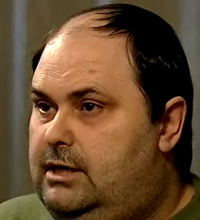
Nelson Hart
Murderer James Roszko
Murderer · Canada · 2005
James Roszko was a Canadian man operating a hydroponic marijuana grow-op in Roc…
4 victims
James Roszko
Murderer · Canada · 2005
James Roszko was a Canadian man operating a hydroponic marijuana grow-op in Roc…
4 victims
 Angelo Colalillo
Murderer · Canada · 1993
Angelo Colalillo was suspected of committing serial sexual assaults and murders…
3 victims
Angelo Colalillo
Murderer · Canada · 1993
Angelo Colalillo was suspected of committing serial sexual assaults and murders…
3 victims
 Derek Jensen
Murderer · Canada · 2011
Derek Jensen was the ex-boyfriend of Tabitha Stepple. Jensen had encountered St…
3 victims
Derek Jensen
Murderer · Canada · 2011
Derek Jensen was the ex-boyfriend of Tabitha Stepple. Jensen had encountered St…
3 victims
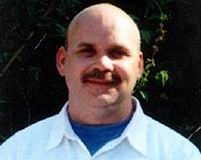 Douglas Donald Moore
Murderer · Canada · 2003
Douglas Donald Moore died of an apparent suicide in a cell at the Maplehurst De…
3 victims
Douglas Donald Moore
Murderer · Canada · 2003
Douglas Donald Moore died of an apparent suicide in a cell at the Maplehurst De…
3 victims
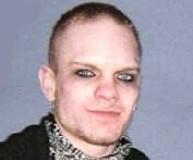 Jeremy Steinke
Murderer · Canada · 2006
Jeremy Allan Steinke was sentenced to three life sentences on December 15, 2008…
3 victims
Jeremy Steinke
Murderer · Canada · 2006
Jeremy Allan Steinke was sentenced to three life sentences on December 15, 2008…
3 victims
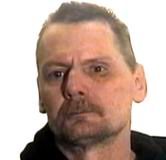 Shawn Lamb
Murderer · Canada · 2011
Shawn Cameron Lamb was 54 at sentencing. He was described as a chronic drug add…
3 victims
Shawn Lamb
Murderer · Canada · 2011
Shawn Cameron Lamb was 54 at sentencing. He was described as a chronic drug add…
3 victims
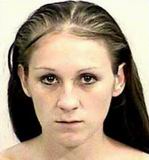 Brandy Lee Rose Devine
Murderer · USA · 2012
Brandy Lee Rose Devine was a 25-year-old mother accused in connection with the…
1 victim
Brandy Lee Rose Devine
Murderer · USA · 2012
Brandy Lee Rose Devine was a 25-year-old mother accused in connection with the…
1 victim
 Robert Joe Wagner
Serial killer · Australia · 1992
Robert Joe Wagner (born 28 November 1971 in Parramatta, New South Wales) was an…
10 victims
Robert Joe Wagner
Serial killer · Australia · 1992
Robert Joe Wagner (born 28 November 1971 in Parramatta, New South Wales) was an…
10 victims
 Joe Morgan
Murderer · USA · 1946
Joe Morgan (10 April 1929 – 9 November 1993) was described as “the Godfather” o…
2 victims
Joe Morgan
Murderer · USA · 1946
Joe Morgan (10 April 1929 – 9 November 1993) was described as “the Godfather” o…
2 victims
 David Gore
Serial killer · USA · 1981
David Alan Gore (also known as DAVID A GORE, DAVID ALAN GORE, DAVID ALLAN GORE)…
6 victims
David Gore
Serial killer · USA · 1981
David Alan Gore (also known as DAVID A GORE, DAVID ALAN GORE, DAVID ALLAN GORE)…
6 victims
- Gender
- male
- Country
- Canada
- Location
- Gander Lake, Newfoundland, Canada
- Date of birth
- 1968
- Age at first offence
- 34
- Characteristics
- parricide
- Victim profile
- His three-year-old twin daughters, Karen and Krista Hart
- Method of murder
- Drowning
- Date(s) of murder
- August 4, 2002
- Years active
- 2002
- Date of arrest
- June 13, 2005
- Status
-
Life imprisonment
Sentenced to life in prison with no parole eligibility for 25 years on March 28, 2007
Case details
Nelson Hart (born c 1968) was a Newfoundland, Canada resident. He lived with his wife, Jennifer, and twin daughters, Karen and Krista, in the relatively isolated town of Grand Falls-Windsor, Newfoundland, Canada.
The offence
Nelson Hart was convicted of murdering his twin daughters, Karen and Krista, in 2002.
On August 4, 2002, Hart and his daughters traveled to the near-by area of Little Harbour on Gander Lake. After they traveled, Hart returned home in a panic and said that Krista had fallen in the lake. Hart returned to Gander to get help. When police arrived, Karen was dead and Krista was unconscious. Krista was taken off life support the next day.
Background
Nelson Hart lived with his wife, Jennifer, and twin daughters, Karen and Krista, in Grand Falls-Windsor, Newfoundland, Canada.
Tammy Leonard, a social worker working with the Hart family in the months leading up to the death of the twins, testified that the Harts had chronic financial problems and were on social assistance. There was consideration by social workers to remove the children from the family before they moved in with Jennifer Hart's father.
In June 2002, the family found themselves homeless again, and the possibility of the children's removal was revisited. By mid-summer, the Hart family was living in an apartment and receiving regular visits from a new social worker, Carolyn Chard. Chard testified that Nelson appeared increasingly angry with her presence. At no time did either social worker think that Hart posed any danger to his children.
The prosecution argued that Hart—who was a welfare recipient living in stark poverty—feared having his daughters taken by child protection workers. The jury was told that social workers had twice planned to apprehend the children on grounds that Hart and his wife were not able to provide food and shelter for the children. The court also heard that social workers did not suspect Hart of being a bad parent.
Hart's wife, Jennifer Hart, left the courtroom sobbing after the verdict was announced.
Hart's brother, Mervin Hart, testified that he had agreed to take in the girls and Hart's wife, but not Hart himself. The court also heard that Hart did not want his daughters to call his brother "Daddy."
Investigation
Initial story to police
In the initial questioning, Hart claimed that his daughter had fallen into the lake. Months later, he changed his story to say that, being an epileptic, he had suffered a seizure and could not recall how the girls ended up in the water.
Hart claimed that he lied to avoid losing his driver's licence.
The court heard that Hart told an undercover officer that he lied about having had an epileptic seizure at Gander Lake—one of two versions of the drownings that Hart gave police in 2002.
Hart initially said one of his daughters had fallen into the water and he left the other by the lake while he drove to get help. Hart said he did not enter the water because he could not swim. He drove back to Gander to get his wife, who also could not swim. He later told RCMP investigators that he had had an epileptic seizure at the lake and that his daughters panicked and wound up in the lake.
Undercover operation
By February 2005, the police had not made much more progress in the case, so they decided to launch an elaborate undercover operation that ended up costing over CAD $400,000.
The operation began with Hart being approached in a parking lot by an undercover agent. Over time, he was eventually asked to run a delivery for what he was told was an organized crime group. Over a period of four months, agents continued the operation and got closer to Hart, leading him to believe he was becoming more accepted in the organization.
After four months, the supposed leader of the group asked Hart a question he was told would test his loyalty. Hart was asked about the murder of his daughters and, with some detail, described the scenario, eventually taking some of the agents to the scene of the crime. The jury at trial watched the confession taped from a hidden camera in the hotel where Hart described the murder.
The undercover officer said: "This is just about the perfect murder," and Hart replied: "It was pretty well-organized," The officer said: "You must be a thinker, eh?" Hart replied: "Sometimes it pays to be that way."
Arrest
Hart was charged with first degree murder on June 13, 2005.
Trial
Dates and court participation
Hart's trial began on February 27, 2007 and concluded with a guilty verdict on March 28, 2007.
Hart did not testify in his own defense during the trial, as the judge refused to close the court to spectators during his testimony. Hart asked Justice Wayne Dymond for permission on Monday morning to testify without the public present; Dymond turned down the request. Hart had said stress from testifying could trigger an epileptic seizure.
Verdict and automatic sentencing
The jury did not believe Hart's lawyer's claims and other claims. On March 28, 2007, the jury gave the verdict of guilty. The verdict was guilty on two counts of first-degree murder. Justice Wayne Dymond gave the automatic sentence for first-degree murder: life in prison with no parole eligibility for 25 years. The jury deliberated for about 16 hours, beginning late Monday.
Evidence and defence position
Two key pieces of evidence for the prosecution were videotapes of covertly recorded conversations Hart made with the officers.
In one recording, made in a Montreal hotel room, Hart told an undercover officer—who was posing as the boss of the criminal gang—that he had killed his two daughters and then lied to police about what happened when the twins died. When the phoney crime boss heard Hart's confession, he told Hart: "It's pretty much a perfect murder." Hart told the officer: "It was pretty well organized." Hart boasted to the phoney boss that he had been able to throw off the police investigation.
In another recording, made at Gander Lake, Hart showed an undercover officer how he pushed the girls into the water.
An undercover officer told the jury that Hart confessed to the murders during a conversation in a Montreal bar; that conversation was not recorded.
Hart told an undercover officer that he lied about having had an epileptic seizure at Gander Lake—one of two versions of the drownings that Hart gave police in 2002.
Hart's lawyer, Derek Hogan, asked the jury to disregard Hart's videotaped confessions because Hart had a long history of lying in his life. Undercover officers, none of whom could be identified because of a court order, said Hart was relaxed and friendly on the occasions when he made confessions.
The defence argued that Hart feared for his life and that the confessions were coerced. Hogan maintained outside the courtroom that Hart felt the threat of violence was real.
Hogan told reporters: "One of the officers acknowledged the only way you leave a crime family is through witness protection or in a box if you're killed. So that was disingenuous or dishonest to say."
In addition to the defence argument about coerced confessions, Hart's lawyer claimed that Hart was intimidated by the undercover agents and made up the story to impress them. The jury ultimately did not believe this and other claims.
Contested access to the courtroom
The judge refused to close the court to spectators during Hart's testimony, and Hart did not testify in his own defense as a result.
Appeals
Hart filed an appeal to the guilty verdict on April 11, 2007. He claimed that the videotaped confessions were not admissible.
He also claimed that the judge should have closed the court to allow Hart to testify during the trial.
Outcome
Nelson Hart was found guilty of killing his twin daughters, Karen and Krista, at Gander Lake in 2002. The automatic sentence was life in prison with no parole eligibility for 25 years on March 28, 2007.
Other details
Hart said in connection with the undercover operation: "They told me I'd have my ribs broke. I had to make myself self look like a big criminal, just like they were."
Hart was sobbing and dropped his head and shook it as the jury in Gander returned its verdict.
An elaborately described undercover RCMP operation led Hart to believe he was working for a large, Montreal-based criminal organization, although he was dealing with a series of undercover officers who testified that Hart—asked to make deliveries in cities across the country while picking up cash payments—came to regard the phoney mobsters as friends.
Hart maintained that he made a false confession to impress people he thought were criminals.
There was consideration of moving the children due to child protection concerns, and the jury heard that social workers planned to apprehend the children twice. Tammy Leonard and Carolyn Chard testified about social work involvement and observations, including that they did not suspect Hart posed danger to the children.
Spotted an error, or have more information about this case?