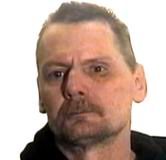
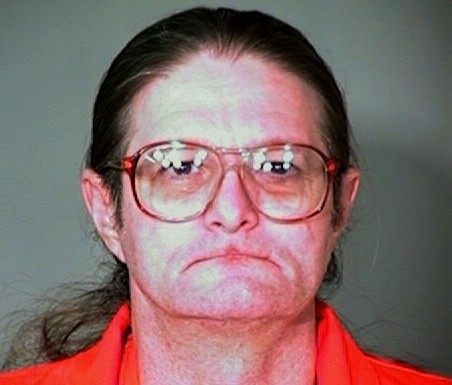
Shawn Lamb
Murderer James Roszko
Murderer · Canada · 2005
James Roszko was a Canadian man operating a hydroponic marijuana grow-op in Roc…
4 victims
James Roszko
Murderer · Canada · 2005
James Roszko was a Canadian man operating a hydroponic marijuana grow-op in Roc…
4 victims
 Derek Jensen
Murderer · Canada · 2011
Derek Jensen was the ex-boyfriend of Tabitha Stepple. Jensen had encountered St…
3 victims
Derek Jensen
Murderer · Canada · 2011
Derek Jensen was the ex-boyfriend of Tabitha Stepple. Jensen had encountered St…
3 victims
 Douglas Donald Moore
Murderer · Canada · 2003
Douglas Donald Moore died of an apparent suicide in a cell at the Maplehurst De…
3 victims
Douglas Donald Moore
Murderer · Canada · 2003
Douglas Donald Moore died of an apparent suicide in a cell at the Maplehurst De…
3 victims
 Jeremy Steinke
Murderer · Canada · 2006
Jeremy Allan Steinke was sentenced to three life sentences on December 15, 2008…
3 victims
Jeremy Steinke
Murderer · Canada · 2006
Jeremy Allan Steinke was sentenced to three life sentences on December 15, 2008…
3 victims
 Travis Baumgartner
Murderer · Canada · 2012
Sentenced to life in prison with no chance of parole for 40 years on September…
3 victims
Travis Baumgartner
Murderer · Canada · 2012
Sentenced to life in prison with no chance of parole for 40 years on September…
3 victims
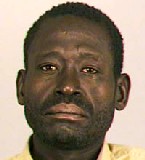 Johnson Aziga
Murderer · Canada · 2003
Johnson Aziga (born 1956) was a Ugandan-born Canadian man resident in Hamilton,…
2 victims
Johnson Aziga
Murderer · Canada · 2003
Johnson Aziga (born 1956) was a Ugandan-born Canadian man resident in Hamilton,…
2 victims
 Catherine Andrus
Murderer · Canada · 2009
Catherine Andrus — common-law wife of Michel Leblanc; pleaded guilty to second-…
1 victim
Catherine Andrus
Murderer · Canada · 2009
Catherine Andrus — common-law wife of Michel Leblanc; pleaded guilty to second-…
1 victim
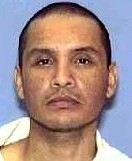 Gilberto Reyes
Murderer · USA · 1998
Gilberto Reyes was convicted of capital murder in the 287th Judicial District C…
1 victim
Gilberto Reyes
Murderer · USA · 1998
Gilberto Reyes was convicted of capital murder in the 287th Judicial District C…
1 victim
 Woo Bun-Kon
Spree killer · South Korea · 1982
Woo Bun-Kon, also known as Woo “Power” Bum-Kon (February 24, 1955–April 27, 198…
57 victims
Woo Bun-Kon
Spree killer · South Korea · 1982
Woo Bun-Kon, also known as Woo “Power” Bum-Kon (February 24, 1955–April 27, 198…
57 victims
 Sara María Aldrete
Serial killer · Mexico · 1987
Sara María Aldrete (born September 6, 1964 in Matamoros, Tamaulipas, Mexico) wa…
15 victims
Sara María Aldrete
Serial killer · Mexico · 1987
Sara María Aldrete (born September 6, 1964 in Matamoros, Tamaulipas, Mexico) wa…
15 victims
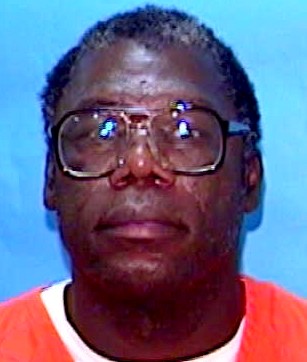 Kenneth Quince
Murderer · USA · 1979
Kenneth Darcell Quince (also known as Rasikh Abdul-Hakim) was the appellant in…
1 victim
Kenneth Quince
Murderer · USA · 1979
Kenneth Darcell Quince (also known as Rasikh Abdul-Hakim) was the appellant in…
1 victim
- Gender
- male
- Country
- Canada
- Location
- Manitoba, Canada
- Date of birth
- 1959
- Age at first offence
- 52
- Characteristics
- drug addict, crime spree
- Victim profile
- Lorna Blacksmith, 18 / Tanya Nepinak, 31 (her remains haven't been found) / Carolyn Sinclair, 25
- Method of murder
- Beating with an axe handle / Strangulation
- Date(s) of murder
- September 2011 / December 18, 2011 / January 11, 2012
- Years active
- 2011–2012
- Date of arrest
- June 24, 2012
- Status
-
Imprisoned
Sentenced to 20 years in prison with no chance of parole for at least 10 years on November 13, 2013
Case record: Shawn Lamb
Background
Shawn Cameron Lamb was 54 at sentencing. He was described as a chronic drug addict and career criminal, with criminal history dating back to the mid-1970s and containing more than 100 convictions.
A doctor's report presented to Rick Saull described Lamb as “egocentric, callous, ruthless and reckless,” and stated that he suffered from an anti-social personality disorder.
Lamb began using hard drugs at age 12 in Ontario. Court heard that around this time he ran away from his adoptive and abusive home to take up life on the street.
The offence
Lamb pleaded guilty to two counts of manslaughter in connection with killings of Carolyn Sinclair and Lorna Blacksmith.
Carolyn Sinclair
Carolyn Sinclair was 25. Lamb killed her on Dec. 18, 2011.
Court heard Lamb met Sinclair and the two purchased crack cocaine together, returning to smoke it at his apartment at 822 Notre Dame Ave.
According to an agreed statement of facts, Sinclair was beaten with an axe handle after she took what was left of the drugs and locked herself in the bathroom. Lamb’s statement recorded:
“he said that she remained conscious so he proceeded to choke her with his hands until she lost consciousness and died.”
Lamb left Sinclair’s body in the bathroom for several days, then wrapped her in plastic, put her into a duffle bag and dropped her near a garbage bin in a Notre Dame Avenue garbage can. Her remains weren’t located until March 31, 2012.
An autopsy found the cause of the pregnant woman’s death was blunt force trauma.
DNA evidence that Sinclair had been in Lamb’s suite was obtained, and hinged on the successful admission of Lamb’s statement to stand up as corroborating evidence against him.
Sinclair’s family members were present at sentencing. Amanda Sinclair, Carolyn Sinclair’s sister, said outside court Thursday morning that “My sister [Carolyn] is never going to return. Lorna is never going to return,” and that, “These girls are not going to come home for Christmas. They’re not going to come home for Mother's Day. They're not going to come home for any kind of holidays.”
Amanda Sinclair said: “But you know,” and then, “he gets his three meals a day, you know, for how many years? And they're asking for less?” She added: “Sinclair said there will be no justice for her sister. In nine years, he's eligible for parole. In nine years, do I get to see my sister? Does she get to come back to me? That's not fair at all, but you know, that's our justice system. Where's the justice in this? There's no justice system for my family. I'm never going to get her back.”
Lorna Blacksmith
Lorna Blacksmith was 18. Lamb killed her on Jan. 11, 2012.
Court heard that Lamb and Blacksmith were smoking drugs in Lamb’s apartment when Blacksmith said she would call her supplier for a delivery. An argument ensued; Lamb grabbed the phone from Blacksmith’s hands and threw her to the floor. Lamb grabbed a television cord and strangled Blacksmith to death.
The statement of facts recorded that Lamb did attempt to revive her but couldn't.
Lamb stole plastic sheeting from a nearby construction site and used it to wrap up Blacksmith’s body, then dumped it in the back lane of an abandoned home at 797 Simcoe St.
Blacksmith’s remains weren’t found for about six months. When forensic investigators found her, she was in an “advanced state of decomposition” and an autopsy couldn’t definitively show a medical cause of death other than a belief she died of “unspecified homicidal violence.”
It was Lamb who, in June 2012, told police where to find Blacksmith, and he said to investigators that he “knew where a body could be located.”
Additional allegations connected to missing woman Tanya Nepinak
At the time of Lamb’s arrest, he was also accused of killing a third missing woman, Tanya Nepinak, in September 2011. She was described as 31-year-old Tanya Jane Nepinak.
Lamb denied killing Nepinak. Her body had never been found. The case did not form part of Thursday’s proceedings and it remained unclear what would happen to it.
Police declared Nepinak as a homicide victim and charged Lamb with second-degree murder in connection with her death.
Police said they believed her body was placed in a garbage bin in the city’s West End, and the bin was emptied at the Brady Road landfill. A week-long search of the area in October 2012 turned up no evidence.
Vernon Mann, father of Nepinak’s two children, said he was concerned her murder would be forgotten. He said Lamb’s plea deal made no reference to Nepinak’s case, and that it meant Lamb was getting “a slap on the wrist,” adding that, “It almost feels like they're letting her case slip through the cracks.”
Glazer, when asked what would happen to the charge in Nepinak’s case, said: “Stay tuned.”
Investigation and evidence
The entire case against Lamb for the killings was based on an in-depth series of statements Lamb made to investigators when he found himself in custody on June 22, 2012 on an unrelated matter.
The Crown’s position was that the statements were central because there were no eyewitnesses to the killings and limited forensic evidence available to put before the court.
The Crown attorney Shiela Leinburd told the judge:
“But for the admission of (Lamb's) statement, the Crown's case would fail,”
Leinburd also said:
“There were no eyewitnesses to the killings, and despite the best efforts of the police, only limited forensic evidence is available to be put before the court,”
and:
“Consequently the description of the killing of both women is taken solely from the accused Lamb’s statement.”
Arrest and custody context
Lamb was arrested and questioned in June 2012 on an unrelated matter. Police learned of Lamb’s alleged connection to the three homicides after he was picked up on June 21.
Plea and court proceedings
Lamb’s sentence followed a deal reached between prosecutors and Lamb’s lawyers after Lamb pleaded guilty to two counts of manslaughter in the cases of Sinclair and Blacksmith.
Lamb’s guilty pleas were entered as reduced counts from second-degree murder. The deal called for two consecutive 10-year sentences for a total of 20 years in jail.
The judge Rick Saull indicated the protection of the public was his primary concern and said a “honestly informed public” would accept the sentence as appropriate. Saull said:
“I am confined to consideration of what was put before me today”
and: “The Crown has achieved a responsible result,”
and: “Mr. Lamb will be incarcerated for a very, very long time ... and may never see the street again.”
Sentencing
Justice Rick Saull endorsed the joint sentencing recommendation.
Lamb was sentenced to 20 years in prison. The sentence included a provision that he not be allowed to apply for parole before serving another nine years in custody.
Lamb received two years of credit for time served, meaning he would serve 18 years in prison. He would be eligible for parole in nine years.
Saull said the sentence was similar to a “life sentence” and similar to what he would have received if he was found guilty of second-degree murder.
The judge also said Lamb would likely have to spend part of his sentence in solitary confinement.
Defence and sentencing hearing conduct
Lamb requested to withdraw his guilty pleas because the word “sociopath” had been used by a doctor in a report referenced in court but wasn’t tabled as evidence. The move drew gasps from relatives of the victims, who at times cried and shook as they heard the facts of how their family members died.
Lamb ultimately retracted his request and the hearing continued.
Lamb and defence lawyer Martin Glazer said Lamb’s conduct had been influenced by his long-standing drug problem. Glazer said:
“Shawn is the first to admit he's wasted most of his life abusing substances,”
and: “With treatment, he can become law-abiding… there is light at the end of the tunnel for Mr. Lamb,”
Glazer said the confession and resolve to own up led to the women’s killer being found. Glazer said:
“The police were faced with a windfall because they had no clue he was involved,”
and: “‘I told the police I did it, I'm not taking it back,’” was what Lamb told him,
Glazer also said:
“How many people in his shoes would do that?”
Lamb said:
“I have remorse. I have empathy,”
and: “I understand there's a lot of anger, disgust, hate — they want vengeance,” he said.
During the hearing, Lamb said he hated what he had become. He addressed the court, giving details about the killings and saying people wouldn’t understand what he had been through. Lamb also said he was sorry, had remorse and empathy, and understood the feelings of victim’s families.
Lamb said:
“Basically, I turn into a monster at times. That is not me,”
Trial deal rationale and statements about evidence
Leinburd and defence counsel agreed that the description of the killings came from Lamb’s statement and that without it the Crown’s case would fail.
Glazer told court police paid Lamb $600 to give a confession on the location of Blacksmith’s body. Glazer said outside court:
“He was paid by the police for confessing,”
and: and added: “He even has the receipts.”
Glazer described this as “First time that I've ever seen such a case in Canada, and I've been a criminal lawyer for 31 years.” He also said the payment made Crown prosecutors nervous, resulting in the plea deal reducing the charges from second-degree murder to manslaughter. Glazer told reporters:
“The problem with the Crown's case was if the statement was thrown out of court, the Crown would have no case,”
Glazer also said the plea spared the victims’ families from having to endure a trial.
During sentencing remarks, Glazer read letters written by Lamb to victims’ families, in which Lamb called Blacksmith a beautiful spirit and said he was “truly sorry.”
Police payment to Lamb for information
Winnipeg police admitted they paid $1,500 to accused serial killer Shawn Lamb in a bid to get information about missing and murdered Manitoba women.
Supt. Danny Smyth explained the approach and said:
“The Winnipeg Police Service is sensitive to the fact there are many missing and murdered women in Manitoba and in Canada. These investigations are a priority for us. In this case, the investigators explored all available options in the interest of justice and public safety,”
Smyth said:
“I would say this is very unusual. In my time this is the first time I can recall us going to that kind of a measure.”
Police outlined the contact and payment process. Smyth said Lamb was initially arrested on a sexual assault charge nearly two years earlier unrelated to any homicide, and while being processed, Lamb indicated “he knew where a body was,” triggering a homicide investigation.
Smyth said police led to Carolyn Sinclair’s body, and that Lamb refused to cooperate further and did not give a formal statement. Lamb was not charged with Sinclair’s killing and the investigation remained ongoing.
Smyth said Lamb later contacted police and wanted to broker a deal, indicating he had more information to relate about the homicide and other crimes. Police consulted with the Crown and set up a special “canteen fund” at the Remand Centre for Lamb.
Police deposited an initial $600 into the canteen fund, and Lamb could use it to buy cigarettes, snacks and other items in custody. Police later sat down with Lamb after he upheld his end of the deal by confessing to killing Sinclair and Lorna Blacksmith.
Smyth said at the time Blacksmith was still listed as a missing person, and Lamb led investigators to Blacksmith’s body.
Smyth said Lamb then was charged with two counts of second-degree murder but continued to contact investigators indicating he would provide more information about other homicides. Police met with Lamb on two further occasions, depositing another $600 and then $300 into his account, for a total of $1,500.
Smyth said neither further payments led to additional evidence:
“Neither provided investigators with any additional evidence,”
Smyth said police were put in a difficult position because there would be no case without cooperation from Lamb and said the approach brought closure to the families of Carolyn Sinclair and Lorna Blacksmith:
“This brought closure to the families of Carolyn Sinclair and Lorna Blacksmith,”
Smyth said it was hoped subsequent information would be forthcoming for closure for families of other victims Lamb may have been involved in:
“It was hoped subsequent information would be forthcoming to bring closure to the families of other victims that Mr. Lamb may have been involved in.”
Smyth described the measure as extraordinary and weighed individually:
“This is an extraordinary measure that we considered.”
“Put into the context of missing and murdered women and the sensitivityy around that and trying to get to the bottom of some of those things,”
Smyth added:
“I think every case would be weighed individually. This wouldn’t be something we’d do routinely.”
Criminal record and prior violence
Lamb’s criminal record was described as extensive across multiple provinces. It was stated that since 1979 he had 109 convictions in Ontario, Alberta, B.C. and Manitoba.
In Manitoba, Lamb had 45 convictions since 2002 for everything from robbery to forgery, fraud, and uttering threats.
He had several convictions for violence, including a sexual assault for which he served four years in prison in 1992.
At sentencing, it was said he had 16 convictions for assault alone.
At the time of the arrest, police were also investigating a sexual assault charge nearly two years earlier that was unrelated to any homicide.
Other courtroom remarks
At sentencing, a man yelled from the gallery, calling Lamb a monster and telling him to take responsibility, and was escorted out by sheriff’s officers. One man yelled:
“You're a f------ monster ... Take f------ responsibility,” before being led out.
Lamb’s defence lawyer Martin Glazer also described the jury and evidence limitations, saying police had no clue he was involved until he came forward.
Glazer said outside court:
“How many people in his shoes would confess?”
and: “You commit two homicides, you're getting away with it, no one knows you did it, and then while in police custody he tells them the truth.”
Timeline
- Dec. 18, 2011 — Carolyn Sinclair was killed.
- Jan. 11, 2012 — Lorna Blacksmith was killed.
- March 31, 2012 — Carolyn Sinclair’s remains were located.
- June 21, 2012 — Police picked up Lamb and learned of his alleged connection to the homicides.
- June 22, 2012 — Lamb was in custody on an unrelated matter when he made statements used in the case.
- June 2012 — Lamb told police where to find Lorna Blacksmith’s body.
- October 2012 — A week-long search for Tanya Nepinak’s body turned up no evidence.
- May 2012 — Lamb was most recently charged with sexual assault.
- June 2012 — Lamb was most recently charged with sexual assault.
- Nov. 13, 2013 — Lamb was sentenced to 20 years in prison with no chance of parole for at least 10 years.
Outcome
Lamb’s murder charges in connection with the deaths of Carolyn Sinclair and Lorna Blacksmith were reduced to manslaughter counts.
Lamb was sentenced to 20 years with no chance of parole for at least 10 years, and he was eligible for parole in nine years after credit for time served.
Lamb remained charged with second-degree murder in connection with Tanya Nepinak, and his denial of killing Nepinak remained part of that case’s posture.
Spotted an error, or have more information about this case?