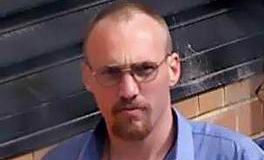
Robert Joe Wagner
Serial killer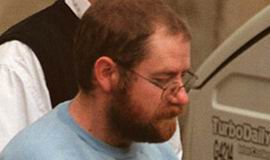 John Justin Bunting
Serial killer · Australia · 1992
John Justin Bunting (born 4 September 1966 in Inala, Queensland) was an Austral…
11 victims
John Justin Bunting
Serial killer · Australia · 1992
John Justin Bunting (born 4 September 1966 in Inala, Queensland) was an Austral…
11 victims
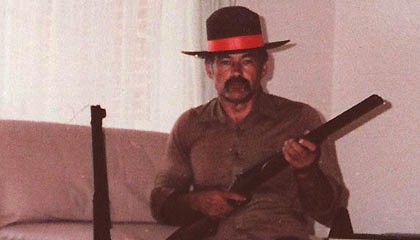 Ivan Milat
Serial killer · Australia · 1989
Ivan Milat was convicted of seven murders and received multiple life sentences.…
7 victims
Ivan Milat
Serial killer · Australia · 1989
Ivan Milat was convicted of seven murders and received multiple life sentences.…
7 victims
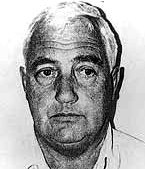 John Wayne Glover
Serial killer · Australia · 1989
John Wayne Glover (26 November 1932 – 9 September 2005) was a British-born Aust…
6 victims
John Wayne Glover
Serial killer · Australia · 1989
John Wayne Glover (26 November 1932 – 9 September 2005) was a British-born Aust…
6 victims
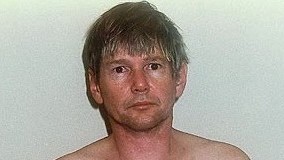 Peter Dupas
Serial killer · Australia · 1997
Peter Norris Dupas was an Australian serial killer known for violence against w…
6 victims
Peter Dupas
Serial killer · Australia · 1997
Peter Norris Dupas was an Australian serial killer known for violence against w…
6 victims
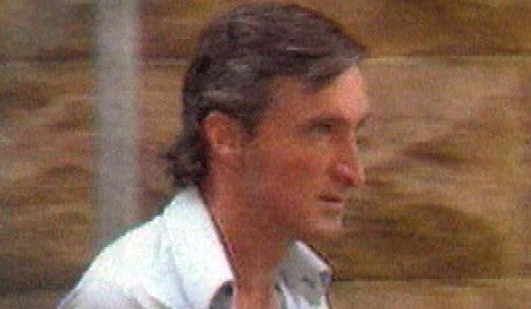 David Birnie
Serial killer · Australia · 1986
David John Birnie (16 February 1951 – 7 October 2005) was an Australian serial…
4 victims
David Birnie
Serial killer · Australia · 1986
David John Birnie (16 February 1951 – 7 October 2005) was an Australian serial…
4 victims
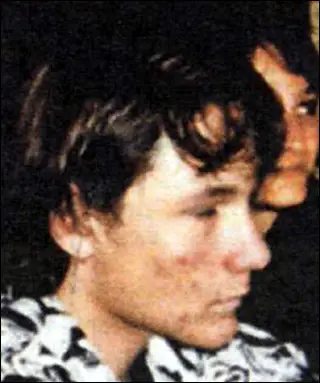 James Vlassakis
Serial killer · Australia · 1997
James Spyridon Vlassakis (born 24 December 1979) was an Australian serial kille…
4 victims
James Vlassakis
Serial killer · Australia · 1997
James Spyridon Vlassakis (born 24 December 1979) was an Australian serial kille…
4 victims
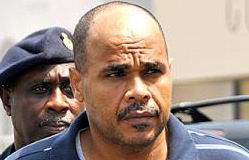 Cyril Darville
Serial killer? · The Bahamas · 1990
Cyril Darville was convicted for a murder committed in 1990. He had a prior rec…
9 victims
Cyril Darville
Serial killer? · The Bahamas · 1990
Cyril Darville was convicted for a murder committed in 1990. He had a prior rec…
9 victims
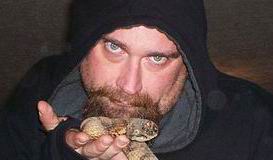 Gregory Hale
Murderer · USA · 2014
Gregory Hale was known among his neighbors and acquaintances as a “devil worshi…
1 victim
Gregory Hale
Murderer · USA · 2014
Gregory Hale was known among his neighbors and acquaintances as a “devil worshi…
1 victim
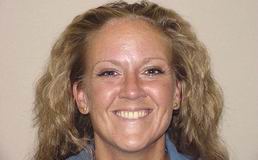 Sharee Miller
Murderer · USA · 1999
Sharee Paulette Miller was an American woman who was accused of plotting the mu…
1 victim
Sharee Miller
Murderer · USA · 1999
Sharee Paulette Miller was an American woman who was accused of plotting the mu…
1 victim
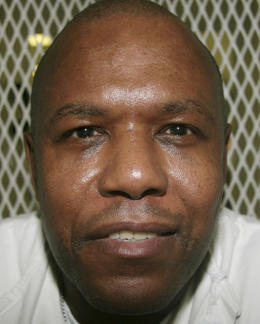 Larry Wayne Wooten
Murderer · USA · 1996
Defendant: Larry Wayne Wooten Status: Executed by lethal injection in Texas on…
2 victims
Larry Wayne Wooten
Murderer · USA · 1996
Defendant: Larry Wayne Wooten Status: Executed by lethal injection in Texas on…
2 victims
 Sedley Alley
Murderer · USA · 1985
Sedley Alley was executed by lethal injection in Tennessee on June 28, 2006. Se…
1 victim
Sedley Alley
Murderer · USA · 1985
Sedley Alley was executed by lethal injection in Tennessee on June 28, 2006. Se…
1 victim
 Jarvis Jay Masters
Murderer · USA · 1985
Jarvis Jay Masters (born 1962) was an African American man from Long Beach, CA.…
1 victim
Jarvis Jay Masters
Murderer · USA · 1985
Jarvis Jay Masters (born 1962) was an African American man from Long Beach, CA.…
1 victim
- Gender
- male
- Country
- Australia
- Location
- Snowtown, South Australia, Australia
- Date of birth
- November 28, 1971
- Age at first offence
- 21
- Characteristics
- cannibalism, torture, drug addict
- Victim profile
- Clinton Trezise, 22 / Ray Davies, 26 / Michael Gardiner, 19 / Barry Lane, 42 / Thomas Trevilyan, 18 / Gavin Porter, 29 / Troy Youde, 21 / Frederick Brooks, 18 / Gary O'Dwyer, 29 / Elizabeth Haydon, 37 / David Johnson, 24
- Method of murder
- Shooting - Strangulation
- Date(s) of murder
- 1992 - 1999
- Years active
- 1992–1999
- Date of arrest
- May 20, 1999
- Status
-
Life imprisonment
Sentenced to ten consecutive sentences of life imprisonment without the possibility of parole on September 8, 2003
Case identity
Robert Joe Wagner (born 28 November 1971 in Parramatta, New South Wales) was an Australian serial killer who was convicted of seven murders connected to the Snowtown murders (also known as the Bodies in Barrels murders). He was sentenced to ten consecutive sentences of life imprisonment without the possibility of parole on September 8, 2003.
Background
The Snowtown murders were the murders of 12 people in South Australia, Australia between August 1992 and May 1999. The crimes were uncovered when the remains of eight victims were found in barrels of acid located in a rented former bank building in Snowtown, South Australia on 20 May 1999. The town of Snowtown is in the Mid North of South Australia, 145 km north of Adelaide.
Although Snowtown is frequently linked with the crimes, the bodies had been held in a series of locations around Adelaide for some time, and were moved to Snowtown in early 1999, very late in the crime spree that had spanned several years. Only one victim was killed in Snowtown; none of the victims or the perpetrators were from that town.
The offence
Wagner was convicted in connection with the murder of ten victims described as part of the Snowtown murders. The murders involved torture and killing by multiple offenders, with bodies later stored in barrels of acid.
Wagner pleaded guilty to three charges of murder for the murders of Barry Lane, Fred Brooks and David Johnson on 27 September 2002. He later pleaded not guilty to the remaining seven murder charges against him, and was eventually convicted of them, bringing the total number of victims to ten.
A piece of the flesh of the eleventh and final victim, David Johnson, was fried and eaten by John Bunting and Robert Wagner.
Wendy Abraham QC, the deputy Director of Public Prosecutions, reported at the Supreme Court of South Australia that the victims were forced to call their torturers “God”, “Master”, “Chief Inspector” and “Lord Sir”.
The physical torture described included the following examples associated with victims:
- Ray Davies was garrotted with a piece of rope and a tyre lever after being placed in a bath, attacked with clubs, repeatedly beaten about his genitals and having a toe crushed with a pair of pliers.
- Frederick Brooks received electric shocks to his penis and testicles, and had a burning sparkler pushed down into his penis; after his toes were crushed and his nose and ears burned with cigarettes, he was allowed to choke to death on his gag.
Investigation
The discovery of the barrels in May 1999 in Snowtown was described as the culmination of five years of criminal investigation. Police involvement with the then unlinked crimes began with the discovery of human remains at Lower Light.
After Elizabeth Haydon’s disappearance, the police installed a listening device in Mark Haydon’s house in Smithfield Plains, recordings from which were later used as court evidence. The remains found at Lower Light were later determined to have been those of Clinton Trezise, who had been murdered in Bunting’s living room at Salisbury North, South Australia. Ray Davies and Suzanne Allen were found buried in the back yard of that house.
The bodies in barrels were variously stored in several places before finally being moved to the bank vault in Snowtown. These included:
- a shed behind Bunting’s house at Murray Bridge in April 1998, after which the three barrels were moved to Haydon’s property at Smithfield Plains later in 1998
- then five barrels were stored in a Toyota Land Cruiser at Hoyleton, a locality on the Adelaide Plains near the Clare Valley, with a sixth in a Mitsubishi Sigma back at Murray Bridge
- both of these vehicles were later moved to Snowtown, and afterwards the barrels moved into the bank vault, which had been rented by Haydon, using the name “Mark Lawrence”, the name he had used before he married.
Of the Snowtown location one local police source said: “From what I understand there was no person involved in those murders from within Snowtown or the surrounding district. They were murdered elsewhere and the drums were brought to Snowtown because it was a quiet little town and there was a premises ideal for the persons involved.”
Examiners attempting to identify the remains found them mummified rather than dissolved, the latter being the apparent intention of storing the bodies in barrels of acid. The killers had chosen hydrochloric acid which mummified the remains.
Arrest / accused context
A total of four people were arrested and charged over the murders. All were convicted of the murders or assisting in the murders. This group was largely influenced by ringleader John Justin Bunting.
Much detail was not made public with the cases having been subject to over 250 suppression orders, many of which have not yet been lifted.
Trial
After a series of pre-trial hearings, the first of the accused to be sentenced was Vlassakis, who was given four life sentences on 21 June 2001 after pleading guilty to four murders.
Later that summer, Bunting, Haydon and Wagner each pleaded not guilty to 10 counts of murder. Many of the charges against Haydon were later dropped due to insufficient evidence.
The Supreme Court trial for Wagner and Bunting began on 14 October 2002 and within a short space of time the court experienced difficulties with the jury. At least one juror refused to continue due to the horror of the evidence and some sources report that a total of three jurors withdrew from the panel for this reason.
Both Bunting and Wagner were found guilty on 8 September 2003.
Bunting was convicted of eleven murders and Wagner, who had pleaded guilty to three murders, was convicted of seven; both appealed their convictions.
At Wagner’s sentencing, he rose in the dock and stated:
“Pedophiles were doing terrible things to children. The authorities didn't do anything about it. I decided to take action. I took that action. Thank you.”
Sentencing
They were each sentenced to imprisonment for life on each count to be served cumulatively. The presiding judge, Justice Brian Martin, stated that the men were “in the business of killing for pleasure” and were also “incapable of true rehabilitation”.
Wagner was sentenced to ten consecutive sentences of life imprisonment without the possibility of parole on September 8, 2003.
Appeals
In May 2005 the Supreme Court dismissed an appeal by Bunting and Wagner. They had exhausted their avenues of appeal in South Australia.
Outcome
Wagner was convicted of seven murders in the Supreme Court and received ten consecutive sentences of life imprisonment without the possibility of parole on September 8, 2003.
Aftermath
Bunting and Wagner were described, alongside backpacker murders killer Ivan Milat as Australia’s worst serial killers. The particulars of the case, especially the manner in which the victims were found, horrified and fascinated the public.
The murders garnered Snowtown much unwanted attention, and the town became best-known for the murders. According to local residents, in the 18 months following the discovery in the disused bank vault, a steady stream of unwelcome visitors would stop to look at and photograph the building.
At the time, the local press reported a suggestion that the town’s name be changed to avoid the stigma now associated with the name, although this suggestion was never acted upon. One suggested new name in press reports was “Rosetown”.
The house in Salisbury North was owned by the South Australian Housing Trust, and has been demolished. Today units for older people are in its place.
Other details
Listed victims connected to the overall case
The case description listed the following victims and circumstances:
- Clinton Trezise, 22 (d. Aug 1992) was found buried in a shallow grave in 1994 at Lower Light. Was killed in Bunting’s living room at his home in Salisbury North, by being bashed with a shovel after being invited in for a social visit.
- Ray Davies, 26 (d. Dec 1995) was a mentally handicapped man who lived in a caravan in the back yard behind Suzanne Allen’s house who became a target after her accusation that he was a paedophile. Harvey assisted in his torture. Davies was never reported missing.
- Suzanne Allen, 47 died some time after Davies, and her remains were found buried above his in the garden of the house at Salisbury North. Her remains were wrapped in eleven different plastic bags. The death was concealed by the accused and they continued to collect her pension, but they later claimed she had actually died of a heart attack. Based on the evidence presented at trial, the jury was unable to decide without doubt that she had been murdered.
- Michael Gardiner, 19 (d. Aug 1997) was an openly gay man murdered after a suspicion arose that he was also a paedophile.
- Barry Lane, 42 (d. Oct 1997) was a gay man and cross dresser who had been in a relationship with Wagner at the time Bunting first met them in 1991 when he moved to their neighbourhood. Trevilyan was a later boyfriend of Lane’s. Lane had been tortured by having his toes crushed with pliers.
- Thomas Trevilyan, 18 (d. 1997) was found hanging from a tree near Kersbrook in the Adelaide Hills, and was initially presumed to have committed suicide. He had helped in the murder of Barry Lane, but was later killed after discussing the crime with others. He was known to his family to have suffered from paranoid schizophrenia and was easily persuaded.
- Gavin Porter, 29 (d. Apr 1998) was a heroin addict and friend of Vlassakis. After Bunting, Elizabeth Harvey, Vlassakis, and Youde moved to Murray Bridge, South Australia, Porter also moved in. Bunting decided he should be the next victim after he was pricked by a discarded syringe Porter left on the couch in the living room. Porter was strangled in his car parked on the property.
- Troy Youde, 21 (d. Sep 1998) was Vlassakis’ half-brother and son of Elizabeth Harvey who was living with them at Bunting’s Murray Bridge house at the time of his death. He was killed in the house after being dragged from his bed while asleep. This was the first murder Vlassakis participated in.
- Fred Brooks, 18 (d. Sep 1998) was the intellectually disabled son of Jodie Elliott, a woman in love with Bunting, and was chosen by Bunting as an easy victim and lured to his house where he was attacked and brutally tortured.
- Gary O’Dwyer, 29 (d. Nov 1998) was a man disabled in an earlier car accident and on a pension; he was a stranger picked as an easy target. He was killed in his home in Frances Street, Murray Bridge, by Bunting, Wagner and Vlassakis.
- Elizabeth Haydon, 37 (d. Nov 1998) was Mark Haydon’s wife and was killed by Bunting and Wagner in her home while her husband was out.
- David Johnson, 24 (d. May 1999) was Vlassakis’ half-brother. He was murdered by Bunting in the bank building having been lured there by Vlassakis. He was the only victim to have died in Snowtown.
Scene in the bank building
One Snowtown officer said:
“It was a scene from the worst nightmare you've ever had, I don't think any of us was prepared for what we saw.”
The building was described as being littered with tools used by the killers to torture and murder their victims, including:
- Knives
- A bloodstained saw
- Double barrel shotgun
- Coils of rope
- Rolls of tape
- Rubber gloves
- Cloths
- A Variac metallurgy tool that the killers used to administer electric shocks to the genitals and other sensitive parts of the victim’s body
The pathologists’ report revealed that prolonged torture had taken place using everyday tools such as pincers, pliers and clamps—examples of all of these were found in the vault.
Handling of suppression orders and community detail
The case description included that the murders had been subject to over 250 suppression orders, many of which have not yet been lifted.
Later film and books
A movie, “Snowtown”, regarding the life of John Bunting was released in Australia on 19 May 2011.
Books listed included:
- Snowtown Murders: The Real Story Behind the Bodies in the Barrels Killings, Andrew McGarry, ISBN 0-7333-1482-1
- Snowtown: The Bodies In Barrels Murders: The Grisly Story of Australia’s Worst Serial Killings, Jeremy Pudney, ISBN 0-7322-6716-1
- All Things Bright And Beautiful: Murder In The City Of Light, Susan Mitchell, ISBN 1-4050-3610-9
Spotted an error, or have more information about this case?