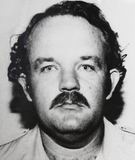
David Gore
Serial killer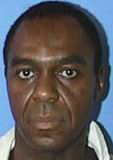 Carl Eugene Watts
Serial killer · USA · 1974
Carl Eugene Watts (born November 7, 1953; died September 21, 2007), also known…
100 victims
Carl Eugene Watts
Serial killer · USA · 1974
Carl Eugene Watts (born November 7, 1953; died September 21, 2007), also known…
100 victims
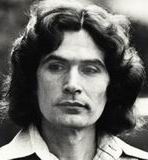 Rodney Alcala
Serial killer · USA · 1977
Rodney James Alcala (born August 23, 1943) was also known as Rodrigo Jacques Al…
100 victims
Rodney Alcala
Serial killer · USA · 1977
Rodney James Alcala (born August 23, 1943) was also known as Rodrigo Jacques Al…
100 victims
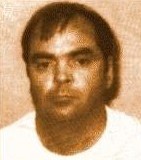 Donald Leroy Evans
Serial killer · USA · 1975
Donald Leroy Evans (born July 5, 1957) was an American serial killer who murder…
60 victims
Donald Leroy Evans
Serial killer · USA · 1975
Donald Leroy Evans (born July 5, 1957) was an American serial killer who murder…
60 victims
 Michael Swango
Serial killer · USA · 1981
Michael Swango (Joseph Michael Swango) was a physician and American serial kill…
60 victims
Michael Swango
Serial killer · USA · 1981
Michael Swango (Joseph Michael Swango) was a physician and American serial kill…
60 victims
 Efren Saldivar
Serial killer · USA · 1989
Efren Saldivar (born 30 September 1969) was an American serial killer who murde…
50 victims
Efren Saldivar
Serial killer · USA · 1989
Efren Saldivar (born 30 September 1969) was an American serial killer who murde…
50 victims
 Gary Ridgway
Serial killer · USA · 1982
Gary Leon Ridgway Ridgway was born 18-February-1949 in Salt Lake City, UT. He w…
49 victims
Gary Ridgway
Serial killer · USA · 1982
Gary Leon Ridgway Ridgway was born 18-February-1949 in Salt Lake City, UT. He w…
49 victims
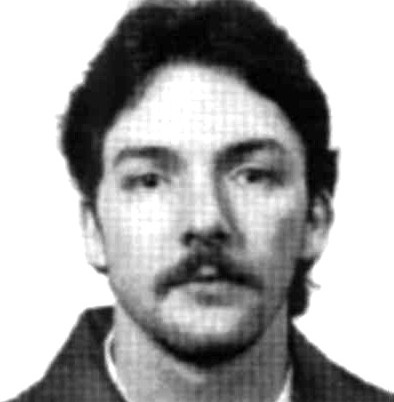 Benny Lee Saylor
Murderer · USA · 1992
Benny Lee Saylor was released from DOC in 1991 on Probation for 4 years followi…
1 victim
Benny Lee Saylor
Murderer · USA · 1992
Benny Lee Saylor was released from DOC in 1991 on Probation for 4 years followi…
1 victim
 Carl Henry Blue
Murderer · USA · 1994
Carl Henry Blue was sentenced to death for capital murder involving Carmen Rich…
1 victim
Carl Henry Blue
Murderer · USA · 1994
Carl Henry Blue was sentenced to death for capital murder involving Carmen Rich…
1 victim
 Cassidy Goodson
Homicide · USA · 2012
Cassidy Goodson — 14-year-old girl; Lakeland teenager who strangled her newborn…
1 victim
Cassidy Goodson
Homicide · USA · 2012
Cassidy Goodson — 14-year-old girl; Lakeland teenager who strangled her newborn…
1 victim
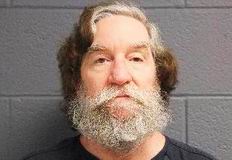 John Douglas White
Murderer · USA · 1994
John Douglas White was a former pastor of a small Mount Pleasant church and lat…
2 victims
John Douglas White
Murderer · USA · 1994
John Douglas White was a former pastor of a small Mount Pleasant church and lat…
2 victims
 Joe Morgan
Murderer · USA · 1946
Joe Morgan (10 April 1929 – 9 November 1993) was described as “the Godfather” o…
2 victims
Joe Morgan
Murderer · USA · 1946
Joe Morgan (10 April 1929 – 9 November 1993) was described as “the Godfather” o…
2 victims
- Gender
- male
- Country
- USA
- Location
- Florida, USA
- Date of birth
- August 21, 1953
- Age at first offence
- 28
- Characteristics
- alcoholic, kidnapping, rape
- Victim profile
- Hisang Huang Ling, 48, and her daughter Ying Hua Ling, 17 / Judy Kay Daley, 35 / Angelica Lavallee, 14 / Barbara Ann Byer, 14 / Lynn Elliott, 17
- Method of murder
- Shooting - Strangulation
- Date(s) of murder
- 1981 / 1983
- Years active
- 1981–1983
- Date of arrest
- J uly 26, 1983
- Status
-
Executed
Executed by lethal injection on April 12, 2012
Parties and identity
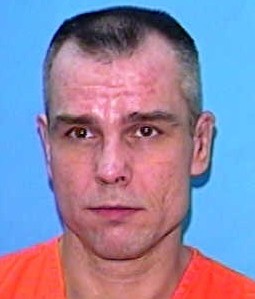
David Alan Gore (also known as DAVID A GORE, DAVID ALAN GORE, DAVID ALLAN GORE) was a white male. His date of birth was 08/21/1953. His aliases included DAVID A GORE, DAVID ALAN GORE, and DAVID ALLAN GORE. He had brown hair and blue eyes. His height was 6'00'' and his weight was 198 lbs.
His cousin and accomplice was Fred Waterfield.
Victims
Lynn Elliott was a 17-year-old victim. She was the final victim.
Other victims listed were:
- Hsiang Huang Ling, 48
- Ying Hua Ling, 17
- Judy Kay Daley, 35
- Angelica LaVallee, 14
- Barbara Ann Byer, 14
Status and sentence history
Gore was sentenced to death on March 16, 1984. He was resentenced to death on December 8, 1992. He was executed by lethal injection on April 12, 2012.
Gore’s death sentence occurred after a federal habeas proceeding that vacated his death sentence, followed by resentencing. His death sentence was affirmed after resentencing by the Florida Supreme Court.
Timeline
- 07/15/1981 — Offense: TRESPASS STRUCTURE ARMED; Sentenced: 11/06/1981; County: INDIAN RIVER; Case No: 8100245; Prison sentence length: 5Y 0M 0D.
- 02/19/1981 — Offense: 1ST DG MUR/PREMED. OR ATT. (listed under prison sentence history); Sentenced: 02/04/1985; County: INDIAN RIVER; Case No: 8400482; Prison sentence length: SENTENCED TO LIFE.
- 07/26/1983 — Offense date(s) listed for the death-judgment case: 07/26/1983, 07/26/1983, 05/21/1983; Offenses: 1ST DG MUR/PREMED. OR ATT., KIDNAP;COMM.OR FAC.FELONY, SEX BAT/ WPN. OR FORCE; County: PINELLAS; Case No: 8400581; Prison sentence length: DEATH SENTENCE, LIFE, LIFE.
- 03/16/1984 — Sentencing date: 03/16/1984; Gore was sentenced to death.
- 12/08/1992 — Resentencing date: December 8, 1992; Gore was resentenced to death.
- 04/12/2012 — Executed by lethal injection.
The offence
Gore and his cousin Fred Waterfield picked up Regan Martin, 14, and Lynn Elliott, 17, who were hitchhiking to the beach. Gore took a gun out of the glove compartment and held it to Regan’s head, then grabbed the two girls’ wrists and held them together. Gore told the girls they should take them to Gore’s home and told the girls that if they said or did anything, they would be killed.
When they arrived at Gore’s home, the girls were handcuffed and taken into a bedroom. The girls were separated. Lynn was tied up while Regan was handcuffed. Gore cut Regan’s clothes off and sexually assaulted her on three separate occasions. Regan testified that she heard noises in the other room after Gore had left. Regan heard Gore tell Lynn to shut up or he would kill her. Gore also told Regan to be quiet or he would slit her throat and that he would do it anyway. Gore then put Regan in a closet; Regan heard two or three shots after Gore left. Gore returned and put Regan in the attic where she was later rescued by police.
A 15-year-old boy, Michael Rock, testified that on July 26, 1983, while riding his bicycle near Gore’s home, he heard screaming and observed a naked girl running down the driveway being chased by Gore, who was also naked. Rock saw Gore catch up, drag the girl back toward a palm tree, and shoot her twice in the head. Rock went home and told his mother, and she called police.
Lynn Elliott’s body was found in the trunk of Gore’s car. Arms and legs were tightly bound with rope, and she had multiple abrasions consistent with falling and being dragged. The gun used to kill her was found in Gore’s home.
Elliott was also described as escaping after being handcuffed and hog-tied tightly, as Gore pursued her, dragged her back toward the house as she fought to free herself, and then shot her twice in the head.
Investigation and arrest-related events
A boy riding by on his bicycle witnessed the killing and called 911. Police arrived and surrounded Gore’s home. The surviving girl was rescued. After his arrest, Gore led authorities to the other bodies and admitted to killing three other girls and two women.
Gore was caught and the other girl was rescued. Police were called after a boy witnessed the murder.
Trial
Gore was indicted for the first-degree, premeditated murder of Lynn Elliott, for the kidnapping of Lynn Elliott, for the kidnapping of Regan Martin, and for three counts of sexual battery of Regan Martin. He was found guilty of all six counts.
A jury recommended the death sentence. The trial court sentenced Gore to death for the first-degree murder of Lynn Elliott and imposed life sentences for the other crimes.
In the voir dire dispute, the trial court sustained the state’s objection to a defense question about whether jurors felt so strongly in favor of the death penalty that they would never be able to recommend mercy. During later discussion and rulings, the court emphasized that mercy was not involved in the legal instructions being considered, and it required the jury to follow instructions and the court’s law. The appellate review found that the trial court should have allowed Gore to propound questions as to bias or prejudice in recommending a life sentence, but it held the error was harmless beyond a reasonable doubt. The appellate decision also addressed rejection of multiple challenges including denial of the motion to suppress Gore’s confession and admission of two prejudicial photographs.
The appellate decision described jury deliberation and the voir dire content regarding death penalty attitudes, including questioning about whether jurors would follow the court’s instructions and consider whether the circumstances were proved before recommending death.
The trial court denied Gore’s request for a mistrial related to an epileptic juror’s interruption of defense counsel during closing argument. The trial court substituted an alternate juror and provided a curative instruction, including:
Ladies and gentlemen of the jury, we are concerned about Mr. Brown's health. Under the circumstances I am excusing Mr. Brown so that he can go about his own personal affairs and I believe we do have someone in attendance with him.
....
Ladies and gentlemen, any outburst that Mr. Brown made or may not have made—I did not hear—but I want to state to you, as I've stated to you from the very beginning, this case must be tried solely on the evidence and on the law and nothing else.
....
Can each of you assure me that you will make your decision in this case solely on the law and nothing else? Is there anything that Mr. Brown has stated that would in any way influence this jury and carry any comments he may or may not have said into the jury room? All right. We're sorry for the interruption of the defense's argument. Mr. Phillips, you may proceed.
The appellate decision also addressed a request for demonstration and other trial rulings including restrictions during voir dire relating to Gore’s cousin’s involvement, denial of a motion for judgment of acquittal, and denial of a motion for new trial.
Sentencing
At the original sentencing, the jury recommended the death sentence by an 11–1 vote and the trial court entered death for first-degree murder and life sentences for the other counts.
The trial court found aggravating circumstances including:
- the murder was committed while Gore was under sentence of imprisonment because he was on parole,
- the murder was committed while Gore was engaged in the commission of two kidnappings and three sexual batteries,
- the murder was committed for the purpose of avoiding or preventing a lawful arrest,
- the murder was especially wicked, evil, atrocious, or cruel,
- the murder was committed in a cold, calculated, and premeditated manner without any pretense of moral or legal justification.
The trial court found none of the statutory mitigating circumstances to be applicable and found no circumstance of the offense could act in mitigation. It considered “any other aspect of Gore's character or record” and found certain aspects applied, including testimony that Gore was a “born again” Christian since his arrest for murder and other family-related considerations.
At resentencing, a jury unanimously recommended death by a 12–0 vote. The trial court again sentenced Gore to death, finding statutory aggravators beyond a reasonable doubt and weighing mitigation. The trial court found no statutory mitigating circumstances and found nonstatutory mitigating circumstances including:
- Gore’s exemplary conduct while in prison and probable future conduct,
- Gore’s impoverished childhood,
- Gore’s exemplary conduct during resentencing,
- Gore’s depression at the time of the offense,
- Gore’s love for his children and separation from them.
Appeals
Florida Supreme Court (Direct Appeal)
The Florida Supreme Court affirmed Gore’s conviction and death sentence. The appellate decision stated the conviction and death sentence were affirmed and addressed multiple grounds including voir dire error being harmless beyond a reasonable doubt, the denial of a motion to suppress being supported by findings of intelligent and voluntary waiver of counsel, admissibility of photographs, denial of a mistrial related to an epileptic juror, and death sentence aggravators including avoiding lawful arrest and HAC.
U.S. Supreme Court (Certiorari in Direct Appeal and Resentencing)
A petition for Writ of Certiorari to the U.S. Supreme Court was filed and denied. The decision also records that the U.S. Supreme Court denied review of the resentencing-related petition.
Federal Habeas
A federal judge granted habeas relief and vacated Gore’s death sentence, requiring a new sentencing hearing. The federal court found the constitutional error involved exclusion of nonstatutory mitigating evidence in violation of Hitchcock/Lockett principles, including evidence relating to drug and alcohol abuse.
The decision states that, with respect to drug and alcohol evidence, evidence could support an inference that Gore had been drinking and/or taking pills at or about the time of the murder and that such evidence was mitigating. Relief was granted on that claim and the death sentence was vacated unless the state resentenced in a manner consistent with those principles.
A subsequent appeal affirmed the federal decision.
State proceedings after resentencing and later appeals
After resentencing, the Florida Supreme Court affirmed the death sentence and addressed multiple issues raised by Gore, including voir dire challenges for cause, parole eligibility instructions, the finding of aggravators including “cold, calculated and premeditated” and avoiding arrest, jury instruction issues, admission and harmlessness of certain testimony issues, judicial assignment for resentencing, and speedy trial arguments.
A later state habeas proceeding was denied. In that proceeding, the Supreme Court addressed claims including allegations of improper ex parte communications, ineffective assistance of counsel during resentencing, and claims that death row time was cruel and unusual punishment, as well as additional constitutional claims related to jury sentencing under Ring and Apprendi.
Other judicial determinations and legal issues recorded
- A federal habeas ruling granted a stay of execution due to short time remaining before a scheduled execution, and later relief required resentencing unless the state resentenced in compliance.
- Several procedural and evidentiary issues were discussed, including Miranda/Edwards arguments about statements, a challenge to victim impact/victim family comments, and claims concerning jury instructions on aggravators and mitigation.
- The record includes multiple aggravator findings discussed in appellate decisions including avoid arrest, HAC, CCP, and parole-related imprisonment aggravator.
Execution
Gore’s execution occurred on April 12, 2012. He was pronounced dead at 6:19 p.m. after being administered a lethal injection.
His last meal was fried chicken, French fries and butter pecan ice cream.
Final words were: “I want to say to the Elliott family I am sorry for the death of your daughter. I am not the same man I was back then 28 years ago. I hope they can find it in their hearts to forgive me.”
In a written statement, Gore said: “I wish above all else my death could bring her back.”
He was 58 at the time of execution.
He was visited by his ex-wife, Gloria Coleman, his mother, and a spiritual adviser, a Baptist minister.
Co-accused
Fred Waterfield was convicted in connection with the murders and was serving two consecutive life sentences for his role. The record indicates that he received life sentences after the trial and that he had been convicted and sentenced in separate proceedings related to other victims.
Other details
Gore’s facility and custody were listed as:
- Current Facility: FLORIDA STATE PRISON
- Current Custody: MAXIMUM
- Current Release Date: DEATH SENTENCE
County of conviction was listed as Pinellas.
A list of prior prison sentence history includes:
- An offense on 07/21/1981 for TRESPASS STRUCTURE ARMED with sentence date 11/06/1981; County: INDIAN RIVER; Case No: 8100245; prison sentence length: 5Y 0M 0D.
- Additional offense entries involving 1ST DG MUR/PREMED. OR ATT. with a sentencing date 02/04/1985; County: INDIAN RIVER; Case No: 8400482; prison sentence length: SENTENCED TO LIFE.
- Another entry for TRESPASS STRUCTURE ARMED with sentencing date 11/06/1981; County: INDIAN RIVER; Case No: 8100245; prison sentence length: 3Y 3M 25D.
- In-custody periods were listed as 12/04/1981 to 03/15/1983 and 02/05/1985 to 04/12/2012.
The record also references that Gore’s death-penalty prosecution included intense pretrial publicity in Vero Beach and that the trial was shifted to St. Petersburg and then to Pinellas County.

Spotted an error, or have more information about this case?