Max Mayer Haslam
Murderer Buck Ruxton
Murderer · United Kingdom · 1935
Buck Ruxton (21 March 1899, Bombay – 12 May 1936, Manchester) was also known as…
2 victims
Buck Ruxton
Murderer · United Kingdom · 1935
Buck Ruxton (21 March 1899, Bombay – 12 May 1936, Manchester) was also known as…
2 victims
 Neville Heath
Murderer · United Kingdom · 1946
Neville George Clevely Heath (1917–46) was born in Essex, England, and later li…
2 victims
Neville Heath
Murderer · United Kingdom · 1946
Neville George Clevely Heath (1917–46) was born in Essex, England, and later li…
2 victims
 Walter Graham Rowland
Murderer · United Kingdom · 1934
Defendant: Walter Graham Rowland Age: 39 (labourer) Residence/Origin: from Mell…
2 victims
Walter Graham Rowland
Murderer · United Kingdom · 1934
Defendant: Walter Graham Rowland Age: 39 (labourer) Residence/Origin: from Mell…
2 victims
 John Jerry Jancar
Homicide · USA · 1983
John Jerry Jancar was a 17-year-old high school student when he was convicted i…
2 victims
John Jerry Jancar
Homicide · USA · 1983
John Jerry Jancar was a 17-year-old high school student when he was convicted i…
2 victims
 Ronald Straight
Murderer · USA · 1976
Ronald Straight was executed by electrocution in Florida on May 20, 1986. · Jul…
1 victim
Ronald Straight
Murderer · USA · 1976
Ronald Straight was executed by electrocution in Florida on May 20, 1986. · Jul…
1 victim
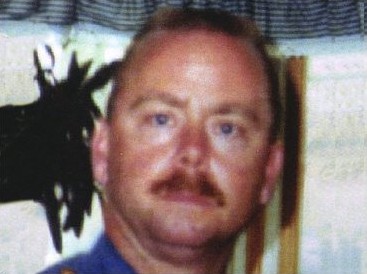 Edward Lutes
Mass murderer · USA · 2002
Edward Lutes, 42, was a police officer. Local community members described Edwar…
5 victims
Edward Lutes
Mass murderer · USA · 2002
Edward Lutes, 42, was a police officer. Local community members described Edwar…
5 victims
 Raymond Ratima
Mass murderer · New Zealand · 1992
Raymond Wahia Ratima was an unemployed shearer and was aged 25. At the beginnin…
7 victims
Raymond Ratima
Mass murderer · New Zealand · 1992
Raymond Wahia Ratima was an unemployed shearer and was aged 25. At the beginnin…
7 victims
 Marie Fikácková
Murderer · Czech Republic · 1960
Marie Fikáčková (September 9, 1936 in Sušice - April 13, 1961) was a Czech seri…
2 victims
Marie Fikácková
Murderer · Czech Republic · 1960
Marie Fikáčková (September 9, 1936 in Sušice - April 13, 1961) was a Czech seri…
2 victims
 Stanley Griffin
Murderer · USA · 2010
Stanley Lamar Griffin was a Black male who was 6 ft. 2 in. tall and weighed 180…
1 victim
Stanley Griffin
Murderer · USA · 2010
Stanley Lamar Griffin was a Black male who was 6 ft. 2 in. tall and weighed 180…
1 victim
- Gender
- male
- Country
- United Kingdom
- Location
- Nelson, Lancashire, England, United Kingdom
- Date of birth
- 1913
- Age at first offence
- 23
- Characteristics
- robbery
- Victim profile
- Ruth Clarkson (a spinster in her seventies)
- Method of murder
- Beating with a heavy tyre lever, a section of iron railing, and a plank
- Date(s) of murder
- June 22, 1936
- Years active
- 1936
- Date of arrest
- —
- Status
-
Executed
Executed by hanging at Strangeways Prison on 4 February 1937
Case record
Background
Max Mayer Haslam was 23 years old when he was taken into custody. He had a lengthy criminal record of minor theft.
Ruth Clarkson was an elderly spinster. Neighbours later reported concerns because they had not seen her, or her dog, for several days. It was said that Ruth Clarkson lived a penurous existence surrounded by filth and decay, while she was actually extremely wealthy with a very valuable collection of jewellery.
A local rumour stated that, although Miss Clarkson lived in what was described as a squalid and apparently poverty-stricken existence, she was actually a wealthy property owner with a horde of money and expensive jewellery hidden in her rubbish-strewn, rodent-infested terraced house.
The offence
On 22 June 1936, the body of Ruth Clarkson was found in her squalid home in Clayton Street, Nelson.
Ruth Clarkson’s battered corpse was found in her house after officers gained entrance through the back door, which had been forced open and then relocked from the outside with a key. Her dog was found hanging from a bedpost by a length of twine, and the dog’s body had begun to putrefy and was described as riddled with maggots.
Investigators found Ruth Clarkson’s blood-soaked body lying amongst a midden of old newspapers, discarded bottles and tins, and half-eaten food. Her head was split open in several places. Blood spatters were found on the walls and ceiling, indicating that she had put up a fight. Close to her body, investigators found a heavy tyre lever, a section of iron railing, and a bloodstained plank, which were presumed to be murder weapons.
Investigation
Detective Superintendent Linaker and Detective Chief Inspector Fenton, from Nelson police station, called at Ruth Clarkson’s house in Clayton Street on the day of the discovery. They had received information from a “nark” that a dwarf had been selling quality pieces of jewellery to local pawnshops. The detectives knew of rumours about Miss Clarkson’s Victorian jewellery collection and wanted to check that it was still in her possession.
The officers knocked loudly and long at the door of Number 56 and failed to gain entry. A worried neighbour told them that Ruth Clarkson’s niece, Edith Edmunson, had a key and lived nearby. The detectives used the key to enter the house via the back door, which appeared to have been forced open and then relocked from the outside with a key.
The police then went in search of their suspect. They knew of only one man in Nelson classed as a dwarf: Max Mayer Haslam. They described Haslam as a surly petty criminal who had only recently been released from Strangeways Prison and who frequented local pubs and lodging houses with a small group of Nelson’s misfits and ne’er-do-wells.
They found Haslam in Pendle Street walking with unemployed labourer Thomas Barlow. When Haslam was later searched at the police station, they found several items of jewellery and a key of the type missing from Ruth Clarkson’s house.
The jewellery and the key were linked to Ruth Clarkson through the report that items of jewellery were being pawned and were being pledged by a dwarf.
Haslam insisted that he had owned the jewellery for a long time and that the key was for the back door of his father’s house in Heywood. The key did not fit any of the locks at his father’s house, but when tried in the door of Number 56 Clayton Street, the lock opened without difficulty.
Arrest
Max Mayer Haslam was arrested for the murder of Ruth Clarkson and stood trial at Manchester Assizes on 8 December 1936.
When Haslam was searched, investigators found jewellery in his pocket and also found a key that later was found to fit Ruth Clarkson’s back door. Haslam had recently had money to spend in pubs, and officers were told that he had shown items he claimed he had stolen to Thomas Barlow and John William Davieson.
Barlow told officers that Haslam had offered him £200 to help dispose of a body.
Trial
Haslam’s trial at Manchester Assizes on 8 December 1936 was presided over by Mr Justice Lawrence and lasted for two days.
Two prosecution witnesses were Thomas Barlow and John William Davieson. Both men stayed at the same Nelson boarding house as Haslam and were frequently in his company. They separately told the court that Haslam had admitted to killing Ruth Clarkson and her dog and had shown them various items he had gained by his crime.
The jury was presented with evidence that Haslam had a good deal of money, some of which he had used to buy drinks in a pub for his friends, and later to pay for tickets for them to visit the picture house.
Barlow testified that when the two detectives had stopped Haslam and Barlow on Pendle Street on 22 June 1936, Haslam had just offered him 200 Pounds to drive a body up to the swamp at Coldwell and throw it in.
Haslam’s defence lawyers counter-claimed that Barlow and Davieson had gone to Number 56 Clayton Street a week before the murder to “case the joint” and had returned themselves to rob and kill Ruth Clarkson.
Forensic and medical evidence included:
- Haslam had recent small fingernail scratches behind his ears and on his chest when his arrest took place.
- A palm-print left on a bloodstained chair at the crime scene matched a print taken from Haslam’s right hand.
- There was a possible dog-bite on Haslam’s right index finger.
- Traces of human blood were found on the toecap of Haslam’s left boot.
When faced with this evidence, Haslam replied, “Not guilty. That's all I have to say.”
A witness gave evidence that they had sold Haslam the tyre lever used in the killing. The jury heard that Haslam’s alibi of being at a cricket match at the time of the offence was dismissed.
The jury found Haslam guilty of the murder of Ruth Clarkson. The verdict of guilty was returned on 10 December 1936, and Haslam was sentenced to death.
Sentencing
On 10 December 1936, the jury returned a verdict of guilty and Max Mayer Haslam was sentenced to death.
Outcome
Max Mayer Haslam was hanged at Strangeways Prison on 4 February 1937.
An anti-hanging protest, led by Misses van der Elst, took place outside the jail during the execution. At 9.15 in the morning, the hymn “Nearer my God to Thee” was played as officials posted the death notices.
People
- Max Mayer Haslam — defendant
- Ruth Clarkson — victim
- Thomas Barlow — witness
- John William Davieson — witness
- Detective Superintendent Linaker — investigator
- Detective Chief Inspector Fenton — investigator
- Edith Edmunson — niece of Ruth Clarkson (keyholder)
- Mr Justice Lawrence — judge
Other details
The investigation began after neighbours reported that Ruth Clarkson and her dog had been missing for several days. Officers gained entrance through the back door, which had been forced open and relocked from the outside with a key. The case involved items of jewellery being pawned, pledged by a dwarf, and the identification of Haslam followed from those pledges.
A key found on Haslam was later found to fit Ruth Clarkson’s back door when tested.

Spotted an error, or have more information about this case?