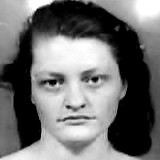
Marie Fikácková
Murderer Waneta Ethel Hoyt
Murderer · USA · 1965
Waneta Ethel (Nixon) Hoyt was born in Richford, New York, and died in prison on…
5 victims
Waneta Ethel Hoyt
Murderer · USA · 1965
Waneta Ethel (Nixon) Hoyt was born in Richford, New York, and died in prison on…
5 victims
 Sharon Kinne
Murderer · Mexico · 1960
Sharon Kinne was known in Mexico as La Pistolera. She was an American murderer.…
3 victims
Sharon Kinne
Murderer · Mexico · 1960
Sharon Kinne was known in Mexico as La Pistolera. She was an American murderer.…
3 victims
 Alicia Crimmins
Murderer · USA · 1965
Name: Alicia Crimmins On her first trial in 1968 was charged only with the deat…
2 victims
Alicia Crimmins
Murderer · USA · 1965
Name: Alicia Crimmins On her first trial in 1968 was charged only with the deat…
2 victims
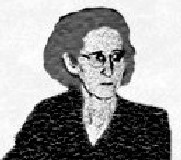 Earle Dennison
Murderer · USA · 1952
Earle Dennison was a widow and worked as a surgical nurse. She worked at the We…
2 victims
Earle Dennison
Murderer · USA · 1952
Earle Dennison was a widow and worked as a surgical nurse. She worked at the We…
2 victims
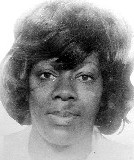 Marie Dean Arrington
Murderer · USA · 1964
Marie Dean Arrington (born August 8, 1933) was an American criminal. She was al…
2 victims
Marie Dean Arrington
Murderer · USA · 1964
Marie Dean Arrington (born August 8, 1933) was an American criminal. She was al…
2 victims
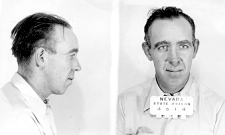 Floyd McKinney
Murderer · USA · 1943
Floyd L. McKinney was a native of Gateway, Oregon. He was 34 at the time of his…
2 victims
Floyd McKinney
Murderer · USA · 1943
Floyd L. McKinney was a native of Gateway, Oregon. He was 34 at the time of his…
2 victims
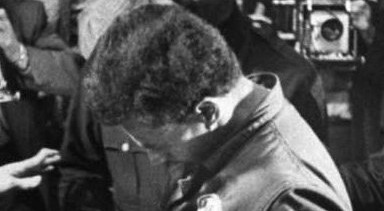 Angelo LaMarca
Murderer · USA · 1956
Angelo LaMarca Angelo LaMarca was executed by electrocution in Sing Sing Prison…
1 victim
Angelo LaMarca
Murderer · USA · 1956
Angelo LaMarca Angelo LaMarca was executed by electrocution in Sing Sing Prison…
1 victim
 Bernard Rhodes
Murderer · USA · 1997
Bernard Rhodes was convicted of first degree murder and first degree robbery. T…
1 victim
Bernard Rhodes
Murderer · USA · 1997
Bernard Rhodes was convicted of first degree murder and first degree robbery. T…
1 victim
 David Francis Brom
Homicide · USA · 1988
David Francis Brom (born October 3, 1971) killed his parents, brother, and sist…
4 victims
David Francis Brom
Homicide · USA · 1988
David Francis Brom (born October 3, 1971) killed his parents, brother, and sist…
4 victims
 Mine An Ener
Murderer · USA · 2003
Mine An Ener was a Villanova University history professor specializing in Middl…
1 victim
Mine An Ener
Murderer · USA · 2003
Mine An Ener was a Villanova University history professor specializing in Middl…
1 victim
 James Campbell
Murderer? · USA · 1997
September 1997 — James Campbell’s first trial ended with a hung jury. · January…
2 victims
James Campbell
Murderer? · USA · 1997
September 1997 — James Campbell’s first trial ended with a hung jury. · January…
2 victims
- Gender
- female
- Country
- Czech Republic
- Location
- Sušice, Pilsem Region, Czech Republic
- Date of birth
- September 9, 1936
- Age at first offence
- 24
- Characteristics
- nurse
- Victim profile
- N ewborn babies
- Method of murder
- Beating around the head
- Date(s) of murder
- February 23, 1960
- Years active
- 1960
- Date of arrest
- 4 days after
- Status
-
Executed
Sentenced to death on October 6th, 1960; executed by hanging at Pankrák Prison on April 13th, 1961
Other details
Marie Fikáčková (September 9, 1936 in Sušice - April 13, 1961) was a Czech serial killer.
Fikáčková grew up in a dysfunctional family, and her marriage had failed. She worked as a nurse in the hospital in Sušice, in its obstetrics department. She started working at the maternity ward in October 1957.
Fikáčková passed the leaving examination at the Secondary Medical Service School in Klatovy in 1955. She became a nurse at the District National Health Centre in Sušice the same year. She was said to be known as a decent woman and a hard working nurse, and she was even about to be promoted to a head nurse. When she was being questioned by police, she said she used to be tortured by her mentally affected brother, and she mentioned her violent neighbour.
At the time of the crimes, Fikáčková was married, but childless, and she was described as being a person with hysteria and blow-up tendencies which were beyond her control. She stated that she was completely sane when committing her crimes. She also said she would even hit her own child if it cried very often, and she said she attacked only crying babies who could not be calmed down. She said:
"I was trouncing the babies right before or during my periods only. Crying babies drove me crazy and my hatered of them even grew."
She stated about pressing a newborn’s head:
"When I was pressing little Prosserová's head, I could feel my fingers sinking into it. I did not feel any skull cracking at that time. I was just pressing the little head and my fingers got deeper and deeper. My anger faded away after a while and I could continue working."
Her father was described as violent and a heavy drinker who hated the Czechs, and she did not relate to her mother. They quarrel very often.
The offence
In 1960, Fikáčková was taken into custody and accused of the murder of a newborn. During investigation, she confessed to killing at least 10 newborn babies since 1957.
She beat her victims around the head, causing them to die within hours or days.
The motive for the murders was never fully explained. The local people were taken aback, and there was a rumour about the number of murdered babies and the way the babies were wounded. Some people spoke about stabbing needles in the eyes and heads of newborn babies, and although there was no evidence, the nurse was said to be responsible for every baby who had died recently.
Before the court, Fikáčková was charged with only two murders, as it was not possible to prove the older killings. The hospital lacked properly functioning supervision mechanisms to deal with the deaths of newborns, and the murders were discovered only by chance.
Arrest and investigation
Fikáčková was arrested right at the maternity ward of the Sušice District Hospital on February 27th, 1960.
Two newborn babies, girls, died while she was on duty on February 23rd, 1960. The autopsy proved that a serious brain injury was the cause of death of the two newborn babies. One of them had even broken arms.
The questioning started on February 28th, 1960 and took nearly six hours. After midnight, Fikáčková spontaneously pleaded quilty.
She stated she crushes the head and breaks arms of the only twenty-hour old newborn baby right at the maternity ward, and she wounded to death a five-week old baby the very same day. She said she attacked ten more newborn babies before, and they were said to survive.
Police had to make sure Fikáčková had not murdered some more newborn babies. They checked the whole collection of the handwritten medical documents, the work schedules, and the autopsy records, but they did not find any other strange death of a newborn baby.
Nevertheless, the medical documents wrote on two newborn babies who suffered an injury when Fikáčková was on duty. The babies were thought to be injured while changing or weighing them. Those injuries were explained when Fikáčková pleaded quilty. She was accused of those crimes too.
The pathologists were present at the autopsy of the two newborn babies murdered by Marie Fikáčková on February 23rd, 1960.
Trial and sentencing
The court followed the principle "In dubio pro reo" meaning "When you are not proved guilty, you are proved innocent".
Fikáčková was sentenced to death on October 6th, 1960. It was almost eight months after her being arrested. Her solicitor appealed from the judgement twice, but the sentence stayed the same.
A question was raised in relation to sentencing and whether earlier killings should have been taken into account, and it was stated that a lighter sentence might have come into question as a bodily harm resulting in death. It was also stated that the medical experts did not answer the question of her sanity clearly, and if she had been found not to be able to control her "blow-ups", she would have never been sentenced to death.
Outcome
Fikáčková was executed by hanging in Pankrác Prison on April 13th, 1961, early in the morning.
Aftermath
In 2007, the yellow press infirmed the real number of newborn babies who died after her attack. Some journalists labelled her "the present greatest serial killer" and were sure there were at least ten more victims of hers. It was also stated that she was said to be responsible for a lifelong suffering of many more newborn babies in a form of inadequacy resulting in an early death, but there was said to be neither direct nor circumstantial evidence for those opinions.
It was stated that infectious infantile paralysis caused the death of lots of newborn babies, infants and little children at that time. The medical statistics said that every twelveth child died of that disease in the early 1950s. The last infectious infantile paralysis pandemic, which repeated every three or five years, broke out in Czechoslovakia in 1957.
Fikáčková became a nurse at the maternity ward in Sušice in 1957. The yellow press said Fikáčková murdered the very first newborn baby in 1957, but it was said the baby was highly probable to die of infectious infantile paralysis. It was stated that the then medical routine excluded the possibility of committing a serial murder within a health centre.
It was stated that the local registry office and the local district people’s committee must be notified of any death within the local health centre, and that whenever a newborn baby died, an autopsy was necessary so doctors could learn the cause and circumstances of the death, and autopsies were required even when a child was born dead, a child died, or a woman in childbed died.
It was stated that if there was a suspicion of murder, there were always two pathologists from the Legal Medicine Institute present at the autopsy.
It was stated that more than 94 per cent of all children in the then Czechoslovakia were vaccinated against infectious infantile paralysis during 1960, and that the disease had not occured in the Czech Republic since August 1960. Marie Fikáčková was arrested in February 1960. It was stated that Czechoslovakia became the very first country in the world where such a disease had been completely stamped out, and that children’s lives were endangered by lots of confirmed diseases now, such as (non-infectious) infantile cerebral palsy.
It was stated that law enforcement authorities and the Local People’s Committe in Sušice were hardly to be accused of withholding the truth of the real number of dead children.
It was stated that Fikáčková was the very first woman executed after 1918.

Spotted an error, or have more information about this case?