
Ronald Straight
Murderer Ervil LeBaron
Murderer · USA · 1972
Ervil Morrell LeBaron (1925 to August 16, 1981) was the leader of a polygamous…
35 victims
Ervil LeBaron
Murderer · USA · 1972
Ervil Morrell LeBaron (1925 to August 16, 1981) was the leader of a polygamous…
35 victims
 Brian Kevin Rosenfeld
Murderer · USA · 1985
Brian Kevin Rosenfeld Brian Kevin Rosenfeld was sentenced to three concurrent l…
23 victims
Brian Kevin Rosenfeld
Murderer · USA · 1985
Brian Kevin Rosenfeld Brian Kevin Rosenfeld was sentenced to three concurrent l…
23 victims
 Marvin Gray
Murderer · USA · 1975
Marvin Gray was convicted killer who claimed responsibility for 23 slayings and…
23 victims
Marvin Gray
Murderer · USA · 1975
Marvin Gray was convicted killer who claimed responsibility for 23 slayings and…
23 victims
 Yahweh ben Yahweh
Murderer · USA · 1980
Yahweh ben Yahweh was born and legally named Hulon Mitchell Jr. (October 27, 19…
23 victims
Yahweh ben Yahweh
Murderer · USA · 1980
Yahweh ben Yahweh was born and legally named Hulon Mitchell Jr. (October 27, 19…
23 victims
 John Joseph Fautenberry
Serial killer · USA · 1990
John Joseph Fautenberry was a former Oregon truck driver. Fautenberry was broug…
6 victims
John Joseph Fautenberry
Serial killer · USA · 1990
John Joseph Fautenberry was a former Oregon truck driver. Fautenberry was broug…
6 victims
 Mario Celaire
Murderer · United Kingdom · 2001
Mario Celaire was convicted of a sexual offence when he was 15 and served four…
1 victim
Mario Celaire
Murderer · United Kingdom · 2001
Mario Celaire was convicted of a sexual offence when he was 15 and served four…
1 victim
 Paul Jaworski
Murderer · USA · 1926
Paul Jaworski was born in Poland as Paul Poluszynski in 1900. He later immigrat…
20 victims
Paul Jaworski
Murderer · USA · 1926
Paul Jaworski was born in Poland as Paul Poluszynski in 1900. He later immigrat…
20 victims
 Futoshi Matsunaga
Serial killer · Jap an · 1996
Futoshi Matsunaga ( 松永 太 , Matsunaga Futoshi , born April 28, 1961) was a Japan…
7 victims
Futoshi Matsunaga
Serial killer · Jap an · 1996
Futoshi Matsunaga ( 松永 太 , Matsunaga Futoshi , born April 28, 1961) was a Japan…
7 victims
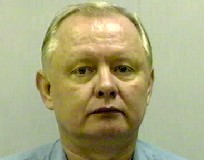 Danny Crump
Mass murderer · USA · 1980
Danny Crump left a package marked "Handle with Care" on the hood of his ex-wife…
6 victims
Danny Crump
Mass murderer · USA · 1980
Danny Crump left a package marked "Handle with Care" on the hood of his ex-wife…
6 victims
- Gender
- male
- Country
- USA
- Location
- Duval County, Florida, USA
- Date of birth
- 1943
- Age at first offence
- 33
- Characteristics
- robbery, torture
- Victim profile
- James N. Stone ( furniture store owner )
- Method of murder
- St abbing with knife
- Date(s) of murder
- October 4, 1976
- Years active
- 1976
- Date of arrest
- —
- Status
-
Executed
Executed by electrocution in Florida on May 20, 1986
Case record: Ronald Straight
Status
Ronald Straight was executed by electrocution in Florida on May 20, 1986.
Timeline
- July 30, 1976 — Straight received a mandatory conditional parole from the Florida Parole and Probation Commission.
- By early September 1976 — Straight drifted to Jacksonville and moved into an apartment occupied by Timothy Palmes, Jane Albert, and Albert’s seven-year old daughter.
- By late September 1976 — Stone decided not to employ Palmes; Palmes told Straight and another, “You know, I'm going to kill him.”
- Sunday, October 3, 1976 — Straight, Palmes and Albert purchased lumber, cement, metal supports and screws to construct a heavily weighted coffin.
- Monday, October 4, 1976 — Albert lured Stone from the store to her apartment; Straight and Palmes struck Stone with a hammer, bound his hands and feet with wire, placed him in the box, beat him, amputated several of his fingers, and tortured him until Stone was stabbed eighteen times with a machete and butcher knife.
- After the killing (undated) — They took Stone’s watch, money and car; Albert took $2,800.00 from the store; the weighted coffin with Stone’s corpse was dumped in the St. Johns River; Albert, her daughter, Palmes and Straight left for California.
- After arrival in California (undated) — Police there apprehended them; Straight resisted arrest by firing a weapon at the officers.
- January 30, 1985 — Straight’s co-defendant, Timothy Palmes, was executed.
- September 13, 1985 — The United States Court of Appeals for the Eleventh Circuit decided Straight’s appeal (No. 84-3447).
- May 20, 1986 — The Supreme Court of the United States denied a stay application; the order staying the execution of the sentence of death until 5 p.m., May 20, 1986 was vacated; Straight was executed by electrocution.
- May 19, 1986 — 488 So. 2d 530 (Florida Supreme Court briefs and opinions docket #68773 referenced in the case summary).
Background
Ronald John Michael Straight was convicted in Florida and sentenced to death for the murder of Jacksonville businessman James N. Stone.
Straight was a co-defendant with Timothy Palmes, who was executed on January 30, 1985.
Straight later sought post-conviction relief, which was denied by the state courts. He then filed a habeas corpus action in the United States District Court for the Middle District of Florida, which was also denied; the United States Court of Appeals for the Eleventh Circuit affirmed.
In the Supreme Court materials, Straight’s matter was identified as a second federal habeas corpus petition, and the Supreme Court proceeding addressed an application for a stay of execution and related procedural issues.
The offence
Motive and planning
Straight moved into an apartment in Jacksonville occupied by Timothy Palmes, Jane Albert, and Albert’s seven-year old daughter. Jane Albert worked as a secretary for James Stone, who owned a furniture store. After discussing Stone’s business with Albert, Straight and Palmes proposed that they would collect old debts of Stone’s customers in exchange for forty percent of the monies collected.
Stone rejected their offer because they contemplated using violence against the uncooperative debtors. Stone offered Straight one hundred dollars for new clothes and told Palmes there might soon be a full-time job opening in the store.
By late September, Stone decided not to employ Palmes. Palmes told Straight and another: “You know, I'm going to kill him.” Straight replied that he should have that opportunity because Stone’s offer of money was insulting. They agreed to wait until after the first of October.
On Sunday, October 3, 1976, Straight, Palmes and Albert purchased lumber, cement, metal supports and screws to construct a heavily weighted coffin.
Luring and assault
The next morning, Albert lured Stone from the store to her apartment. Albert’s daughter told Stone to go to the back bedroom. Straight and Palmes were waiting for him.
They struck Stone with a hammer, bound his hands and feet with wire and placed him in the box. For approximately thirty minutes, they beat him, amputated several of his fingers and otherwise tortured him. During this time the victim repeatedly begged for his life.
Finally, with a machete and butcher knife, Straight and Palmes stabbed Stone eighteen times, eventually killing him.
Robbery and disposal of the body
They took Stone’s watch, money and car. Meanwhile, Albert took $2,800.00 from the store.
The weighted coffin with Stone’s corpse was dumped in the St. Johns River. Albert, her daughter, Palmes and Straight then left for California.
Investigation and arrest
When police there apprehended Albert, her daughter, Palmes and Straight, Straight resisted arrest by firing a weapon at the officers.
Albert was granted immunity from prosecution by the state in exchange for her testimony as a witness.
Palmes confessed and the coffin was recovered from the river.
Trial
Straight and Palmes were tried separately. Both were convicted of first degree murder and sentenced to death.
Sentencing
Following the jury’s advisory sentence of death, the trial court reviewed the evidence and a presentence investigative report. The court found four aggravating circumstances and no mitigating circumstances.
Straight later challenged the trial court’s application of the sentencing statute to the evidence.
Mitigating circumstances instruction issue
During the penalty phase, the trial judge instructed the jury:
“The aggravating circumstances which you may consider are limited to such of the following as may be established by the evidence.”
and then read the statutory aggravating circumstances. The trial judge then instructed the jury: “The mitigating circumstances which you may consider, if established by the evidence, are these....”
Straight contended that the mitigating circumstances instruction failed to adequately inform the jurors that they could also consider non-statutory factors in mitigation, including evidence of his prior history of drug abuse and psychotherapy and his less extensive participation in the murder.
The district court found that Straight failed to object in the trial court or on direct appeal as required by Florida law, which precluded federal habeas corpus review. The United States Court of Appeals for the Eleventh Circuit agreed with the district court, concluding that Straight failed to demonstrate cause for not complying with Florida’s procedural rules.
Aggravating circumstances challenged
Straight challenged findings related to aggravating factors.
The district court and Court of Appeals addressed claims that the trial judge considered improper aggravating factors, including Straight’s armed resistance when arrested and the parole officer’s opinion that he was a danger to society. The Court of Appeals concluded that a reading of the sentencing order showed those facts were considered only to the extent that they negated possible mitigating circumstances, and that there was no indication the judge treated them as aggravating factors.
Straight also pointed out that the trial court relied on the same facts to find two aggravating circumstances. The Court of Appeals described that the Florida Supreme Court had held that “doubling” was error but harmless in Straight’s case because even if one aggravating circumstance were eliminated, three aggravating factors remained and there were no mitigating circumstances.
The Florida Supreme Court explained:
Where it is clear that the sentencing judge merely recited both statutory factors without giving improper double consideration to the single aspect in question, or where the absence of mitigating circumstances makes clear that any added weight accorded the factor did not tip the balance in favor of a sentence of death rather than life, the error of double recitation is harmless.
The United States Court of Appeals referenced United States Supreme Court approval of harmless error analysis in this context, including Barclay v. Florida.
The Court of Appeals concluded that it could not say Straight’s sentence was imposed in any unconstitutional manner because the Florida Supreme Court determined Straight would have been sentenced to death even if both the robbery and pecuniary gain aggravating factors were excluded from consideration.
Appeals
Eleventh Circuit habeas appeal (No. 84-3447)
Straight appealed the denial of his habeas corpus petition in the United States Court of Appeals for the Eleventh Circuit.
The Court considered four alleged errors:
- The trial judge misled the jurors regarding mitigating factors not specified in Florida’s capital sentencing statute, Fla.Stat.Ann. Sec. 921.141(6).
- The trial court improperly applied the statutory list of aggravating and mitigating circumstances to the evidence.
- Straight’s counsel was ineffective at trial and on appeal.
- The Florida Supreme Court violated due process rights by soliciting ex parte non-record material while reviewing the appeal.
The Court addressed each claim and affirmed the district court’s denial of habeas corpus relief, stating it found no reversible error.
United States Supreme Court stay and petition proceedings
A Supreme Court order vacated the prior stay of execution until 5 p.m., May 20, 1986, and denied an application for stay presented to Justice POWELL and referred to the Court. The Supreme Court decision included concurrences and dissents.
The Supreme Court materials described Straight’s execution as scheduled in Florida at 5:01 p.m. that afternoon, and the dissents argued about whether non-statutory mitigating factors could be considered, referencing Lockett v. Ohio.
Justice POWELL’s reasons included that Straight was on his second federal habeas corpus petition, and that the District Court had dismissed the petition under Habeas Corpus Rule 9(b) as successive and found abuse of the writ where new arguments could have been raised earlier. The concurrence asserted there was no basis for concluding the District Court abused its discretion, and that there was no ground for reaching the merits argument.
Outcome
The United States Court of Appeals for the Eleventh Circuit affirmed the judgment of the district court denying Straight’s petition for a writ of habeas corpus.
The Supreme Court vacated the stay, denied the application for stay, and execution proceeded.
Aftermath
Spotted an error, or have more information about this case?