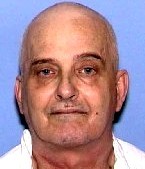
Danny Paul Bible
Murderer Ervil LeBaron
Murderer · USA · 1972
Ervil Morrell LeBaron (1925 to August 16, 1981) was the leader of a polygamous…
35 victims
Ervil LeBaron
Murderer · USA · 1972
Ervil Morrell LeBaron (1925 to August 16, 1981) was the leader of a polygamous…
35 victims
 Brian Kevin Rosenfeld
Murderer · USA · 1985
Brian Kevin Rosenfeld Brian Kevin Rosenfeld was sentenced to three concurrent l…
23 victims
Brian Kevin Rosenfeld
Murderer · USA · 1985
Brian Kevin Rosenfeld Brian Kevin Rosenfeld was sentenced to three concurrent l…
23 victims
 Marvin Gray
Murderer · USA · 1975
Marvin Gray was convicted killer who claimed responsibility for 23 slayings and…
23 victims
Marvin Gray
Murderer · USA · 1975
Marvin Gray was convicted killer who claimed responsibility for 23 slayings and…
23 victims
 Yahweh ben Yahweh
Murderer · USA · 1980
Yahweh ben Yahweh was born and legally named Hulon Mitchell Jr. (October 27, 19…
23 victims
Yahweh ben Yahweh
Murderer · USA · 1980
Yahweh ben Yahweh was born and legally named Hulon Mitchell Jr. (October 27, 19…
23 victims
 Marlon DeWayne Williams
Murderer · USA · 1993
Marlon DeWayne Williams was a drug dealer. Williams was black. He was 26 when e…
1 victim
Marlon DeWayne Williams
Murderer · USA · 1993
Marlon DeWayne Williams was a drug dealer. Williams was black. He was 26 when e…
1 victim
 Jesusa Tatad
Murderer · USA · 2011
Jesusa Tatad was 41 years old at the time of her sentencing. She had divorced R…
1 victim
Jesusa Tatad
Murderer · USA · 2011
Jesusa Tatad was 41 years old at the time of her sentencing. She had divorced R…
1 victim
 Catherine May Wood
Murderer · USA · 1987
Catherine May Wood was an American caregiver who worked at the Alpine Manor Nur…
5 victims
Catherine May Wood
Murderer · USA · 1987
Catherine May Wood was an American caregiver who worked at the Alpine Manor Nur…
5 victims
 Rachel Wade
Murderer · USA · 2009
Rachel Wade (born on February 27, 1990) was convicted of murder in the second d…
1 victim
Rachel Wade
Murderer · USA · 2009
Rachel Wade (born on February 27, 1990) was convicted of murder in the second d…
1 victim
- Gender
- male
- Country
- USA
- Location
- Texas, USA
- Date of birth
- August 28, 1951
- Age at first offence
- 28
- Characteristics
- serial rapist, rape
- Victim profile
- Inez Denton / His sister-in-law, Tracy Powers, her 4-month-old son, Justin, and her roommate, Pamela Hudgins
- Method of murder
- St abbing with an ice pick / St abbing with knife
- Date(s) of murder
- May 27, 1979 / May 1983
- Years active
- 1979–1983
- Date of arrest
- January 1984
- Status
-
Sentenced to death
Sentenced to death on July 17, 2003
Case identifiers
Danny Paul Bible (TDCJ Number 999455)
Personal details
- Date of birth: 08/28/1951
- Gender: Male
- Race: White
- Hair color: Gray
- Height: 05'07"
- Weight: 194
- Eye color: Blue
- Native county: Harris
- Native state: Texas
- Prior occupation: Brazoria Texas Warehouseman, Electrician, Laborer
- Age at receipt: 51
- Education level: 07/17/2003
- Age at the offense: 27
- Date of offense: 05/27/1979
- Date received: 07/17/2003
Prior criminal record
- Prior prison record: #381513 on a 25 year sentence from Palo Pinto County
- Prior conviction details included: 1 count of murder
The offence
On 05/27/1979, in Harris County, Bible attacked and sexually assaulted a white female that came to his residence to use the phone. Bible then stabbed the victim multiple times, resulting in her death.
Victims and confessed killings
Harris County offence and victim
- The May 1979 slaying of Inez Denton, a north Harris County woman who was stabbed repeatedly in the chest and back with an ice pick and raped.
Mineral Wells and related victims (Palo Pinto County)
Bible reportedly confessed to the May 1983 slayings of:
- Tracy Powers
- Justin, Tracy Powers' 4-month-old son
- Pamela Hudgins
The skeletal remains of Tracy Powers and her baby were found the following month, hidden beneath a cattle guard about halfway between Mineral Wells and Weatherford. Their cause of death was not determined. Pamela Hudgins' body was found in a wooded area in Mineral Wells that November. She had suffered trauma to the head.
Investigation and confession (Louisiana)
A man being held in Louisiana on rape charges signed a statement concerning four Texas slayings dating to 1979, including the icepick killing of a Harris County woman.
- Confession timing and context: Bible confessed to the slayings after being jailed in Louisiana in the Nov. 8 rape of a woman there.
- Detective: West Baton Rouge Parish sheriff's detective Randall Walker told the Houston Chronicle for Tuesday editions that Bible confessed to the slayings.
- Walker statement:
"Danny's telling us all about things that happened in Texas," "We can put him in 20-something states since he was paroled [about 1993], so there's no telling what we've got here. " "A serial killer can't kill three or four people and then just quit."
Interview details and tape-recorded statements
On December 16, 1998, Detective Randall Walker, of the West Baton Rouge Parish Sheriff's Office, questioned Bible about the Louisiana offense. Bible gave a tape-recorded statement confessing to that offense (State's Exhibit 2).
The next two tape-recorded statements were obtained on December 18, pursuant to questioning by Detective Walker and Louisiana Trooper Joe Whitmore. Both officers were present during interrogation throughout the day. Detective Walker conducted questioning in the morning and during the first tape-recorded session, while Trooper Whitmore asked questions during the second tape-recorded session.
- Morning (unrecorded) session: began at 9:50 a.m.
- First tape-recorded session: began at 1:40 p.m. and resulted in a tape-recorded confession to the present offense, the aggravated rape and murder of Deaton (State's Exhibit 3A).
- Second tape-recorded session: began sometime in the afternoon, probably no later than 4:10 p.m. and perhaps earlier, and resulted in a tape-recorded confession to the murders of three people in Palo Pinto County (State's Exhibit 4).
The last tape-recorded statement subject to complaints was made on January 6, 1999, and contained confessions to numerous aggravated sexual assault offenses against Bible's five young nieces in San Jacinto County (State's Exhibit 5).
Before each of the interviews in which tape-recorded statements were obtained, the following form from the West Baton Rouge County Sheriff's office was read to Bible:
Warning : Before you can be questioned concerning the alleged offense(s), you must understand and waive your constitutional rights. If you do not understand them, or do not waive them, you cannot be asked any questions concerning the offense(s).
- You have the right to remain silent.
- If you give up the right to remain silent:
A) Anything you say can and will be used against you in "court".
B) You have the right to get advice from a lawyer and to have a lawyer with you during your interview.
C) If you want a lawyer and cannot afford one, the court will appoint one to assist you without charge.
D) If you decide to answer questions now, without consulting with a lawyer and without having one present, you may stop the interview at any time.- You have the right to face your accuser(s) in court.
Consent to speak : I have read this statement of my rights, or had it read to me, and I understand what it says. I am willing to answer questions now without talking to a lawyer first, and without having one present. No promises have been made to me, and no threats have been made against me.
Each day Bible participated in an interview, he signed a copy of the form after it was read to him for the first time that day. Some days, he signed a separate copy for multiple interviews, but only one copy was signed on December 18. The warnings on the form also appeared verbatim on the recordings in State's Exhibits 2, 3A, and 5. On the recordings, after each individual warning, Bible was asked if he understood the particular warning and he replied affirmatively. Bible also was asked during each recording whether the waiver (consent to speak) paragraph was accurate, and replied that it was.
State's Exhibit 4 did not contain these warnings verbatim. Trooper Whitmore reminded Bible that he had been given the West Baton Rouge County Sheriff's form and that this form basically advised Bible of his constitutional rights. Trooper Whitmore reminded Bible that he had read the form, had said that he understood it and had signed it, and that Whitmore and Walker had witnessed those actions, then stated:
"basically, what it [the form] says is that you're voluntarily talking to us, is that correct?"
Bible replied affirmatively. Trooper Whitmore stated he was "not going to go through the entire form" and asked:
"Do you still agree to voluntarily talk to us?"
Bible replied affirmatively. Trooper Whitmore then gave the following warnings in question format, to each of which Bible replied affirmatively:
And you do understand that you don't have to talk to us?
And you do understand that in the course of talking to us if you decide to stop talking to us at any time that you have the right to do that?
You also understand that you have the right to have an attorney present here while we're talking to you?
At the conclusion of those warning questions and Bible's responses, Trooper Whitmore asked:
"And you've agreed to continue to talk to us, voluntarily, of your own free will?"
Bible answered in the affirmative.
In its findings of fact and conclusions of law, the trial court found that Bible was in custody, that he was read Miranda warnings each and every time officers took a taped statement from him, that Bible freely and voluntarily waived his constitutional rights on each of those occasions, and that no threats or promises were made to Bible in exchange for his statements.
Court of Criminal Appeals issue regarding admissibility
Bible contended on appeal that four tape-recorded statements obtained in Louisiana were admitted into evidence in violation of Article 38.22 because Louisiana law enforcement officers failed to give some warnings required by the statute. Specifically, he contended that the warnings were deficient because they specified that his statements could be used against him in "court" but did not specify that the statements could be used against him at "trial." Defense counsel also contended that the Louisiana warnings did not explain that the defendant had a right to consult an attorney "prior to" questioning.
Bible raised fourteen points of error and two supplemental points of error. The Court of Criminal Appeals stated: "We shall affirm."
Arrest and related proceedings
Bible was arrested in January 1984 in Fort Myers, Fla. Later pleaded guilty to the Hudgins murder and was sentenced to 25 years in prison. He also pleaded guilty to aggravated kidnapping in a Montana case and got 20 years. The sentences were served concurrently, and Bible was paroled after serving nine years.
Bible later made another tape-recorded confession to the murders to Texas police detectives, introduced at trial as State's Exhibit 1. The Court noted that Bible did not contest the admissibility of this subsequently recorded confession.
Trial
Bible was convicted in June 2003 of a capital murder committed in May 1979.
Pursuant to the jury's answers to special issues set forth in Texas Code of Criminal Procedure, Articles 37.0711 §§3(b) and 3(e), the trial judge sentenced appellant to death.
Sentencing
The trial judge sentenced Bible to death based on the jury's answers to the special issues.
Appeals
Direct appeal and affirmance
Direct appeal to the Court was automatic. The Court affirmed the trial court’s judgment. Keller, Presiding Judge, delivered the opinion of the Court, with other listed judges joined and Price, J. concurring in the result. The Court’s date delivered was May 4, 2005, and it was published.
Points of error addressed
Confession admissibility (points of error one through four)
Bible argued that Louisiana tape-recorded statements were admitted in violation of Article 38.22. The Court addressed choice-of-law arguments by finding the recorded statements admissible under Article 38.22.
The Court’s analysis included that the warnings were a "fully effective equivalent" and that earlier objections about "court" versus "trial" were previously resolved. The Court discussed that State's Exhibit 4 lacked some warnings verbatim but held that it should not be looked at in isolation and that Trooper Whitmore’s conduct constituted administration of a "fully effective equivalent" to the required warnings and satisfied Miranda.
The Court overruled points of error one through four and supplemental points of error.
Jury instruction on voluntariness and implied promise (point of error five)
Bible complained about the trial court’s refusal to submit a jury instruction concerning voluntariness of Bible's tape-recorded confession to the primary offense given to Texas law enforcement officers (State's Exhibit 1). Bible claimed there was an implied promise or expectation of a life sentence rather than the death penalty.
The Court recited testimony from Harris County Detective Roger Wedgeworth, including the following testimony excerpts:
Q. At this point right now tell the jury what it was you said to Danny Bible in regards to this conversation.
A. Well, I told him that I understood what he what [sic] was trying to do. By confessing to us I understood that he was agreeing to come to Texas to confess to this murder, to plea out for a life sentence. He wanted to do his time here in Texas because that's where his family is. His mother and dad I think is the reason that he gave, as to wanting to come back to Texas.
Q. So, you gave that explanation in the beginning to the defendant?
A. Yes, I did.
Q. Did you make any explanations or try to clear that up with the defendant before you began your interviewing, the details of this murder?
Q. Tell the jury what you told him?
A. Well, he was 47 years old at the time we talked and I understood that any lengthy prison sentence would be a life sentence for him. He'd spend the rest of his life in jail.
Q. Did you tell him that?
A. I did tell him that, yes.
Q. What else did you tell him?
A. Well, that I understood, you know, what he wanted to do.
Q. And as far as understanding of what it was he wanted, what did you say to him by way of explanation as to whether or not you could make that happen?
A. Oh, I see. We - I explained to him that I couldn't make any kind of deal for him at all. That any deal that was made would have to go through the district attorney's office.
[Cross-Examination]
Q. And what you concluded after talking to Detective Walker, and even before you talked to the defendant, was he was trying to get out of Louisiana and go to Texas to serve time and he would serve it on this case; right?
A. That's - that's what his goal was, yes, sir.
Q. He would plead for a life sentence on this case?
A. Yes, sir.
Q. And what you told him was, that based on his age any sentence he got would be a life sentence?
A. Yes, sir, that is correct.
Q. Now, you didn't mean for that to sound like that you were promising him that any sentence he got would be a life sentence, you were referring to his age; right?
A. That's correct.
Q. But what you told him was, any sentence you get will be a life sentence for you?
A. Well, that - I mean, that's - I told him that, that is true.
Q. Did any discussion about the death penalty come up while you were questioning him?
A. No.
Q. Did you tell him, tell the defendant, that in order for him to get to Texas and serve a sentence, he was going to have to confess for the DA to be able to take the charges in the case?
A. Well, I told him that I wasn't the one that could make any kind of decision, period. And that it was entirely up to the DA. That's what I told him.
Q. You didn't tell him anything about he had to confess?
A. I never told him that he had to confess.
Q. Or give a statement? I thought you testified previously that what you told him was that he was going to have to tell you-all first whatever it was he had to tell you?
A. Well, I know exactly what I said back then and that is what I said. But the fact is, whenever we first met with him, we asked him if he would talk with us and he said he would and all that. And I told him that everything would have to go to the district attorney's office; but, in order for us to show them anything we had to have something from him. That's basically what I said back then.
Q. Okay. So, you knew he wanted a life sentence. You told him that whatever he got was going to amount to a life sentence for him and for him to get that he was going to have to tell you, he was going to have to talk to you.
A. Well, I told him I knew what he wanted to do. I knew he wanted to go to Texas to be with family, because it is a lot easier to do time with family around. But yes, I told him that.
And the reason I am asking that is none of us can read the defendant's mind. We don't know how he actually interpreted what you said. We understand what you meant by what you said, but at issue is what he understood. And you admit that he was making it really clear to you that he wanted to confess because he wanted to go serve his time in Texas?
A. I understood that that's, in fact, what he wanted to do. (Emphasis added).
The Court held there was no evidence of any promise from Wedgeworth that Bible would receive a life sentence instead of the death penalty and that it was undisputed Wedgeworth clearly explained he had no authority to make deals. Point of error five was overruled.
Future dangerousness (point of error fourteen)
Bible contended the evidence was legally insufficient for the future dangerousness special issue because he had previously received a life without parole sentence in Louisiana and only would interact with prison society. He also argued evidence showed he was not a threat to prison society based on two minor, nonviolent disciplinary infractions in Texas and that the State presented no evidence of disciplinary infractions during Louisiana incarceration.
The Court rejected the argument and overruled point of error fourteen, stating the record showed numerous violent offenses and that a rational jury could find a continuing threat to society.
The Court listed violent conduct including: after raping and killing Deaton, Bible fled to Montana and Wyoming where he developed an abusive relationship; Bible grounded his knee into her ear, punched her in the face requiring stitches, poured gasoline onto her vehicle and set it on fire, and attacked her vehicle with an axe while a three-year-old child was inside. After that relationship ended, he murdered Tracy Powers, Justin, and Pam Hudgins, fled back to Montana where he kidnapped a young woman and an eleven-year-old girl and raped the girl. The Court stated that Bible pleaded guilty on August 3, 1984 to the Pam Hudgins murder and was sentenced to twenty-five years; he pleaded guilty to two aggravated kidnappings in Montana; he was placed on parole and moved to Texas where he sexually assaulted his five nieces numerous times; and on November 7, 1998 while in Louisiana, he compelled Tera Robinson to submit to a sexual assault under threat of death, tied Robinson up, and attempted to stuff Robinson into a duffel bag unsuccessfully.
The Court added that Bible had killed four people including an infant, and had sexually assaulted numerous others and might have killed the latest victim if he had succeeded in stuffing her into a duffel bag.
Extraneous offences and corpus delicti (points of error six and seven)
Bible contended that portions of his January 6 confession relating to sexual assault of two nieces were improperly admitted because the State failed to present corroborating evidence and argued the corpus delicti doctrine required independent evidence that the offenses occurred.
The Court addressed that Bible confessed to sexually molesting and assaulting five nieces, with the oldest being K.B., three other nieces being K.B.’s sisters, and one being a cousin. The Court stated K.B. testified to numerous instances of Bible sexually assaulting her, one sister (S.B.), and a cousin, but had not observed Bible sexually assaulting the two youngest sisters. The Court stated the only evidence of sexual misconduct with the two youngest sisters came from Bible’s confession.
The Court held the corpus delicti doctrine did not apply to extraneous offenses offered at the punishment phase of a capital case trial. Points of error six and seven were overruled.
Definition of “deliberately” (point of error ten)
Bible complained about refusal to define “deliberately” in the jury charge. The Court stated it had resolved the issue adversely and overruled point of error ten.
Prosecutor's argument: definition of “intentionally” (point of error eleven)
Bible argued that the prosecutor gave an erroneous definition of “intentionally” in closing argument at punishment stage. The Court referenced the prosecutor exchange and the objection.
The Court included the following verbatim passage:
[PROSECUTOR]: And so, we have these issues up here for you to have to deal with. And what's the first one? Do you find from the evidence beyond a reasonable doubt that the conduct of the defendant that caused the death of the deceased was committed deliberately and with a reasonable expectation that the death of the deceased or another would result? Deliberately, you have heard it defined for you somewhat. You know that it doesn't mean what you found him guilty of when you said he acted intentionally, because intentionally means (snaps finger) it happened that fast. He decided in that split second to commit that capital murder. [DEFENSE COUNSEL]: Your Honor, I object. That is a misstatement. Intentionally doesn't mean that it happened that fast. It means conscious objective or desire. [THE COURT]: Overruled. [PROSECUTOR]: So, it doesn't mean intentionally. That's true. It also does not mean premeditated, planning, long, drawn-out process like [defense counsel] would have you think it means. Whatever you want it to mean is completely up to you. It is difficult to see how the prosecutor's misdefining the term "intentionally" in the punishment phase could have any adverse effect on the defendant since that term was used only at guilt, and the jury had already found him guilty.
The Court overruled point of error eleven.
Prosecutor’s argument: “deserved to die” (point of error twelve)
Bible contended the prosecutor engaged in improper argument by saying he “deserved to die.” The Court reproduced relevant portions of the record.
Relevant verbatim record passage:
[PROSECUTOR]: Finally, you are on this jury because you believe that there are crimes that have been committed and defendants who exist that deserve the death penalty. Because you appreciate the fact that there is [sic] some people born you just can't do anything else with. And God only knows why they turn out the way they do or what made them the way they are. None of us are ever going to understand that. But because there are people like that, that's why we had [sic] the death penalty. And for those kinds of people to deal with those sorts of people our law has crafted these issues to address when it is appropriate and when it is not. The questions are designed to try and make it all a process that we can all deal with. And when you answer these questions you answer them because you know in your heart that some people deserve the death penalty. [DEFENSE COUNSEL]: Your Honor, she is appealing to them to answer the questions based on what they think is deserved, not on the basis of those questions. [THE COURT]: Overruled. [PROSECUTOR]: No, I am not. I am telling you to keep in mind that we have the death penalty for reasons that you-all understand. And if you ask yourself the question. Why do we have the death penalty? And you ask yourself which deserve it and which don't, do you think anybody deserves it less - [DEFENSE COUNSEL]: Objection, again, to the argument. They are trying to decide what he deserves rather than answering these three questions. [THE COURT]: Overruled. [PROSECUTOR]: - than Danny Bible? How many people do you have to murder to be a future threat to deserve the death penalty? One, two, three, four? How many children do you have to rape to deserve the death penalty, to be a threat? How many women do you have to rape to deserve the death penalty, to be a future threat? How many babies do you have to kill? Danny Bible's done all those things. There can be no doubt in your mind that the answers to those questions are yes and yes and no, because there is only one place where he belongs. He has left you with no other choice. Sentence him to death.
The Court held the argument was related to the special issues and overruled point of error twelve.
Prosecutor’s argument: burden of proof on future dangerousness (point of error thirteen)
Bible contended a prosecutor comment improperly shifted the burden of proof on future dangerousness special issue. The Court included verbatim record passage:
[PROSECUTOR]: You may hear from the Defense, He was good when he was in the penitentiary. Well, let me tell you something. You don't find anything but one year's worth of information that he didn't do anything wrong, that year from '83 to '84, when he was in the penitentiary. I defy you to find a shred of documents anywhere in evidence that says he is a model prisoner. You won't find it.
The Court overruled point of error thirteen.
Constitutionality of death penalty scheme (point of error nine)
Bible argued the death penalty scheme was unconstitutional due to lack of meaningful appellate review of special issues. The Court stated it refused to conduct certain reviews and that the argument had been previously decided against him, and overruled point of error nine.
Substance used in executions (point of error eight)
Bible contended pancuronium bromide, one of the substances used in Texas executions, inflicted cruel and unusual punishment in violation of the Eighth Amendment. The Court overruled point of error eight, stating the record was not sufficiently developed and the claim involved a fact-intensive inquiry.
Other proceedings and statements from individuals
- Palo Pinto County Sheriff Larry Watson, who investigated the North Texas murders, told KXAS-TV that Bible "is your typical serial killer."
- Bible's sister, Cathy Maples, told Houston television station KPRC that she thought her brother was innocent:
"I feel like my brother did not do any crime, that he didn't do anything wrong," she said.
"I know it in my heart that he didn't." - Bible's cousin Wynona Bible, who was friends with Inez Denton, said Inez Denton was last reported seen alive after going to her grandmother's house to use the phone. Wynona said Bible was there and that she had always suspected him:
"I remember that day like it was yesterday," she said.
- Walker statement about future investigative developments:
"I think we'll get more in the long run," he said.
Aftermath
The trial court's judgment was affirmed. The conviction leading to the death sentence remained in effect under the Court of Criminal Appeals’ affirmance.
Spotted an error, or have more information about this case?