Henry Willis
Murderer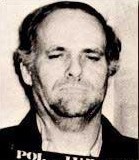 Ervil LeBaron
Murderer · USA · 1972
Ervil Morrell LeBaron (1925 to August 16, 1981) was the leader of a polygamous…
35 victims
Ervil LeBaron
Murderer · USA · 1972
Ervil Morrell LeBaron (1925 to August 16, 1981) was the leader of a polygamous…
35 victims
 Brian Kevin Rosenfeld
Murderer · USA · 1985
Brian Kevin Rosenfeld Brian Kevin Rosenfeld was sentenced to three concurrent l…
23 victims
Brian Kevin Rosenfeld
Murderer · USA · 1985
Brian Kevin Rosenfeld Brian Kevin Rosenfeld was sentenced to three concurrent l…
23 victims
 Marvin Gray
Murderer · USA · 1975
Marvin Gray was convicted killer who claimed responsibility for 23 slayings and…
23 victims
Marvin Gray
Murderer · USA · 1975
Marvin Gray was convicted killer who claimed responsibility for 23 slayings and…
23 victims
 Yahweh ben Yahweh
Murderer · USA · 1980
Yahweh ben Yahweh was born and legally named Hulon Mitchell Jr. (October 27, 19…
23 victims
Yahweh ben Yahweh
Murderer · USA · 1980
Yahweh ben Yahweh was born and legally named Hulon Mitchell Jr. (October 27, 19…
23 victims
 Victor Ernest Hoffman
Mass murderer · Canada · 1967
Victor Ernest Hoffman (born 1946; died May 21, 2004) was found not guilty by re…
9 victims
Victor Ernest Hoffman
Mass murderer · Canada · 1967
Victor Ernest Hoffman (born 1946; died May 21, 2004) was found not guilty by re…
9 victims
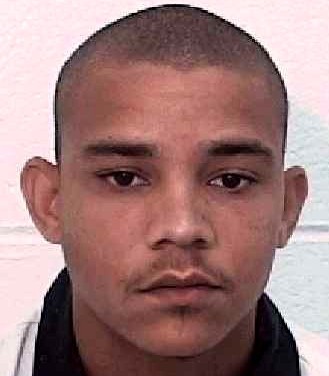 Marion Wilson
Murderer · USA · 1996
Marion Wilson Jr. was convicted of malice murder, felony murder, armed robbery,…
1 victim
Marion Wilson
Murderer · USA · 1996
Marion Wilson Jr. was convicted of malice murder, felony murder, armed robbery,…
1 victim
 Kirt Wainwright
Murderer · USA · 1988
Kirt Douglas Wainwright was convicted of killing Barbara Smith, who was an atte…
2 victims
Kirt Wainwright
Murderer · USA · 1988
Kirt Douglas Wainwright was convicted of killing Barbara Smith, who was an atte…
2 victims
 Faryion Wardrip
Serial killer · USA · 1984
Name: Faryion Wardrip · TDCJ Number: 999331 · Full name: Wardrip, Faryion Edwar…
5 victims
Faryion Wardrip
Serial killer · USA · 1984
Name: Faryion Wardrip · TDCJ Number: 999331 · Full name: Wardrip, Faryion Edwar…
5 victims
 Emily Swann
Murderer · United Kingdom · 1903
Emily Swann (42-year-old mother of 11 children; defendant; convicted of murderi…
1 victim
Emily Swann
Murderer · United Kingdom · 1903
Emily Swann (42-year-old mother of 11 children; defendant; convicted of murderi…
1 victim
 Richard Albert Leavitt
Murderer · USA · 1984
Defendant: Richard Albert Leavitt, 44, of Blackfoot. · Victim: Danette Jean Elg…
1 victim
Richard Albert Leavitt
Murderer · USA · 1984
Defendant: Richard Albert Leavitt, 44, of Blackfoot. · Victim: Danette Jean Elg…
1 victim
- Gender
- male
- Country
- USA
- Location
- Cook County, Georgia, USA
- Date of birth
- 1953
- Age at first offence
- 23
- Characteristics
- armed robbery, kidnapping, police officer
- Victim profile
- James Giddens, 29 (police chief of Ray City)
- Method of murder
- Shooting ( .357 magnum and a .22 caliber pistol)
- Date(s) of murder
- February 11, 1976
- Years active
- 1976
- Date of arrest
- —
- Status
-
Executed
Executed by electrocution in Georgia on May 18, 1989
Case record: Henry Willis
STATUS
Henry Willis was executed by electrocution in Georgia on May 18, 1989.
Background
Henry Willis III was convicted in the Superior Court of Bleckley County, Georgia, of malice murder and sentenced to death for the shooting of a Ray City, Georgia policeman.
Willis was one of three men convicted in Chief Giddens's death. The death sentence of another defendant has been stayed by a Federal court, and the third was sentenced to life in prison.
Chief Giddens had planned to leave his post the next day for a job managing orange groves in Florida.
The offence
Henry Willis and two other men committed an armed robbery of a convenience food store in Adel, Georgia.
The police were informed of the robbery and a radio alert to be on the lookout for the perpetrators was broadcast.
The victim, Ed Giddens, the Chief of Police of Ray City, Georgia, located fifteen miles east of Adel, stopped the auto in which the three men were traveling. Before approaching the auto he reported by radio its description and tag number.
When he tried to arrest the men he was seized, disarmed and abducted.
Thereafter, Ed Giddens was taken to a remote area near Banks Lake in the adjoining Lanier County.
Ed attempted to flee and ran into shallow waters whereupon he was shot by one of Willis's companions.
Willis waded into the water and delivered a coup de grace by shooting Ed in the head several times.
At the trial, Willis testified. He admitted the robbery, the abduction of Ed Giddens, and that he waded into the water and shot Ed. He stated he thought Ed was dead when he shot him.
A separate, more detailed account described the offence as a series of crimes committed on the evening of February 11, 1976 in south central Georgia by Willis and his accomplices, Son Fleming and Larry Fleming. Early in the evening, the three men robbed a convenience store in Adel, Georgia, in adjoining Cook County. Willis and Larry Fleming, one of them armed with Willis's .22 caliber revolver, went into the store while Son Fleming remained in their car, a red and white Ford. They accosted the manager, rifled the cash register, and fled with a brown paper bag of money and a carton of Kool cigarettes.
Chief Giddens was in his police car approximately fourteen miles east of Adel when he received a police broadcast about the robbery, describing a Ford automobile seen leaving the store. Moments later, he radioed the police dispatcher that he was stopping the car and gave a definitive description of it, including the license number.
Once the car had been stopped, Son Fleming, the driver, got out to speak with Chief Giddens. Willis, Son Fleming, and Larry Fleming then jumped Chief Giddens and struggled for his service revolver. They subdued Chief Giddens, placed him in the Ford, and drove the car over isolated country roads to a swampy area.
During the trip, Chief Giddens begged them to spare his life, telling them that he would not report the incident, that he had a wife and three small children, and that he was scheduled to retire from the police force the next day.
Son Fleming stopped the Ford near a swamp and everyone got out. Chief Giddens ran into the swamp and Son Fleming shot at him with Giddens' service revolver; one bullet went through his body, crippling him. As Chief Giddens struggled to escape, Willis and Larry Fleming, armed with Willis's .22 revolver, hunted him down, and Willis shot him five times in the face at close range.
Chief Giddens' death occurred when one of the .22 bullets entered his brain. Petitioner’s defense at trial, according to his attorney's opening statement to the jury, was that Chief Giddens had already died when Willis shot him in the face with his .22 caliber revolver, the death having been caused by a fragment from a .38 caliber bullet fired by Son Fleming. His alternative defense was that if Willis shot Chief Giddens to death, he did so only because Son Fleming coerced him.
Chief Giddens was found dead in a South Georgia swamp about one hundred feet from the highway after an abandoned patrol car was located and its radio used to report that Chief Giddens was missing.
An autopsy revealed Chief Giddens had been shot several times in the face with ratshot and .22 caliber bullets at a range of less than fifteen inches.
Investigation
The police broadcast was issued after the convenience store robbery.
The events included radio communications by Chief Giddens that he was stopping the car and the description of the car, including its license number.
Arrest
At 12:30 a.m. the following morning, two Brooks County deputy sheriffs stopped the Ford near Barney, Georgia.
The Ford appeared to have two occupants: Son Fleming, behind the steering wheel, and Willis, in the right front seat.
The deputies drew their weapons and ordered the two men to get out of the car. Son Fleming and Willis complied and were placed under arrest.
One of the deputies approached the Ford and discovered Larry Fleming hiding by the front seat, under the dashboard.
The deputy discovered Chief Giddens' revolver, Willis's .22 caliber revolver containing two rounds of ratshot and seven empty cartridges, and the money and carton of Kool cigarettes taken in the robbery.
Trial
Willis was convicted in the Superior Court of Bleckley County, Georgia, of malice murder and sentenced to death. The Georgia Supreme Court affirmed his conviction and sentence.
Willis v. State, 243 Ga. 185, 253 S.E.2d 70 (1979).
Petitioner’s case finally went to trial on January 23, 1978. The trials of Willis's two co-indictees were held later in other counties.
Willis was twenty-three years old at the time of his trial. He was black.
Willis challenged the composition of the jury venire prior to the commencement of voir dire on the ground that it did not represent a fair cross section of the community as required by the sixth and fourteenth amendments. The court rejected his challenge.
Next, Willis moved in limine for an order precluding the prosecutor from peremptorily challenging any black veniremen who were qualified to serve on the traverse, or petit, jury. The court denied this motion. Jury selection proceeded, and an all-white jury was empaneled; the prosecutor used ten peremptory challenges to strike all ten of the qualified black veniremen over Willis's objection.
The jury found Willis guilty of malice murder and recommended the death sentence. The trial judge, being bound under Georgia law by the jury's recommendation, imposed that sentence.
During the proceedings, Willis raised issues including:
- A motion to disqualify the prosecutor was denied.
- Willis obtained the disqualification of the Superior Court judge assigned to try his case and, in succession, four other judges as well.
Additional trial-related issues were described in a later appellate habeas discussion:
- The prosecutor’s opening statement remark that “the Chief pleaded for his life” was met by a defense motion for mistrial after the remark. The court denied the motion.
- Chief Giddens' widow testified and became too emotional to continue; the trial judge excused the jury and directed that the witness be removed from the courtroom; she did not return.
- After her removal and the denial of Willis's motion for mistrial, defense counsel conceded the issue.
- The prosecutor examined the mayor of Ray City about the ages of the victim’s children; an objection was sustained, and no curative instruction or mistrial was requested.
- During ballistics expert testimony, the prosecutor asked, “Were you called away from Forsyth, Georgia to come here?,” and Tillman answered, “yes.”
- During cross-examination of Willis, the prosecutor asked whether the victim had pleaded for his life; Willis denied it. The prosecutor later asked whether Willis had called the victim a “honkey.” An objection was made and the court overruled it; later, defense counsel moved for a mistrial and the court denied it.
- During sentencing, the prosecutor asked Dr. Fay Goldberg whether she had performed any tests and whether she knew how long Chief Giddens would be dead; the court interrupted and instructed her to disregard the inquiry.
- During sentencing, defense counsel asked the court to order the victim’s young son removed from the courtroom; the court denied the request and denied a subsequent motion for a mistrial.
- At the close of sentencing, the prosecutor commented that the defendant's expert witnesses were, in effect, “out of town,” and asked the jury to consider the danger Willis would pose if returned to society. The jury proceeding was challenged based on an alleged reference to parole under Ga. Code Ann. Sec. 27-2206 (1981) (recodified as amended at Ga. Code Ann. Sec. 17-8-76 (1982)).
Sentencing
Willis received the death penalty for his part in the February 11, 1976 killing of Ed Giddens.
In later appellate discussion, the sentencing proceeding was linked to the jury’s findings of statutory aggravating circumstances under Georgia law:
- “outrageously or wantonly vile, horrible or inhuman in that it involved torture, depravity of mind, or an aggravated battery to the victim”
- “the offense of murder was committed against any peace officer . . . while engaged in the performance of his official duties”
- “the murder was committed for the purpose of avoiding, interfering with, or preventing a lawful arrest or custody in a place of lawful confinement, of himself or another.”
A later portion of the record described a dispute over the trial court’s charge to the jury on the first aggravating circumstance: the trial court instructed the jury by simply reading the statutory language.
Appeals
The procedural history included:
- Willis v. Georgia, 444 U.S. 885 (cert. denied).
- Willis v. Balkcom, 451 U.S. 926 (reh’g denied; certiorari denied).
- U.S. Supreme Court denial of Willis's final appeal, with Justices William J. Brennan and Thurgood Marshall dissenting.
The Supreme Court proceeding described Henry Willis, III v. Charles R. Balkcom, Warden, Georgia Diagnostic and Classification Center:
- Supreme Court of the United States
- April 20, 1981 (Rehearing Denied June 8, 1981)
- Petitioner was convicted of murder and the jury returned a sentence of death.
- On direct appeal, the Georgia Supreme Court affirmed the conviction and death sentence.
- Justice Marshall, with Justice Brennan joining, dissented from denial of certiorari.
The dissent described:
- The aggravating circumstances found by the jury, including the statutory aggravating circumstance “outrageously or wantonly vile, horrible or inhuman in that it involved torture, depravity of mind, or an aggravated battery to the victim.”
- The trial court’s instruction as constitutionally defective because it consisted of simply reciting the statutory language.
- The dissent argued the death sentence should be vacated and the case remanded for resentencing by a properly instructed jury.
Verbatim dissent language included in the record:
“On petition for writ of certiorari to the Superior Court of Tattnall County, Georgia. The petition for a writ of certiorari is denied. Justice MARSHALL, with whom Justice BRENNAN joins, dissenting. Petitioner was convicted of murder and the jury returned a sentence of death. On direct appeal, the Georgia Supreme Court affirmed the conviction and death sentence.
Adhering to my view that the death penalty is under all circumstances cruel and unusual punishment forbidden by the Eighth and Fourteenth Amendments, I would grant the petition for a writ of certiorari and vacate the judgment below insofar as it left the death sentence undisturbed. But even assuming, arguendo, that there are circumstances in which the death penalty may constitutionally be imposed, I believe those circumstances are not present in this case. …
Because it cannot be said with assurance that an improper finding of a (b)(7) circumstance played no part in the jury's decision to impose the death penalty in this case, I would grant the petition for a writ of certiorari and vacate the death sentence on this additional ground. Justice STEWART joins all but the first and last paragraphs of this dissenting opinion. He would grant the petition for certiorari and vacate the judgment imposing the death penalty, so that a properly instructed jury may consider what sentence to impose.”
Additional federal appellate proceedings described challenges:
- United States Court of Appeals for the Eleventh Circuit decisions in Henry Willis-related habeas cases involved claims about the jury venire fair cross-section requirement and equal protection claims about peremptory strikes, including underrepresentation of “young adults” and allegations regarding the prosecutor’s use of peremptory challenges to exclude blacks.
- The appeals involved remands for evidentiary hearings on two claims in Willis v. Zant, 720 F.2d 1212 (Nov. 17, 1983), and subsequent proceedings resolving remaining claims in an appeal by Henry Willis III versus Ralph Kemp, Warden, Georgia Diagnostic and Classification Center, dated February 12, 1988, with the court affirming denial of habeas relief for claims then before it.
In Willis v. Zant, 720 F.2d 1212 (11th Cir. 1983), the Eleventh Circuit:
- Affirmed summarily rejection of four claims and vacated the district court order as to the fifth and sixth claims, remanding them for evidentiary hearing.
- Vacated and remanded the fair cross-section claim related to young adults aged 18-30 being systematically excluded.
- Vacated and remanded the equal protection claim related to the prosecutor’s alleged historical and systematic use of peremptory challenges to exclude blacks from traverse juries.
In Willis v. Kemp, 838 F.2d 1510 (11th Cir. 1988), the Eleventh Circuit:
- Affirmed the district court’s denial of habeas corpus relief with respect to the claims then before it, including the fair cross-section claim and the equal protection peremptory-strike claim under Swain v. Alabama.
- Affirmed the denial of a prosecutorial misconduct claim related to sentencing proceedings.
A remanded evidentiary hearing resulted in the district court finding that young adults did not constitute a cognizable group for sixth amendment fair cross-section purposes and holding that any underrepresentation did not violate Willis’s rights. The appeals court agreed.
Outcome
He was pronounced dead at 11:20 P.M. at the Georgia Diagnostic and Classification Center.
The United States Supreme Court denied his final appeal about four hours earlier, with Justices William J.
Two state courts and a Federal District Court denied a stay of execution earlier in the day, and the Georgia Board of Pardons and Paroles rejected a plea for clemency.
The execution press discussion included:
- Millard Farmer, Willis's lawyer, met with Willis shortly after the Supreme Court ruling.
- Farmer said: “He asked me to be strong and to fight for the rights of others,” and that: “If he could relive that night, he would forfeit his own life rather than take that individual's life.”
The victim's son, Bill Giddens, said after the execution: “It’s a burden that’s removed,” and that: “It’s something I’ve waited on for years.”
It was stated that Willis was the 14th person executed in Georgia and the 109th in the nation since the Supreme Court allowed the death penalty to be reinstated in 1976.
Aftermath
After the Supreme Court denial of Willis's final appeal and the denial of stays of execution, Willis was executed by electrocution.
The execution followed repeated denials of habeas relief and appeals, including the Supreme Court denial in Willis v. Balkcom and the Eleventh Circuit proceedings addressing multiple constitutional claims.


Spotted an error, or have more information about this case?