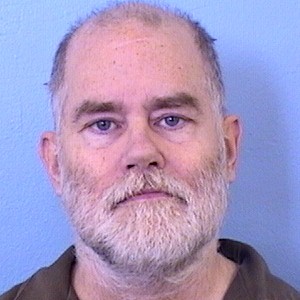
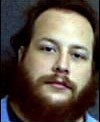
Jonathan Preston Haynes
Murderer Brian Kevin Rosenfeld
Murderer · USA · 1985
Brian Kevin Rosenfeld Brian Kevin Rosenfeld was sentenced to three concurrent l…
23 victims
Brian Kevin Rosenfeld
Murderer · USA · 1985
Brian Kevin Rosenfeld Brian Kevin Rosenfeld was sentenced to three concurrent l…
23 victims
 Yahweh ben Yahweh
Murderer · USA · 1980
Yahweh ben Yahweh was born and legally named Hulon Mitchell Jr. (October 27, 19…
23 victims
Yahweh ben Yahweh
Murderer · USA · 1980
Yahweh ben Yahweh was born and legally named Hulon Mitchell Jr. (October 27, 19…
23 victims
 Russell Ellwood
Murderer · USA · 1991
Russell Ellwood was a former taxi driver. Authorities suspected him of killing…
20 victims
Russell Ellwood
Murderer · USA · 1991
Russell Ellwood was a former taxi driver. Authorities suspected him of killing…
20 victims
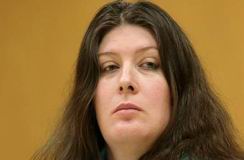 Jamie Davis
Murderer · USA · 2010
Jamie Carole Davis was a Lakeland woman who was accused of fatally shooting ano…
1 victim
Jamie Davis
Murderer · USA · 2010
Jamie Carole Davis was a Lakeland woman who was accused of fatally shooting ano…
1 victim
 Joseph Lave
Murderer · USA · 1992
Joseph Lave was convicted in connection with the murder of Justin Marquart duri…
2 victims
Joseph Lave
Murderer · USA · 1992
Joseph Lave was convicted in connection with the murder of Justin Marquart duri…
2 victims
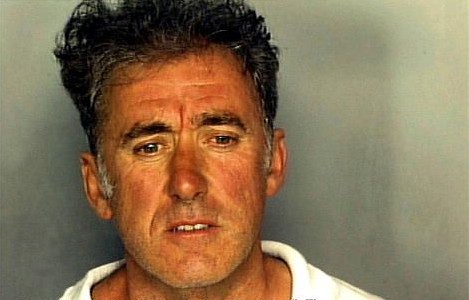 Francisco Arce Montes
Murderer · France · 1996
Francisco Arce Montes was a psychologically troubled loner who drifted around E…
1 victim
Francisco Arce Montes
Murderer · France · 1996
Francisco Arce Montes was a psychologically troubled loner who drifted around E…
1 victim
 Robert Anthony Buell
Murderer · USA · 1982
Robert Anthony Buell was a former Akron city planner who lived in the nearby to…
1 victim
Robert Anthony Buell
Murderer · USA · 1982
Robert Anthony Buell was a former Akron city planner who lived in the nearby to…
1 victim
 Anisio Ferreira de Sousa
Murderer · Brazil · 1989
September 4, 2003 — Anísio Ferreira de Sousa was sentenced to 77 years in priso…
19 victims
Anisio Ferreira de Sousa
Murderer · Brazil · 1989
September 4, 2003 — Anísio Ferreira de Sousa was sentenced to 77 years in priso…
19 victims
 Lawrence Bittaker
Serial killer · USA · 1979
Lawrence Sigmund Bittaker was adopted shortly after his birth by Mr. and Mrs. G…
5 victims
Lawrence Bittaker
Serial killer · USA · 1979
Lawrence Sigmund Bittaker was adopted shortly after his birth by Mr. and Mrs. G…
5 victims
- Gender
- male
- Country
- USA
- Location
- California/Illinois, USA
- Date of birth
- October 3, 1958
- Age at first offence
- 29
- Characteristics
- —
- Victim profile
- Frank Ringi ( hairdresser) / Dr. Martin Sullivan, 68 (plastic surgeon)
- Method of murder
- Shooting
- Date(s) of murder
- May 27, 1987 / August 6, 1993
- Years active
- 1987–1993
- Date of arrest
- 3 days after
- Status
-
Life imprisonment
Sentenced to death on May 5, 1994; commuted to life in prison on April 29, 1994
Case record
Jonathan Preston Haynes was a neo-Nazi who killed a Chicago-area plastic surgeon in 1993 to protect “the integrity of Aryan beauty.” He also killed a San Francisco hairdresser in 1987 and planned to kill other people.
Background
Edward Haynes, Jonathan Haynes’s father, was a banker with a passion for English literature. Edward Haynes provided his wife and four children with a life of comfort, education and travel. At various times the family lived in New York City, Southern California, the Virgin Islands and the San Francisco Bay area. Edward Haynes and his wife, Custis, considered themselves to be liberal and open to people of any race or religion. At home, the family closely followed the civil rights movement of the 1960’s and 1970’s.
Edward Haynes said: “All the people around him were taking it in like the air that we breathe,” and he said: “I think we used to cheer on the Warren Court at the dinner table when one of the big decisions came down.”
Edward Haynes said that if his son was harboring racist thoughts, no one knew it. Edward Haynes added: “They would have been very unpopular,” and he said: “I think we used to cheer on the Warren Court at the dinner table when one of the big decisions came down.” Edward Haynes described his son’s issues and said he tried to persuade his son to see a psychiatrist.
Custis Haynes visited Jonathan in jail. One of her other sons also visited Jonathan in jail. Edward Haynes was weakened by recent surgery and had not been able to go to Chicago to see his son. Edward Haynes said: “Please convey the grief we feel for the killings and give our deepest sympathies to the families of the men involved,” and he said: “We're horrified,” and he said: “but he is our son and we also love him.” Edward Haynes also said: “We believe he is sick.” Edward Haynes said: “I view ethnic hatred maybe as the worst mental illness of all, because it affects so many people.” He said: “Somehow, this virus has attacked our son.”
Jonathan Haynes said that his admiration of the Nazis began one day when he was 12, when he was leafing through a history book. Jonathan Haynes said: “I thought they were very good-looking people, and for some reason I felt more sympathy for them,” and he said: “I know I was supposed to hate. But I felt I had been born on the wrong side of the battle lines.” Jonathan Haynes also said: “I never talked to my parents about it. I kind of knew instinctively it was a deep dark secret.”
Jonathan Haynes was never popular and preferred books to people even as a child. He secretly read Hitler's “Mein Kampf” in high school. Edward Haynes described “his troubles” beginning at that time. Edward Haynes said Jonathan Haynes became aggressive, had difficulty studying and isolated himself from his family.
Jonathan Haynes graduated from the Cate School, a private boarding school in Carpinteria, Calif., in 1977. He did not immediately pursue college as his family hoped. Instead he spent the next few years working odd jobs and avoiding his parents, who tried unsuccessfully to persuade him to see a psychiatrist. Edward Haynes said: “He was resolutely opposed to any form of professional help.”
Jonathan Haynes later got a job as a laboratory technician, enrolled in a community college, transferred to one California state university and then to another for its chemistry department. Edward Haynes said he seemed purposeful and confident and that he warmed to his family. Edward Haynes said: “We were very proud of him.” He also said: “We were always concerned about the lack of friends but, there was absolutely no indication of radical political views.” Edward Haynes said that during this time of apparent grace Jonathan Haynes first acted on his growing hatred.
Jonathan Haynes said: “I wanted to study up on subjects that interested me, like the Zionists and Israel.”
Jonathan Haynes told his family he wanted a job with the Federal Government and headed to Washington, but he said he really wanted access to the Library of Congress. He said: “I wanted to study up on subjects that interested me, like the Zionists and Israel.”
In November 1991, Jonathan Haynes got a job with the Bureau of Alcohol, Tobacco and Firearms as a chemist. He found an apartment in Rockville, Md. His parents visited in June 1992, and his mother saw him again when Jonathan Haynes attended a family funeral in February. Edward Haynes said that both times Jonathan Haynes seemed affectionate and content. Edward Haynes said: “He was very upbeat about his job,” and he said: “He seemed more happy and better adjusted than he had been since he was a little boy.”
Jonathan Haynes resigned from the Government job in March. Two months later he packed his belongings and journeyed across the Northeast, camping out in a battered gray 25-year-old Volkswagen Beetle with most of the inside seating ripped out. During this time he had an apparent hit list and planned killings in Chicago.
The offence
Wilmette shooting of Dr. Martin Sullivan
Jonathan Haynes was found guilty of murder and burglary in connection with the Aug. 6 shooting of Dr. Martin Sullivan in his suburban Wilmette office.
Dr. Martin Sullivan was 68 years old. He operated his Center for Plastic Surgery in a modern two-story office building in Wilmette. He drove to one of his two offices after surgery and saw patients until late afternoon.
On the day of the shooting, a man who had never met Dr. Sullivan showed up for an appointment, filled out several forms, followed him into an examination room and shot him four times in the chest.
At a bond hearing, Bruce Paynter, an assistant state's attorney for Cook County, said Jonathan Haynes arrived on time for a 2:45 P.M. consultation. Jonathan Haynes gave his name as John Rothman, then sat in the bright white-tiled waiting room of the second-floor clinic and filled out insurance forms with false information. After about 15 minutes he was ushered into an examination room. Bruce Paynter said that when Dr. Sullivan entered the room, Jonathan Haynes pulled out a .38-caliber Colt revolver and opened fire.
Bruce Paynter said: “There was no conversation,” and he said: “No confrontation. This was an execution.”
Dr. Sullivan managed to stagger to the door before collapsing on the floor outside the examination room, and the police said he collapsed before staff and patients attempted to save him. Jonathan Haynes fled to the street and drove away.
Jonathan Haynes was arrested the following day in Skokie.
Jonathan Haynes described his motivation as “Aryan beauty,” the blond Nordic look as idealized by the Nazis. He said he was angry about people who were “diluting the Aryan beauty” by dyeing their hair blond and wearing blue contact lenses. He also said he condemned “bleached-blond hair” and “tinted blue eyes,” and he condemned “fake Aryan beauty brought about by plastic surgery.”
At a hearing, Jonathan Haynes said: “I condemn bleached-blond hair, tinted blue eyes and fake facial features brought by plastic surgery,” and he said: “It's time we faced up to it and stopped feeding off Aryans like a horde of locusts in a field of wheat.”
Jonathan Haynes also said in court: “I condemn bleached-blond hair and tinted blue eyes,” and he said: “I condemn fake Aryan beauty brought about by plastic surgery. You fought World War II against Aryan beauty. Stop feeding off Aryan beauty like a herd of locusts in a wheat field.”
Jonathan Haynes said he did not care how beloved his victim had been, saying: “That's not my problem,” and he said: “He was listed in the phone book.”
Jonathan Haynes said he was not all that much concerned with getting caught, saying: “I wasn't all that much concerned with getting caught,” and he said: “I figured that was a hazard I was willing to take.”
Dr. Sullivan was on the staff of six hospitals in the Chicago area and was an assistant professor at Northwestern University School of Medicine. His partner, Dr. John Smith, said Dr. Sullivan dedicated only about 15 percent of his practice to cosmetic surgery. Dr. Smith described Dr. Sullivan’s speciality as reconstructive surgery, repairing torn faces of accident victims and rebuilding breasts lost to cancer. Dr. Smith said Dr. Sullivan spent one day a week for 30 years working in a cleft-lip and palate program that he helped create at Shriners' Hospital for Crippled Children.
Dr. Smith said: “That's what I find so . . . I don't know what the word is,” and Dr. Smith said: “If this fellow had researched Martin, he would have known he was not the plastic surgeon he envisioned.”
When this fact was pointed out to Jonathan Haynes, Jonathan Haynes said: “That's outside the area of my expertise,” and he said: “The fact that he was listed as a plastic surgeon is enough for me. I'm prepared to get real cold about it.”
Dr. Sullivan was described as a favorite among nurses with whom he worked. He had closely cut blond hair and trademark bow ties, loved limericks and jokes, was calm and easygoing in the operating room, drank loads of Pepsi and always seemed to know where to find it on sale. He had eight children and 21 grandchildren.
Dr. Elysa Fisher said that anyone who wanted to see her must now be referred by a physician. Dr. Fisher said: “This week I had a patient who was a Yellow Pages referral, and I had my hand on the knob and I had to steel myself to open the door,” and she said: “When I did, I saw this 96-pound girl and felt silly. But I am frightened now.”
Investigation and confession
Within days of the fatal shooting on Aug. 6, police arrested Jonathan Preston Haynes and he confessed to the crime. He told police he also killed a San Francisco hairdresser in 1987 and planned to kill other people.
At a bond hearing, Assistant State's Attorney Bruce Paynter said Jonathan Haynes sought attacks on hairdressers who dyed hair blond, manufacturers of blue-tint contact lenses and plastic surgeons who made their clients look more “Aryan.” Prosecutors said Dr. Sullivan was apparently selected at random from a phone book.
The Federal Bureau of Investigation was investigating whether Jonathan Haynes was responsible for letters to other doctors threatening to kill them unless they stopped performing cosmetic surgery on Asians.
Detectives in San Francisco were reviewing Jonathan Haynes’s confession before deciding whether to file charges related to the 1987 shooting.
Arrest and custody
Jonathan Haynes was arrested the following day in Skokie after fleeing from Dr. Sullivan’s office.
Jonathan Haynes waived his right to a lawyer at a court appearance on Monday. At that appearance, he did not enter a plea and he was ordered held without bail on charges of murdering Dr. Martin Sullivan at his suburban Chicago office. He was also ordered to undergo a psychiatric evaluation. After a psychiatric evaluation, he was found fit to stand trial.
Jonathan Haynes acted as his own attorney in a nonjury trial but called no witnesses and presented no evidence.
Prior offence: San Francisco hairdresser shooting
Jonathan Haynes was ordered held without bail and prosecutors said he had confessed to killing a hairdresser in San Francisco in 1987.
Frank Ringi was a San Francisco hairdresser who ran a successful salon with his partner, Tom Trulli, and performed beauty makeovers on a local morning television program called “People Are Talking.”
On the afternoon of May 27, 1987, Jeff Brosch, an inspector with the San Francisco police, said a man who identified himself as John Rockman entered Mr. Ringi’s salon and said he had an appointment. The man was shown to a room where he had a brief conversation with Mr. Ringi before pulling out a gun and shooting him three times in the head. Mr. Trulli ran into the room and was shot once in the stomach. The man fled.
The San Francisco police never linked Jonathan Haynes to the murder and had all but given up on the case when Jonathan Haynes confessed in Chicago. After the shooting of Mr. Ringi, Jonathan Haynes apparently resumed his life in San Francisco, working for several laboratories in Silicon Valley.
Trial and legal proceedings
Jonathan Haynes was indicted on a murder charge and was ordered held without bail on charges of murdering Dr. He was found fit to stand trial after a psychiatric evaluation.
Jonathan Haynes had been scheduled to enter a plea on Sept. 14.
At his trial, Jonathan Haynes was found guilty of murder and burglary.
Jonathan Haynes called no witnesses and presented no evidence while acting as his own attorney in the nonjury trial.
Sentencing and appeals
Jonathan Haynes was sentenced to death on May 5, 1994.
His death sentence was commuted to life in prison on April 29, 1994.
Other details
Jonathan Haynes used the name John Rothman and had earlier used the name John Rockman in the San Francisco appointment.
Jonathan Haynes said: “I don't have any remorse,” and he said: “I do regret that I didn't get the manufacturer of the blue contact lenses.” He pointed out that Dr. Sullivan was not Jewish and was targeted for death because of his profession, not his race or religion, and he said the hate-crime laws of Illinois, which allow for greater punishment of bias crimes, could not be applied to his case.
Jonathan Haynes said: “I have bad eyes and bad ears.”
Jonathan Haynes said: “Why go overboard with it?” and he said: “I'm a Nazi. Can I say Jimi Hendrix was a great guitarist? I say give people credit for their attributes.”
Jonathan Haynes refused a public defender and rebuffed his parents’ attempt to hire a lawyer for him. He granted several interviews to journalists and seemed glad of the attention. He described himself as completely unrepentant.
Jonathan Haynes was born with a history of mental illness was not claimed; however, he was ordered to undergo a psychiatric evaluation and was found fit to stand trial.
O. J. Mabwa said he could recall seeing Jonathan Haynes on the front porch sitting there when he came home at night, and that Jonathan Haynes was usually by himself.
Andy Knott, a spokesman for State's Attorney Jack O'Malley, said the person Jonathan Haynes said he was planning to kill had been notified.
Lawrence Jeffries of the Center for Democratic Renewal said there would be widespread support within the white supremacy movement for this man.
Michael Sandberg of the Anti-Defamation League said he had evidence of two contacts Jonathan Haynes made with such groups, including a 1987 trip to Southern California to meet with David McCalden and an attempt in 1991 to sell his neo-Nazi artwork using a mailing list obtained from Joseph Dilys.
Spotted an error, or have more information about this case?