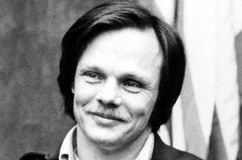
Lawrence Bittaker
Serial killer Donald Henry Gaskins
Serial killer · USA · 1969
Donald Henry Gaskins, also known as Donald “Pee Wee” Gaskins, was a serial kill…
200 victims
Donald Henry Gaskins
Serial killer · USA · 1969
Donald Henry Gaskins, also known as Donald “Pee Wee” Gaskins, was a serial kill…
200 victims
 Carl Eugene Watts
Serial killer · USA · 1974
Carl Eugene Watts (born November 7, 1953; died September 21, 2007), also known…
100 victims
Carl Eugene Watts
Serial killer · USA · 1974
Carl Eugene Watts (born November 7, 1953; died September 21, 2007), also known…
100 victims
 Rodney Alcala
Serial killer · USA · 1977
Rodney James Alcala (born August 23, 1943) was also known as Rodrigo Jacques Al…
100 victims
Rodney Alcala
Serial killer · USA · 1977
Rodney James Alcala (born August 23, 1943) was also known as Rodrigo Jacques Al…
100 victims
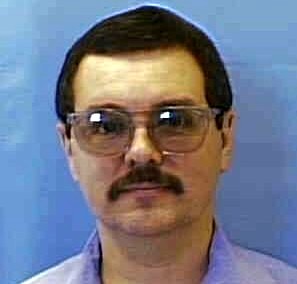 Donald Harvey
Serial killer · USA · 1970
Donald Harvey was known as an American serial killer and a self-professed “Ange…
87 victims
Donald Harvey
Serial killer · USA · 1970
Donald Harvey was known as an American serial killer and a self-professed “Ange…
87 victims
 Donald Leroy Evans
Serial killer · USA · 1975
Donald Leroy Evans (born July 5, 1957) was an American serial killer who murder…
60 victims
Donald Leroy Evans
Serial killer · USA · 1975
Donald Leroy Evans (born July 5, 1957) was an American serial killer who murder…
60 victims
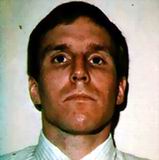 Michael Swango
Serial killer · USA · 1981
Michael Swango (Joseph Michael Swango) was a physician and American serial kill…
60 victims
Michael Swango
Serial killer · USA · 1981
Michael Swango (Joseph Michael Swango) was a physician and American serial kill…
60 victims
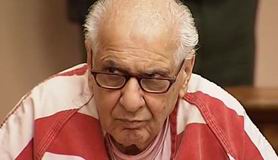 Joseph Naso
Serial killer · USA · 1977
Joseph Naso was convicted by a Marin County jury of the murders of four women d…
4 victims
Joseph Naso
Serial killer · USA · 1977
Joseph Naso was convicted by a Marin County jury of the murders of four women d…
4 victims
 James Edward Smith
Murderer · USA · 1983
James Edward Smith (age 37) was executed in Texas by lethal injection on June 2…
1 victim
James Edward Smith
Murderer · USA · 1983
James Edward Smith (age 37) was executed in Texas by lethal injection on June 2…
1 victim
 Ronald Watkins
Murderer · USA · 1988
Ronald Watkins was convicted of capital murder and robbery for the killing of W…
1 victim
Ronald Watkins
Murderer · USA · 1988
Ronald Watkins was convicted of capital murder and robbery for the killing of W…
1 victim
 Louis Wagner
Murderer · USA · 1873
Louis Wagner had lived on Smuttynose Island with six Norwegian immigrants: Mare…
2 victims
Louis Wagner
Murderer · USA · 1873
Louis Wagner had lived on Smuttynose Island with six Norwegian immigrants: Mare…
2 victims
 Eddie Lee Howard
Murderer · USA · 1992
Eddie Lee Howard, Jr. was a forty-one year old male. He was convicted and sente…
1 victim
Eddie Lee Howard
Murderer · USA · 1992
Eddie Lee Howard, Jr. was a forty-one year old male. He was convicted and sente…
1 victim
- Gender
- male
- Country
- USA
- Location
- California, USA
- Date of birth
- September 27, 1940
- Age at first offence
- 39
- Characteristics
- kidnapping, rape, torture
- Victim profile
- Cindy Schaeffer, 16 / Andrea Hall, 18 / Jacqueline Lamp, 13, and Jackie Gilliam, 15 / Shirley Ledford, 16
- Method of murder
- Ligature strangulation
- Date(s) of murder
- June-October 1979
- Years active
- 1979
- Date of arrest
- November 20, 1979
- Status
-
Sentenced to death
Sentenced to death on March 24, 1981
Case record: Lawrence Bittaker
Background
Lawrence Sigmund Bittaker was adopted shortly after his birth by Mr. and Mrs. George Bittaker. George worked in aircraft factories, which required frequent moves for the family from Pennsylvania to Florida to Ohio and finally to California. Bittaker dropped out of high school in 1957 after several run-ins with juvenile authorities and police. Soon after dropping out, he was arrested in Long Beach for auto theft, hit-and-run, and evading arrest, and he was taken to the California Youth Authority, where he remained until he turned 19.
Within days of Bittaker’s California parole, FBI agents in Louisiana arrested him for violating the Interstate Motor Vehicle Theft Act. He was convicted in August 1959 and sentenced to 18 months at a federal reformatory in Oklahoma. His behavior there led to a transfer to a U.S. medical center in Springfield, Missouri, where he was released after serving two-thirds of his sentence.
Bittaker was arrested for a Los Angeles robbery in December 1960 and was convicted in May 1961, receiving an indeterminate sentence of one to 15 years in state prison. A 1961 psychiatric examination found Bittaker to be manipulative and “having considerable concealed hostility.” Despite “superior intelligence,” he was diagnosed as a “borderline psychotic” and “basically paranoid.” Another psychiatrist noted Bittaker’s “poor control of impulsive behavior.” These diagnoses notwithstanding, he was paroled in late 1963, after serving barely one-sixth of his maximum sentence.
Two months after his conditional release, Bittaker was jailed again for parole violation and suspicion of robbery. Another parole violation sent him back to prison in October 1964.
In 1966, Bittaker was interviewed by a psychiatrist. He confessed that stealing made him feel “important,” and he added that his crimes occurred “under circumstances that were not totally my fault.” Another diagnosis of borderline psychosis was recorded, and authorities released him again. He was again released and later returned to custody for another parole violation in June 1967. One month later, he was tagged for theft and leaving the scene of a hit-and-run accident. After conviction, he received a five-year sentence, but he was paroled after serving less than three years in April 1970.
Bittaker was arrested for burglary and parole violation in March 1971. He was convicted on both counts in October and received an additional sentence of six months to 15 years. He was freed three years later in 1974.
Before meeting Roy Norris, Bittaker was serving time for assault with a deadly weapon in 1978 when he met Norris at the California Men’s Colony in San Luis Obispo. Roy Norris was a convicted rapist, and the two men met while Norris was confined.
People
- Lawrence Sigmund Bittaker — offender; serial killer
- Roy Lewis Norris — co-offender; serial killer
- Cindy Schaeffer — victim (16)
- Andrea Hall — victim (18)
- Jacqueline Lamp — victim (13)
- Jackie Gilliam — victim (15)
- Shirley Sanders — victim
- Lynette Ledford — victim (16)
- Angelo Buono — referenced as “Hillside Strangler”; not part of this case proceedings
- Jimmy Dalton — prison friend of Norris
- Paul Bynum — Hermosa Beach detective who headed the Ledford investigation
- Steve Kay — deputy district attorney who prosecuted Norris on his previous rape charge; later involved in Norris’s plea arrangement
- Peter Pitchess — Los Angeles County Sheriff
- John Shook — Torrance judge who set an execution date
- Scott Glenn — actor who visited the FBI Behavioral Science Unit at Quantico
- John Douglas — FBI profiler; led the tour for Scott Glenn
- Randy Kraft — fellow inmate with whom Bittaker played bridge
- Douglas Clark — fellow inmate with whom Bittaker played bridge
- William Bonin — fellow inmate with whom Bittaker played bridge; executed before February 1996
- Michael Newton — named in a bibliography entry; quoted work included in the provided material
- Robert Markman — forensic psychiatrist who examined Bittaker before trial
The offence
Bittaker and Roy Norris kidnapped, tortured, raped, and murdered five young women in California over a period of five months in 1979.
Bittaker and Norris hatched a plan to rape and kill local girls. Bittaker purchased a 1977 GMC cargo van, which they called “Murder Mack” because it had no side windows in the back and a large passenger side sliding door. From February to June 1979, they tested their plan by driving along the Pacific Coast Highway, stopping at beaches, talking to girls, and taking their pictures. When police later arrested them, officers found close to 500 pictures among Bittaker’s possessions.
Murder of Cindy Schaeffer (16)
On June 24, 1979, Bittaker and Norris identified their first victim as 16-year-old Cindy Schaeffer. They picked her up near Redondo Beach, and Norris forced her into the van. They duct taped her mouth and bound her arms and legs. Bittaker drove the van to a fire road in the San Gabriel Mountains out of sight of the highway. Both men raped the girl, and then Bittaker wrapped a straightened wire coat hanger around her neck. He tightened the wire with vise-grip pliers, strangling her to death. They wrapped her body in a plastic shower curtain and dumped it in a nearby canyon.
Murder of Andrea Hall (18)
On July 8, they picked up 18-year-old Andrea Hall hitchhiking. Norris hid in the back of the van, and Bittaker talked her into the van. Bittaker offered her a drink from a cooler in the back. When she went to the cooler, Norris jumped her, bound her arms and legs, and taped her mouth shut. They drove to the fire road and raped her several times. Bittaker dragged her from the van and Norris left to get beer. When he returned, Hall was gone, and Bittaker was looking at Polaroid pictures of her.
Bittaker stabbed her with an ice pick in both ears and strangled her. He threw her body over a cliff.
Murder of Jackie Gilliam (15) and Leah Lamp (13)
On September 3, while driving near Hermosa Beach, they spotted two girls on a bus stop bench and offered them a ride. Jackie Gilliam (15) and Leah Lamp (13) accepted. The girls became suspicious when Bittaker parked the van near a suburban tennis court. Lamp went for the back door and Norris hit her in the head with a bat. A short scuffle broke out, but with Bittaker’s help Norris subdued the teens and bound them both.
Bittaker drove them to the fire road. They kept the girls alive for two days, raping and torturing them with a wire hanger and pliers, and they made an audio recording of the events. Eventually Bittaker stabbed Gilliam in both ears with an ice pick. When she did not succumb, both men took turns strangling her until she died. Bittaker then strangled Lamp while Norris hit her in the head with a sledgehammer seven times. They dumped the bodies over a cliff, and the ice pick was still in Gilliam’s head.
Murder of Shirley Sanders
Bittaker and Norris kidnapped Shirley Sanders on September 30 and sprayed her with mace before forcing her into the van. Both raped her, but she escaped. Police had shown her pictures of the men, and she identified the men as Lawrence and Roy. The provided material also stated that she was unable to identify her assailants and returned to Oregon after reporting the assault.
Murder of Lynette Ledford (16)
Bittaker and Norris kidnapped 16-year-old Lynette Ledford on October 31. They raped and tortured her while driving around Los Angeles instead of heading to their usual mountain spot. Bittaker stabbed the young girl several times and also tortured her with pliers. During her torture, her screams and pleas were tape-recorded as Bittaker repeatedly beat her elbows with a sledgehammer while demanding that she not stop screaming. He eventually strangled her with a wire hanger, using the pliers to twist a cinching loop around her throat.
Instead of tossing her body over a cliff, they left it on a random lawn in Hermosa Beach to see the local reaction in the newspaper. The body was found the next day and caused “quite a stir,” since it was only days since the arrest of “Hillside Strangler” Angelo Buono.
Investigation
Norris had been telling a prison friend, Jimmy Dalton, about the murders. Dalton thought the stories were lies until Ledford’s body was found. Dalton spoke to his lawyer and they went to the Los Angeles Police Department with information about Norris.
At the time of charging prisoners with five counts of murder, Los Angeles County Sheriff Peter Pitchess announced that Bittaker and Norris might be linked to the disappearance of 30 or 40 other victims. By February 20, the stack of photographs had yielded nineteen missing girls, but none were ever traced, and Norris had apparently exhausted his desire to talk.
Tape recordings of Jacqueline Lamp’s final moments were recovered from “Murder Mack.” Detectives counted 500 photographs of smiling young women among the suspects’ effects.
Arrest
Police made their break on November 20, when Bittaker and Norris were arrested on charges stemming from a September 30 assault in Hermosa Beach. The provided material stated that their female victim had been sprayed with Mace, abducted in a silver van, and raped before she managed to escape. The woman ultimately failed to make a positive I.D. on Bittaker and Norris, but arresting officers discovered drugs in their possession and held both in jail for violation of parole.
In the second narrative portion, it stated that police mounted surveillance on the pair, and that two days before Thanksgiving 1979 they arrested Norris for parole violation on the marijuana charge while Bittaker was jailed on suspicion of kidnapping and raping Shirley Sanders. The material also said Norris waived his right to counsel and sparred with the interrogators before eventually confessing.
Trial
At the trial, both Norris and Bittaker were charged with murder, kidnapping, forcible rape, sexual perversion and criminal conspiracy.
Bittaker was convicted of rape, torture, kidnapping, and murder on February 17, 1981, and he was sentenced to death. Before the conviction, on February 5, 1981, Bittaker testified that Norris first informed him of the murders after their arrest in 1979, and the jury returned a guilty verdict on February 17.
The material stated that California prosecutors needed “special circumstances” for a death sentence, such as slayings deemed “especially heinous, atrocious or cruel, manifesting exceptional depravity.” Bittaker’s personal audiotapes were replayed for the jury, which recommended death.
Sentencing
Bittaker was sentenced to death on March 24, 1981, in accordance with the jury’s recommendation.
The judge also imposed an alternate sentence of 199 years and four months, to take effect in the event that Bittaker’s death sentence is ever commuted to life imprisonment.
Appeals
The material stated that an appeal of a death sentence was automatic and stayed the execution.
- On June 28, 1989, the California Supreme Court affirmed Bittaker’s death sentence.
- On October 4, 1989, Bittaker was absent when Torrance judge John Shook set his execution for December 29.
- On June 11, 1990, the California Supreme Court declined to hear the case again.
Outcome
As of February 2008, Bittaker was still on death row and received mail, signing using his nickname “Pliers” Bittaker. Norris was spared a life sentence or being executed in return for his testimony against Bittaker. Norris was denied parole in 2009 and would be eligible again in another ten years.
Other details
In custody, Norris apologized “for my insanity,” and he was soon telling officers tales of murder. The material also included discussion that detectives recovered an audio recording of the events and that during Ledford’s torture her screams and pleas were tape-recorded.
The material included verbatim statements from the audio recordings and trial-related narrative in which Ledford responded to Bittaker and Norris during torture, including:
- “Say something, girl!”
- “What do you want me to say?”
- “You can scream louder than that, can’t you?”
- “Scream, baby!”
- “Go ahead and scream or I’ll make you scream!”
- “I’ll scream if you stop hitting me,” Ledford sobs when Norris starts striking her elbows with a hammer.
- “Keep it up, girl! Keep it up! Scream till I say stop!”
The material also included verbatim statements attributed to Bittaker and Norris as recorded or narrated through their accounts:
- Bittaker said: “for my insanity” (as quoted in the material for Norris’s apology, attributed there to Norris).
- Bittaker confessed he planned to be “bigger than Manson.”
- Bittaker said: “under circumstances that were not totally my fault.”
- Bittaker described his theft as making him feel “important.”
- Norris recalled that Schaeffer “convulsed for 15 seconds or so and that was it. She just died.”
- Bittaker recalled: “throughout the whole experience, Cindy displayed a magnificent state of self-control and composed acceptance of the conditions and facts over which she had no control. She shed no tears, offered no resistance, and expressed no great concern for her safety. I guess she knew what was coming.”
- Norris later informed police: “He told me that he told her he was going to kill her,” and “He wanted to see what her argument would be for staying alive. He said that she didn’t put up much of an argument.”
The material further stated that before trial, forensic psychiatrist Dr. Robert Markman examined Bittaker, rejected the earlier findings of borderline psychosis, and branded Bittaker a “classic sociopath.” It also stated Markman explained later that the diagnosis meant that Bittaker “was incapable of learning to play by the rules, he would never learn by experience, and he would just keep butting his head against the barriers of acceptable behavior.”
Prison behavior and activity described in the material included that Bittaker filed more than 40 frivolous suits against the state prison system by October 1995. One example described stated that the state paid $5,000 to have a suit dismissed involving his claim of “cruel and unusual punishment” after receiving a broken cookie on his lunch tray. The material stated California prisoners were permitted to file suits for free.
The material also described that Bittaker enjoyed a daily game of bridge with fellow inmates Randy Kraft, Douglas Clark, and William Bonin. It stated that the game was left short-handed in February 1996 after Bonin was executed.
A bibliography line in the material included Michael Newton — An Encyclopedia of Modern Serial Killers - Hunting Humans, and it also included Ronald Kessler’s The FBI (1993) and Ronald Markman and Dominick Bosco’s Alone with the Devil (1989).
Spotted an error, or have more information about this case?