Arthur Heys
Murderer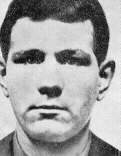 Alfred Charles Whiteway
Murderer · United Kingdom · 1953
Alfred Charles Whiteway was a serial rapist. Both girls had very deep stab woun…
2 victims
Alfred Charles Whiteway
Murderer · United Kingdom · 1953
Alfred Charles Whiteway was a serial rapist. Both girls had very deep stab woun…
2 victims
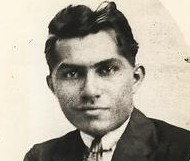 Buck Ruxton
Murderer · United Kingdom · 1935
Buck Ruxton (21 March 1899, Bombay – 12 May 1936, Manchester) was also known as…
2 victims
Buck Ruxton
Murderer · United Kingdom · 1935
Buck Ruxton (21 March 1899, Bombay – 12 May 1936, Manchester) was also known as…
2 victims
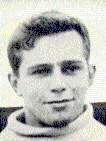 Miles Giffard
Murderer · United Kingdom · 1952
Miles William Giffard (1927 - 24 February 1953) twice played cricket for the Co…
2 victims
Miles Giffard
Murderer · United Kingdom · 1952
Miles William Giffard (1927 - 24 February 1953) twice played cricket for the Co…
2 victims
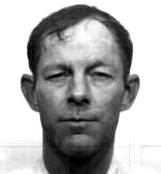 Harold Amos Barnard
Murderer · USA · 1980
June 6, 1980 — Harold Amos Barnard, Jr., killed sixteen-year-old Tuan Nguyen du…
1 victim
Harold Amos Barnard
Murderer · USA · 1980
June 6, 1980 — Harold Amos Barnard, Jr., killed sixteen-year-old Tuan Nguyen du…
1 victim
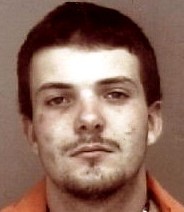 Paul Warner Powell
Murderer · USA · 1999
Paul Warner Powell was an imprisoned Virginia capital defendant. In January 199…
1 victim
Paul Warner Powell
Murderer · USA · 1999
Paul Warner Powell was an imprisoned Virginia capital defendant. In January 199…
1 victim
 One L. Goh
Mass murderer · USA · 2012
One L. Goh was 43 years old at the time of the Oikos University shooting. He wa…
7 victims
One L. Goh
Mass murderer · USA · 2012
One L. Goh was 43 years old at the time of the Oikos University shooting. He wa…
7 victims
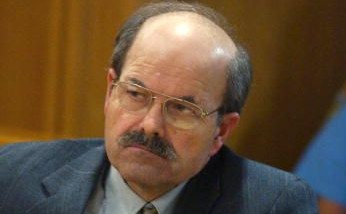 Dennis Rader
Serial killer · USA · 1974
Dennis Lynn Rader (born March 9, 1945) was an American serial killer who murder…
10 victims
Dennis Rader
Serial killer · USA · 1974
Dennis Lynn Rader (born March 9, 1945) was an American serial killer who murder…
10 victims
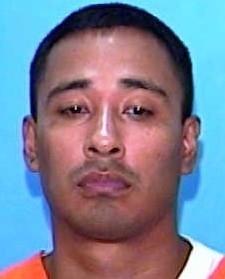 Joel Diaz
Murderer · USA · 1997
Name: Joel Diaz · Date of birth: 06/13/73 · Case citation / opinion: Supreme Co…
1 victim
Joel Diaz
Murderer · USA · 1997
Name: Joel Diaz · Date of birth: 06/13/73 · Case citation / opinion: Supreme Co…
1 victim
- Gender
- male
- Country
- United Kingdom
- Location
- Beccles, Suffolk, England, United Kingdom
- Date of birth
- 1907
- Age at first offence
- 37
- Characteristics
- rape
- Victim profile
- Winifred Mary Evans, 27 (W.A.A.F. radio operator)
- Method of murder
- Strangulation
- Date(s) of murder
- November 8, 1944
- Years active
- 1944
- Date of arrest
- —
- Status
-
Executed
Executed by hanging at Norwich prison on March 13, 1945
Background
Arthur Heys was a Leading Aircraftsman in the RAF in 1944. He was married and stationed at Beccles, in Suffolk.
Winifred Mary Evans was also in the RAF and was a 27-year-old radio operator. Her body was found in a ditch.
Winifred Mary Evans was a member of the WAAF and her home was at Harlesden. She was temporarily at Ellough RAF station. With other members of the WAAF she went to a dance at a US aerodrome in Norfolk on Wednesday night.
The offence
On 9th November 1944 the body of Winifred Mary Evans was found in a ditch. She was raped and strangled.
During the trial, the prosecution alleged that the woman had been attacked and assaulted and that she had been “treated with such savagery and violence that she was not able to breath.”
The judge described the killing as “a murder more savage and horrible than any in my experience of crime.”
A pathologist formed the opinion that she had been thrown or fallen into the ditch and then jumped on, pinned down and outraged, and that compression of chest caused asphyxia. The prosecution evidence included that the body was apparently outraged and suffocated.
Investigation
A duty corporal on duty at the camp where Winifred was billeted told the police of a man in uniform who had turned up around midnight the night before. The corporal said Winifred had told the man to return to his own quarters. The corporal did not know the name of the man, so the police arranged for her to attend the next pay parade to see if she could pick him out.
Chief Det-Insp Green, of Scotland Yard, accompanied by Dr Keith Simpson, the Home Office pathologist, arrived to investigate.
Chief Det-Insp. Greene of Scotland Yard produced the anonymous letter when the case was resumed.
A witness who had returned to the station and switched on a light in a hut saw a man, later identified as the accused, and he said he was lost. The witness told him to get out. The prosecution alleged that, after leaving the WAAF camp about five minutes after midnight, Winifred was accompanied for a short distance by another girl who returned to the station and identified the accused.
In the morning it was noticed that Heys’ civilian shoes were exceptionally dirty. He spent some time brushing his trousers and cleaning his shoes, and later he was seen cleaning his trousers with a towel.
The prosecution said brick dust had been found on the shoes of the accused, and a plan of the aerodrome and its layout was produced to address a raised point about a path of red brick covered with mud and whether walking on it would cause shoes to be coated with brick dust. Witnesses expressed the view that brick dust would not come on the shoes from that path.
Dr Eric Biddle, pathologist at the East Suffolk and Ipswich Hospital, saw the body in the ditch and testified that there were human bloodstains on the man’s jacket and that, in his opinion, it was the girl’s blood. He also testified that there was dry gritty material on the man’s shoe soles and on those of the girl, which was similar to that removed from the ditch.
Arrest
Heys was charged with the murder of Miss Winifred Mary Evans. He was further remanded and he stood trial at Bury St. Edmunds in January 1945.
Heys was taken to Norwich prison, and later he was escorted out to court.
He had been in prison since December 5th, and only been escorted out to Court when he spoke about the anonymous letter.
Trial
The trial took place at Bury St. Edmunds on Monday, with the jury deliberating for 40 minutes after the sentence discussion. The trial was described as a “three days’ hearing.”
Anonymous letter
An anonymous letter purporting to confess to the murder was read when the trial opened.
“Will you please give this letter to the solicitors for the airman who is so wrongfully accused of murdering Winnie Evans”
“I want to state I am the person responsible for the above-mentioned girl's death. I had arranged to meet her at the bottom, of the road where the body was found, at midnight. When 1 arrived she was not there. I waited some time and decided to walk down towards the W.A.A.F. quarters. Just before I reached this I heard a voice and stood close to the hedge. I heard footsteps. It proved to be an airman. I don't think he saw me. I then saw someone I recognised was Winnie. She said I should not have come down to meet her. A W.A.A.F, friend had offered to go along with her as the airman ahead was drunk and had lost his way She had her cycle with her; no one will ever find this. She told me she could not stay long. I must have been mad and I don’t know what happened. I know she struggled.”
“I shall be going overseas shortly. Please convey my humble apologies to the airman concerned.”
Then counsel said:
“Then,” said counsel, “Our case is that the document emanated from the prisoner.”
Mr John Flowers, KC, for the prosecution said that according to a handwriting expert the block lettering was the same as on leave forms filled in by Heys, who after arrest was taken to Norwich prison. Supt. Cherrill, for many years in the comparison and identification of handwriting department at Scotland Yard, testified that block letters had characteristics that were even more significant than in ordinary handwriting. When asked if he thought the anonymous letter was written by the same person who printed the letters on the leave forms and tab, Supt. Cherrill said: “It was the same person's.”
Asked about alleged disparities, the Superintendent said:
“It was the same person's. Alleged disparities: Mr. F. T. Alpe (for Heys) cross-examined the witness at length concerning formation of the characters. Asked how he accounted for the difference in many letters, the Superintendent said it might be speed or the desire to write not in natural style. He described some of the letters as " superficially different, but basically not.”
Prosecution position
The prosecution said its case was built upon circumstantial evidence, which in cumulative effect produced the certainty that Heys was the man who killed the girl. Evans and Heys had been stationed at the same place, and the body of the girl was found in a ditch. After returning from a dance, counsel described that Winifred had changed and left for her place of duty about five minutes after midnight. She had been accompanied for a short distance by another girl who, on returning to the station and switching on a light in a hut, saw a man identified later as the accused.
Mr Flowers said that nobody could have put certain details in the letter except the accused:
“Nobody in the world could have put that in this letter, according to any reasonable view of the evidence, except this man.”
Defence position
Mr FT Alpe and Mr MP Solomon appeared for Heys, whose wife sat in the gallery.
Mr FT Alpe quoted from Richelieu:
“Give me a dozen lines written by the hand of the most innocent man and I will find something therein which will cause him to hang.”
Mr Alpe cross-examined about the alleged letter smuggled out of prison and suggested that letters from prisoners were on official paper. He also asked whether it was suggested Heys had accomplices in prison and whether a man charged with murder would be wandering about prison.
During evidence, Heys denied having murdered the girl or written the anonymous letter. Heys said he had been four days at the site after returning from ten days’ leave with his wife and three children. He said he went to Beccles and had about three pints of “mild and bitter” and at another public house had five pints. He said he then went to a dance and lost his bicycle, describing it as his first night out. He said he never saw anything of the girl that night.
Asked by counsel why he went to the women’s ablutions hut, Heys replied that he thought it was his own site. He said he did not know there was another road from Beccles. He said he received directions, went straight to his hut and got there about 12.30. He said he did not put on a light because it was not the custom to do so unless on duty, and he thought his pals were asleep.
When questioned about the anonymous letter, Heys said:
“The only reason I can give is that on one occasion I went out with two men and one cut his hand in falling off a cycle and I helped him to get up. It would be last October.”
When asked by Mr Flowers “How do you account for the blood on the tunic?” Heys responded with that explanation.
Mr Flowers addressed the jury, and the judge told the jury that if they thought the statement made by the accused to the police might be true, he was entitled to be acquitted.
Jury verdict and sentencing
After the hearing, Heys was found guilty and sentenced to death.
When asked if he had any reason to give why sentence of death should not be passed on him, Heys replied:
“God knows I am innocent of this foul crime. I know God will look after me. I am not afraid.”
As he turned to go below he looked at the gallery, where his wife sat in tears.
Sentencing
After a three days’ hearing at Bury St. Edmunds, Arthur Heys was at Suffolk Assizes sentenced to death for the murder of Winifred Mary Evans.
Appeals
No appeal information appeared in the provided text.
Outcome
Arthur Heys was found guilty at trial and was sentenced to death. He was hanged at Norwich prison on 13 March 1945 at the age of 37.
It was stated that there had been no execution at Norwich since 8 March 1938.
Aftermath
During the trial it was stated that Heys attempted to smuggle out an anonymous letter to his Commanding Officer while in custody. The letter was meant to be from another person and it stated that an airman (himself) stood wrongly accused of the murder of Winifred Mary Evans, and it included details that only the killer could have known.
Spotted an error, or have more information about this case?