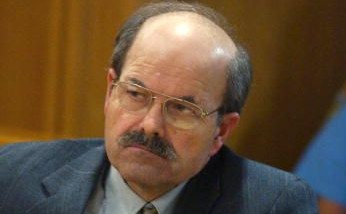
Dennis Rader
Serial killer Donald Henry Gaskins
Serial killer · USA · 1969
Donald Henry Gaskins, also known as Donald “Pee Wee” Gaskins, was a serial kill…
200 victims
Donald Henry Gaskins
Serial killer · USA · 1969
Donald Henry Gaskins, also known as Donald “Pee Wee” Gaskins, was a serial kill…
200 victims
 Carl Eugene Watts
Serial killer · USA · 1974
Carl Eugene Watts (born November 7, 1953; died September 21, 2007), also known…
100 victims
Carl Eugene Watts
Serial killer · USA · 1974
Carl Eugene Watts (born November 7, 1953; died September 21, 2007), also known…
100 victims
 Rodney Alcala
Serial killer · USA · 1977
Rodney James Alcala (born August 23, 1943) was also known as Rodrigo Jacques Al…
100 victims
Rodney Alcala
Serial killer · USA · 1977
Rodney James Alcala (born August 23, 1943) was also known as Rodrigo Jacques Al…
100 victims
 Donald Harvey
Serial killer · USA · 1970
Donald Harvey was known as an American serial killer and a self-professed “Ange…
87 victims
Donald Harvey
Serial killer · USA · 1970
Donald Harvey was known as an American serial killer and a self-professed “Ange…
87 victims
 Donald Leroy Evans
Serial killer · USA · 1975
Donald Leroy Evans (born July 5, 1957) was an American serial killer who murder…
60 victims
Donald Leroy Evans
Serial killer · USA · 1975
Donald Leroy Evans (born July 5, 1957) was an American serial killer who murder…
60 victims
 Michael Swango
Serial killer · USA · 1981
Michael Swango (Joseph Michael Swango) was a physician and American serial kill…
60 victims
Michael Swango
Serial killer · USA · 1981
Michael Swango (Joseph Michael Swango) was a physician and American serial kill…
60 victims
 Erika Sifrit
Murderer · USA · 2002
Erika Sifrit and Benjamin Sifrit gained notoriety in 2002 for the murders of Jo…
2 victims
Erika Sifrit
Murderer · USA · 2002
Erika Sifrit and Benjamin Sifrit gained notoriety in 2002 for the murders of Jo…
2 victims
 Janjira Smith
Murderer · USA · 2006
Janjira Jeffrey Smith poisoned her ex-boyfriend’s Jägermeister with insecticide…
1 victim
Janjira Smith
Murderer · USA · 2006
Janjira Jeffrey Smith poisoned her ex-boyfriend’s Jägermeister with insecticide…
1 victim
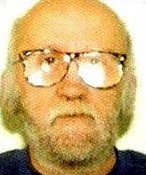 Ronald Jebson
Murderer · United Kingdom · 1970
Ronald Jebson (born 1939) was a convicted pedophile who was also known as Ronal…
3 victims
Ronald Jebson
Murderer · United Kingdom · 1970
Ronald Jebson (born 1939) was a convicted pedophile who was also known as Ronal…
3 victims
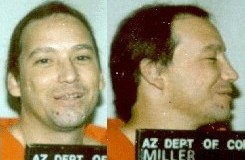 Donald Jay Miller
Murderer · USA · 1992
June 12, 1992 — Jennifer Geuder went out with her married boyfriend, Jose Luna,…
1 victim
Donald Jay Miller
Murderer · USA · 1992
June 12, 1992 — Jennifer Geuder went out with her married boyfriend, Jose Luna,…
1 victim
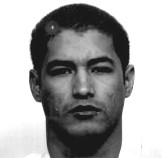 Pedro Cruz Muniz
Murderer · USA · 1976
Dec. 20, 1976 — Janis Carol Bickham was abducted while walking about a mile fro…
1 victim
Pedro Cruz Muniz
Murderer · USA · 1976
Dec. 20, 1976 — Janis Carol Bickham was abducted while walking about a mile fro…
1 victim
- Gender
- male
- Country
- USA
- Location
- Sedgwick County , Kansas, USA
- Date of birth
- March 9, 1945
- Age at first offence
- 29
- Characteristics
- sadist
- Victim profile
- Joseph Otero, 38, his wife Julie, 34, and two of their children: Joseph II, 9, and Josephine, 11 / Kathryn Bright, 21 / Shirley Vian, 24 / Nancy Fox, 25 / Marine Hedge, 53 / Vicki Wegerle, 28 / Dolores E. Davis, 62
- Method of murder
- Ligature strangulation - St abbing with knife
- Date(s) of murder
- 1974 - 1991
- Years active
- 1974–1991
- Date of arrest
- February 25, 2005
- Status
-
Life imprisonment
Sentenced to serve 10 consecutive life sentences on August 18, 2005; eligible for parole after 175 years of imprisonment
Background
Dennis Lynn Rader (born March 9, 1945) was an American serial killer who murdered 10 people in Sedgwick County (in and around Wichita, Kansas), between 1974 and 1991. He was known as the BTK killer (or the BTK strangler), which stood for “bind, torture and kill” and described his modus operandi. He sent boastful letters describing the details of the killings to police and to local news outlets during the period in which the murders took place. After a long hiatus in the 1990s, he resumed sending letters in 2004, leading to his 2005 arrest and subsequent conviction.
Rader was the eldest of four sons born to William Elvin Rader and Dorothea Mae Cook. Although born in Pittsburg, Kansas, he grew up in Wichita, attended Riverview School, and later graduated from Wichita Heights High School. In 1957, he was confirmed into the Zion Lutheran Church.
According to several reports, including his own confessions, as a child he tortured animals. He also had a sexual fetish for women’s underwear; he stole panties from his victims and wore them himself.
Rader attended Kansas Wesleyan University from 1965 to 1966. He then spent four years (1966–1970) in the U.S. Air Force, stationed in Texas, Alabama, Okinawa, South Korea, Greece and Turkey. When he returned to the United States, he moved to Park City, a suburb located seven miles north of Wichita.
He worked for a time in the meat department of Leekers IGA supermarket in Park City alongside his mother, a bookkeeper for the store.
Rader attended Butler County Community College in El Dorado, earning an associate’s degree in Electronics in 1973. He enrolled at Wichita State University in the same fall and graduated in 1979 with a bachelor’s degree in Administration of Justice.
He married Paula Dietz on May 22, 1971, and they had one son and one daughter. Dennis and Paula were the parents of two adult children, Brian and Kerri.
From 1972 to 1973, Rader worked as an assembler for the Coleman Company, a camping gear firm, as two of his early victims had.
He worked for a short time for Cessna in 1973.
From November 1974 until being fired in July 1988, Rader worked at a Wichita-based office of ADT Security Services, a company that sold and installed alarm systems for commercial businesses during his years there. He held several positions, including installation manager. It was believed that he learned how to defeat home security systems while there.
He was a census field operations supervisor for the Wichita area in 1989, prior to the 1990 federal census.
Other details
Rader was the president of the congregation council of Christ Lutheran Church. He was also a Cub Scout leader. His son became an Eagle Scout.
Rader served on both the Sedgwick County’s Board of Zoning Appeals and the Animal Control Advisory Board, appointed in 1996 and resigned in 1998.
Rader was hired to be supervisor of the Compliance Department at Park City, a two-employee, multi-functional department in charge of “animal control, housing problems, zoning, general permit enforcement and a variety of nuisance cases.” In this position, neighbors recalled him as sometimes overzealous and extremely strict; one neighbor complained that he euthanized her dog for no reason.
On March 2, 2005, the Park City council terminated Rader’s employment for failure to report to work or to call in; at that point, he had been arrested for the murders five days earlier.
Rader was ineligible for the death penalty because Kansas did not have a death penalty during the period of time in which he committed his crimes. Kansas reinstated death penalty laws in 1994.
Timeline
- March 9, 1945 — Dennis Lynn Rader was born.
- 1957 — He was confirmed into the Zion Lutheran Church.
- 1965–1966 — He attended Kansas Wesleyan University.
- 1966–1970 — He served in the U.S.
- 1971 — He married Paula Dietz on May 22, 1971.
- 1973 — He earned an associate’s degree in Electronics at Butler County Community College.
- 1974 (January) — The Otero family killings occurred.
- October 1974 — A letter describing in detail the killing of the Otero family was stashed in an engineering book in the Wichita Public Library.
- 1974 (January 15) — Four members of the Otero family were killed.
- 1974 (April 4) — Kathryn Bright was killed.
- 1977 (March 17) — Shirley Vian was killed.
- 1977 (September 16) — A letter claimed he murdered Vicki Wegerle; her death is not described as murder in the provided material.
- 1977 (December 8) — Nancy Fox was killed.
- 1978 (early) — He sent a letter to television station KAKE in Wichita claiming responsibility for multiple murders.
- 1979 — He graduated from Wichita State University in 1979.
- 1979 — He sent two identical packages in 1979, one to an intended victim who was not at home and one to KAKE.
- 1979 — He was expected to have an associated event involving Anna Williams (she escaped death by returning home later than expected).
- 1985 (April 27) — Marine Hedge was killed.
- 1986 (September 16) — Vicki Wegerle was killed.
- 1988 — After the murders of three members of the Fager family in Wichita, a letter was received claiming BTK denied being the perpetrator of this crime.
- 1989 — He became a census field operations supervisor for the Wichita area for three months prior to the 1990 federal census.
- 1991 (January 19) — Dolores Davis was killed.
- October 1974 — A letter was stashed in an engineering book in the Wichita Public Library.
- October 2004 — A manila envelope was dropped into a UPS box in Wichita containing cards with images of terror and bondage of children pasted on them.
- December 2004 — Wichita police received another package from the BTK killer found in Wichita’s Murdock Park.
- February 16, 2005 — He sent a floppy disk to Fox TV station KSAS in Wichita.
- February 25, 2005 — He was detained near his home in Park City and accused of the BTK killings.
- February 26, 2005 — The Wichita Police Department announced in a press conference that it was holding him as the prime suspect in the BTK killings.
- February 28, 2005 — He was formally charged with the murders.
- March 5, 2005 — News sources claimed multiple sources verified he confessed to the 10 murders he was charged with.
- April 10, 2006 — He had a Class Two disciplinary report concerning “mail.”
- April 23, 2006 — He reached “Incentive Level Two” and received privileges for good behavior.
- August 18, 2005 — He was sentenced to serve 10 consecutive life sentences.
- August 19, 2005 — He was moved from the Sedgwick County Jail to the El Dorado Correctional Facility as inmate #0083707.
- June 27, 2005 — He changed his plea to guilty on the scheduled trial date.
- July 22, 2005 — A controversy erupted on CNN’s Nancy Grace show over a poem passed on and sold as serial killer memorabilia.
- July 27, 2005 — Sedgwick County District Judge Eric Yost waived the usual 60-day waiting period and granted an immediate divorce for his wife.
- October 25, 2005 — The Kansas Attorney General filed a petition to sue Robert Mendoza and Tali Waters for breach of contract.
- May 10, 2007 — Robert Mendoza settled the case for $30,000 with no admission of wrongdoing.
- January 2005 — He attempted to leave a cereal box in the bed of a pickup truck at a Home Depot in Wichita.
- February 2005 — More postcards were sent to KAKE, and another cereal box was left at a rural location containing another bound doll.
The offence
Rader murdered 10 people in Sedgwick County (in and around Wichita, Kansas), between 1974 and 1991. He was known for sending taunting letters to police and newspapers.
The victims were:
- January 15, 1974 — Four members of the Otero family: Joseph Otero, Julie Otero, Joseph Otero II, Josephine Otero.
- April 4, 1974 — Kathryn Bright (he also shot Bright’s brother, Kevin, twice, but he survived).
- March 17, 1977 — Shirley Vian.
- December 8, 1977 — Nancy Fox.
- April 27, 1985 — Marine Hedge.
- September 16, 1986 — Vicki Wegerle.
- January 19, 1991 — Dolores Davis.
Rader collected items from the scenes of the murders he committed and reportedly had no items related to any other killings.
Rader had other intended victims. Anna Williams, 63, escaped death by returning home much later than he expected. Rader explained during his confession that he became obsessed with Williams and was “absolutely livid” when she evaded him. Rader spent hours waiting in her home and left when she did not return home from visiting friends. Rader stalked two women in the 1980s and one in the mid-1990s; they filed restraining orders against him, and one moved away. He also admitted in his interrogation that he was planning to kill again. He set a date for October 2004 and was stalking his intended victim.
Modus operandi
Rader used personal jargon for his killing equipment. He described his victims as “projects.” He likened the murders to killing animals by saying he “put them down.” He created what he called a “hit kit,” a briefcase or bowling bag containing the items he would use during murders: guns, tape, rope and handcuffs. He also packed what he called “hit clothes” that he would wear for the crimes and then dispose of.
He developed a pattern for his murders: he wandered until he found a potential victim, stalked until he knew the pattern of their lives and the best time to strike, and often stalked multiple victims at a time.
At the time of a murder, he broke into the house, cut the phone lines, and hid until his victim came home. He often calmed his victims by pretending to be a rapist who needed to work out some sexual fantasies on them, causing many victims to be more cooperative and even help him, thinking he would leave them alone after the rape was over; instead, he killed them.
He bound, tortured, and killed his victims. He strangled his victims until they lost consciousness, let them revive, then strangled them again. He repeated the pattern and became sexually aroused at the sight of their struggles. Finally, he strangled them to death and masturbated to ejaculation onto the corpse.
Letters
Rader was known for sending taunting letters to police and newspapers.
A poem was enclosed entitled “Oh! Death to Nancy,” described as a botched version of the lyrics of the American folk song “Oh Death.”
In his letters, he suggested possible names for himself, including “BTK,” and demanded media attention.
There was correspondence from BTK from 1974 to 1979, including:
- a letter stashed in an engineering book in the Wichita Public Library in October 1974 that described in detail the killing of the Otero family in January of that year;
- a letter sent in early 1978 to KAKE in Wichita claiming responsibility for the murders of the Oteros, Shirley Vian, Nancy Fox, and another unidentified victim assumed to be Kathryn Bright;
- two identical packages in 1979, one to an intended victim who was not at home when he broke into her house and the other to KAKE. The packages featured another poem, “Oh Anna Why Didn’t You Appear,” a drawing of what he intended to do to the victim, and some small items he had pilfered from Anna’s home. He waited for several hours inside Anna Williams’ home on the 600 block of South Pinecrest, then left when she did not come home until later.
In 1988, after the murders of three members of the Fager family in Wichita, a letter was received from someone claiming to be the BTK killer in which he denied being the perpetrator. The letter credited the killer with having done “admirable work.” It was not proven until 2005 that this letter was in fact written by the genuine BTK killer.
In March 2004, a series of 11 communications from BTK (Rader) led directly to his arrest in February 2005. Several examples of those communications were described:
- The Wichita Eagle received a letter using the return address “B ill T homas K illman.” The author claimed he murdered Vicki Wegerle on September 16, 1986, and enclosed photographs of the crime scene and a photocopy of her driver’s license, stolen at the time of the crime. Prior to this, it had not been definitively established that Wegerle was killed by BTK (Rader).
- In May 2004, a word puzzle was received by KAKE.
- On June 9, 2004, a package was found taped to a stop sign at the corner of First and Kansas in Wichita, containing graphic descriptions of the Otero murders and a sketch labeled, “The Sexual Thrill Is My Bill.”
- The package also contained a chapter list for a proposed book entitled “The BTK Story,” mimicking a story written in 1999 by Court TV (now truTV) crime writer David Lohr. Chapter One was entitled, “A Serial Killer Is Born.”
- In July, a package was dropped into the return slot at the downtown public library containing more material, including the claim that he was responsible for the death of 19-year-old Jake Allen in Argonia, Kansas earlier that same month. The claim was found to be false and the death was ruled a suicide.
- In October 2004, a manila envelope dropped into a UPS box in Wichita contained cards with images of terror and bondage of children pasted on them, a poem threatening the life of lead investigator Lt. Ken Landwehr, and a false autobiography containing many details about Rader’s life. These details were later released to the public.
- In December 2004, a package was found in Wichita’s Murdock Park. It contained the driver’s license of Nancy Fox, noted as stolen from the crime scene, and a doll symbolically bound at the hands and feet with a plastic bag tied over its head.
- In January 2005, Rader attempted to leave a cereal box in the bed of a pickup truck at a Home Depot in Wichita, but the box was initially discarded by the owner and later retrieved from trash after Rader asked in a later message. Surveillance tape showed a distant figure driving a black Jeep Cherokee leaving the box in the pickup.
- In February, more postcards were sent to KAKE, and another cereal box was left at a rural location containing another bound doll, meant to symbolize the murder of 11-year-old Josephine Otero.
Rader asked if his writings, if put on a floppy disk, could be traced. The police answered via a newspaper ad posted in the Wichita Eagle saying it would be OK to use the disk.
On February 16, 2005, Rader sent a floppy disk to Fox TV station KSAS in Wichita. Forensic analysis determined the disk had been used by the Christ Lutheran Church in Wichita and referenced the name “Dennis.” An internet search determined that “Dennis Rader” was president of the church council.
Arrest
On February 25, 2005, Rader was detained near his home in Park City and accused of the BTK killings.
At a press conference the next morning, Wichita Police Chief Norman Williams announced, “the bottom line... BTK is arrested.”
Rader was stopped while driving near his home and taken into custody shortly after noon on February 25, 2005.
Immediately after, law enforcement officials, including a Wichita Police bomb unit truck, two SWAT trucks, and KBI, FBI and ATF agents, converged on his residence near the intersection of I-135 and 61st Street North.
Once in handcuffs, he was asked by an officer, “Mr. Rader, do you know why you’re going downtown?” and he replied, “Oh, I have my suspicions, why?”
Police searched Rader’s home and vehicle and collected evidence including computer equipment, a pair of black pantyhose retrieved from a shed, and a cylindrical container. The church he attended, his office at City Hall, and the main branch of the Park City library were also searched that day. Officers were seen removing a computer from his City Hall office, but it was unclear if any evidence was found at these locations.
After the arrest, Rader talked to police for several hours. He stated he chose to resurface in 2004 for various reasons, including David Lohr’s feature story on the case and the release of the book Nightmare in Wichita: The Hunt for the BTK Strangler by Robert Beattie. He wanted the opportunity to tell his story his own way. He also said he was bored because his children had grown up and he had more time on his hands.
Investigation
By 2004, the investigation of the BTK killer had gone cold. Then Rader sent a letter to police claiming responsibility for a killing previously not attributed to him.
DNA collected from under the fingernails of that victim provided police previously unknown evidence. Police began DNA testing hundreds of men. Altogether, some 1100 DNA samples would be taken.
Police corresponded with the BTK killer (Rader) to gain his confidence. In one communication, he asked if it was possible to trace information from floppy disks. Police replied that there was no way of knowing what computer such a disk had been used on, when in fact such ways existed. He sent his message and floppy to the police department.
Police checked the metadata of a Microsoft Word document. In the metadata, they found that the document had been made by a man who called himself Dennis. They also found a link to the Lutheran Church. When police searched the internet for “Lutheran Church Wichita Dennis,” they found his family name and identified a suspect: Dennis Rader, a Lutheran Deacon. Police also knew BTK owned a black Jeep Cherokee. Investigators drove by Rader’s house and noticed a black Jeep Cherokee parked outside.
Investigators controversially obtained a warrant to test the DNA of a Pap smear Rader’s daughter had taken at the University of Kansas medical clinic while she was a student there. The DNA of the Pap smear was a near match to DNA of the sample taken from the victim’s fingernails indicating the killer was closely related to Rader’s daughter. This was described as the evidence police needed to make an arrest.
Sometime during this period, police obtained a warrant for the medical records of Rader’s daughter. A tissue sample seized at this time was tested for DNA and provided a familial match with semen collected at an earlier BTK crime scene, along with other evidence gathered prior to and during surveillance, giving police probable cause for an arrest.
Rader’s confession was described as recorded on over 20 DVDs and filled up twelve DVDs. He did not contest his guilt, and most evidence was not tested in court.
Physical and circumstantial facts described as corroborating included:
- DNA analysis of BTK’s semen and material taken from underneath the fingernails of victim Vicki Wegerle matching the DNA profile of Dennis Rader.
- Rader’s grammar and writing style matching letters and poems received from BTK; communications were typed, stenciled, stamped with a stamp set or computer generated.
- A pay phone used to report a murder in 1977 located a few blocks from ADT Security (Rader’s workplace).
- Wichita Police Detective Arlyn G. Smith II and his partner George Scantlin tracing photocopied communications to two photocopy machines, one at Wichita State University and a second copier at the Wichita Public Library.
- Kathryn Bright’s brother Kevin reporting the killer asked him if he had seen him at the university.
- A poem similar to a folk song taught by a professor on that campus in that time period, though Rader dismissed any connection.
- Rader living on the same street as Marine Hedge, just houses away.
- Two victims (Julie Otero and Kathryn Bright) working at the Coleman Company, though not during the same period Rader worked there; Rader worked at Coleman only a short time and not at the same location as the victims.
- Semen found on Josephine Otero or near the bodies of Josephine Otero, Shirley Vian and Nancy Fox described as critical evidence linking Rader to the crimes.
- DNA obtained from fingernail scrapings of Vicki Wegerle’s left hand matching Rader’s DNA, described as eliminating any doubt that he was her murderer.
- Rader sending trophies to police in his letters, and others discovered in his office.
- Police and prosecutors stating the confession was limited to 10 known victims and that they did not believe there were any more victims due to extensive records and memorabilia he kept.
A 1978 letter included the following verbatim text (with spelling and grammatical errors preserved): I find the newspaper not writing about the poem on Vain unamusing. A little paragraph would have enough. Iknow it not the media fault. The Police Cheif he keep things quiet, and doesn't let the public know there a psycho running around lose strangling mostly women, there 7 in the ground; who will be next? How many do I have to Kill before I get a name in the paper or some national attention. Do the cop think that all those deaths are not related? Golly -gee, yes the M.O. is different in each, but look a pattern is developing. The victims are tie up-most have been women-phone cut- bring some bondage mater sadist tendencies-no struggle, outside the death spot-no wintness except the Vain's Kids. They were very lucky; a phone call save them. I was go-ng to tape the boys and put plastics bag over there head like I did Joseph, and Shirley. And then hang the girl. God-oh God what a beautiful sexual relief that would been. Josephine,when I hung her really turn me on; her pleading for mercy then the rope took whole, she helpless; staring at me with wide terror fill eyes the rope getting tighter-tighter. You don't understand these things because your not underthe influence of factor x). The same thing that made Son of Sam, Jack the Ripper, Havery Glatman, Boston Strangler, Dr. H. H. Holmes Panty Hose Strangler OF Florida, Hillside Strangler, Ted of the West Coast and many more infamous character kill. Which seem s senseless, but we cannot help it. There is no help, no cure, except death or being caught and put away. It a terrible nightmarebut, you see I don't lose any sleep over it. After a thing like Fox I ccome home and go about life like anyone else. And I will be like that until the urge hit me again. It not continuous and I don;t have a lot of time. It take time to set a kill, one mistake and it all over. Since I about blew it on the phone-handwriting is out-letter guide is to long and typewriter can be traced too,.My short poem of death and maybe a drawing;later on real picture and maybe a tape of the sound will come your way. How will you know me. Before a murder or murders you will receive a copy of the initials B.T.K. , you keep that copy the original will show up some day on guess who? May you not be the unluck one! P.S. How about some name for me, its time: 7 down and many more to go. I like the following How about you? 'THE B.T.K. STRANGLER', WICHITA STRANGLER', 'POETIC STRANGLER', 'THE BOND AGE STRANGLER' OR PSYCHO' THE WICHITA HANGMAN THE WICHITA EXECUTIONER, 'THE GAROTE PHATHOM', 'THE ASPHIXIATER'. B.T.K
Trial
Rader pleaded guilty to the murders on June 27, 2005, giving a graphic account of his crimes in court.
On February 28, 2005, he was formally charged with 10 counts of first degree murder.
On May 3, District Court Judge Gregory Waller entered not guilty pleas on Rader’s behalf, as Rader did not speak at his arraignment.
He made his first appearance via videoconference from jail and was represented by a public defender. Bail was continued at $10 million.
Sentencing
On August 18, 2005, Rader was sentenced to serve 10 consecutive life sentences, one life sentence per murder victim.
The sentencing included:
- nine life sentences each with the possibility of parole after 15 years; and
- one life sentence with the possibility of parole after 40 years.
Altogether, it meant he would be eligible for parole after 175 years of imprisonment. It was described as guaranteeing he would spend the rest of his life in prison, without any possibility of parole.
Kansas did not have a death penalty at the time the murders were committed, so life imprisonment was the maximum penalty allowed by law. Rader was ineligible for the death penalty.
Victims’ families made statements, followed by Rader, who apologized for the crimes.
Judge Gregory Waller’s sentence required a minimum of 175 years without a chance of parole. It was described as the longest possible sentence he could deliver because Kansas had no death penalty at the time the killings were committed.
On August 19, 2005, Rader was moved from the Sedgwick County Jail to the El Dorado Correctional Facility, a Kansas state prison, to begin serving his life sentence as inmate #0083707 with an earliest possible release date of February 26, 2180.
Witnesses described that while traveling the 40-minute drive from Wichita to El Dorado, Rader talked about innocuous topics such as the weather but began to cry when victims’ families’ statements from the court proceedings came on the radio.
Rader was being held in the EDCF Special Management unit, also known as solitary confinement, for “the inmate’s own protection.” He was confined to the cell 23 hours a day, with the exception of voluntary solo one-hour exercise yard time, and had access to the shower three times per week.
Beginning April 23, 2006, having reached “Incentive Level Two,” he was allowed to purchase and watch television, purchase and listen to the radio, receive and read magazines, and have other privileges for good behavior.
The victims’ families disagreed with this decision.
Appeals
Kansas reinstated death penalty in 1994. The last known BTK killing was in 1991, making all known BTK murders ineligible for the death penalty. Even if later murders were linked to the BTK killer, it was described as originally unclear whether the death penalty would come into play, as the Kansas Supreme Court declared the state’s capital punishment law unconstitutional on December 17, 2004. That ruling was reversed by the United States Supreme Court on June 26, 2006 in the case of Kansas v. Marsh, and the Kansas death penalty statute was upheld.
No appeal outcome was described in the provided material.
Outcome
Rader was sentenced to 10 consecutive life terms on August 18, 2005, with eligibility for parole after 175 years of imprisonment.
Aftermath
Rader later became the subject of post-arrest notoriety and profit controversy.
On July 22, 2005, a controversy erupted on CNN’s Nancy Grace show over a poem that Dennis Rader had written that was passed on to someone who then sold it on an auction site specializing in serial killer memorabilia. The poem was titled “Black Friday,” an ode to the day he was arrested. The poem expressed Rader’s unhappiness about being caught, with one of the verses proclaiming, “The dark side of me has been exposed.”
On August 12, 2005, Dateline NBC aired Confessions of BTK.
Massachusetts psychologist Robert Mendoza was hired by Rader’s court-appointed public defenders to conduct an interview after he pleaded guilty on June 27. NBC claimed Rader knew the interview might be on TV, but that was described as a false statement according to the Sedgwick County Sheriff’s department. Rader mentioned the interview during his sentencing statement.
On October 25, 2005, the Kansas Attorney General filed a petition to sue Robert Mendoza and Tali Waters, co-owners of Cambridge Forensic Consultants, LLC, for breach of contract, claiming they intended to benefit financially from the use of information obtained from involvement in Rader’s defense.
On May 10, 2007, Mendoza settled the case for $30,000 with no admission of wrongdoing. The Kansas Attorney General’s office arranged for the settlement money to be distributed to families of the victims.
Police in Wichita, Park City, and several surrounding cities continued looking into unsolved cases before, during, and after 1974 and 1991 in cooperation with state police and the FBI. They focused on cases after 1994 when the death penalty was reinstated in Kansas.
As of November 2009, no other murders were discovered that could be attributed to Rader.
Victims
He murdered 10 people in Sedgwick County:
- Joseph Otero
- Julie Otero
- Joseph Otero II
- Josephine Otero
- Kathryn Bright
- Shirley Vian
- Nancy Fox
- Marine Hedge
- Vicki Wegerle
- Dolores Davis

Spotted an error, or have more information about this case?