
Henri-Antoine Charrière
Homicide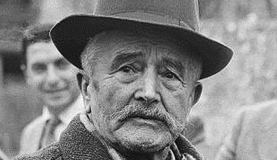 Gaston Dominici
Homicide · France · 1952
Gaston Dominici was convicted of the triple murder of three Britons in France i…
3 victims
Gaston Dominici
Homicide · France · 1952
Gaston Dominici was convicted of the triple murder of three Britons in France i…
3 victims
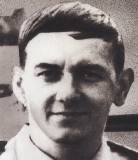 Alain Lamare
Homicide · France · 1978
Alain Lamare (born 1956) was a French gendarme known to the public under the ni…
1 victim
Alain Lamare
Homicide · France · 1978
Alain Lamare (born 1956) was a French gendarme known to the public under the ni…
1 victim
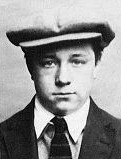 Harold Jones
Homicide · United Kingdom · 1921
Harold Jones was a 15-year-old shop worker at the time of the offences. In Febr…
2 victims
Harold Jones
Homicide · United Kingdom · 1921
Harold Jones was a 15-year-old shop worker at the time of the offences. In Febr…
2 victims
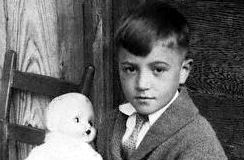 Carl Newton Mahan
Homicide · USA · 1929
Name: Carl Newton Mahan Carl Newton Mahan was described as a 6-year-old from Pa…
1 victim
Carl Newton Mahan
Homicide · USA · 1929
Name: Carl Newton Mahan Carl Newton Mahan was described as a 6-year-old from Pa…
1 victim
 Carol Hatley
Murderer · USA · 2012
Carol Hatley was sentenced to 22 years in prison for the murder of her mother,…
1 victim
Carol Hatley
Murderer · USA · 2012
Carol Hatley was sentenced to 22 years in prison for the murder of her mother,…
1 victim
 Donna Marie Freeman
Murderer · USA · 2011
Donna Marie Freeman was of the Helena community at sentencing. She was 36 at th…
1 victim
Donna Marie Freeman
Murderer · USA · 2011
Donna Marie Freeman was of the Helena community at sentencing. She was 36 at th…
1 victim
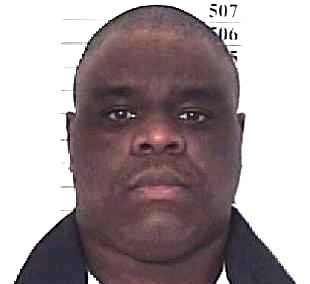 Scotty Morrow
Murderer · USA · 1994
Scotty Morrow began dating Barbara Ann Young in June 1994. Young broke up with…
2 victims
Scotty Morrow
Murderer · USA · 1994
Scotty Morrow began dating Barbara Ann Young in June 1994. Young broke up with…
2 victims
 Timothy Wayne Adams
Murderer · 2002
Timothy Wayne Adams was a Black male who was executed by lethal injection in Te…
1 victim
Timothy Wayne Adams
Murderer · 2002
Timothy Wayne Adams was a Black male who was executed by lethal injection in Te…
1 victim
 David Phillip Smith
Murderer · USA · 1995
David Phillip Smith was 20 years old when he was sentenced to death. He was sen…
1 victim
David Phillip Smith
Murderer · USA · 1995
David Phillip Smith was 20 years old when he was sentenced to death. He was sen…
1 victim
- Gender
- male
- Country
- France
- Location
- Paris, France
- Date of birth
- November 16, 1906
- Age at first offence
- 24
- Characteristics
- escape, fugitive
- Victim profile
- A pimp, Roland le Petit
- Method of murder
- Shooting
- Date(s) of murder
- March 26, 1930
- Years active
- 1930
- Date of arrest
- April 7, 1930
- Status
-
Sentenced to hard labour for life on October 26, 1931.
Background
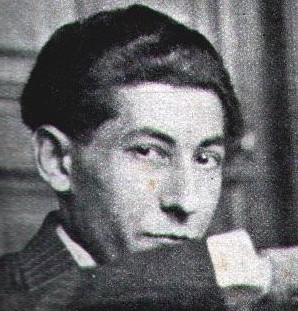
Henri-Antoine Charrière was born in Ardèche, France. He had two older sisters. His mother died in 1917, when Henri was nearly 11 years old. In 1923, at the age of seventeen, he enlisted in the French Navy and served for two years. After leaving the Navy, Charrière became a member of the Paris underworld. He married a French woman and had a daughter.
The offence
Charrière was convicted of the murder of a pimp, Roland le Petit. Charrière claimed the charge was false.
Sentencing
Charrière was sentenced to hard labour for life on October 26, 1931. He had to leave behind his family, his pregnant wife, and his daughter.
Investigation
After Charrière’s conviction for the murder of Roland le Petit, he was transported within the French penal system.
Arrest
After leaving the Navy and becoming involved with the Paris underworld, Charrière was convicted and then imprisoned before being transferred to French Guiana.
Timeline
- October 26, 1931 — Charrière was sentenced to hard labour for life.
- 29 November 1933 — Charrière escaped from the infirmary at Saint Laurent with two companions, Clousiot and Maturette.
- 1934 — Charrière was extradited back to French Guiana with his two comrades.
- 26 June 1936 — Charrière and his fellow escapees were released with Clousiot dying a few days later.
- July 3, 1944 — Charrière became officially domiciled in Venezuela.
- October 18, 1945 — Charrière was finally freed.
- 1969 — Charrière visited Paris in conjunction with the publication of Papillon.
- 1970 — Papillon was first published in the United Kingdom in a translation by Patrick O’Brian.
- 1973 — Papillon was made into a film Papillon directed by Franklin Schaffner.
- July 29, 1973 — Charrière died in Madrid (Spain).
Investigation
He was held first at the transit prison of Beaulieu in Caen, France. He was then transported to the prison of St-Laurent-du-Maroni on the Maroni river in the penal settlement of mainland French Guiana.
Trial
Charrière was convicted of the murder of Roland le Petit and sentenced to hard labour for life on October 26, 1931, while he strenuously claimed the charge was false.
Escape and imprisonment in French Guiana
First escape
On 29 November 1933, Charrière successfully escaped from the infirmary at Saint Laurent with two companions, Clousiot and Maturette. They sailed along the coast via Trinidad and Curaçao to Riohacha, Colombia. They received help along the way from a group of lepers (also convicts) on Pigeon Island and from a compassionate British family, as well as many others. During this time, three additional escapees joined the trio on their journey to Colombia. Poor weather prevented them from leaving the Colombian coast, and they were all recaptured and imprisoned.
Charrière managed to escape again with the aid of a fellow prisoner. After several days and nights of putting distance between themselves and the prison, they went their separate ways; Charrière came upon the region of Guajira. He spent several months living in a native village of pearl divers. In the village, he had a relationship with a young woman and her sister; they later became his wives and the mothers of his children. He spent rapturous months describing “the purest form of love and beauty.”
Charrière left that situation, driven to correct the injustice he experienced. Once again, Charrière was captured and imprisoned at Santa Marta, and later transferred to Barranquilla, where he was unexpectedly reunited with Clousiot and Maturette.
In spite of numerous escape attempts, Charrière remained unable to free himself from these prisons. He was extradited back to French Guiana in 1934 along with his two comrades. One of the escape attempts involved Charrière breaking the arches of his feet, and he was flat-footed ever after.
Punishment and release after the recapture
Charrière and his fellow escapees were sentenced to two years in solitary confinement, nicknamed the “Devourer of Men” by the island convicts, on St. Joseph (one of the Îles du Salut, which comprise Royale, St. Joseph, and Devil’s Island) as punishment for the escape.
He and his fellow escapees were released on 26 June 1936, with Clousiot dying “a few days later”.
Subsequent interment and unsuccessful attempts
After his release, Charrière was interned on the island of Royale.
Charrière was sentenced to another eight years in solitary confinement for another escape attempt and the subsequent murder of a fellow convict who had foiled his plan by acting as an informer. However, he was released after only nineteen months. His release followed him risking his life in an attempt to save a drowning little girl named Lissette in shark-infested waters. He was released for “medical reasons,” which he attributed to this rescue attempt.
He next feigned madness by having determined typical symptoms shown by those diagnosed with such madness in an attempt to escape from the island’s mental hospital, which was leniently guarded. He planned the escape during the period after the start of World War II when punishment for escape attempts was elevated to death on charges of treason. The rationale for this was that anyone attempting escape was trying to defect to the enemy. A mad person was viewed as someone not in control of his own actions, making it impossible to punish him for anything, including escaping. This escape attempt failed, and Charrière’s companion drowned.
Escape from Devil’s Island
After “regaining his sanity,” Charrière requested to be transferred to Devil’s Island. Authorities agreed because Devil’s Island was said to be inescapable.
During his sentence on Devil’s Island, Charrière decided that his past escape attempts were too complex. He planned to fling himself into the ocean from a cliff using a bag of coconuts as his raft. In preparation, he observed that the waves rolled in a particular succession. Every seventh wave appeared much larger and stronger than the others, and the seventh wave might be enough to push him into the deep ocean. After several experiments with weighted down sacks of coconuts, he named the seventh wave Lisette after the little girl he had risked his life to save.
Charrière convinced Sylvain, a fellow convict, to accompany him on his escape. He and Sylvain spent four days and three nights adrift in the sea, floating on coconut-filled bags and surviving on grated coconut pulp. Sylvain prematurely left the raft and sank into the mud-flat’s quicksands, disappearing as the waves washed over his softening trap; he was a mere three hundred yards from the mainland.
Charrière waited until the waves pushed his raft to solid shoreline. After reaching the mainland, Charrière came in contact with an elder Chinese known as Cuic Cuic. He had been made known to him before the escape from Devil’s Island by Cuic Cuic’s brother, Chang. Charrière joined Cuic Cuic in his refuge. Together, also in the company of a one-armed friend, they escaped by boat to Georgetown.
Although Charrière could have lived there as a free man, he and five others continued by sea to Venezuela, where they were captured and imprisoned in El Dorado Prison, a small gold mining town named after the mythical gold city of El Dorado. In prison, he was shocked by the way prisoners were treated, which he felt was similar to the way the French treated convicts in the galleys of the 18th and 19th centuries.
Charrière was finally freed on October 18, 1945.
Subsequent career and later life
After his release, Charrière settled in Venezuela and became officially domiciled there from July 3, 1944. He was a resident there from 1945. In 1952, he married a Venezuelan woman named Rita. They had children together. He opened a restaurant in Caracas.
He returned to France when he visited Paris in conjunction with the publication of his account of his experiences, Papillon, in 1969. The book sold over 1,000,000 copies in France. It prompted a French minister to attribute “the moral decline of France” to mini-skirts and Papillon.
Papillon was first published in the United Kingdom in 1970 in a translation by the novelist Patrick O’Brian. Charrière played the part of a jewel thief in a 1970 film called The Butterfly Affair. He also wrote a sequel to Papillon, Banco, in which he described his life subsequent to his release from prison.
In 1973, his book Papillon was made into a film Papillon directed by Franklin Schaffner. In the film, the actor Steve McQueen took the role of “Papillon”. Dalton Trumbo wrote the screenplay, and Charrière acted as a consultant on location. An interview with Henri Charrière was included in the documentary Magnificent Rebel, which described the making of the film.
Henri Charrière died in Madrid, Spain, from throat cancer on July 29, 1973.
Papillon (book details)
Papillon was Charrière’s 1970 best-selling book. It detailed his alleged numerous escapes, attempted escapes, adventures, and recaptures from his imprisonment in 1932 up to his final escape to Venezuela. The book’s title was Charrière’s nickname, derived from a butterfly tattoo on his chest (papillon being French for butterfly).
The veracity of his account was questioned, but he maintained that, excepting minor lapses in memory, it was true. Modern researchers believed Charrière got much of his story material from other inmates, and they saw the work as more fictionalized than a true autobiography.
In 2005, a then 104-year-old man in Paris named Charles Brunier claimed to be the real Papillon. Modern critics tended to agree that Charrière’s depictions included events that happened to others, and that Brunier was at the prison at the same time.
Other details
Charrière’s nickname Papillon was associated with a butterfly tattoo on his chest. He was also described as an author of Papillon, a memoir of his incarceration in a penal colony on French Guiana. He was an escapee throughout his sentences in the French penal system, including escape attempts from St-Laurent-du-Maroni, the Îles du Salut, and Devil’s Island.
Spotted an error, or have more information about this case?