
Arthur Brown
M ass m urderer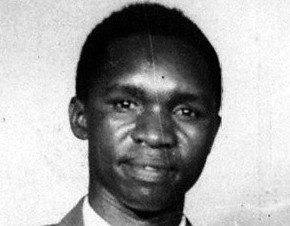 Joseph Kibweteere
Mass murderer · Uganda · 2000
Joseph Kibweteere led a breakaway sect known as the Movement for the Restoratio…
1000 victims
Joseph Kibweteere
Mass murderer · Uganda · 2000
Joseph Kibweteere led a breakaway sect known as the Movement for the Restoratio…
1000 victims
 Dr. Wouter Basson
Murderer · 1992
Wouter Basson (born July 6, 1950) was a South African cardiologist and the form…
230 victims
Dr. Wouter Basson
Murderer · 1992
Wouter Basson (born July 6, 1950) was a South African cardiologist and the form…
230 victims
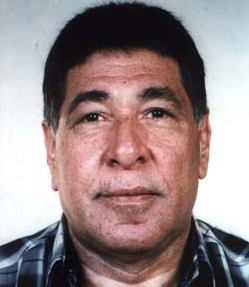 Gameel Al-Batouti
Mass murderer · USA · 1999
Gameel Al-Batouti (also rendered “Gamil ElBatouty” or “El Batouty” in U.S. offi…
216 victims
Gameel Al-Batouti
Mass murderer · USA · 1999
Gameel Al-Batouti (also rendered “Gamil ElBatouty” or “El Batouty” in U.S. offi…
216 victims
 Luis Alfredo Garavito
Serial killer · Colombia/Ecuador · 1992
Luis Alfredo Garavito Cubillos, also known as "La Bestia" ("The Beast") or "Tri…
192 victims
Luis Alfredo Garavito
Serial killer · Colombia/Ecuador · 1992
Luis Alfredo Garavito Cubillos, also known as "La Bestia" ("The Beast") or "Tri…
192 victims
 Timothy McVeigh
Mass murderer · USA · 1995
Timothy James McVeigh (April 23, 1968 – June 11, 2001) was a United States Army…
168 victims
Timothy McVeigh
Mass murderer · USA · 1995
Timothy James McVeigh (April 23, 1968 – June 11, 2001) was a United States Army…
168 victims
 Hu Wanlin
Homicide · China · 1997
Hu Wanlin (胡万林), born 1949, was from Mianyang, Sichuan Province. · 1993 — While…
146 victims
Hu Wanlin
Homicide · China · 1997
Hu Wanlin (胡万林), born 1949, was from Mianyang, Sichuan Province. · 1993 — While…
146 victims
 Alejandro Avila
Murderer · USA · 2002
Alejandro Avila was convicted of kidnapping, murder, and sexual assault in the…
1 victim
Alejandro Avila
Murderer · USA · 2002
Alejandro Avila was convicted of kidnapping, murder, and sexual assault in the…
1 victim
 Anna Carolina Jatobá
Murderer · Brazil · 2008
Anna Carolina Jatobá was the stepmother of Isabella de Oliveira Nardoni. Alexan…
1 victim
Anna Carolina Jatobá
Murderer · Brazil · 2008
Anna Carolina Jatobá was the stepmother of Isabella de Oliveira Nardoni. Alexan…
1 victim
 John Glenn Moody
Murderer · USA · 1988
Name: John Glenn Moody · Sentence status: Executed by lethal injection in Texas…
1 victim
John Glenn Moody
Murderer · USA · 1988
Name: John Glenn Moody · Sentence status: Executed by lethal injection in Texas…
1 victim
 Robert Holguin
Homicide · USA · 2005
Robert Holguin was a 14-year-old boy convicted of murdering 87-year-old war vet…
1 victim
Robert Holguin
Homicide · USA · 2005
Robert Holguin was a 14-year-old boy convicted of murdering 87-year-old war vet…
1 victim
- Gender
- male
- Country
- —
- Location
- —
- Date of birth
- August 14, 1970
- Age at first offence
- 22
- Characteristics
- drugs
- Victim profile
- José Guadalupe Tovar; Jessica Quinones, 19 (seven months pregnant) ; Audrey Brownm and Frank Farias
- Method of murder
- Shooting Loca tion : Harris County, Texas, USA
- Date(s) of murder
- June 20, 1992
- Years active
- 1992
- Date of arrest
- 4 months after
- Status
-
Sentenced to death
Sentenced to death on June 30, 1994
Case overview
Arthur Brown Jr. was convicted in Texas of shooting four people to death in a drug dispute. He was later sentenced to death on June 30, 1994.
Timeline
- 1993 — Arthur Brown Jr. was convicted of shooting four people to death in a drug dispute.
- June 30, 1994 — Arthur Brown Jr. was sentenced to death.
- October 21, 1997 — The United States Supreme Court refused to review an appeal in Brown v. Texas.
Supreme Court action (appeal and denial of review)
On October 21, 1997, the Supreme Court refused to hear Brown v. Texas challenging a provision of the Texas death penalty law.
The law prohibited telling jurors that if they chose a life sentence instead of the death penalty, the defendant would not be released on parole for at least 40 years. The lawyers for the Texas death row inmate argued that withholding truthful information could allay a jury’s fears that a dangerous murderer, if not put to death, would soon be out on the street.
Texas juries in capital cases were required to assess the defendant’s “future dangerousness,” but were simultaneously instructed “you are not to consider or discuss” how long the defendant would actually serve if sentenced to life in prison.
Justice John Paul Stevens wrote in response to the Court’s unsigned, one-line order denying review that:
“unquestionably tips the scales in favor of a death sentence that a fully informed jury might not impose”
Justice Stevens also stated that the Texas law was in “obvious tension” with a 1994 Supreme Court decision from South Carolina. That earlier decision held that when a state puts the dangerousness of a capital murder defendant at issue, it cannot conceal from the jury the existence of an alternative sentence of life without parole.
The coverage of the Texas law differed from South Carolina in that Texas did not provide a life-without-parole option. The case therefore raised the question of whether the due process principle established in the 1994 decision, Simmons v. South Carolina, extended to life sentences in which parole remained a possibility.
In a footnote to his statement, Justice Stevens said there was data on public attitudes toward the death penalty indicating that the difference between a sentence of life without parole and a life sentence with long-delayed parole was one of degree, not kind. He said that public support for the death penalty dropped notably in states that offered a guarantee of long incarceration as an alternative.
Three other Justices signed the statement: David H. Souter, Ruth Bader Ginsburg, and Stephen G. Breyer. Justice Stevens characterized the statement as not a dissent from the denial of review but as an “opinion respecting the denial.”
Case details and procedural posture
The case that reached the Supreme Court was Brown v. Texas, No. 96-9187. It was an appeal from the Texas Court of Criminal Appeals.
Arthur Brown Jr. was convicted in 1993 of shooting four people to death in a drug dispute.
After the denial of review, Arthur Brown Jr. was free to raise the same issue through a petition for a writ of habeas corpus in the Federal courts. The report said that this route was unlikely to succeed because the United States Court of Appeals for the Fifth Circuit, which includes Texas, had already rejected the argument in an unrelated case.
The report also stated that the Supreme Court action involved a system in which jurors were required to consider future dangerousness while being instructed not to consider or discuss how long a life-sentenced defendant would actually serve.
Other details
The report stated that the New Mexico Supreme Court had already ruled that jurors must be informed of how parole would operate under a life sentence for a convicted murderer.
Spotted an error, or have more information about this case?