
Maxwell Alton Hoffman
Murderer Brian Kevin Rosenfeld
Murderer · USA · 1985
Brian Kevin Rosenfeld Brian Kevin Rosenfeld was sentenced to three concurrent l…
23 victims
Brian Kevin Rosenfeld
Murderer · USA · 1985
Brian Kevin Rosenfeld Brian Kevin Rosenfeld was sentenced to three concurrent l…
23 victims
 Yahweh ben Yahweh
Murderer · USA · 1980
Yahweh ben Yahweh was born and legally named Hulon Mitchell Jr. (October 27, 19…
23 victims
Yahweh ben Yahweh
Murderer · USA · 1980
Yahweh ben Yahweh was born and legally named Hulon Mitchell Jr. (October 27, 19…
23 victims
 Russell Ellwood
Murderer · USA · 1991
Russell Ellwood was a former taxi driver. Authorities suspected him of killing…
20 victims
Russell Ellwood
Murderer · USA · 1991
Russell Ellwood was a former taxi driver. Authorities suspected him of killing…
20 victims
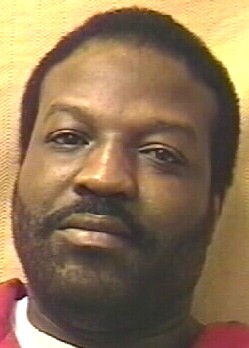 David Junior Ward
Murderer · USA · 1991
David Junior Ward was the defendant. He was tried in connection with the robber…
1 victim
David Junior Ward
Murderer · USA · 1991
David Junior Ward was the defendant. He was tried in connection with the robber…
1 victim
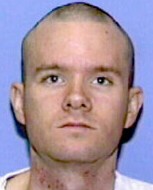 James Scott Porter
Murderer · USA · 1995
James Scott Porter was a defendant in a capital murder case. · 1990 — Porter pl…
2 victims
James Scott Porter
Murderer · USA · 1995
James Scott Porter was a defendant in a capital murder case. · 1990 — Porter pl…
2 victims
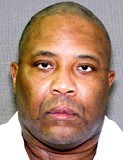 Gary Green
Murderer · USA · 2009
Gary Green was sentenced to death on November 22, 2010. Gary Green was a Black…
2 victims
Gary Green
Murderer · USA · 2009
Gary Green was sentenced to death on November 22, 2010. Gary Green was a Black…
2 victims
 Shahidul Ahmed
Murderer · United Kingdom · 2000
Shahidul Ahmed, 41, from Bletchley, was convicted of the murder of Rachel Manni…
1 victim
Shahidul Ahmed
Murderer · United Kingdom · 2000
Shahidul Ahmed, 41, from Bletchley, was convicted of the murder of Rachel Manni…
1 victim
 Albert Clozza
Murderer · USA · 1983
Albert Clozza was convicted of killing a 13-year-old girl, Patricia Beth Bolton…
1 victim
Albert Clozza
Murderer · USA · 1983
Albert Clozza was convicted of killing a 13-year-old girl, Patricia Beth Bolton…
1 victim
- Gender
- male
- Country
- USA
- Location
- Canyon County, Idaho, USA
- Date of birth
- J une 11, 1957
- Age at first offence
- 30
- Characteristics
- murder-for-hire, rape, revenge, drugs, history of mental illness, torture
- Victim profile
- Denise Williams (police drug informant)
- Method of murder
- St abbing with knife - Crushed her to death under a pile of rocks
- Date(s) of murder
- September 19, 1987
- Years active
- 1987
- Date of arrest
- —
- Status
-
Sentenced to death
Sentenced to death on June 13, 1989
Case information
Name: Maxwell Alton Hoffman Status: Sentenced to death on June 13, 1989
Background
Maxwell Hoffman was convicted of first degree murder and commission of a felony by use of a deadly weapon for the September 19, 1987, murder of Denise Williams in Owyhee County. Hoffman was found guilty of first-degree murder by a Canyon County jury on March 16, 1989. He was sentenced on June 13, 1989, to death by lethal injection.
The Idaho Supreme Court affirmed Hoffman’s conviction and sentence on January 29, 1993. It dismissed the appeal challenging the dismissal of his successive petition for post conviction relief on December 6, 1996. Hoffman also sought relief in the federal courts.
In 2002, a federal judge in Boise ordered that Hoffman be resentenced because his attorneys did not adequately represent him during the sentencing phase of his trial. The United States Supreme Court later dismissed a case involving the Idaho defendant who said his lawyers gave him bad advice when they told him to reject a plea deal that did not involve the death penalty.
The offence
Denise Williams was a police informant. Williams had cooperated with police in an investigation of Hoffman’s accomplices’ drug trafficking activities.
Hoffman and his accomplices attacked Williams with knives and crushed her to death under a pile of rocks.
Hoffman had been accused of ordering two other men to murder a drug informer, Denise Williams, in September 1987. The jury returned guilty verdicts on March 16, 1989.
Investigation
A body of Denise Williams was found partly buried in the Owyhee Desert in a ravine where the police had been led by Richard Holmes.
Richard Holmes had been accused of ordering two friends to kill Ms. Williams.
Prison uprising and related death
An inmate identified in court papers as a police informer was killed in his cell during an uprising at the Idaho State Penitentiary. The 3 1/2-hour uprising began after prisoners refused to let two unarmed guards confiscate their homemade liquor. Twenty minutes after the authorities quelled the rampage, the body of the informer was discovered.
The body of the informer, Richard Holmes, was discovered while other prisoners went on a rampage. Richard Holmes was 35 years old.
Holmes’s lawyer, Rolf Kehne, said Holmes had become an instant target for other prisoners when word spread that he had cooperated with the authorities.
Mr. Holmes’s lawyer said someone shoved into his cell a handful of newspaper clippings saying he had led the police to Ms. Williams’s body in hopes of making a deal with the prosecution. Kehne said: “I'm absolutely convinced he was killed because the prosecutors, contrary to the promise they made, went public with the fact that Richard Holmes helped them,” and the quoted statement was attributed to Mr. Kehne.
A prosecutor involved in the case said Holmes’s identity had been made public by mistake. Richard Harris, the Canyon County prosecutor, said he was shocked to discover that the sensitive information had been placed in the court file, accessible to reporters and other members of the public. Harris blamed Lawrence Wasden, the prosecutor in neighboring Owyhee County. Mr. Wasden declined to comment. Tim McNeese, executive assistant to the director of the State Department of Corrections, said the killer got into the cell through a hole knocked in the cinder-block wall. McNeese declined to give other details of Holmes’s death.
Holmes had not requested protective custody because he would have had to spend several months before his trial in maximum security, according to his lawyer.
Holmes was accused of ordering two friends to kill Ms. Williams.
Arrest
Maxwell Hoffman was charged with first-degree murder for the September 19, 1987, murder of Denise Williams in Owyhee County.
Trial
At trial, Hoffman was represented by county public defenders William Wellman and Charles Coulter. Hoffman was indigent.
The state sought the death penalty. The trial court conducted a separate sentencing proceeding that included a presentence interview of the defendant by a probation officer, submission of a presentence report written by the probation officer, and a sentencing hearing in which aggravating and mitigating evidence was presented by the state and defense counsel.
Before sentencing proceedings began, Hoffman’s trial counsel filed a motion requesting the right to have counsel present at the presentence interview with the probation officer, which the court denied. Trial counsel also filed a motion pursuant to Idaho Code 19-2522(3)(a-f) and (5) requesting that the court order a psychiatrist or psychologist to examine “the mental condition of the defendant” and submit a written report to defense counsel. The court granted the motion and appointed psychologist David Sanford, Ph.D., to prepare a written evaluation of Hoffman and submit it to defense counsel.
Hoffman’s attorneys elected not to present Sanford's report at sentencing or “make any use of the psychological findings.”
At trial, the jury found Hoffman guilty of first degree murder for killing Denise Williams, a police informant, on March 16, 1989.
Hoffman testified at sentencing that he had spent most of his childhood as a ward of the state and some of his adult life in state penal institutions where he was incarcerated for burglary and robbery. He testified that his schooling had been sporadic, that he had never learned to read, and that he had chronic problems with alcohol and drugs.
On June 13, 1989, the trial court sentenced Hoffman to death after finding that the aggravating factors outweighed the mitigating evidence.
The trial court’s written decision found that two statutory aggravating factors—the killing of a government witness and the particularly “heinous, atrocious and cruel” nature of the murder—outweighed mitigating factors that included Hoffman’s drug addiction, educational deficiencies, and disadvantaged social background.
A separate prosecutor account said Hoffman had been convicted and sentenced for the revenge slaying of a police drug informant.
Sentencing
On June 9, 1989, the court held a sentencing hearing to determine whether Hoffman would receive life in prison or the death penalty.
On June 13, 1989, the trial court imposed the death penalty.
At the presentence interview, Hoffman discussed the murder of Denise Williams with the probation officer and made multiple equivocal statements about his involvement. Hoffman conceded in the interview that he had known that Williams was an informant and that he did not think that what she did was right. Hoffman told the probation officer that although he had recently found the “Lord,” he had been previously living the life of a “demon.” Most significantly, Hoffman admitted that he had been present at two unrelated murders and indicated that although he could have helped prevent these murders, he did not make any such attempt.
When asked whether he was involved in William's murder, Hoffman told the probation officer: “I'm not saying I'm not involved and I'm not saying I am involved.” The presentence report explained that Hoffman refused to answer no “because he could be lying.”
The probation officer recommended in the presentence report to the trial court that Hoffman be sentenced to the “maximum punishment,” which in this case was death.
Dr. Sanford’s report concluded that Hoffman was “illiterate,” and “shows a rather consistent picture of brain damage to the left hemisphere” that created “significant articulation problems” and an “overall borderline intellectual capability.”
A prosecutor asked the court to ensure that Hoffman was advised at the beginning of his presentence interview of his right to remain silent.
A later federal appellate summary also recorded that Hoffman’s sentencing phase had involved claims of inadequate representation by his attorneys.
Appeals
Idaho Supreme Court
Federal habeas proceedings and Ninth Circuit
On December 28, 1998, U.S. District Judge B. Lynn Winmill denied Hoffman’s petition for a writ of habeas corpus and lifted a stay of execution.
Hoffman appealed Judge Winmill’s decision.
On July 5, 2006, the Ninth Circuit Court of Appeals reversed Judge Winmill. The Ninth Circuit held that Hoffman’s defense attorney provided ineffective assistance of counsel by recommending that Hoffman reject the state’s plea offer. The Ninth Circuit concluded that defense counsel’s representation during the plea bargaining stage was deficient because of “incomplete” research and because of the risk associated with rejecting the offer.
The State of Idaho asked the Ninth Circuit to reconsider and suggested a rehearing “en banc” before a panel of eleven judges.
On March 6, 2007, the Ninth Circuit denied the state’s request for rehearing. However, seven judges dissented. In the dissent, Judge Carlos T. Bea stated: “not only does the panel find deficient performance in an attorney’s failure correctly to predict future court decisions (the Crystal Ball Rule), the panel finds prejudice in a mere supposition by this court that the defendant would have taken the plea had his attorney guessed correctly.”
The U.S. Supreme Court granted the State of Idaho’s request to review the Ninth Circuit’s decision ordering release or an offer of a plea agreement that Hoffman rejected more than 18 years ago. Attorney General Lawrence Wasden said: “The Supreme Court’s decision to hear this case is important beyond the Hoffman case.” Wasden also said: “The Ninth Circuit’s decision adopted a standard of law that is not supported by United States Supreme Court precedent or the court of any other jurisdiction in the country. The Supreme Court, in deciding the Hoffman case, will clarify the legal standards for claims of ineffective assistance of counsel.”
The U.S. Supreme Court dismissed the case on January 7, 2008.
A defense lawyer, Joan Fischer, said Hoffman wanted the new sentence quickly because it could mean a better cell in less restrictive conditions.
Claims addressed in appellate opinion
A Ninth Circuit decision recorded the following claims Hoffman appealed from the district court’s dismissal of his petition for a writ of habeas corpus:
- Whether Idaho Code 19-2719 was an adequate and independent state law ground to support the state court’s judgment that petitioner had defaulted his ineffective assistance of counsel claims.
- Whether petitioner’s due process rights were violated by the state trial court’s refusal to allow petitioner’s attorney to be present at the presentence interview conducted by the state probation officer.
- Whether the “heinous, atrocious and cruel” aggravating factor in Idaho’s capital sentencing law, Idaho Code 19-2515(h)(5), was unconstitutionally vague.
- Whether the application of Idaho’s capital sentencing scheme unconstitutionally deprived petitioner of the right to have a jury determine the presence of an aggravating circumstance in light of Apprendi v. New Jersey.
The Ninth Circuit held the ineffective assistance claims were procedurally defaulted under Idaho Code 19-2719, but reversed on the question whether the Idaho statute was “adequate” to preclude federal review of the underlying constitutional claim. It also reversed the district court on the question whether the Idaho statute violated the right to counsel when the Idaho trial court refused to allow petitioner’s attorney to be present at the presentence interview. It affirmed the district court’s denial of all remaining claims.
The appellate opinion ordered an evidentiary hearing on ineffective assistance of counsel claims, remanded the question whether the denial of counsel during the presentence interview constituted harmless error based, in part, on relevant evidence that may be developed at the hearing, and applied harmless-error analysis regarding reliance on the “heinous, atrocious and cruel” aggravating factor.
The opinion also concluded that Walton v. Arizona foreclosed Hoffman's Apprendi-based challenge to Idaho’s capital sentencing scheme, with a separate concurrence by Judge Pregeron on the result of Part V.
Outcome
Hoffman’s death sentence remained the status at sentencing on June 13, 1989.
The U.S. Supreme Court dismissed a case involving Hoffman in which he sought a plea deal despite his rejection of it and the continuing effect of an order for resentencing. The reported chance of getting another death sentence was characterized as remote.
Other details
Idaho Code 19-2719 required capital defendants to “file any legal or factual challenge to the sentence or conviction that is known or reasonably should be known” within forty-two days of entry of judgment.
The judgment against Hoffman was entered on June 13, 1989.
Hoffman’s petition for state post-conviction relief was timely filed on July 25, 1989 by trial counsel Wellman and Coulter, who continued to provide legal representation. Counsel requested an additional psychological evaluation, which was denied.
The state court held an evidentiary hearing and denied relief on December 13, 1989.
Wellman and Coulter appealed to the Idaho Supreme Court. The appeal consolidated direct appeal and post-conviction claims as required by Idaho Code 19-2719.
On January 29, 1993, the Idaho Supreme Court affirmed the death sentence and the denial of the post-conviction petition.
Hoffman, represented by newly appointed counsel Charles Peterson and Ellison Matthews, filed a second petition for post-conviction relief in the state district court on July 7, 1995. The petition alleged fourteen grounds for relief, including three claims asserting ineffective assistance of counsel at trial, sentencing, and on direct appeal.
The state moved to dismiss, arguing procedural default because all post-conviction claims were required to be filed within forty-two days of entry of judgment.
The state district court denied relief on May 20, 1996.
The Idaho Supreme Court issued a brief, unexplained ruling on December 6, 1996 granting the state’s motion to dismiss.
On April 2, 1996, Hoffman’s counsel filed a federal habeas petition in the United States District Court for the District of Idaho asserting, inter alia, that Idaho Code 19-2719 deprived him of constitutional rights; counsel’s performance was deficient in violation of Sixth Amendment rights; the ineffective assistance of counsel claims were not procedurally barred; refusal to allow his attorney to be present at the presentence interview violated Fifth, Sixth, Eighth, and Fourteenth Amendment rights; and the “heinous, atrocious and cruel” aggravating factor was unconstitutionally vague.
A later account also included details that the sentencing court’s consideration of the challenged aggravating factor could constitute harmless error because the trial court independently weighed the mitigating evidence against two statutory aggravating circumstances, including the victim’s status as a potential witness in a legal proceeding.
The Ninth Circuit decision also stated that it remanded for an evidentiary hearing on ineffective assistance of counsel claims and reversed the district court’s ruling on the Fifth and Sixth Amendments applicability to the presentence interview, deferring harmless-error determination until after the ineffective assistance of counsel hearing.
In the prison uprising narrative, the body was discovered after the uprising and after prisoners broke glass and burned mattresses.

Spotted an error, or have more information about this case?