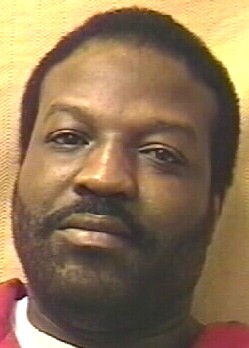
David Junior Ward
Murderer Brian Kevin Rosenfeld
Murderer · USA · 1985
Brian Kevin Rosenfeld Brian Kevin Rosenfeld was sentenced to three concurrent l…
23 victims
Brian Kevin Rosenfeld
Murderer · USA · 1985
Brian Kevin Rosenfeld Brian Kevin Rosenfeld was sentenced to three concurrent l…
23 victims
 Russell Ellwood
Murderer · USA · 1991
Russell Ellwood was a former taxi driver. Authorities suspected him of killing…
20 victims
Russell Ellwood
Murderer · USA · 1991
Russell Ellwood was a former taxi driver. Authorities suspected him of killing…
20 victims
 Robert Martines Perez
Murderer · USA · 1994
Name: Robert Martines Perez · Other name used in proceedings: Robert Martinez P…
15 victims
Robert Martines Perez
Murderer · USA · 1994
Name: Robert Martines Perez · Other name used in proceedings: Robert Martinez P…
15 victims
 Billy Frank Vickers
Murderer · USA · 1993
Billy Frank Vickers Vickers was executed by lethal injection in Texas on Januar…
14 victims
Billy Frank Vickers
Murderer · USA · 1993
Billy Frank Vickers Vickers was executed by lethal injection in Texas on Januar…
14 victims
 Marcellus Williams
Murderer · USA · 1998
Marcellus Williams was convicted in the State of Missouri case styled State of…
1 victim
Marcellus Williams
Murderer · USA · 1998
Marcellus Williams was convicted in the State of Missouri case styled State of…
1 victim
 Charles Ebo Quansah
Serial killer · Ghana · 1993
Charles Ebo Quansah, also known as Charles Papa Kwabena Ebo Quansah, was born i…
34 victims
Charles Ebo Quansah
Serial killer · Ghana · 1993
Charles Ebo Quansah, also known as Charles Papa Kwabena Ebo Quansah, was born i…
34 victims
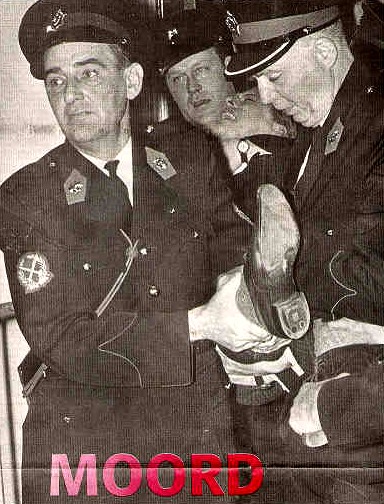 Hans Van Zon
Serial killer · Netherlands · 1964
Hans van Zon was born in Utrecht, Holland, in April 1942. He was described as a…
5 victims
Hans Van Zon
Serial killer · Netherlands · 1964
Hans van Zon was born in Utrecht, Holland, in April 1942. He was described as a…
5 victims
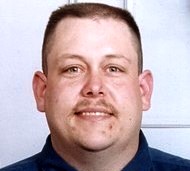 Charles Dalton
Murderer · USA · 2009
Charles L. Dalton Sr. (38) killed his wife, his teenage son, and his young daug…
3 victims
Charles Dalton
Murderer · USA · 2009
Charles L. Dalton Sr. (38) killed his wife, his teenage son, and his young daug…
3 victims
 Warren Lee Hill
Homicide · USA · 1985
Warren Lee Hill was 36 when he was sentenced to death in September 1991 in Lee…
2 victims
Warren Lee Hill
Homicide · USA · 1985
Warren Lee Hill was 36 when he was sentenced to death in September 1991 in Lee…
2 victims
 Dragoslav Petkovic
Homicide · Bosnia-Herzegovina · 2002
29 April 2002 — 17-year-old Dragoslav Petkovic opened fire with a handgun short…
1 victim
Dragoslav Petkovic
Homicide · Bosnia-Herzegovina · 2002
29 April 2002 — 17-year-old Dragoslav Petkovic opened fire with a handgun short…
1 victim
- Gender
- male
- Country
- USA
- Location
- Pitt County, North Carolina, USA
- Date of birth
- November 3, 1961
- Age at first offence
- 30
- Characteristics
- robbery, drugs, juvenile
- Victim profile
- Dorothy Mae Smith (convenience store owner)
- Method of murder
- Shooting
- Date(s) of murder
- April 3, 1991
- Years active
- 1991
- Date of arrest
- Next day
- Status
-
Executed
Executed by lethal injection in North Carolina on October 12, 2001
Parties and identities
David Junior Ward was the defendant. He was tried in connection with the robbery and murder of Dorothy Mae Smith, with accomplice Wesley Harris.
Dorothy Mae Smith was the victim and she was murdered.
Wesley Harris was Ward’s accomplice and a codefendant.
Seymour Smith was Dorothy Mae Smith’s husband. He and Dorothy operated a convenience store and his .38 caliber pistol was picked up by Dorothy.
Timeline
- April 3, 1991 — Dorothy Mae Smith was shot five times and died following an armed ambush and robbery at her home after returning from closing a convenience store.
- April 14, 1992 — David Junior Ward was sentenced to death in Pitt County Superior Court for the April 3, 1991 murder of Dorothy Mae Smith.
- June 9, 1999 — A stay of execution was granted by the North Carolina Supreme Court.
- Aug. 16, 2001 — The stay of execution was lifted.
- Oct. 12, 2001 — David Junior Ward was executed by lethal injection in North Carolina.
Background
Dorothy and her husband, Seymour Smith, owned a convenience store.
On 3 April 1991, Dorothy and her brother closed the store around 10:30 p.m. Dorothy filled a money box with $4,000 in cash and an undetermined number of checks. She collected her personal belongings—including fruit, crackers, a comb, and a magazine—which she placed in a white plastic bag. She also picked up her husband’s .38 caliber pistol. She got in her pickup truck and headed toward her house down the road from the store; her brother followed her home.
David Junior Ward was born in 1961 in a rural area of Pitt County near the Tar River before it becomes the Pamlico, and near the Beaufort County line. He was the oldest of eight children. His family was poor throughout his childhood. His father supported his wife and children by working on nearby farms, and David joined his father in fields picking cucumbers from age nine and harvesting tobacco from age 12. The home where David grew up included violent fights that left combatants bleeding and occasionally required hospitalization. David remembered being whipped with a belt “at the time that everybody else got beat with drop cords.” David did not feel he was abused and described his childhood as typical and happy. David felt close to his father, who did not abuse his wife or children and did not use drugs. When his father died, David was fifteen. In response, David withdrew from others and became emotionally isolated, while also assuming the role of head of his household providing for his mother and seven siblings. David dropped out of school in the eleventh grade.
David became a father in 1984. He maintained a close relationship with his daughter Kevette and her mother through correspondence and prison visits.
His law troubles began as a teenager. He started using drugs at 13 and later turned to stealing cars and robbing stores to pay for his drug habit, and on some occasions this activity landed him in jail.
In 1983, David began dating Rosa Lee Knight. Their daughter Kevette was born a year later.
David worked on a tobacco farm and later became a janitor at his school, working in the morning and attending classes in the afternoon. He quit school because he was “burned out” from the dual commitment.
During this period he also cared for his blind grandmother, fixing her breakfast and cleaning the house. Through the years he moved from job to job, mostly manual labor and farm work. He worked for an asbestos removal company but decided to leave because he thought the work was making him sick. Most of the money he earned was given to his mother.
The offence
At the house, Dorothy turned into the driveway and went to the back of her house; her brother stopped in the road and watched until he saw her brake lights turn on.
At about 10:30 p.m., a next-door neighbor heard sounds at first thought to be exploding firecrackers but realized they were gunshots. The neighbor heard five shots fired in rapid succession. The neighbor went outside and saw only Dorothy’s pickup parked at the back door of her house. The neighbor saw no one and became concerned. The neighbor and a friend went to the Smith house and discovered Dorothy’s body lying on the ground near the back door.
Dorothy had blood coming from the back of her head and did not respond when they called her name. They phoned 911. Police arrived and found no vital signs in Dorothy. Deputies observed Dorothy’s body fully clothed lying close to the back door of the house, with her feet nearest the house, her head away from the house, and a set of keys and prescription glasses on the ground near her hand.
They found an apple, some fruit, crackers, a comb, a deed, and four spent shell casings strewn in the driveway.
Later, they found a .32 caliber bullet and a .22 caliber bullet at the base of an air conditioning unit also near the house.
The medical examiner testified that Dorothy had been shot five times with small caliber firearms. The medical examiner found gunshot wounds on the left side of the back of the head and neck area; on the left arm near the shoulder; on the left side of the chest; on the left side of her body near the back and just below the waist; and on the left arm. The medical examiner testified that all gunshots had been fired from a distance exceeding three to four feet from Dorothy.
The wound to Dorothy’s head would have been immediately incapacitating and the wounds to the chest and shoulder fatal if left untreated. The bruise on the right side of Dorothy’s forehead and the bruise to her right elbow led Dr. Gilliland to conclude that Dorothy was immediately incapacitated by the gunshot wound to the head and died very quickly. Dr. Gilliland also concluded that the head wound occurred after the others based on the angle of the other wounds in conjunction with the bruises.
Ward was arrested on unrelated charges and gave a complete confession.
Ward stated that he came to Greenville and got up with Wesley Harris. Ward said Harris said he had a job to do that night and that they were going to rob Seymour Smith’s wife when she closed the store. Ward said they went by the store and she was there so they rode around until it got dark. Ward said that about 10:00 p.m. they parked Harris’s blue Saab car on the road that runs off between the store and the Smith house. Ward said:
“We ran across the road and got in the bushes next to the driveway. I had a rifle and Wesley had a pistol. The rifle was a .22 caliber and the pistol was a .32 caliber. When Mrs. Smith pulled in the driveway and pulled around back and got out of the truck, we started shooting. Wesley ran and got the money box after she fell and we ran across the road and got in the car and left. We put the money in the ditch near Empire Brushes. We got a money box and a white plastic bag. I called a cab and went to my girlfriend’s house near Belvoir. Before I could get up with Wesley the next day, the cops got me.”
Ward said that Wesley kept both guns that were used.
After the murder and robbery, Harris collected Smith’s cashbox with all of the money and hid the weapons they used at his apartment. Ward never received any of the money from the robbery.
Investigation and arrest
The following day, Ward was apprehended for questioning and immediately confessed his involvement in the robbery. He led authorities to the home of Wesley Harris, where they found the money and weapons from the robbery.
Ward cooperated fully with police, voluntarily waiving his rights to remain silent or have an attorney present during questioning.
The only evidence of Ward’s participation was his own confession.
Trial
Both suspects were charged with robbery and first-degree murder.
Wesley Harris was tried first, convicted, and sentenced to Life Imprisonment.
Ward was tried a month later.
The appointed legal counsel had practiced mostly real estate law, had not been involved in a felony criminal case in over five years, and had never before defended a 1st degree murder suspect.
The defense submitted fourteen non-statutory mitigating circumstances. Ward was convicted and given the death penalty.
Ward’s death sentence was based on the single aggravating factor of “pecuniary [financial] gain.”
The jury returned a death sentence, based on the single aggravating factor of “pecuniary gain” even though the account stated there was no evidence that Ward obtained any money from the crimes and no proof that he ever intended to benefit financially.
Ward maintained he purposely shot off to the side so as not to strike Smith. Court records also noted bullet holes found at the base of an air conditioning unit attached to the house, while it was stated that it was never determined which gun caused the bullet holes.
The account stated that at Ward’s trial, the judge did not allow the jury to hear testimony regarding Harris’s life sentence.
The account stated that Ward’s “courtroom outburst at his trial was in response to his perception that the district attorney was badgering his mother on the witness stand.”
Sentencing
David Junior Ward was sentenced to death April 14, 1992 in Pitt County Superior Court for the April 3, 1991 murder of Dorothy Mae Smith during a robbery.
The sentencing in Ward’s case was described as being based on an aggravating factor of “pecuniary gain.”
Appeals
Citations included:
- State v. Ward , 449 S.E.2d 709 (N.C. 1994) (Direct Appeal).
- Ward v. North Carolina , 115 S.Ct. 2014 (1995) (Cert. Denied).
- Ward v. French , 989 F.Supp. 752 (E.D.N.C. 1997) (Habeas).
- Ward v. French , 165 F.3d 22 (4th Cir. 1998).
The account described that for more than three years, Ward was denied the benefit of new discovery provisions enacted for death row inmates.
It also described that just before a scheduled execution in June 1999, the North Carolina Supreme Court stayed the execution and ruled Ward was within the scope of the discovery law. The account stated that suppressed witness statements were found in September 2000.
The account stated that Ward’s motion regarding suppressed witness statements was denied without a hearing by Judge Russell Duke, Jr., of Pitt County after he signed an order drafted by the state.
The account also stated that the North Carolina Supreme Court denied review of that decision.
It further described that the North Carolina Secretary of Correction set a new execution date for Ward of Oct. 12, 2001 without allowing federal court review of federal constitutional issues, and that the North Carolina Supreme Court refused to review that decision.
Outcome
David Junior Ward was executed by lethal injection in North Carolina on October 12, 2001.
The execution was scheduled for 2 a.m. at Central Prison.
An execution date for Ward was originally set for June 25, 1999, but a stay of execution was granted by the North Carolina Supreme Court on June 9, 1999. That stay was lifted Aug. 16, 2001.
A media tour at Central Prison was scheduled for Monday, October 8 at 10 a.m., and the account said it would be the only time the news media would be allowed to photograph the execution chamber and death watch area before the execution.
During the tour, Warden R.C. Lee would explain execution procedures, and the session was described as lasting approximately one hour.
Aftermath
The account described David Ward’s status as a 40-year-old death row inmate in North Carolina scheduled for execution on October 12, 2001.
It also stated that Ward remained committed to his mother, who recently suffered a stroke and was recovering.
Spotted an error, or have more information about this case?