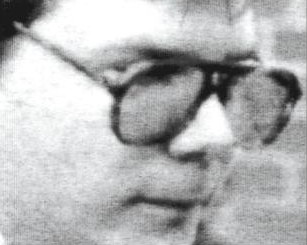
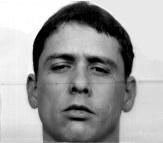
Albert Clozza
Murderer Brian Kevin Rosenfeld
Murderer · USA · 1985
Brian Kevin Rosenfeld Brian Kevin Rosenfeld was sentenced to three concurrent l…
23 victims
Brian Kevin Rosenfeld
Murderer · USA · 1985
Brian Kevin Rosenfeld Brian Kevin Rosenfeld was sentenced to three concurrent l…
23 victims
 Marvin Gray
Murderer · USA · 1975
Marvin Gray was convicted killer who claimed responsibility for 23 slayings and…
23 victims
Marvin Gray
Murderer · USA · 1975
Marvin Gray was convicted killer who claimed responsibility for 23 slayings and…
23 victims
 Yahweh ben Yahweh
Murderer · USA · 1980
Yahweh ben Yahweh was born and legally named Hulon Mitchell Jr. (October 27, 19…
23 victims
Yahweh ben Yahweh
Murderer · USA · 1980
Yahweh ben Yahweh was born and legally named Hulon Mitchell Jr. (October 27, 19…
23 victims
 Russell Ellwood
Murderer · USA · 1991
Russell Ellwood was a former taxi driver. Authorities suspected him of killing…
20 victims
Russell Ellwood
Murderer · USA · 1991
Russell Ellwood was a former taxi driver. Authorities suspected him of killing…
20 victims
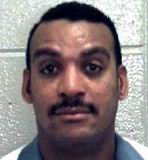 Emmanuel Hammond
Murderer · USA · 1988
Emmanuel Fitzgerald Hammond was convicted by a jury in Fulton County of murder,…
1 victim
Emmanuel Hammond
Murderer · USA · 1988
Emmanuel Fitzgerald Hammond was convicted by a jury in Fulton County of murder,…
1 victim
 James Biela
Murderer · USA · 2008
James Michael Biela (also described as James Biela), age 27 at arrest, of Spark…
1 victim
James Biela
Murderer · USA · 2008
James Michael Biela (also described as James Biela), age 27 at arrest, of Spark…
1 victim
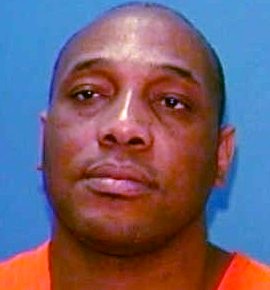 Rickey Roberts
Murderer · USA · 1984
Rickey Roberts was convicted of the murder of George Napoles and was sentenced…
1 victim
Rickey Roberts
Murderer · USA · 1984
Rickey Roberts was convicted of the murder of George Napoles and was sentenced…
1 victim
 Mauricio Rodriguez Silva
Serial killer · USA · 1978
Mauricio Rodriguez Silva was born with “gigantism” which enlarges features and…
4 victims
Mauricio Rodriguez Silva
Serial killer · USA · 1978
Mauricio Rodriguez Silva was born with “gigantism” which enlarges features and…
4 victims
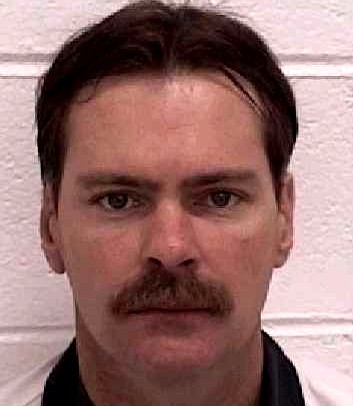 Leonard Drane
Murderer · USA · 1990
Leonard Maurice Drane was convicted in a capital case involving the killing of…
1 victim
Leonard Drane
Murderer · USA · 1990
Leonard Maurice Drane was convicted in a capital case involving the killing of…
1 victim
- Gender
- male
- Country
- USA
- Location
- Virginia Beach, Virginia, USA
- Date of birth
- 1960
- Age at first offence
- 23
- Characteristics
- rape
- Victim profile
- Patricia Beth Bolton (female, 13)
- Method of murder
- Beating - Asphyxia from inhaling her own blood
- Date(s) of murder
- January 13, 1983
- Years active
- 1983
- Date of arrest
- Next day
- Status
-
Executed
Executed by electrocution in Virginia on July 24, 1991
Case details
Albert Clozza was convicted of killing a 13-year-old girl, Patricia Beth Bolton, in 1983. Clozza was executed in Virginia on 24 July 1991 by electrocution.
Background
Patricia Beth Bolton, aged 13 years, left her family's residence in the Derby Run Trailer Park to walk alone to a bookmobile that routinely stopped near the park. She was last seen leaving her home in the evening of her disappearance.
The offence
On Thursday, January 13, 1983, around 6:30 p.m., Patricia Beth Bolton left her family's residence in the Derby Run Trailer Park to walk alone to a bookmobile. She had not returned home by about 8:00 p.m., and her father began searching the neighborhood without success.
Clozza abducted Bolton as she made her way back from visiting a bookmobile in a Virginia Beach trailer park. Clozza dragged Bolton across a field into nearby woods. Bolton was raped, sodomized, and severely beaten in the face.
The medical examiner reported that Bolton died from inhaling her own blood and that she had been violated with a 4 inch twig. Bolton’s body was found the day after the abduction. The body was nude except for one sock.
Investigation
On the morning after Bolton’s disappearance, the father found a French book on the lawn of his home. He resumed his search and discovered his daughter's T-shirt and a blue notebook, with Clozza's name in it, behind a residence near the Bolton home.
On that day, January 14, a search of the Derby Run area for the missing child was supervised by a Virginia Beach detective. Approximately 150 persons, mostly military personnel, participated in the search. The search was concentrated in a large field adjacent to the trailer park separating the park from higher, brush-covered, wooded ground.
About 3:00 p.m., five stacked books were found in the field with one of the child's tennis shoes. Stains from two puddles of blood were discovered near the books. Bolton’s bra and her other shoe were found farther into the field from the residential area. Her blue jacket, corduroy trousers, underwear, and sock were discovered still farther into the field.
At 4:30 p.m., Bolton’s body, unclothed except for one sock, was found by a member of the search party. The body was lying face down at the bottom of an embankment in the wooded area and was barely visible due to surrounding brush and undergrowth. The body was encrusted with blood, vegetation-type debris, and mud.
Medical examiner evidence (verbatim descriptions and quoted opinions)
Externally, the entire front of the face was swollen and bruised. The lips were bruised, torn and crushed. The upper lip had been stripped off the bone. The lower jaw was dislocated. The fat of the cheek was crushed and bruised from the inside. There were scrapes on the knuckles of the hands and numerous scratch marks on the forearms, buttocks, backs of the thighs, legs, and front of the trunk. These marks apparently were made by bristles and thorns. There was bruising on the front of the knees and dirt driven into the skin. The area around the genitals was bruised. An elongated abrasion was found on the front, inside portion of the left thigh.
Internally, there was bleeding on the surface of the brain and hemorrhage of the scalp. The outer and inner lips of the vagina were bruised. There was a laceration near an area of attachment at the lower end of the inner lips of the vagina. There was tearing and bruising of the lining of the vagina. A piece of twig, three and three-quarters inches in length, had penetrated the vagina, perforated the vaginal wall, and protruded into the abdominal cavity.
Internally in the head and neck region, there was bleeding in the floor of the mouth and the soft tissues of the face. A piece of vegetation resembling a corn husk was wedged in the upper throat.
The medical opinion was that direct blows to the head by a blunt object or a fist caused the extensive injuries in that area. The medical examiner further testified that the twig caused perforation of the abdominal cavity, either at the time of death or just after the victim died.
The other vaginal injuries were caused by the penetration of "a firm, cylindrical object, anything from three, four to five, six inches in circumference and penetrating or up to about two or three inches." He opined that the injuries to the knees were consistent with falling down and being pushed down repeatedly.
Finally, the medical examiner testified to the cause of death as follows:
"She died as a result of shock from bleeding and aspiration of some of the blood; that is, bleeding into the windpipe, swallowing, inhaling the blood into the windpipe and bleeding and shock and hemorrhaging resulting from blunt-force blows about the head and face."
She died, he opined, within several hours after eating a meal.
Arrest
On the evening of the child's disappearance, the defendant, who had worked in the trailer park but lived nearby in the Sandbridge area, was seen in the bookmobile during the period between 6:30 p.m. and 7:30 p.m.
About 10:30 p.m. he entered a Seven-Eleven store located across the street from the bookmobile. He was "covered in blood." There was blood on his face, arms, and clothes. The fly to his trousers was unzipped. There was blood on the trousers about the opening.
He told the store clerk, whom he knew, that he had been "rolled" by two men who had "beat him up." Defendant said that his arm and ribs had been injured in the fight.
After helping defendant clean the blood from his person, the clerk called the police. The defendant left the store before officers arrived.
Clozza was taken into custody by the Virginia Beach Police, and the first of a series of interviews with the police began shortly after 8:00 p.m. on Friday, January 14th. Clozza was arrested on a warrant executed about 11:30 p.m. that day.
Trial
Proceedings and evidence
Initially, Clozza denied any involvement with the child. Over time, he admitted the crimes with which he was charged except rape. In an interview that he initiated with the police on June 27, 1983, he admitted raping the victim.
Confessions and account of the crimes
Clozza’s admissions included the following account.
Clozza observed the child, who appeared to him to be older than her 13 years, carrying books in the area of the bookmobile. He said he had consumed 15-16 beers earlier in the day but later testified that he was not intoxicated at the time of the offenses.
He stated that he followed her to a point near the front of her residence, "grabbing" her from behind and putting his hand over her mouth and on her arm. He forced her behind a trailer home and told her to remove her coat and shirt. She complied, and he struck her several times. She began to bleed about the mouth. He told her to remain quiet.
He forced her to walk through the residential area to the edge of the field. There he ordered her to remove her coat again and her bra. He struck her three times after she followed his directions. He said that she was "[n]ot very badly" injured at that time, but it was "possible" that her teeth had been knocked loose.
They started across the field and after they had walked one-fourth of the way across, the child ran, trying to escape. Clozza caught her, struck her twice while she was standing and forced her to disrobe. She fell to the ground and he hit her three or four times while she was on the ground. He stated he raped her at that point and ejaculated on the ground. He did not remove his clothes but unzipped his trousers. He said her condition then was "fair," but he thought her nose was broken and that she was "missing" several teeth.
Next, while the child was on the ground, Clozza forced her to commit an act of fellatio on him. Then, he pulled her to her feet and pushed her toward the wooded area. He stated that she was not speaking to him, but that he probably was saying, "isn't this nice or I'm having fun or something on that order."
As they reached a hill where the tree line began, Clozza struck her and made her commit fellatio again. He said her condition was "poor" at that time, she was bleeding from her nose and mouth, and one eye was swollen closed. Next, he "put a stick in her mouth," and another in her vagina. Asked by the interrogator the purpose of placing the stick in her vagina, Clozza answered: "I don't know. Maybe cruelty."
They continued on a path in the wooded area with the defendant striking the child in the back of the head and then in the face. Finally, she fell and, according to Clozza, her condition was "very poor." At this point, Clozza stated, he ordered the child to get up and to go down an embankment. He said that he did not give her an opportunity to comply but that he pushed her "down into the valley" when he saw a light from a flashlight approaching him at a distance.
Clozza stated that he left the area, walked back down the path, and went to the Seven-Eleven store.
Defence counsel and mitigation approach (as described in the appeal record and clemency letters reference)
Clozza’s legal representation at his trial was seriously deficient, with defence counsel expressing personal disgust at the crime, reservations about representing Clozza, and personal distaste for his client.
No mitigating evidence was presented at the sentencing phase of the trial. Counsel led the jury in a recital of the Lord’s Prayer (see letter to Governor Douglas Wilder, appended). Clozza declined to seek executive clemency from the Governor.
Verdicts
On November 3, 1983, a jury convicted Clozza of capital murder, aggravated sexual battery, sexual penetration with an inanimate object, abduction with intent to defile, and two counts of forcible sodomy.
The jury fixed his sentence as life imprisonment for each of the non-capital offenses except aggravated sexual battery, and as twenty years imprisonment for the aggravated sexual battery offense.
On November 4, 1983, the jury sentenced Clozza to death for capital murder committed during or after rape.
The court imposed sentence on November 22, 1983.
Sentencing
The jury’s death sentence for capital murder committed during or after rape followed the conviction and sentencing by the jury on November 4, 1983.
Clozza did not seek executive clemency from the Governor.
Appeals
State and federal appeal history
The Virginia Supreme Court affirmed the convictions of capital murder and the death sentence.
The United States Supreme Court denied his petition for writ of certiorari on February 19, 1985.
Clozza filed a petition for a writ of habeas corpus in the Circuit Court of the City of Virginia Beach on April 4, 1985. In an order dated October 25, 1985, the court denied without evidentiary hearing all of Clozza’s claims except ineffective assistance of counsel. It held an evidentiary hearing on the ineffective assistance of counsel claim on December 5, 1985, and denied relief on all of Clozza’s petition for state habeas corpus relief on June 4, 1986.
Clozza then appealed the denial of state habeas corpus relief to the Supreme Court of Virginia, which affirmed on February 26, 1987.
The United States Supreme Court denied Clozza’s petition for writ of certiorari challenging the denial of habeas corpus relief in the state courts on November 2, 1987.
Federal habeas and appellate decision
Clozza filed his petition for federal habeas corpus relief on March 18, 1988. A magistrate filed a report recommending denial of relief on July 10, 1989. The district court denied relief on August 17, 1989. From that order Clozza appealed.
The federal appeal was:
- 913 F.2d 1092
- Albert J. Clozza, Petitioner-Appellant, v. Edward W. Murray, Director, Virginia Department of Corrections, Respondent-Appellee.
- United States Court of Appeals, Fourth Circuit.
- Argued Feb. 6, 1990.
- Decided Sept. 13, 1990.
- Before WIDENER, HALL and WILKINS, Circuit Judges.
The appeals court affirmed the judgment of the district court and held that Clozza’s death sentence was based upon the aggravating circumstance of vileness as well as on the aggravating circumstance of future dangerousness.
Quotations and specific issues addressed on appeal
The appeals court addressed Clozza’s claims that he was denied adequate and effective assistance of counsel and that Virginia’s capital sentencing procedure was unconstitutional.
Clozza challenged trial counsel’s remarks. The appeals court quoted statements made during trial, including remarks attributed to trial counsel:
- During voir dire, counsel stated he did not want to participate and only did so because it was his duty and his job. Counsel also stated that "some team of ACLU lawyers" would decide whether he had gone too far with his instincts in defending Clozza.
- During the opening statement, counsel stated it was difficult "getting to like you [Clozza] enough" to defend him adequately, and he said that he did not know what his defense would be in the case and that he "would probably want to kill" Clozza as a result of the offense.
- Counsel asked Clozza on direct examination about miracles saving the victim and made a remark that it was "really weird" celebrating Halloween while representing Clozza.
- During closing argument, counsel indicated he did not want to put petitioner "back on the street" and that if Clozza's attempt at suicide had been successful, "it would not have been the greatest tragedy."
Clozza later asserted that his attorney, Legler, made prejudicial remarks including the quoted comments. The appellate court concluded those remarks were consistent with trial strategy.
The appeals court quoted a statement about the possibility of placing sticks in the victim:
"I don't know. Maybe cruelty."
The appellate court also quoted an attorney statement in the footnote context:
"If it is my kid, a lawyer training in law school, it wouldn't make any difference. I would probably want to kill him."
The appeal included discussion of Clozza’s ineffective assistance claims at guilt and sentencing phases.
The appeals court also discussed Clozza’s procedural default arguments and claims about jury instructions and proportionality review. It noted that the Virginia Supreme Court decided the case was the worst on record, stating:
"Actually, there are no other cases in our records that have involved conduct as despicable as the acts of this defendant."
The appeals court affirmed the district court’s judgment.
Outcome
Clozza was executed in Virginia by electrocution on July 24, 1991. The appeals court affirmed the denial of federal habeas corpus relief.
Aftermath
Clozza became the 12th person to die in the electric chair since Virginia resumed executions in 1982 and the 150th executed in the nation since a ruling in 1976 by the Supreme Court allowed states to resume capital punishment.
Clozza was pronounced dead at 11:07 P.M.
Clozza did not request clemency from Gov. L. Douglas Wilder. The governor issued a statement that:
"completed a thorough and exhaustive review of the record" and found no reason to stop the execution.
Michelle Prosser said the governor received 11 letters asking for clemency, and that:
"The majority were from out of state and clearly associated with Amnesty International," and that Amnesty International opposes capital punishment as a violation of human rights.
Clozza made a statement quoted in the account of the execution:
"I cannot change what I have done in the past, no matter how much I wish that I could," "Nothing I can say or do will stop the pain that I have caused. I do not expect people to forgive me for what I have done in my life. For I am and have paid for my ways."
The account also described that Virginia’s electric chair was last used in December, before it was moved from the State Penitentiary in Richmond to the Greensville prison in Jarratt, 55 miles south of Richmond.
Other details
Clozza was described as white and 31 at the time of execution. Clozza’s conviction involved capital murder and sexual offenses committed in 1983.
Clozza’s first confession was initially on January 18, 1983, when he confessed to all the crimes except rape. A tape recording of that confession was played to the jury during the trial and was admitted as evidence.
On June 27, 1983, Clozza made voluntary statements to police admitting that he had raped the victim. The tape of the second confession was also played to the jury, and it was admitted into evidence along with a transcript of the tape which Clozza had read and signed. Clozza did not dispute the confessions in the proceeding.
On November 3, 1983, the jury convicted Clozza of capital murder, aggravated sexual battery, sexual penetration with an inanimate object, abduction with intent to defile, and two counts of forcible sodomy.
Clozza was on parole at the time of proceedings described in the appellate record; his supervising Virginia Beach parole officer was also talked to. Counsel consulted publications and statutes and procedures involved in capital cases, and counsel sought psychiatric examinations from the University of Virginia Institute of Law and Psychiatry and from Central State Hospital.
Dr. Lee testified at the guilt phase of the trial and during the state habeas corpus proceeding. Dr. Lee testified he was aware of mitigating factors found in the Virginia statutes and informed counsel of intoxication as a possible mitigating factor. Dr. Lee’s alternate diagnosis included that Clozza "could have been pathologically oriented or psychopathically oriented." During the state habeas proceeding, Dr. Lee stated: "if he was, indeed, sober, it would, of course, indicate my reconstructions would be false."
Clozza’s parents testified during the guilt phase of the trial. The state habeas court found that Legler’s testimony was more credible about requests for their testimony, and it concluded that any error in failure to call Doctor Lee or failure to call Mr. and Mrs. Clozza during the sentencing phase did not prejudice the defense.
Clozza challenged the verdict form’s use of "and/or" in the verdict form. The appeals court discussed that the claim was procedurally defaulted, and referenced Turner v. Bass and Briley v. Bass.
The appeals court referenced that the Virginia Supreme Court in this very case found the death sentence was "based on both the vile nature of the offense and the likelihood that the defendant would commit future acts of violence that would constitute a serious threat to society." It also noted that both the vileness and dangerousness aspects had been decided adversely to Clozza.
Spotted an error, or have more information about this case?