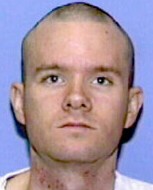
James Scott Porter
Murderer Brian Kevin Rosenfeld
Murderer · USA · 1985
Brian Kevin Rosenfeld Brian Kevin Rosenfeld was sentenced to three concurrent l…
23 victims
Brian Kevin Rosenfeld
Murderer · USA · 1985
Brian Kevin Rosenfeld Brian Kevin Rosenfeld was sentenced to three concurrent l…
23 victims
 Russell Ellwood
Murderer · USA · 1991
Russell Ellwood was a former taxi driver. Authorities suspected him of killing…
20 victims
Russell Ellwood
Murderer · USA · 1991
Russell Ellwood was a former taxi driver. Authorities suspected him of killing…
20 victims
 Robert Martines Perez
Murderer · USA · 1994
Name: Robert Martines Perez · Other name used in proceedings: Robert Martinez P…
15 victims
Robert Martines Perez
Murderer · USA · 1994
Name: Robert Martines Perez · Other name used in proceedings: Robert Martinez P…
15 victims
 Billy Frank Vickers
Murderer · USA · 1993
Billy Frank Vickers Vickers was executed by lethal injection in Texas on Januar…
14 victims
Billy Frank Vickers
Murderer · USA · 1993
Billy Frank Vickers Vickers was executed by lethal injection in Texas on Januar…
14 victims
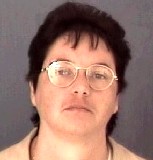 Kelly Gissendaner
Murderer · USA · 1997
Kelly Gissendaner was convicted in 1998 of recruiting her lover to kill her hus…
1 victim
Kelly Gissendaner
Murderer · USA · 1997
Kelly Gissendaner was convicted in 1998 of recruiting her lover to kill her hus…
1 victim
 Mario Benjamin Murphy
Murderer · USA · 1991
Mario Benjamin Murphy was a Mexican national. He was scheduled to be executed i…
1 victim
Mario Benjamin Murphy
Murderer · USA · 1991
Mario Benjamin Murphy was a Mexican national. He was scheduled to be executed i…
1 victim
 Melanie Smith
Mass murderer · United Kingdom · 2012
Melanie Smith was convicted of murdering five members of a family after she set…
5 victims
Melanie Smith
Mass murderer · United Kingdom · 2012
Melanie Smith was convicted of murdering five members of a family after she set…
5 victims
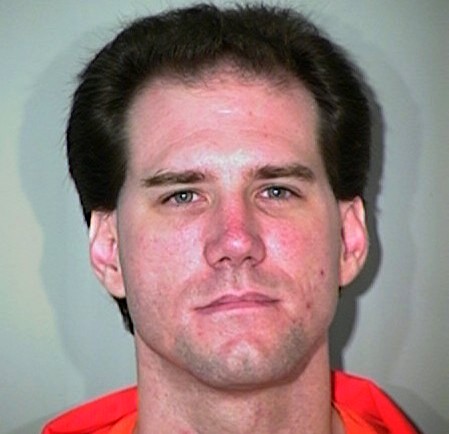 Richard Harley Greenway
Murderer · USA · 1988
27 March 1988 — Greenway and Christopher Lincoln burglarized the Tucson home of…
2 victims
Richard Harley Greenway
Murderer · USA · 1988
27 March 1988 — Greenway and Christopher Lincoln burglarized the Tucson home of…
2 victims
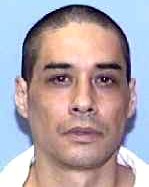 Perry Allen Austin
Murderer · 1992
Perry Allen Austin TDCJ Number: 999410 Date of birth: 06/23/1959 Sex: male Race…
1 victim
Perry Allen Austin
Murderer · 1992
Perry Allen Austin TDCJ Number: 999410 Date of birth: 06/23/1959 Sex: male Race…
1 victim
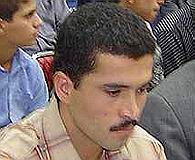 Mohammed Bijeh
Serial killer · Iran · 2004
Mohammed Bijeh (Persian: محمد بيجه ) was an Iranian serial killer. He confessed…
20 victims
Mohammed Bijeh
Serial killer · Iran · 2004
Mohammed Bijeh (Persian: محمد بيجه ) was an Iranian serial killer. He confessed…
20 victims
- Gender
- male
- Country
- USA
- Location
- Bowie County, Texas, USA
- Date of birth
- August 15, 1971
- Age at first offence
- 24
- Characteristics
- white supremacist
- Victim profile
- White male transient, 40 / Rudy Delgado, 40 ( fellow inmate )
- Method of murder
- Shooting / Beating with a rock - St abbing with makeshift knife
- Date(s) of murder
- 1995 / 2000
- Years active
- 1995–2000
- Date of arrest
- —
- Status
-
Executed
Executed by lethal injection in Texas on January 4, 2005
Case identity
James Scott Porter was a defendant in a capital murder case.
Timeline
- 1990 — Porter pleaded guilty to burglary of a building and was sentenced to eight years probation.
- 1991 — Porter was convicted of burglary of a building and was sentenced to five years; he was released on parole.
- 1995 — Porter was convicted and sentenced to forty-five years in prison for murder with a deadly weapon.
- March 2001 — Porter was convicted and sentenced to death for capital murder.
- May 28, 2000 — While serving his sentence in prison, Porter beat to death fellow inmate Rudy Delgado in the prison day room.
- April 21, 1995 — Porter was convicted and sentenced to forty-five years in prison for murder with a deadly weapon.
- July 2, 2003 — The Texas Court of Criminal Appeals adopted the trial court’s findings and denied post-conviction habeas corpus relief.
- September 26, 2003 — Porter filed a federal petition for writ of habeas corpus and a motion to dismiss that petition.
- January 30, 2004 — The U.S. District Court for the Eastern District, Beaumont Division, conducted an evidentiary hearing to determine Porter’s competency.
- February 17, 2004 — The district court dismissed Porter’s application for federal writ of habeas corpus.
- Wednesday, December 29, 2004 — The Texas Attorney General media advisory announced Porter was scheduled for execution after 6 p.m. Tuesday, January 4, 2005.
- Tuesday, January 4, 2005 — Porter was executed by lethal injection in Texas.
- 6:12 p.m. CST (January 4, 2005) — Porter was pronounced dead.
Background
Porter pleaded guilty to burglary of a building in 1990 and was sentenced to eight years probation. In 1991, he was convicted of burglary of a building and sentenced to five years. He was released on parole.
On April 21, 1995, Porter was convicted and sentenced to forty-five years in prison for murder with a deadly weapon. He shot a 40 year old white male transient two times in the head and dumped his body in a water well. Porter expressed no remorse for this murder and thought he had done society a favor. While imprisoned, Porter committed additional offences that led to the capital murder case.
Porter was sent to the Texas Department of Criminal Justice’s Barry Telford Unit in northeast Texas to serve a 45-year sentence for first-degree murder. He was serving this sentence when he committed the capital murder in prison. While in prison on the murder charge, prior to committing the capital murder, Porter was convicted of possessing a deadly weapon.
During the capital murder proceedings and on death row, Porter was called a white-supremacist and he claimed allegiance to white gangs and acquired extensive tattoos, including letters that spell “HATE” on four fingers of his right hand.
The offence
On May 28, 2000, while both men were serving time in prison at the Texas Department of Criminal Justice Telford Unit in Bowie County, Porter brutally beat to death fellow inmate Rudy Delgado in the prison day room.
Delgado was seated at a table. Porter struck Delgado, from behind, with a rock sheathed in a pillow case. Delgado fell to the floor and lay helpless on the ground as Porter continued to bludgeon his face and head with the rock. When the pillow case finally ripped, Porter stabbed Delgado in the head and face with a makeshift knife. Porter then stomped on Delgado’s head and face with steel-toed work boots.
Once the attack was over, Porter surrendered to a correctional officer. Porter gave a written statement to investigators, confessing to the murder of Delgado. In his confession, Porter admitted he had been planning to kill someone for some time and had decided to use the rock and the knife the week before the murder.
Porter admitted taking eleven Dilantin pills the night before the murder to help with the “rush of killing someone no one in particular.” Porter admitted he picked his victim at random. Porter later bragged about the murder in letters he wrote to other inmates and to the district attorney, and repeatedly stated that he would kill again.
Porter asserted in a hearing held outside the jury’s presence that he wanted to be convicted and sentenced to death for this murder, and he “put on little defense.”
Investigation
After the attack, Porter surrendered to a correctional officer.
Porter’s later letters to other inmates and to the district attorney were described as boasting and repeated statements that he would kill again.
James Elliott, the assistant district attorney in Bowie County, used Porter's letters at trial, telling jurors the convicted murderer was boasting and proud of killing Delgado.
Arrest
Porter surrendered to a correctional officer after the attack on Delgado.
Trial
Porter was convicted in March 2001 and sentenced to death by a jury in Bowie County, Texas.
On direct appeal, the Texas Court of Criminal Appeals affirmed Porter’s conviction and sentence on automatic review.
The trial was described as involving evidence about the confession, Polaroid pictures and videotape of the crime scene, trial counsel’s performance regarding peremptory challenges, and a trial court ruling granting the State’s challenge for cause to a vacillating venireperson.
Porter v. State (Not Reported in S.W.3d (Tex.Crim.App. Apr 09, 2003)) The defendant was convicted in the trial court, Bowie County, of capital murder and sentenced to death. On direct appeal, the Court of Criminal Appeals held that: (1) evidence that defendant ingested seizure medication prior to making confession did not render confession involuntary; (2) probative value of Polaroid pictures and videotape of crime scene was not outweighed by danger of unfair prejudice; (3) trial counsel's performance was not deficient for failure to exercise five peremptory challenges in opposition to defendant's wishes; (4) trial court did not err by granting State's challenge for cause to vacillating venireperson. Affirmed. WOMACK, J., delivered the opinion for a unanimous Court.
The opinion stated that Porter was convicted in March 2001 of capital murder. Tex. Penal Code Ann. § 19.03(a). Pursuant to the jury’s answers to the special issues set forth in Texas Code of Criminal Procedure article 37.071 sections 2(b) and 2(e), the trial judge sentenced appellant to death. Art. 37.071 § 2(g). Direct appeal to this Court is automatic. Art. 37.071 § 2(h). The Court affirmed.
Sentencing
Porter was convicted and sentenced to death by a jury in Bowie County, Texas, in March 2001.
Porter also had a prior sentence of forty-five years in prison for murder with a deadly weapon for the 1995 shooting death of a transient. He was serving that sentence when he committed the capital murder in prison.
Appeals
On automatic direct appeal, the Texas Court of Criminal Appeals affirmed Porter’s conviction and sentence.
Porter did not pursue certiorari review from the U.S. Supreme Court.
During state post-conviction proceedings, Porter informed his attorney that he no longer wished to pursue appeal of his conviction and sentence. Porter and his attorney agreed that if Porter’s application for post-conviction relief was unsuccessful, counsel would inform the federal court of Porter’s desire to waive appeal.
On July 2, 2003, the Texas Court of Criminal Appeals adopted the trial court’s findings and denied post-conviction habeas corpus relief.
On September 26, 2003, Porter filed a federal petition for writ of habeas corpus and a motion to dismiss the petition, including a request that the federal court appoint a mental health expert to determine whether Porter was competent to make the decision to dismiss his federal appeals.
The U.S. District Court for the Eastern District, Beaumont Division, appointed a psychiatrist who examined Porter and concluded Porter was competent. On January 30, 2004, the court conducted an evidentiary hearing to determine Porter’s competency and ruled that Porter was competent to dismiss his application. Therefore, the court dismissed Porter’s application for federal writ of habeas corpus on February 17, 2004.
Porter did not request clemency.
Outcome
Porter was executed by lethal injection in Texas on January 4, 2005.
At the request of Porter, no appeals were pending in the courts and no clemency petition was filed with the Texas Board of Pardons and Paroles, as described by his lawyer Robin Norris.
On January 4, 2005, Porter gave final words in a brief final statement. The final words were: “I am sorry for the pain I have caused you. I know it is a great loss and I want to apologize. I am sorry. And to my family I love you and I will see you all in heaven.”
Six minutes later, at 6:12 p.m. CST, Porter was pronounced dead.
Final/Special Meal: Two extra crispy fried chicken breasts, two thighs, onion rings, french fries, fried okra, five slices of buttered garlic bread, a bowl of country gravy, a couple slices of onions, pickles, jalapeno peppers, ketchup, mustard, sliced tomato, one pot of thick coffee and a banana split.
Aftermath
Porter’s lawyer Robin Norris said Porter had been advised that attorneys were ready to help him, even at the last minute.
Porter’s execution was described as the first death row execution of 2005, and he was described as the first of nine Texas inmates with execution dates already that year, including four in January.
Other details
James Elliott, the assistant district attorney in Bowie County who prosecuted Porter, stated: “And I'm not exaggerating that one bit.”
James Elliott also said: “In a way, I was,” and: “That dude never touched any little boys again.”
James Elliott stated: “The letter where he said 'I'm going to kill again the next chance I get' was fairly convincing.”
Anna Acevedo stated after watching her brother’s killer die: “I believe he was taken out too easy,” “He didn't feel the same pain my brother did.” “I would have been happy to see him feel the same pain my brother felt.” “His apology wasn't good enough for me.”
Porter told The Associated Press in a recent interview: “What I done is what I done,” “I'd taken a 2-pound rock to somebody's head and spread them all over the place.” “I guess at that time I just lost all my cool and didn't care anymore.”
Porter said while on death row: “Dude never touched any little boys again.”
Porter said: “I'm sorry it happened. That's all I can say.”
Porter said about his victim: “Dude was a homosexual.” “He asked me several times if that was something I might dig.” “One day, frustration started eating on me, like a little old black shroud covering my eyes. I'm going to kill someone.”
Porter said: “It wasn't my place to re-punish him for something he was already punished for.”
Porter said:
Porter also stated: “I'm the type of individual to face up to my responsibility and my mistakes.”
Porter told The Associated Press: “It's not my place to repunish him for something he was already punished for.”
Porter said: “I'm just thankful I had the chance to get salvation,” “although I don't deserve it.” “I know where I'm going. I know what's going to happen.” “I'm set. I'm secure in that and I'm at a real peace with it.” “I've never felt that kind of peace.” “And I like it, instead of all the hate, the chaos, the anger and the aggravation I usually feel.”
The June quote attributed to Sandra Day O'Connor stated: “paying lip service to principles” “regarding appellate law in upholding death sentences with 'no foundation in the decisions of this court.'”
James Elliott said the convicted murderer was boasting and proud of killing Delgado.
Porter’s lawyer Robin Norris said: “I believe as much as I can determine that he is in fact determined to go.”


Spotted an error, or have more information about this case?