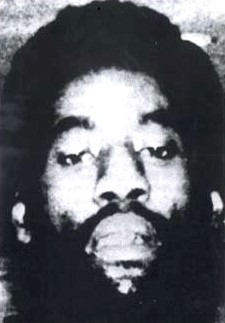
William Horton
Murderer Ervil LeBaron
Murderer · USA · 1972
Ervil Morrell LeBaron (1925 to August 16, 1981) was the leader of a polygamous…
35 victims
Ervil LeBaron
Murderer · USA · 1972
Ervil Morrell LeBaron (1925 to August 16, 1981) was the leader of a polygamous…
35 victims
 Marvin Gray
Murderer · USA · 1975
Marvin Gray was convicted killer who claimed responsibility for 23 slayings and…
23 victims
Marvin Gray
Murderer · USA · 1975
Marvin Gray was convicted killer who claimed responsibility for 23 slayings and…
23 victims
 Yahweh ben Yahweh
Murderer · USA · 1980
Yahweh ben Yahweh was born and legally named Hulon Mitchell Jr. (October 27, 19…
23 victims
Yahweh ben Yahweh
Murderer · USA · 1980
Yahweh ben Yahweh was born and legally named Hulon Mitchell Jr. (October 27, 19…
23 victims
 Charles Manson
Murderer · USA · 1969
Charles Milles Manson (born November 12, 1934) was an American criminal and mus…
9 victims
Charles Manson
Murderer · USA · 1969
Charles Milles Manson (born November 12, 1934) was an American criminal and mus…
9 victims
 Jeffrey Weise
Spree killer · USA · 2005
Jeffrey Weise, a 16-year-old student at Red Lake High School in Red Lake, an un…
9 victims
Jeffrey Weise
Spree killer · USA · 2005
Jeffrey Weise, a 16-year-old student at Red Lake High School in Red Lake, an un…
9 victims
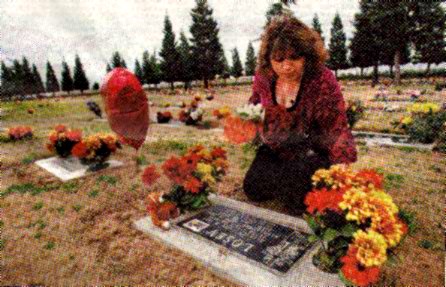 Vasily Petrovich Losev
Murderer · USA · 1999
Vasily Petrovich Losev, 45, was the father who killed his three sons and set th…
3 victims
Vasily Petrovich Losev
Murderer · USA · 1999
Vasily Petrovich Losev, 45, was the father who killed his three sons and set th…
3 victims
 Larry Keith Robison
Mass murderer · USA · 1982
August 10, 1982 (4:30 p.m.) — Junett Bryant arrived at the home of her adult so…
5 victims
Larry Keith Robison
Mass murderer · USA · 1982
August 10, 1982 (4:30 p.m.) — Junett Bryant arrived at the home of her adult so…
5 victims
 Clover Boykin
Murderer · USA · 1993
Clover Boykin killed her 5-month-old son, Dayton Boykin, in Florida on October…
2 victims
Clover Boykin
Murderer · USA · 1993
Clover Boykin killed her 5-month-old son, Dayton Boykin, in Florida on October…
2 victims
 Gerald Albert Gallego
Murderer · USA · 1954
Gerald Albert Gallego was a cop-hating father of Gerald Armand Gallego. He murd…
2 victims
Gerald Albert Gallego
Murderer · USA · 1954
Gerald Albert Gallego was a cop-hating father of Gerald Armand Gallego. He murd…
2 victims
 Amber Hilberling
Murderer · USA · 2011
Amber Hilberling was convicted of second-degree murder in connection with the d…
1 victim
Amber Hilberling
Murderer · USA · 2011
Amber Hilberling was convicted of second-degree murder in connection with the d…
1 victim
- Gender
- male
- Country
- USA
- Location
- Lawrence, Massachusetts, USA
- Date of birth
- August 12, 1951
- Age at first offence
- 23
- Characteristics
- armed robbery, rape, kidnapping
- Victim profile
- Joseph Fournier, 17 (gas station attendant)
- Method of murder
- St abbing with knife
- Date(s) of murder
- October 26, 1974
- Years active
- 1974
- Date of arrest
- —
- Status
-
Life imprisonment
Sentenced to life in prison in 1975; released as part of a weekend furlough program on June 6, 1986, but did not return; sentenced to two consecutives life terms plus 85 years on October 20, 1987; transferred on April 18, 1996 to the Maryland House of Correction Annex, a maximum security prison in Jessup, Maryland, where he remains today
Background
William R. Horton was born August 12, 1951 in Chesterfield, South Carolina.
The offence
On October 26, 1974 in Lawrence, Massachusetts, Horton and two accomplices robbed Joseph Fournier, a 17-year-old gas station attendant. Horton stabbed Fournier 19 times and left him in a trash can. Fournier died from blood loss.
On April 3, 1987 in Oxon Hill, Maryland, Horton twice raped a local woman after pistol-whipping, knifing, binding, and gagging her fiancé. Horton stole the car belonging to the man he had assaulted.
Investigation
Horton was captured by police after a chase.
Arrest
Horton was captured by police after a chase following the April 3, 1987 incident in Oxon Hill, Maryland.
Trial
Horton was convicted of murder and sentenced to life imprisonment after the October 26, 1974 Lawrence, Massachusetts offence.
Sentencing
Horton was sentenced to life imprisonment for the murder after the October 26, 1974 Lawrence, Massachusetts offence.
On October 20, 1987, Horton was sentenced in Maryland to two consecutive life terms plus 85 years. The sentencing judge was Vincent J Femia.
"I'm not prepared to take the chance that Mr. Horton might again be furloughed or otherwise released. This man should never draw a breath of free air again."
Appeals
No appeal information was provided.
Outcome
Horton was released as part of a weekend furlough program on June 6, 1986, but did not return.
On October 20, Horton was sentenced in Maryland to two consecutive life terms plus 85 years.
On April 18, 1996, Horton was transferred to the Maryland House of Correction Annex, a maximum security prison in Jessup, Maryland, where he remains today.
Other details
The Massachusetts weekend furlough program released Horton while he was serving a life sentence for murder, without the possibility of parole, providing him the opportunity to commit armed robbery and rape.
A political advertisement during the 1988 U.S. Presidential race was critical of the Democratic nominee and Massachusetts Governor Michael Dukakis for his support of the program.
The State inmate furlough program was signed into law by Republican Governor Francis W. Sargent in 1972.
After the Massachusetts Supreme Court ruled that the right extended to first-degree murderers, the Massachusetts legislature passed a bill prohibiting furloughs for such inmates. In 1976, Governor Dukakis vetoed this bill. The program remained in effect through the intervening term of governor Edward J. King and was abolished during Dukakis's final term of office on April 28, 1988. The abolition occurred after the Lawrence Eagle Tribune had run 175 stories about the furlough program and won a Pulitzer Prize.
Dukakis continued to argue that the program was 99% effective. The Lawrence Eagle Tribune stated that no state outside of Massachusetts, nor any federal program, would grant a furlough to a prisoner serving life without parole, as Horton was.
In April 1988, Lee Atwater asked aide Jim Pinkerton for negative research to defeat Dukakis. Pinkerton returned with reams of material that Atwater told him to reduce to a 3x5 index card, telling him, "I'm giving you one thing. You can use both sides of the 3x5 card."
On May 25, 1988, Republican consultants met in Paramus, New Jersey holding a focus group of Democrats who had voted for Ronald Reagan in 1984. After giving the focus group the material Pinkerton provided on the index card, most of the voters switched from favoring Dukakis to favoring Bush. These focus groups convinced Atwater and other Republican consultants that they should 'go negative' against Dukakis.
Vice-President Bush first mentioned Horton at the Texas Republican convention on June 9, 1988. The following week at the Illinois Republican convention in Springfield, Bush pressed the argument against Dukakis by declaring that Dukakis had let Horton loose to 'terrorize innocent people' and continued support of the furlough program until the Massachusetts legislature changed the law.
Bush again mentioned Horton at the National Sherrifs Association in Louisville, KY and declared himself in favor of 'life without parole' for convicted murderers.
Over the Fourth of July weekend in 1988, Lee Atwater attended a motorcyclists' convention in Luray, VA. Later that night, a focus group in Alabama had turned completely against Dukakis when presented the information about Horton's furlough.
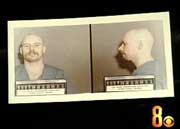
Beginning on September 21, 1988, the Americans for Bush arm of the National Security Political Action Committee began running a campaign ad entitled "Weekend Passes," using the Horton case to attack Dukakis. The ad was produced by media consultant Larry McCarthy, who had previously worked for Roger Ailes. After clearing the ad with television stations, McCarthy went back and added a menacing mug shot of Horton, who is African-American. McCarthy called the image "every suburban mother's greatest fear." The ad was run as an independent expenditure, separate from the Bush campaign, which claimed, as legally required, not to have had any role in its production.
On October 5, the Bush campaign ran its own ad, "Revolving Door," attacking Dukakis over the weekend furlough program. While the advertisement did not mention Horton or feature his photograph, it depicted a variety of intimidating-looking men walking in and out of prison through a revolving door. The commercial was filmed at an actual state prison in Draper, Utah, but the persons depicted - thirty in all, including three African-Americans and two Hispanics - were all paid actors.
Dukakis's campaign ran an ad about a murderer named Angel Medrano who raped and killed a pregnant mother of two after escaping from a federal correctional halfway house. The controversy escalated when Vice Presidential candidate Lloyd Bentsen and former Democratic candidate and civil rights leader Jesse Jackson called the ad racist.
In 1990, the Ohio Democratic Party and a group called "Black Elected Democrats of Ohio" filed a complaint with the Federal Elections Commission alleging that NSPAC had coordinated or cooperated with the Bush campaign in airing the ad, which would make it an illegal in-kind campaign contribution.
In 1990, the FEC investigation revealed indirect connections between McCarthy and the Bush campaign (such as his having previously worked for Ailes), but found no direct evidence of wrongdoing, and the investigation was closed with no finding of any violation of campaign finance laws.
According to Elizabeth Drew of "The New Yorker," several Hispanic congressmen in the Southwest asked Dukakis to delete Medrano's name, which was done.
During the 1988 presidential campaign, the first person to mention the Massachusetts furlough program was Al Gore. Gore took issue with the furlough program at a debate at the Felt Forum sponsored by the New York Daily News and asked Dukakis whether or not he would extend Massachusetts-style furloughs to the federal level. Dukakis responded: "The difference between you and me is that I have run a criminal justice system. You haven't."
Media consultant Roger Ailes was reported to remark "the only question is whether we depict Willie Horton with a knife in his hand or without it."
Further information regarding the furlough came from aide Andy Card, a Massachusetts native whom President George W. Bush later named as his chief of staff during the Florida recount.
Jumping the gun: Although commercials about Willie Horton were not run until the fall campaign, Vice-President Bush first mentioned Horton at the Texas Republican convention on June 9, 1988.
The name Willie Horton became synonymous with negative campaigning. There were more references to Horton in the 1992 campaign between Bill Clinton and George H.W. Bush than there were in 1988.
Spotted an error, or have more information about this case?